Your dog’s paws are like your feet but go through even more wear and tear because dogs don’t wear shoes. The paws balance your dog’s entire body weight onto their surprisingly delicate paw pads, protecting the fine ligaments, blood vessels, and skeletal structure underneath. Sadly, paws are also susceptible to the elements and environmental hazards that can affect both comfort and mobility. To help you keep your dog’s paws as clean and healthy as possible, join us below as we break down some essential paw care tips.

The 8 Tips for Taking Care of Your Dog’s Paws
1. Check Their Paws Regularly
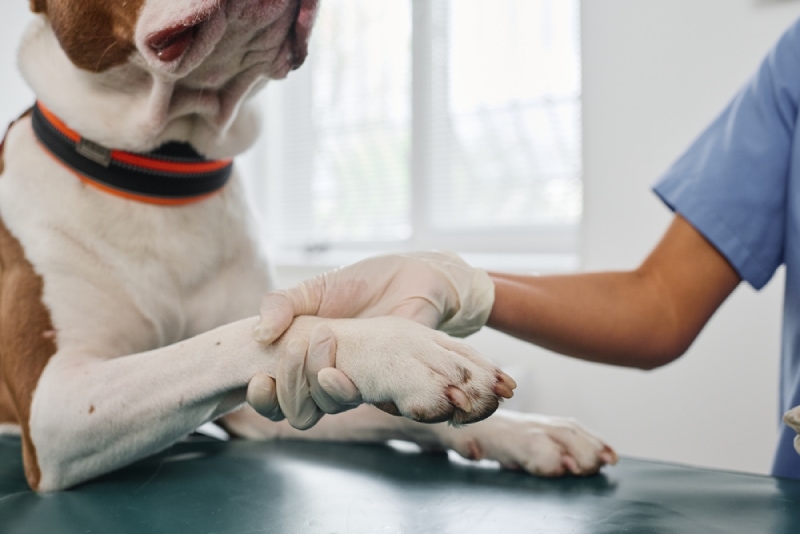
The single best way that you can care for your dog’s paws is to look over them regularly. This includes checking for foreign objects, such as thorns, weeds, pebbles, glass, or something else. If you can check them every time they come in from outside, that is great! However, we know this is not always realistic, so give them a good look about once a week, but preferably more often if you have the time.
2. Keep Your Dog’s Paws Clean
The next step in proper paw care is routine cleaning. Your dog’s paws pick up a lot of bacteria, dirt, and other foreign matter from the environment, especially outdoors. Wipe your dog’s paws with a clean, damp cloth or pet wipes every time they come inside, taking care to check for anything out of the ordinary. Skin infections from bacteria on the feet that enter open wounds can wreak havoc on the paw pads. Dogs who have skin allergies may need even more cleaning attention to keep their paws healthy and free from allergens.
If you are looking for the perfect product to clean your dog's sensitive areas, Hepper's Wash Wipes are our recommendation, plus it's a great on-the-go option. These premium wipes are thick and durable enough for the toughest of paw messes, while still being soft enough to use on your dog's ears or eyes. Formulated with pet-friendly, hypoallergenic ingredients they are the ideal product for all dogs of all ages, skin conditions, or sensitivities.
At Dogster, we’ve admired Hepper for many years and decided to take a controlling ownership interest so that we could benefit from the outstanding designs of this cool pet company! 
3. Keep Them Off Hot Surfaces
If the asphalt outside is too hot for you to touch or it is over 85°F outside, it is too hot for your dog’s paw pads. Walking on baking cement can cause burns that may progress into cracked, infected paws. To avoid this altogether, schedule your walks during shady parts of the morning or evening. Alternatively, you can just stroll in more comfortable grassy areas during peak sunlight hours. Lightweight dog booties can help protect against hot asphalt as well, but some dogs are not big fans.

4. Winter Paw Care
Commercial de-icing products used to fight ice and snow contain salt and other additives that can make your dog’s paws blister or burn. If the weather is severe enough outside to merit de-icing, it’s not a bad idea to try booties for your dog’s paws. They look funny, but between de-icing products and the severe chill of winter, your dog’s paws need all the help they can get.
You should be extra patient with your dog when walking during the winter if they’re not used to the weather. If you had to go outside in sub-freezing temperatures to go to the bathroom, you might be a little upset about it too!
5. Moisturize Sensitive Paws
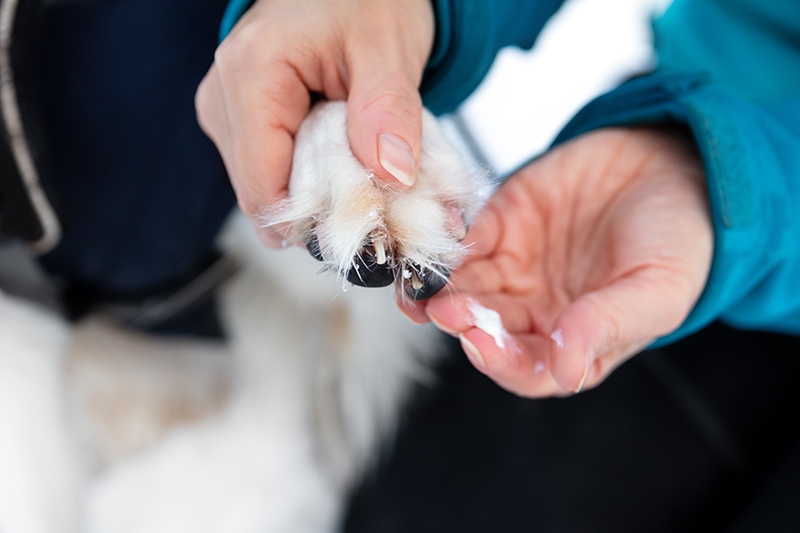
Dog paws see a lot of mileage between extreme cold, extreme heat, and the odd rough, rocky terrain that bites into their feet. Some dogs have rougher paws just like some humans have rougher feet, but all doggy paws can benefit from the occasional dog-safe moisturizer. If you are unsure what brand to use, ask your vet for safe recommendations. Pet balm or moisturizer should be vigorously rubbed into your dog’s paws so they can’t lick it off, as the ingredients are usually topically safe but can cause some digestive upset if eaten.
6. Look for Signs of Negative Paw-Related Behavior
If your dog is paying a lot of attention to their paws, especially by licking, you should be concerned. Seemingly obsessive paw licking may signal a problem with their paws or even cause one. For example, paw licking can be a sign of compulsive OCD-like behavior or could be because of angry, red yeast infections. Other times, it may be a self-soothing response to pain from illness or injury, which calls for a visit to the vet to figure things out.
If you need to speak with a vet but can't get to one, head over to PangoVet. It's our online service where you can talk to a vet online and get the advice you need for your dog — all at an affordable price!
7. Keep Those Furry Paw Pads Neatly Trimmed
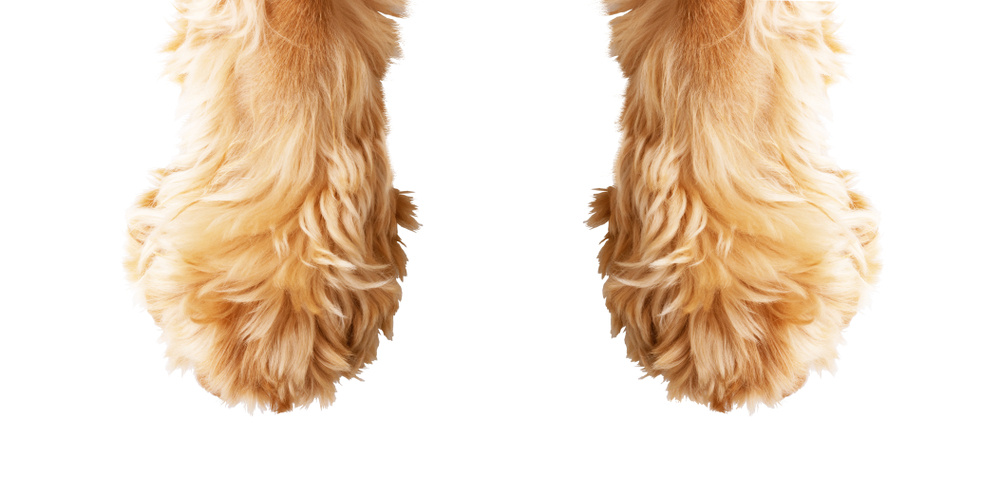
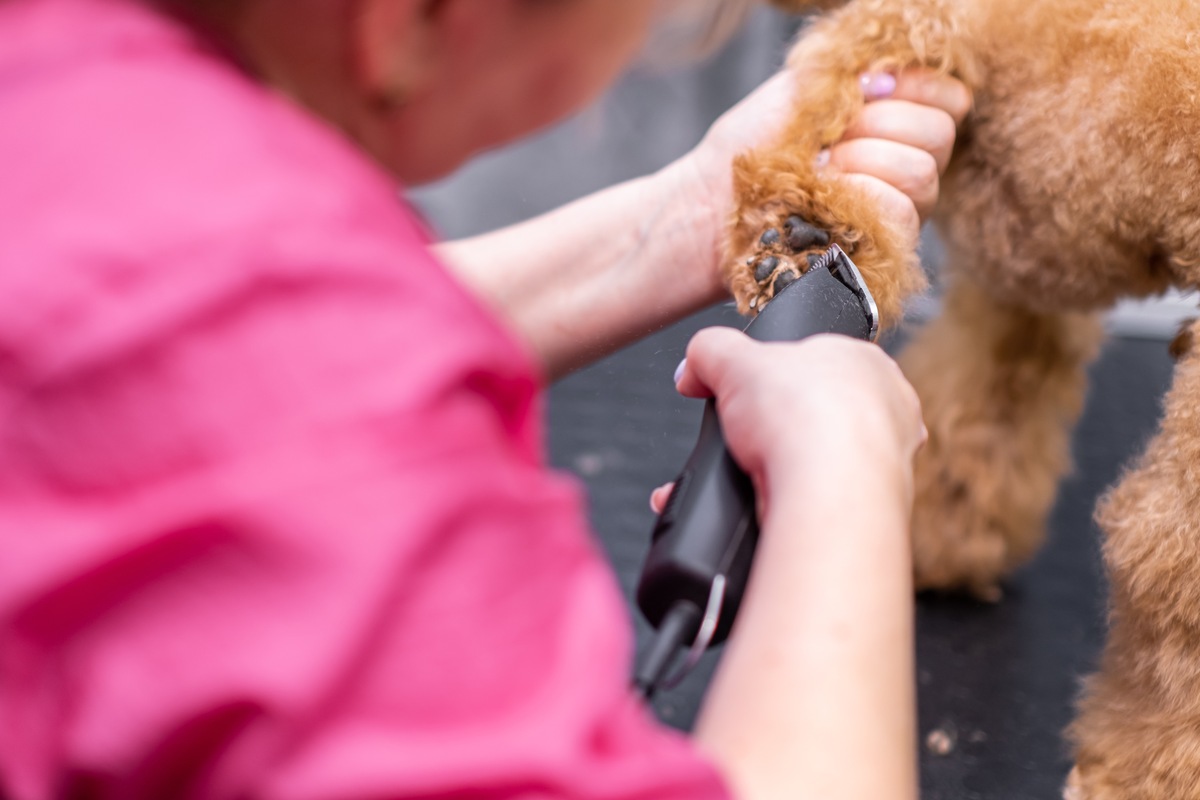
If your dog has shaggy medium or long fur, we suggest trimming the excess fur between their toes. It helps to not only prevent matting but also reduces moisture accumulation. Too much moisture between the toes can freeze during the winter, mat into unmanageable tangles, and even invite infections in some cases.
8. You Might Need to Go Easy on the Exercise
One of the best ways to prevent your dog’s paws from getting hurt in the first place is to choose appropriate exercise for their age. Adult dogs are the most resilient and able to take on strenuous exercise because their body is fully developed. Young puppies may have tender paws that are sensitive to extreme temperature and injury, while older dogs may have thicker paw pads but perhaps less mobility in their joints.
That means you should stick to cool, smooth surfaces while your dog is young until their paws can toughen up. Hard surfaces are okay but should be avoided for senior dogs. Grass is ideal for all life stages if you have access to a secure yard or nearby park. Better yet, you could opt for swimming as a form of low-impact exercise every once in a while.

Conclusion
Keeping your dog’s paws in good shape is a combination of prevention and preparedness. Wearing booties in the winter can keep their paws safe and cozy, moisturizing keeps their paws soft, and avoiding hot surfaces in the sweltering summer sun is a simple safety measure. The right response at the right time helps keep your dog as healthy and comfortable at all times, thus making them feel better overall.
Related Reads:
Featured Image Credit: Lubustock, Shutterstock
 The 8 Tips for Taking Care of Your Dog’s Paws