How to Help a Dog in Labor: 4 Tips for a Safe Birth (Vet Answer)

Dogs are pregnant for about 63 days, give or take, before they go into labor. Therefore, there is not much time to prepare for new puppies. You should start preparing right after seeing your veterinarian and having the mother checked out within the first 30 days of gestation.
Your vet may try and estimate how many puppies you can expect, although this can only be done by palpation or ultrasound between days 21 to 31 or using X-rays after 47 days. Based on this, your vet can determine how safe or risky the labor may be based on several factors, including your dog’s breed, age and health, and the expected size of the puppies.
Gathering supplies and bedding is important, but the most crucial aspect of overseeing the birth of new puppies is knowing how to help your dog get through labor. Here is a guide that you can use to make sure you are prepared for this important support role.

Important Considerations
If your dog is pregnant, it’s crucial to establish a good rapport with your local vet and be familiar with their working hours and fees, in case you need professional help during the labor. This article is meant to provide useful information for owners of whelping dogs, and has been approved by a veterinarian, but is not a replacement for direct veterinary advice and physical examination.
For inexperienced owners and first-time doggy mothers, labor is a stressful experience, and unfortunately, sometimes things don’t go as planned. Discussing risk factors for each particular case with the vet is crucial, so a plan can be made well in advance of the expected date of delivery.
The following signs are an indication of labor complications, and if you see them, you need to contact your vet urgently:
Signs of Serious Labor Complications:
All of these require assistance from your vet and may indicate that your dog needs a cesarean. Your vet will advise you on the most appropriate and safest course of action for your dog and her litter. Also, speak to your vet about ways to assist your dog during whelping and how to care for the puppies, check their umbilicus and mouths, warm them up, and stimulate their breathing and nursing.
This should only be done if you are experienced with whelping and following your vet’s advice, as inappropriate or rough handling of the puppies can cause fatal injuries.
The 4 Ways to Help a Dog in Labor:
1. Prepare a Nesting Box

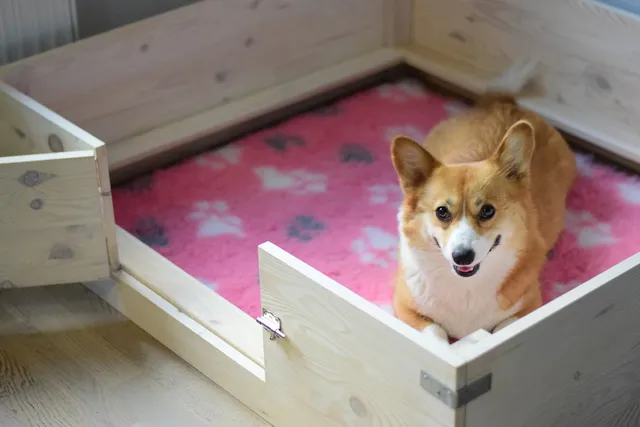
You should prepare a nesting box for your dog about a week before you expect her to go into labor. A nesting box is a safe, clean, soft place for your dog to give birth and to care for her babies for the first few days. The box should have elevated edges so the puppies do not wander too far away from their mother while their eyes are still closed.
The nesting box should be filled with soft towels for the comfort and warmth of your dog and her babies once they are born. Keep extras ready because you will have to replace the towels after birth and several times throughout the day thereafter until the box is no longer needed. Place the nesting box in a quiet, dark corner of your home, where your dog and her puppies can have complete privacy from other members and animals in the household.
2. Recognize the Beginning of Labor

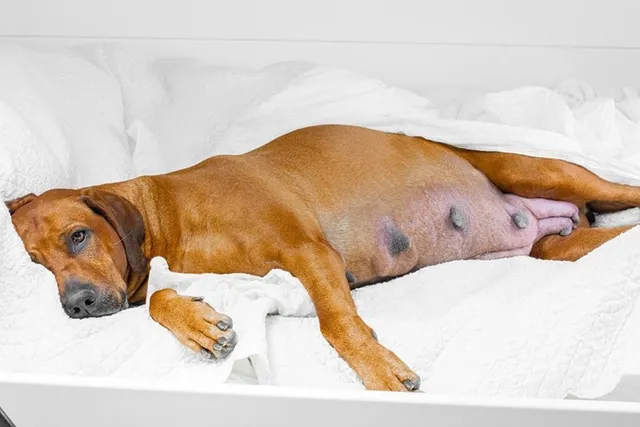
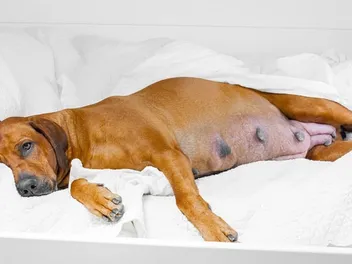
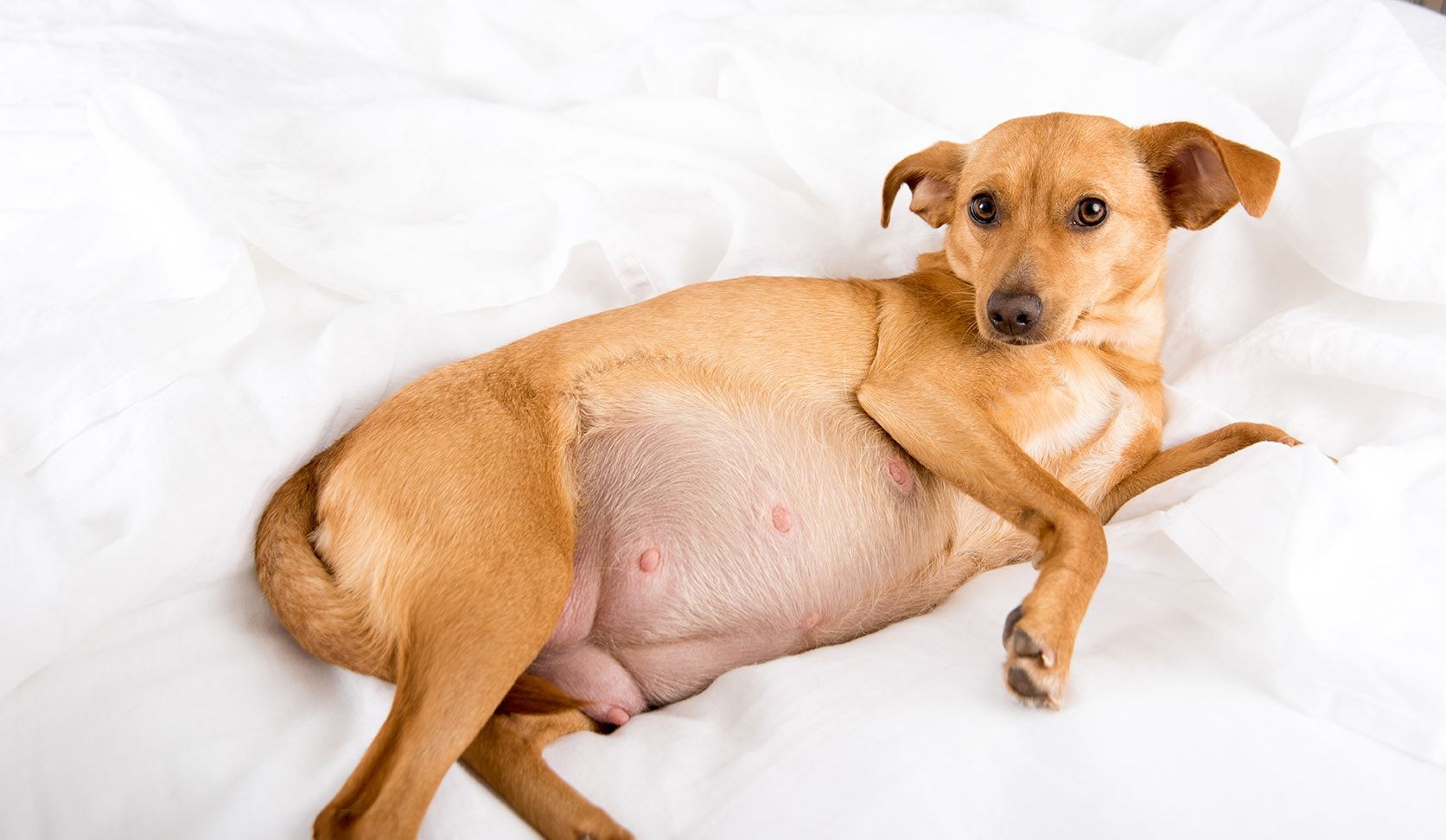
To best help your dog get through labor, it is important to keep an eye out for the first signs of labor1 so you can start preparing her and yourself for the experience. You may notice that your pooch’s teats are enlarging, which means that they are starting to produce milk for the puppies. Your dog will become unsettled and may start what is known as “nesting behavior,” finding herself a quiet place. Her body temperature will drop. She may start panting and lose her appetite. This stage usually lasts 6 to 12 hours but may be longer in first-time mothers.
At this point, start looking for signs of discomfort and distress that could indicate that contractions may follow shortly. When your dog starts panting, pacing, or acting differently, lead her to her nesting box and get her settled in for the birth of her puppies. If there is any doubt about what is normal, contact your vet for valuable first-hand advice.
3. Supporting Your Dog Through Labor and Birth

When birth is close, you should notice a green discharge and a series of contractions that can be seen as waves of ripples rolling across the abdomen. For the most part, you are there simply to support your dog as she gives birth. Stay with her as often as you can, and if necessary, take turns with family members keeping the dog company overnight.
The birthing process can last anywhere from a few hours to 24 hours. Puppies can be born head or tail first, so in most cases, there is no reason to worry about breech births (unless they are stuck in the birth canal)—the puppies and mother should be fine. However, if the puppy is not coming out easily or at all, or if no birth happens after 20 minutes of active labor and contractions, it is important to call your veterinarian urgently for a possible checkup.
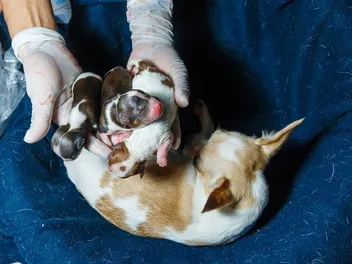
When the puppies are born, they will be inside sacs that the mother dog should tear open before cleaning each baby off. If she does not do this, you should do it yourself using gloves, a clean cloth, and gentle stroking motions. Do not be alarmed if a stillbirth happens, as this is common with mammal litters. If a puppy is born not breathing, try to clear their mouth and nose, then gently rub their bodies to stimulate them.
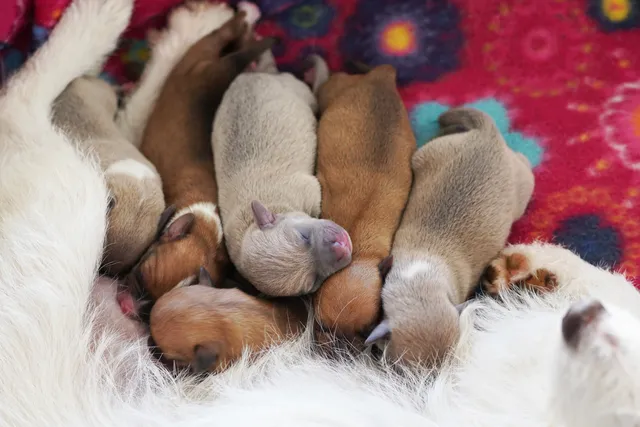
With any luck, they will start breathing on their own and join their littermates for a first milk meal. Count the number of placentas your dog has passed; this should match the number of puppies.
4. Offering Support After Birth

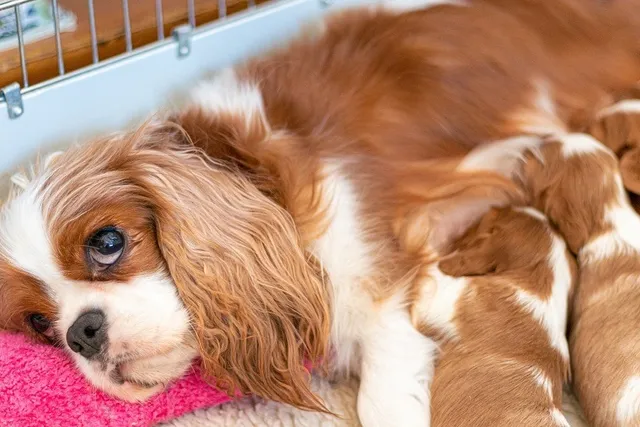
Make sure that your dog and her puppies can have peace for the first few days after birth. If necessary, set them up in a spare room where nobody but you or another caregiver can access them at any given time. It is important to feed your dog high-quality puppy food while she breastfeeds, as it has the extra nutrition, fat, and calories that she will need to maintain her strength and health throughout the process of producing milk. You should also have your dog checked out by a veterinarian a few days after giving birth, as well as a few weeks after that, to ensure that she does not develop any birth-related health issues. Supervise the mother and the puppies closely for the first week or so, hourly in the first few days after birth, to make sure you can recognize each pup. Weigh and check them to make sure they are developing properly and to avoid any injuries, which can happen with big litters, such as the mother accidentally stepping or lying on her puppies. Speak to your vet about nutrition and preventative care for the puppies, such as deworming and vaccination regimes, as they are getting bigger.
Final Thoughts
Having a pregnant dog and expecting puppies can be a stressful time. Good preparation beforehand, independent research, and regular contact with your vet will make this process go as smoothly as possible. If at any point you feel like your dog is having any issues during whelping, it’s crucial to contact your vet urgently and get them seen. This can mean the difference between life and death for the puppies, and unattended whelping issues or delays in the appropriate veterinary treatment can be life-threatening for the mum as well. Related Reads:
Sources
https://www.vets-now.com/pet-care-advice/my-dog-is-in-labour/
https://vcahospitals.com/know-your-pet/breeding-for-pet-owners-whelping-in-dogs
https://www.pdsa.org.uk/pet-help-and-advice/pet-health-hub/conditions/pregnancy-in-dogs
https://vcahospitals.com/know-your-pet/feeding-the-pregnant-dog
https://todaysveterinarypractice.com/radiology-imaging/imaging-essentials-fetal-count-radiology/
Featured Image Credit: Anna Hoychuk, Shutterstock
Expert dog care, straight to your inbox
News, insights, expert advice, and everything dog.

No spam — unsubscribe anytime.
By signing up, you agree to our Terms & Conditions and Privacy & Cookies Policy.
How useful was this post?
Click a star to rate. You can leave written feedback afterwards. (We read all feedback.)
Dr. Maja Platisa DVM MRCVS (Veterinarian)
Maja joined our team in March 2023 as one of our in-house veterinarians. She is passionate about animals and their health and loves to help the readers with any issues or questions they have regarding their four-legged friends and other animal companions. Her passion is small animal medicine and emergency work, while she also has a great interest in animal welfare.
Dr. Platisa has 8 years of professional experience working with numerous animal species in the UK and the Channel Islands, from dogs, cats, rabbits, guinea pigs, to cows, goats, sheep, pigs, and poultry. Maja is enthusiastic about veterinary volunteer work and often helps in neutering projects for stray animals in Greece. She has a wide array of skills in the fields of animal medicine and surgery, endoscopy, microscopy, diagnostic imaging, and other aspects of clinical work.
Maja obtained her veterinary training and degree from the Faculty of Veterinary Medicine, University of Zagreb, Croatia, in 2015.