How to Get Dogs Unstuck After Mating? 2 Vet-Reviewed Methods


In this article
If you're an inexperienced dog owner or new to breeding dogs, it can be concerning when your dog finds themselves stuck while mating. This process, called a "tie", is a normal part of the breeding process and nothing to be concerned about.
As a natural phenomenon, there's usually no need for human intervention unless the two dogs have been tied for a while. If they can’t get unstuck, it’s always best to seek veterinary advice.

Why Do Dogs Become Tied?
Understanding how to respond to your dog becoming stuck while mating means understanding the canine mating process.
Male dogs have erectile structures on the base of their penis called the "bulbus glandis." These swell during copulation and, along with the female tightening her vaginal muscles, serve to tie the mating dogs together in order to achieve successful ejaculation, which carries on throughout the copulatory tie.
It may not happen during every mating, and only one out of 15 males achieves it during their first year of life. Still, a tie does not guarantee successful mating, while a female may also get pregnant even if the tie hasn’t occurred.
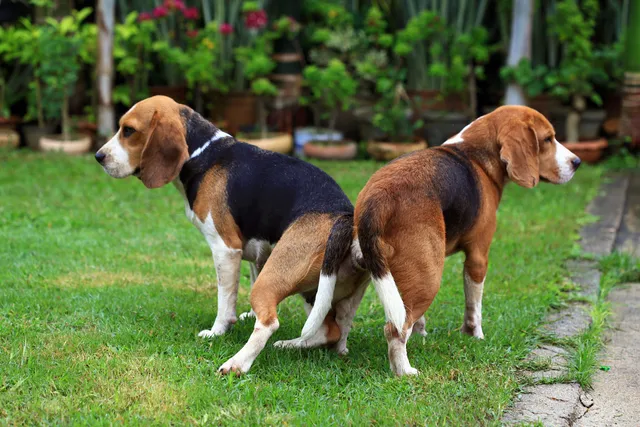
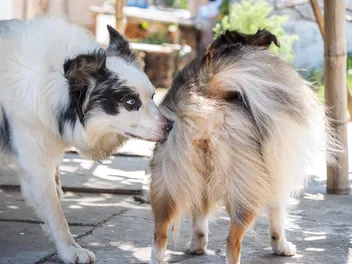
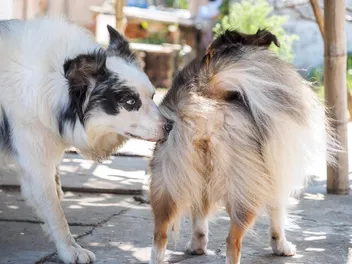
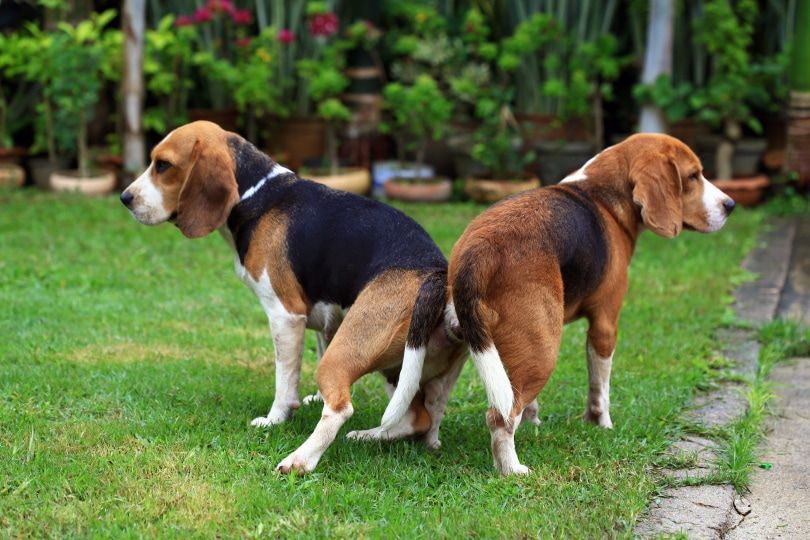
During the tie, as the male dog has stopped with the pelvic thrusts, they will often dismount and turn around, leaving the dogs back to back. This is also a natural part of the process. Although there's no solid theory as to why dogs do this, it may originate from their wild ancestors and the need to protect themselves from attackers, but at this time they are finished with the pelvic thrust and are ready to dismount.
The 2 Vet-Reviewed Methods to Get Dogs Unstuck After Mating:
1. Leave Them Be
This may seem like a bad idea, especially since seeing your dog stuck to another can be alarming. But dogs have been mating for centuries without human intervention, and given time, they will naturally become unstuck in almost all instances.
A tie, in general, lasts anywhere between 5 to 20 minutes. For dogs that are breeding for the first time, it may take a little longer for them to separate, but there's usually no reason to be alarmed. Anxiety and interference can actually be the reasons that a tie lasts for a while.
If neither dog is familiar with the breeding process, keep their environment calm and without noise, visitors, or any unnecessary excitement. Stay calm yourself, too. Dogs are notoriously good at picking up on our inner turmoil and won't relax if they know that you're panicking.
Stay calm and soothe both dogs with words of encouragement. Avoid touching the male’s abdomen or genital area, as it may prolong the tie if he remains excited.

2. Seek Advice From Your Vet
On the off chance that the tie is lasting more than 1 or 2 hours, or one or both of the dogs are becoming distressed, give your vet a call. In some instances, they may recommend certain adjustments in the male dog position, but don’t do this without veterinary guidance, as it may lead to serious injuries of both dogs’ reproductive tracts.
In some cases, based on anecdotal reports, as the male dog tends to be turned with their back to the female during the tie, it may help to get them back into the standard position of the male mounting the female. Never try to forcefully move, adjust, or separate them, as again, this will lead to injuries. As the excitement and the swelling of the male’s bulbus glandis subsides, the dogs will untie in the majority of cases. If this doesn’t occur, your vet may need to intervene.

Never Forcefully Separate Tied Dogs
It can be easy to assume that separating your dogs as fast as possible is the best thing to do when they're stuck together, whether you want to prevent pregnancy or because you're worried about your dog being in pain. Regardless of the reasoning, physically separating your dogs by forcing them apart or startling them is never the right answer.
Not only can interfering cause more stress for the dogs, especially if they've never mated before, but you could also hurt them in the process, even if you don't intend to.

Does the Tie Hurt?
Sometimes, the female dog will growl, bark, or whine during mating. This can be one of the reasons that dog owners will want to separate their dogs, as they’re worried they may hurt each other. Provided that the dogs are left alone, however, there's no reason that either the male or the female will be hurt during the mating process. Naturally, the female may feel more discomfort than the male.
It may be particularly discomforting for both dogs during their first mating, though. Inexperience makes for an awkward encounter for all creatures, not just dogs. Anxiety is also a cause for much of the discomfort or pain that either dog feels. This is why it's so important for you, as the owner, to exude calmness and keep both dogs relaxed to avoid unnecessary injuries.
Do Dogs Always Get Pregnant When They Tie?
Although ejaculation of the sperm occurs during the first few minutes of the tie, it doesn't make pregnancy a certainty. Sometimes, a tie doesn't happen at all, yet your dog can still become pregnant.
Pregnancy relies on the female's heat cycle, which is divided into four main stages and begins for the first time once your dog is mature enough (around 6 months for small breeds and 12 to 24 months for larger breeds). “Coming into heat” generally includes the stage of proestrus and estrus, when the female develops signs to attract the male, which prelude to mating.

Stage One: Proestrus
This stage is when bleeding and other signs, like a swollen vulva and bloody vaginal discharge, occur. Proestrus lasts around 6 to 10 days, and during this timeframe, a female dog will ward off any would-be suitors on her own because she isn't ready for mating.
Stage Two: Estrus
The fertile period follows immediately after the first stage and lasts for about 5 to 9 days, but there is great individual variation. The female dog becomes open to male interest. Swelling of the vulva subsides and the discharge is reduced, becoming light in color.
Although one mating in this time can be enough for fertilization to occur in some cases, most breeders try to keep the male and female dogs together for a while to ensure conception, if possible.
Stage Three: Diestrus
This is the stage where the female stops being attractive to the males. It can last a few weeks or up to 140 days, and it will mark the period of pregnancy if the female dog got pregnant after the mating. The progesterone hormone values are increased during this stage.
Stage Four: Anestrus
This is the period of rest before the next heat or after a pregnancy has finished and a litter has been delivered. It may last up to 4 months, and progesterone levels remain low.

The 6 Ways to Avoid Pregnancy
It's a well-known fact that puppies are adorable. Unfortunately, they're also expensive to take care of and often wind up abandoned in shelters when dog owners can't find homes for them.
There are ways to prevent your dog from becoming pregnant, and not all of them are permanent solutions if you would like to breed your dog at some point.
1. Spaying and Neutering
Spaying is a surgical and permanent procedure involving the removal of the female reproductive organs. This avoids pregnancy and other unwanted ailments, like mammary tumors and infections of the uterus, called pyometra. Neutering refers to the removal of testicles in male dogs.
Spaying will also stop your female dog from having heat cycles, and you'll be able to avoid the blood patches that she'll leak as well as unwanted pregnancies. Plus, you can help prevent pet overpopulation or more puppies ending up abandoned in shelters. It’s the only foolproof way to prevent a pregnancy.

2. Isolation
If you intend on breeding your female but she is too young yet to get pregnant, or you are waiting for your spay appointment with the vet, there are ways to try and reduce the likelihood of incidental mating. Depending on how good of an escape artist your dog is or if you also have a male dog, isolation might be easier said than done.
There are several ways that you can try to do this:
If you decide to try putting diapers on your female dog thinking this will prevent her from mating, you may be in for a surprise. Diapers may help to contain some of the vaginal discharge but may not be effective in stopping a mating. They should be changed several times per day, as they will get quite smelly and may lead to a skin irritation, not to mention most dogs may not tolerate it, could try to take it off, or tear it into pieces.
3. Reduce Her Time Outside
During the last few days of your female's heat, you want to limit her access outside to reduce the risk of encountering unfixed male dogs. Shorten walks and keep her on a lead, avoiding dog parks or busy areas.

4. Veterinary Medical Intervention
There is a medication called aglepristone that can be administered by a veterinarian either at the time of mismating or up to 45 days after, in which case it prevents implantation from taking place, causes early embryonic death and resorption, or leads to pregnancy loss, depending on the timeline. Your vet can discuss the protocol used for this option, alongside possible side effects, although these are not very common.
5. Chemical Castration
If you have a male dog along with a female and don't want to get either of them fixed at this time for various reasons, your vet can chemically castrate your male dog. This will make them temporarily infertile for around 6 months and let you breed your dogs at a later date.
You'll still have to keep your female away from male dogs outside your household, though, and be mindful that it may take several weeks for testosterone levels to drop.
If you like to talk with a vet to clear out any other doubts you might have regarding this topic, you can consult one online.
Conclusion
Although the sight of two dogs stuck together can be alarming, especially for new dog owners or those unfamiliar with the tie phenomenon, it's a natural part of the canine breeding process.
There's no way to physically get your dog unstuck after mating without hurting both the male and the female. The best and only thing that you can do is stay calm and wait it out. Given time, your dogs will separate themselves and be no worse for wear.
If the tie lasts for longer than an hour or more, or if one of the dogs is becoming distressed, consult with your veterinarian.
See also:
Sources
Featured Image Credit: Sigma_S, Shutterstock
Expert dog care, straight to your inbox
Vet-reviewed advice, training tips, and the best of Dogster. Free, and you can unsubscribe anytime.
By signing up, you agree to our Terms & Conditions and Privacy & Cookies Policy.
How useful was this post?
Click a star to rate. You can leave written feedback afterwards. (We read all feedback.)
Ollie is a zoologist turned freelance animal writer living in South Australia with his partner Alex and their mini zoo consisting of their eldest, a rescue dog named Pepper, many aquatic creatures, and their cat Steve. Ollie has a Master's degree in wildlife biology but became a freelance animal writer in 2020 and hasn't looked back. He loves sharing what he has learned with pet parents around the planet.