Do Dogs Have Period Cramps? Vet-Verified Health Facts & FAQ

In this article
Every human woman knows just how uncomfortable and painful periods can be. Leading up to a period, women can experience bloating, cramping, gastrointestinal upset, as well as emotional or behavioral changes.
When a dog enters a heat cycle, is it comparable to what we experience? Is the pain the same? Do they have similar changes in behavior or are things different for our canine companions? While dogs don’t have cramps like humans, it is thought that they feel some level of discomfort during their heat cycle. In this article, we aim to explain what science has determined so far about periods and dogs.

Discomfort During Heat Cycles
Because our dogs can’t tell us how they are feeling, we rely on behaviors like excessive grooming, licking, pacing, and difficulty getting settled to tell us that our dog is uncomfortable during her cycle. Dogs entering a heat cycle, known as estrus, often show signs of discomfort, fever, and irritation, while others appear unaffected by the process.

Do Dogs Have Period Cramps?
Women experience period pain or cramps as the body expels the extra lining of the uterus (womb). This lining builds up each month in preparation for a potential pregnancy, so if none occurs, the lining material is pushed out of the womb in the process known as menstruation.
The canine uterus does not go through this same process because they have a different placental implantation design, so their uterus does not experience the same cramping that human females do.
Do Dogs Experience Pain During Their Cycle?
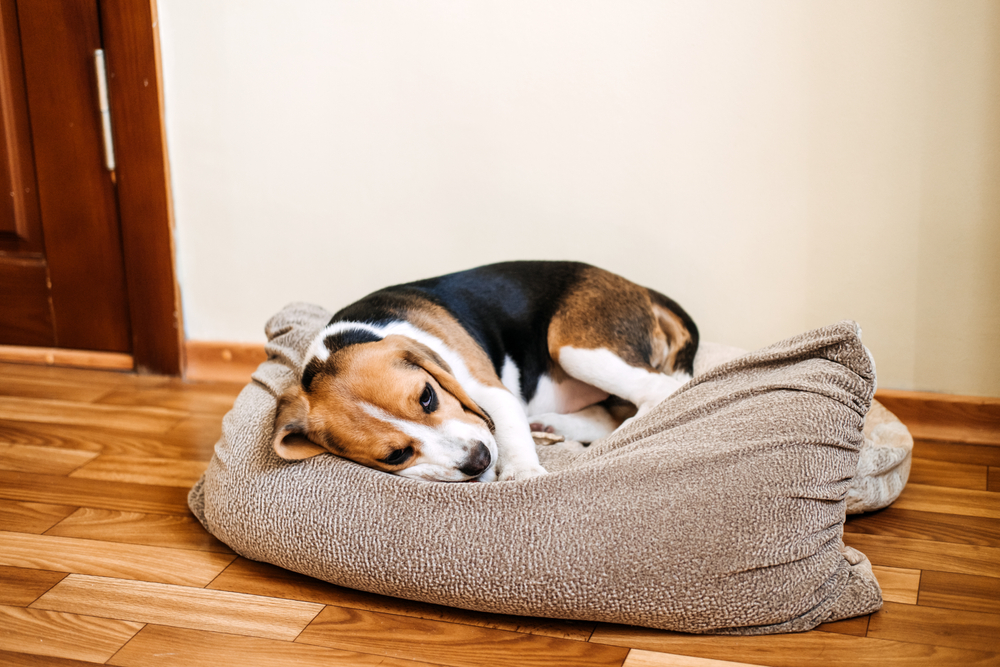
There is no scientific or veterinary evidence to suggest that dogs experience pain during estrus, but it is likely that they experience some discomfort. Most of the time, a dog might get fidgety, have changes in appetite, stretch more, and lick the affected areas.
Ultimately, since we can't talk to our dogs in language we can understand, it's hard to say exactly what a dog is experiencing during her cycle. However, just as every woman is different, every female dog likely experiences heat cycles in different ways.
Some of them might seem purely unaffected by it and continue their day-to-day routine without much of a difference. Others might seem a little more down and out, not really themselves, or might even seem moodier than usual.

What Happens During Heat Cycles?
Dogs have quite a protracted estrus cycle consisting of four stages. Unlike humans, who cycle every month, dogs tend to only have one or two heat cycles per year.
When Heat Cycles Begin
For some dogs, estrus may begin as early as 4 months of age, but 6 months is more common. Many things can influence when females go into their heat cycles, including the breed and genetics.
Small breed dogs tend to have their first estrus cycle at around 5-6 months, while giant breeds may not have their first cycle until they are 18-24 months old.
Stages of the Heat Cycle

As we mentioned, there are 4 stages to the canine estrus cycle:
1. Proestrus: 6-11 days
Estrogen is produced by the ovaries during proestrus, reaching a peak 1-2 days before the next stage (estrus). The increasing estrogen levels result in the bloody vaginal discharge and swelling of the vulva (external genitalia) that we associate with a dog coming on heat. They will become more interested and playful with male dogs, but are not yet receptive to mating. During this stage, they might be a bit uncomfortable, but they aren’t believed to be experiencing significant pain.
2. Estrus: 5-9 days (can be longer or shorter)
This is when the female becomes receptive to mating. Estrogen levels drop and progesterone starts to increase, leading to a surge in luteinizing hormone, which triggers ovulation. Vaginal discharge often changes to a clear or straw-colored fluid, but may vary between individuals.

3. Diestrus: 5-9 weeks
The period after mating is signaled by the end of estrus, when the female stops showing signs of receptivity. Progesterone (the hormone that maintains pregnancy) continues to rise for 2-3 weeks after ovulation, whether the dog is pregnant or not. Once progesterone levels peak, they stay at this level for 1-2 weeks before gradually dropping over the next 10-30 days until returning to baseline.
4. Anestrus: 4 months
Anestrus occurs at the end of estrus if no mating occurs. In dogs that have mated, anestrus begins at the end of diestrus (non-pregnant) or after having a litter. Progesterone levels stay low. This period prepares the uterus for the next estrus cycle. It is the stage a dog enters either at the end of her heat cycle or after having a litter. Progesterone levels remain low throughout this stage.
How to Prevent Heat Cycles in Females
If a female is unspayed, she will continue to go into heat on a cyclic basis. Every female is a little bit different. Some dogs go into heat cycles every 5 months, but it's not uncommon for there to be 11 months of separation in between, particularly in giant breeds.
There are hormone injections available to delay the onset of estrus and extend the anestrus period, but the most effective way to prevent heat cycles is through spaying.

Getting Your Female Spayed
Previous recommendations were to have your dog spayed prior to her first season. This was to minimize the risks of accidental pregnancy, unwanted estrus behaviors, and, most importantly, for the significant reduction in mammary cancer. Evidence shows us that the risks of mammary cancer development increase from 0.5% to 8% for dogs spayed after their first season.1 This risk increases to 26% if they are spayed after their second season - this means that dogs spayed after their second season have a 1 in 4 chance of developing mammary cancer.
Recent studies have suggested that for certain breeds, such as the Rottweiler, spaying and neutering may actually have a negative effect on life expectancy by increasing the risks of bone tumors (osteosarcoma).2 This research is still ongoing, and we recommend talking to your vet about the best option for your pet.
Most vets now recommend spaying female dogs between the first and second season in order to ensure that she has reached full sexual maturity, reducing the risks of joint abnormalities and urinary incontinence, whilst still minimizing mammary cancer risks.
Managing a Dog’s Cycle
Unless there are extenuating circumstances, dogs should not be spayed once they have started a heat cycle. This is due to the swelling and increased blood flow to the reproductive organs, making surgery more risky. The ideal time is during anestrus, whilst hormone levels are at their baseline. If your dog has started showing signs of proestrus, there are some things you’ll want to do to manage this period.
1. Prepare for Bleeding
If your dog is indoors, you're going to need to prepare for bleeding. While dogs typically spot and don't have a free flow, they still can stain your fabrics, furniture, and other spaces of the home if they are left to free bleed.
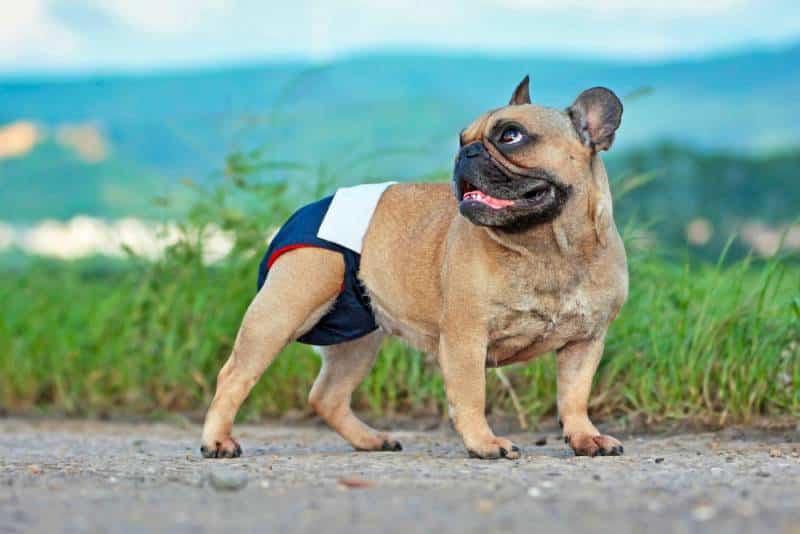
Some people prefer keeping their dogs confined to a certain space during this time while others do more creative things, such as buying doggy diapers for their females.

2. Give Her Space
During this time, your girl is likely not feeling like much of herself. To make her more comfortable, be sure to let her have her space, quiet time, or alone time, if necessary. That means keeping other animals in the home out of her space and preventing children from poking or prodding.
While she's feeling a little down, you can set a bed or small area aside for her to escape to when the household is just a little too chaotic.
3. Keep Her Contained
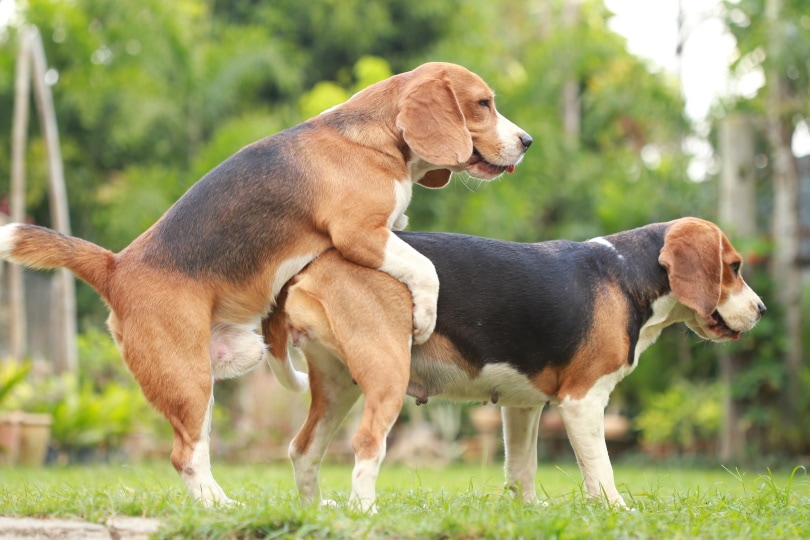
During your female’s heat cycle, it is extremely important to keep her contained and supervised at all times as she, and any intact males nearby, will take any opportunity to get together. This includes related dogs.
4. Understand Pregnancy Risk
If you are trying to prevent your dog from getting pregnant during her heat cycle, it is important to understand how many days per month she can get pregnant. Dogs have a longer window of opportunity compared with humans, and are able to become pregnant throughout most of the estrus cycle.
Dogs are most fertile typically starting 9 to 10 days after they start their heat cycle and it lasts roughly 5 days once it begins. During this time, her ovaries will release eggs for fertilization.

FAQ
Should I Let My Dog Have A Litter?
Despite what you may have heard, there is no biological or behavioral advantage to allowing your dog to have a litter, and with so many dogs in shelters and in need of homes, there is no need to contribute to this number.
Waiting until your dog has had her first season is sensible, however, as it ensures that her body has fully developed before removing any reproductive hormones.
Do Dogs and Humans Bleed At The Same Part of Their Cycle?
No. In humans, menstruation (bleeding) occurs at the end of estrus if no pregnancy has occurred. Each cycle, the lining of the uterus (womb) becomes thickened in preparation for embryo implantation, but if no egg is fertilized, this lining is shed over a period of 3-5 days.
In dogs, bleeding occurs during proestrus as the vaginal wall becomes ready for mating.
What Should I Do If My Dog Seems Uncomfortable During Her Cycle?
It is normal for a dog to seem a bit quiet or off food during her estrus cycle, but if you are worried that she is particularly unsettled or uncomfortable, it is worth checking in with your vet. They may recommend a check up, or have some suggestions of what you can do to make her more comfortable.

Conclusion
Female dogs will likely experience some level of discomfort during certain stages of their heat cycle, but it is not the equivalent of cramping like human females have. You can prevent this entirely though! If you haven't done so already, it's a good idea to make an appointment with your vet to discuss the benefits of getting your dog fixed.
Not only do you have to deal with your dog being uncomfortable during these cycles, but you also have to accept the possibility of pregnancy, long weeks of bleeding, and eventual disease if they remain unaltered. It’s best to get it taken care of early.
See also:
Sources
Featured Image Credit: Iryna Imago, Shutterstock
Expert dog care, straight to your inbox
Vet-reviewed advice, training tips, and the best of Dogster. Free, and you can unsubscribe anytime.
By signing up, you agree to our Terms & Conditions and Privacy & Cookies Policy.
Ashley Bates is a freelance dog writer and pet enthusiast who is currently studying the art of animal therapy. A mother to four human children— and 23 furry and feathery kids, too – Ashley volunteers at local shelters, advocates for animal well-being, and rescues every creature in need. Her mission is to create awareness, education, and entertainment about pets to prevent homelessness. Her specialties are dogs and cats.
Join the conversation
Ask a question, share your story, or send private feedback.