I Found a Dried Dead Tick on My Dog - Should I Be Worried?


In this article
Finding a tick on your dog is always unpleasant, whether dead or alive. Dead and dried ticks can't actively transmit bloodborne illnesses to your dog, so they're less of a worry than live ones. However, they still present a problem and should be removed. So, while you don't need to be as worried as if you found a live tick, you should still be vigilant and remove it carefully from your dog as soon as possible.

First of All, What Do Dead Ticks Look Like?

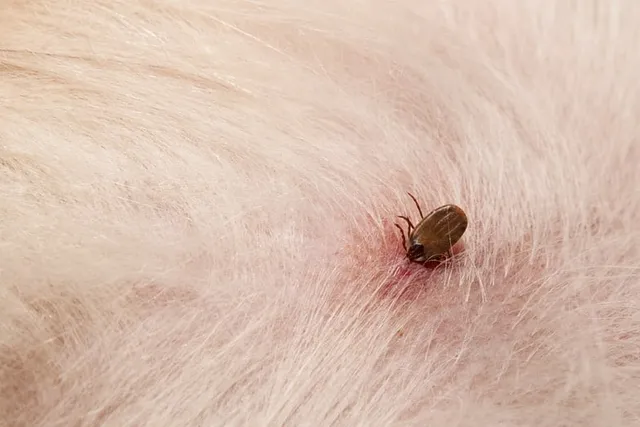
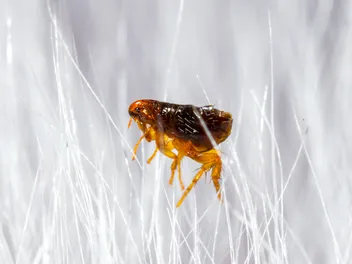
Dead ticks look slightly different than live ticks. It can be difficult to tell them apart, but subtle differences can help you know if you're dealing with a dry, dead one or a live one.
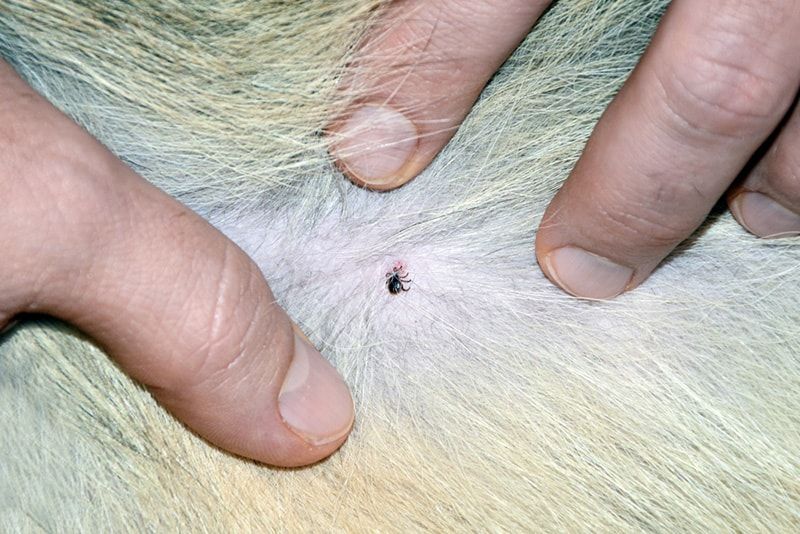
Dead ticks have silvery white skin and appear dry and brittle, rather than the darker color normally associated with live ticks. Their legs will be held up to their bodies in death, and they won't move. In fact, this leg position is one of the biggest differences between a dead and a live tick; ticks can appear grey even if they're very much alive, making it more tricky to determine.
However, a living tick's legs will always be stretched out, occasionally moving while remaining attached to your dog and enjoying its meal. They'll also often be larger, particularly when they are fully engorged. Ticks can vary in size, from the size of an apple seed when they haven't had a meal to the size of a pumpkin seed or larger!
Why Should I Worry About Dead, Dry Ticks?
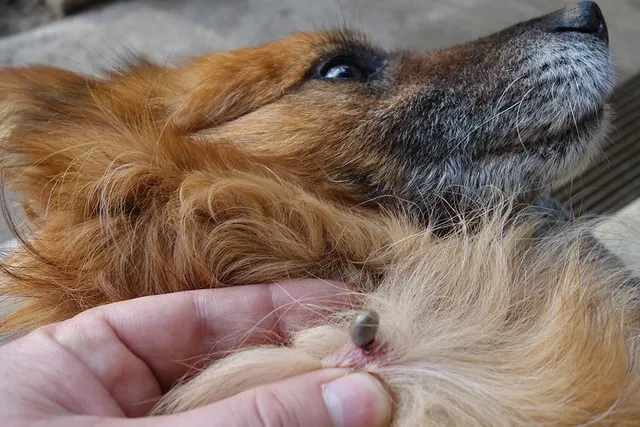
Ticks won't always fall off your dog's skin, even if they're dead. A tick's mouthparts are embedded deeply into your dog's skin and anchored there, and some ticks will stay on the same host for weeks. A full meal can take a tick between a few days to a week to drink, so its mouthparts must be strong enough to keep it from falling off at the slightest bump.
Unfortunately, this means that a tick can stay in place even after it's died and can cause irritation and infection at the bite site. This can be uncomfortable for your dog, so removing them as soon as possible is the key to ensuring an infection doesn't set in. When removing a dead tick, avoid pulling the head or squeezing the body too much, since a dead tick can release any residual blood from its body back into your dog.
- Our Recommendations: Best Flea & Tick Treatment – Dogster’s Reviews & Top Picks
Why Would I Find a Dead Tick and Not a Live One?
Ticks most often die on dogs due to the effective antiparasitic treatments that are now available. Medication such as Seresto enters the dog's upper skin layer and requires a tick to bite in order to kill it. Trauma can also cause the death of a tick; if a dog is scratching and biting at the tick, it could crush and kill it. Most ticks will fall from a host when they die, but it doesn't happen all the time. The mouthparts are so effective that they can sometimes remain lodged in the skin.


How Do I Remove a Dried Dead Tick from My Dog?
Removing a dead tick is the same as removing a live one. You might require a little more care to keep it in one piece. The process to remove a dried dead tick is as follows:
Identify the tick and ensure it is dead.
Part your dog's fur and use a pair of tweezers or a tick-picking tool to hold the tick gently, getting as close to your dog's skin as possible.
Begin to pull on the tick slowly and gently in an upwards direction, taking care not to squeeze with the tweezers or put any pressure on its body.
Pull in the same gentle but constant manner until the mouthparts and head are out; don't spin or twist the tweezers or tool as you're pulling.
If you want to take your dog to the vet for a check-up once you've removed the tick, keep its body in a Ziploc bag for identification purposes.
Clean the skin with 70% isopropyl alcohol or 3% hydrogen peroxide.

Which Diseases Can Ticks Give Dogs?
Ticks can give dogs many diseases, but it depends on the type of tick they were bitten by. The main diseases of concern for your dog are:
- Lyme disease: Deer tick
- Ehrlichiosis: Brown dog tick, lone star tick, American dog tick
- Anaplasmosis: Black-legged tick
- Rocky Mountain Spotted Fever: American dog tick, deer tick, rocky mountain wood tick
- Babesiosis: Deer ticks (mainly)
- Bartonellosis: Deer ticks (mainly)
Lyme Disease
Caused by the Borrelia bacterium, Lyme disease is commonly found on the West Coast, North East, and upper Midwest of the United States. Ticks need to stay attached to a dog for 36 to 48 hours for the transmission of this bacteria to occur, and signs show 2 to 5 months after being bitten. The signs of infection with Lyme disease include:
- Fever
- Lameness
- Joint pain and swelling
- Fatal kidney disease is a rare complication of Lyme disease, but it does occur
Treatment for Lyme disease usually consists of a 28- to 30-day course of antibiotics prescribed by a vet.
You may be interested in: When Is Flea & Tick Season? A State-by-State Guide (Vet-Verified)

Ehrlichiosis
Signs of Ehrlichiosis begin 1 to 3 weeks after a tick bite and include fever and low blood platelets. Blood platelets are what the body uses to help the blood clot after an injury, but it also means the blood won't clot within the body. This shows in dogs as bruising and frequent nosebleeds. Anaplasmosis has the same common symptoms as Ehrlichiosis.
If you notice any signs that your dog may be sick following a visit to an area known to have ticks or you are concerned about finding a tick on your dog, take them to your veterinarian or call them as soon as possible, whether the tick is dead or alive.
How Do I Stop My Dog from Getting Bitten by Ticks?
Ticks don't fly or jump; they crawl or fall onto unsuspecting victims in a process called "questing." They do this by finding frequently trafficked paths in woodlands, and they hang onto the end of blades of grass.
Prevention of tick bites is achieved with medication such as spray preparations, spot-on treatments, or medicated collars such as Seresto. Most of these methods repel ticks, but they are only effective if the tick bites.
Where Should I Check My Dog for Ticks?
If you've found one dead, dry tick on your dog, you must check its entire body from nose to tail to check for more. Usually, there is more than one. Concentrate on areas with long fur, between the toes, on the face, and in the ear folds, as these are common places for ticks to hide.

Conclusion
Finding a dead tick can be a worrying and distressing experience for you and your dog. However, it is crucial to remain calm and gently remove the tick with tweezers or a tick remover tool to reduce the risk of infection. If you are worried about your dog being bitten by a tick or worried after finding a dead one on your dog, take your pet to the veterinarian. In addition, close monitoring can help you spot any signs that might be worrying, so you'll get veterinary treatment quickly.
Related reads:
Sources
Featured Image Credit: Jen Helton, Shutterstock
Expert dog care, straight to your inbox
News, insights, expert advice, and everything dog.

No spam — unsubscribe anytime.
By signing up, you agree to our Terms & Conditions and Privacy & Cookies Policy.
How useful was this post?
Click a star to rate. You can leave written feedback afterwards. (We read all feedback.)
Nicole has loved animals of all sizes her whole life so it's no wonder she has dedicated her career to helping them through what she loves best: learning, writing, and sharing knowledge with others. She’s the proud mom of two dogs, a cat, and a human. With a degree in Education and 15+ years of writing experience, Nicole wants to help pet parents and pets around the planet to live happy, safe, and healthy lives.