
Fleas & Hot Spots on Dogs: Vet-Verified Causes, Signs & Treatment


In this article
View 3 More +Hot spots are painful and irritating lesions that can form on your dog’s skin. Hot spots can be caused by a variety of issues, and fleas are sometimes the culprit. Fleas and other insect bites can cause skin irritation, self-trauma, and the development of hot spots.
Although they’re small, fleas are significant nuisances that can quickly wreak havoc on your entire home. If you notice any hot spots on your dog, it’s best to schedule an appointment with your veterinarian for treatment right away, as they can progress quickly. Here’s how you can help your dog if you suspect fleas have caused hot spots on your dog.

How Do Fleas Cause Hot Spots on Dogs?
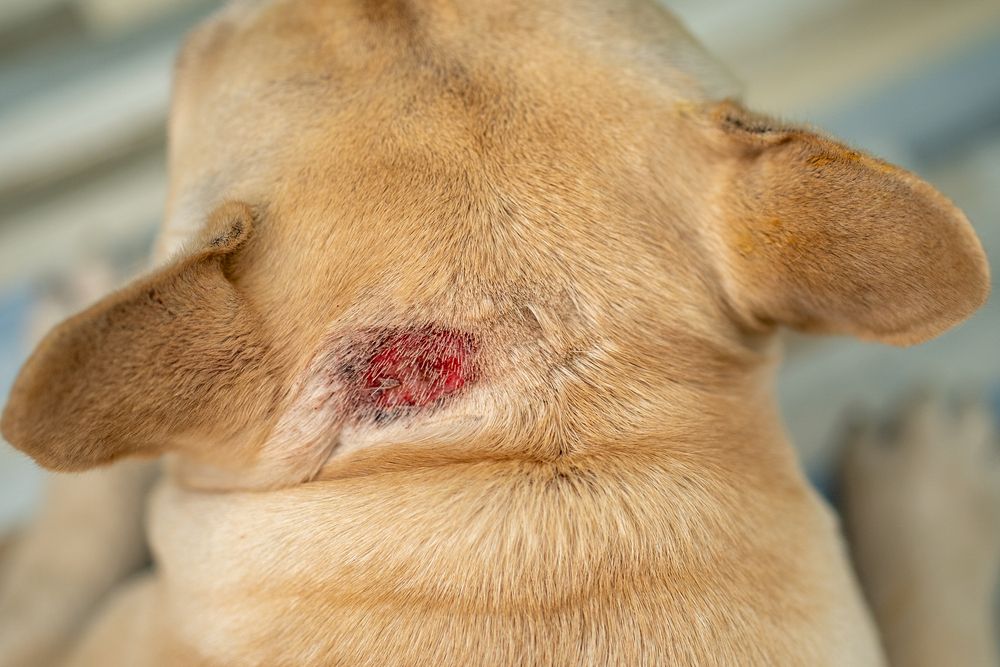
Hot spots, or acute moist dermatitis, are skin lesions that can appear on any part of your dog’s body. They are red, inflamed and oozy. They’re itchy and painful and may have an unpleasant odor and contain pus.
Fleas are parasites that survive by feeding on their host’s blood. Flea bites often feel itchy to dogs, and dogs usually scratch, bite, or lick flea bite sites to alleviate the irritation. Many dogs are also allergic to flea bites, and they will have a more severe reaction even to only a few flea bites. The self trauma from the scratching, licking and chewing of the skin can lead to hot spots developing.
If your dog has started scratching or licking themselves more than usual, we suggest booking a consult with a vet for advice on next steps.
How to Treat Fleas and Hot Spots on Dogs

The best way to keep fleas at bay is to be on top of preventative treatment. Many different kinds of preventative flea products exist, and it’s best to consult your veterinarian to determine the best kind for your dog. Your veterinarian can help you find the right brand and determine if your dog should use topical treatments, oral medication, or medicated collars.
If your dog does end up with a flea infestation, it’s important to act quickly. Fleas can transfer to other pets and people and infest a home in just a matter of days. Consult your veterinarian for the best form of treatment for your dog. Your veterinarian may recommend flea pills or spot-on products to help kill the fleas on your dog. You’ll also have to clean and vacuum the house and apply a household flea spray. The bedding needs to be washed on a hot wash. Getting rid of fleas is a rigorous process, and it can take around 3 months to eradicate a house of fleas completely.
Your veterinarian can also help you treat your dog’s hot spots. Hot spots are usually cleaned with antiseptic, and your dog may also have to wear a cone until the hot spot heals to prevent further self-trauma. Depending on the severity of the hot spot, your veterinarian may prescribe antibiotics and anti-itch medication. You’ll have to continue to monitor the hot spot and contact your veterinarian if it’s not healing or if it’s getting worse.

Other Signs of Fleas on Dogs
You may be able to notice other signs of a flea infestation before a hot spot appears on your dog’s skin. A common sign of fleas is increased scratching, licking, and biting the skin. You may notice small brown particles on your dog’s coat that look like fine coffee grounds. These particles are also known as flea dirt or flea droppings.
Fleas can also cause skin inflammation and hair loss. In some cases, fleas may cause tapeworm infestations. Fleas can carry tapeworm eggs, and your dog can swallow these eggs while licking or biting their skin.
Other Causes for Hot Spots
Fleas and insect bites aren’t the only cause of hot spots. Anything that causes irritation to the skin and self trauma can cause hot spots to form. Common causes include skin allergies, ear disease, and skin injuries and grazes. Occasionally behavioral issues can cause excessive licking which can lead to hot spots developing.
Poor grooming can also contribute to hot spots forming. Matted fur collects moisture and doesn’t allow the skin to breathe, and hot spots can erupt from the skin underneath these areas. Excessive moisture in a dog’s coat after swimming, bathing, or sometimes even drooling can lead to hot spots in the same way.
Dogs with impacted anal glands often resort to scooting and licking to alleviate the irritation. This can often cause hot spots around the tail.


Conclusion
Dogs can get hot spots from fleas due to the irritation and resulting self-trauma to the skin that they cause. However, hot spots can be caused by many other kinds of health issues. So, if you notice hot spots on your dog, it’s best to get them checked out by your veterinarian since the sore patch can progress surprisingly quickly. Your veterinarian can diagnose if the hot spot is caused by fleas or another health issue. Getting the proper diagnosis will help you provide appropriate treatment for your dog’s hot spots and ensure their skin heals as quickly as possible.
Sources
Featured Image Credit: Tienuskin, Shutterstock
Expert dog care, straight to your inbox
News, insights, expert advice, and everything dog.

No spam — unsubscribe anytime.
By signing up, you agree to our Terms & Conditions and Privacy & Cookies Policy.
How useful was this post?
Click a star to rate. You can leave written feedback afterwards. (We read all feedback.)

Jessica is a freelance writer who spends bigger part of her day researching and writing while her furry companion Cavapoo, Nora, snoozes beside her. She loves dogs, pets and animals because there’s so much to learn from them, and they do so much for us. As a dog mom, she understands the strong connection that pet parents have with their pets. So, she loves sharing helpful information that pet owners can use to better understand their beloved pets. When she isn't writing, you may find her walking dogs, tending to her plants, or drinking her nth cup of coffee.