Dogster is reader-supported. When you buy via links on our site, we may earn a commission at no cost to you. Learn more.

Ask the Vet

Dog Ear Infections: Causes, Treatments & Prevention (Vet Answer)

Dr. Rachel Ellison
Written and fact-checked by Dr. Rachel EllisonVet Approved
Dr. Rachel Ellison
Reviewed & Fact-Checked byDr. Rachel EllisonDVM (Veterinarian)
Dr. Rachel Ellison lives on a mountain in Utah with her husband, daughter, and son, as well as their animal menagerie— a Bernese Mountain Dog, a Bengal/Siamese mix, and an orange tabby cat, as well as numerous chickens. During her free time, she enjoys being with those she loves, cooking and baking, reading, hiking, sharing her knowledge about cats, and exploring nature and the world around her.View authorThe information is current and up-to-date in accordance with the latest veterinarian research. Learn more
Updated on June 17, 2026
Share
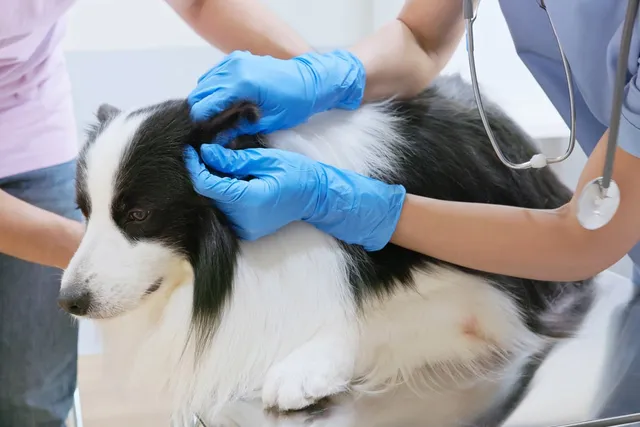
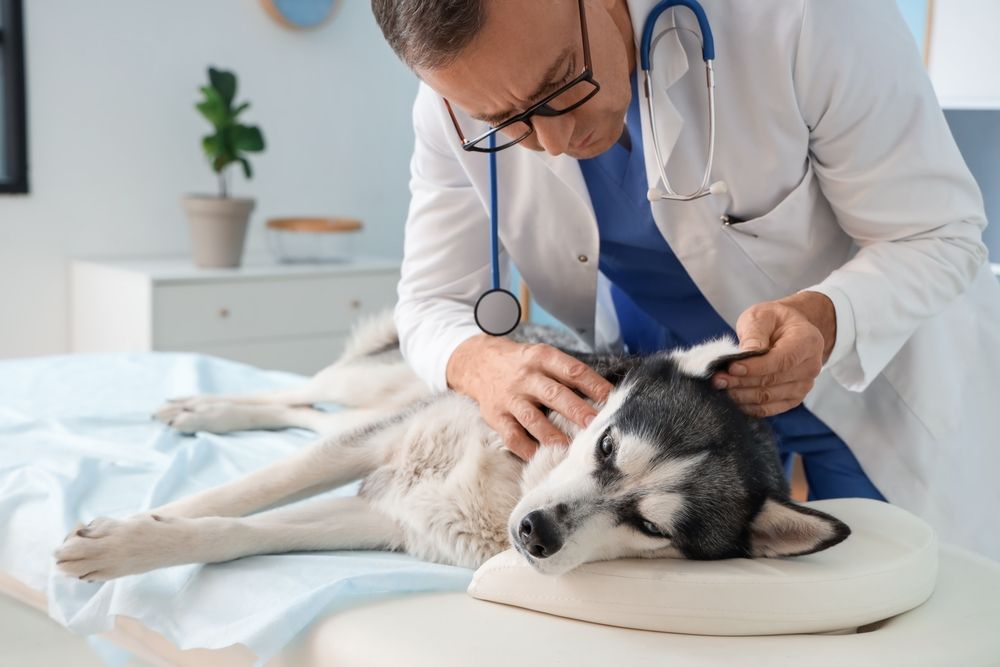
male vet checking the ear of husky dog

Did you know that 15% of dogs seen at a veterinary practice have ear disease? While this can be due to various causes, ear infections are arguably at the top of the list and are extremely common. While some dogs may get a rare ear infection, others may be plagued with recurring ones.

There are a variety of reasons why an ear infection may develop; in this article, we’ll discuss these causes as well as some potential treatments and ways to help prevent these frustrating infections altogether!

divider dog paws 3 oct 2024

A Little About Dog’s Ears

A dog’s ear is an organ that consists of the outer, middle, and inner ear which all work together to allow for hearing and balance. An ear infection can occur in any (or all) of these areas, but this article will focus on the very common outer ear infection, also termed “otitis externa.”

The outer ear itself consists of the pinnae (ear flap) and a long “L” shaped ear canal. At the end of the canal is the eardrum (also termed a tympanic membrane) which separates the areas of the outer and middle ear.

You’re welcome to use our images, but we require you link directly to this site for credit (ex. Image from Dogster)

Surprisingly, some dogs that have otitis externa will not show outward signs! Luckily, the majority do, and some things to be on the lookout for include:

Signs of otitis externa:

  • Common or persistent head shaking or ear scratching
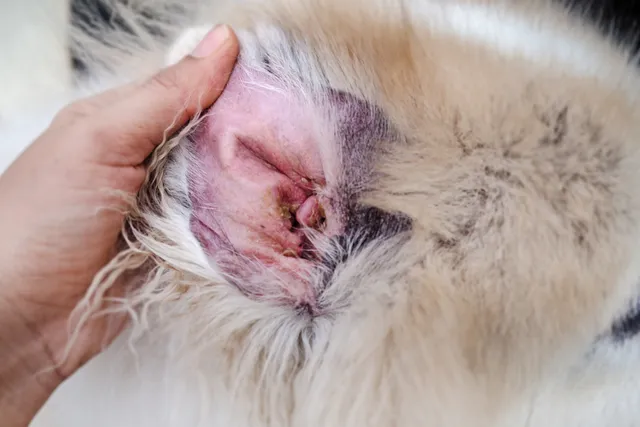
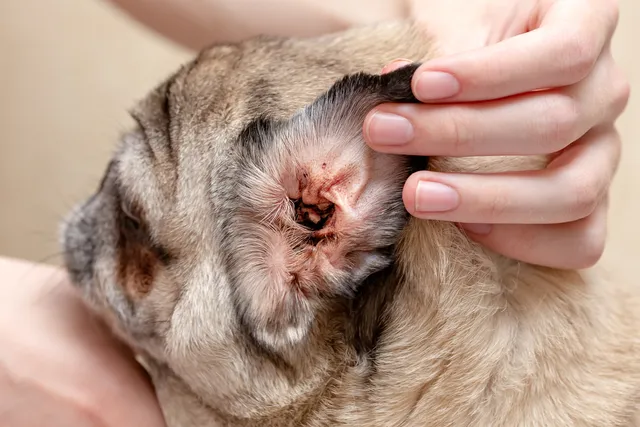
  • Excess dark debris or discharge in or around the inside of the ear flap
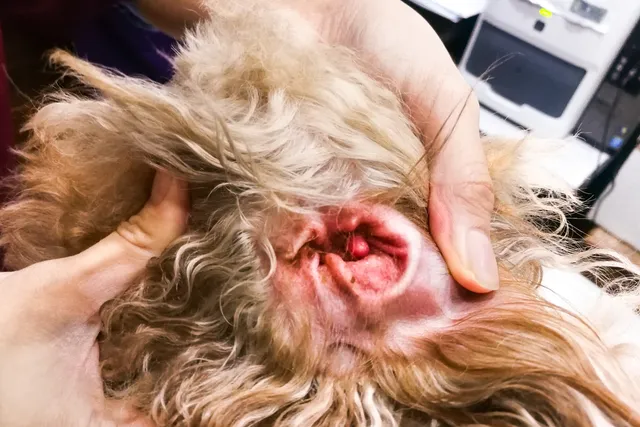
  • Inflammation and redness of the ear/canal
  • Foul or sweet abnormal smell coming from ears
  • Ear sensitivity or pain

Causes

Otitis externa in dogs is often caused by many contributing factors. The “PSPP” system is often used by veterinarians for addressing ear infections and stands for “Primary, Secondary, Perpetuating, and Predisposing.” This system can help veterinarians focus on not only the infection itself but also the reasons why it occurred in the first place and the other factors that may allow for the development of the ear infection.1

Various causes:

  • The primary cause is the root inciting reason for the ear infection. Primary causes can result in an infection without any other contributing cause, even in an otherwise healthy ear. Most frequently in dogs, the primary cause is allergies. This could be due to allergies from the environment, food, or fleas (or any combination of the above). Other possible, but less common primary reasons may be ear mites, hormonal disease, an ear mass or polyp, or foreign objects such as foxtails (grass awns).
  • Secondary causes of the ear infection are what is considered the infection itself. There can be various types that include bacteria, yeast (called Malassezia), or a mixed infection of the two.
  • Perpetuating factors are conditions that make the problem worse and are unresolved stresses that allow for the ear disease to continue. This can include things such as inflammation in the ear canal, biofilm (slime debris) within the ear, mineralization of the ear canal, narrowing of the ear canal, or a middle or inner infection.
  • Predisposing factors include the dog’s genetics or lifestyle which may make a dog more inclined to have an ear infection. Some examples of this may be excess ear hair, ear moisture, ear overcleaning, pendulous ear pinnae, or abnormal ear anatomy.

If you’re concerned about your pet’s well-being, we recommend you contact a veterinarian.

Treatment

When all PSPP systems (see above) that are at play for causing an ear infection are addressed, successful long-term treatment of ear disease can occur.

Some common medications to treat the ear infection itself can include medicated ear cleaners and topical medications such as ear ointments or drops. These products will be prescription based and there are many different brands and types that your veterinarian may recommend. Depending on the type of infection, these topical medications may include various antibiotics, antifungals, steroids, anti-inflammatories, etc.

In more severe or involved cases, systemic drugs may be needed such as oral antibiotics or anti-inflammatories.

The management of allergies will depend not only on the cause but also on how an owner elects to treat them when presented with various options. Some options may include immunotherapy (‘allergy shots’), special diets (hydrolyzed or novel), strict flea prevention, and medical management.

For medical management in the allergic dog (remember, allergies are the most common primary cause of ear infections), certain medications to manage the allergies may be utilized. Drugs such as antihistamines can be attempted, and in severe inflammation or painful cases, steroids may be needed temporarily to provide control. Other long-term medical management may include Apoquel (immunosuppressant tablet), Atopica (immunosuppressant capsule), or Cytopoint (monoclonal antibody injection).

In a small subset of select cases, surgery for tumors, polyps, end-stage ear inflammation with mineralization, or failed medical management, may be needed.

Prevention

Once an infection is resolved, what are some tips for stopping another infection from happening again? Below are some tips a dog owner can try at home.

Prevention tips:

  • Monitor your dog’s ears and check for signs of infection. If cause for concern is present, a visit to your dog’s doctor would be recommended.
  • Keep the ears clean. Routine ear maintenance cleaning, often every 2–4 weeks, is a good starting place for many dogs. Use a veterinary-recommended ear maintenance cleaner; in most cases avoid those with alcohol or hydrogen peroxide within the product.
  • When wiping, don’t use Q-tips inside the ear canal; instead, absorbent gauze, cotton balls/pads, a small soft towel or pet safe wipes will suffice. Asking to be shown how to do this properly at your dog’s veterinary clinic may be helpful.
  • Keep the ears dry. Swimming and bathing can provide opportunities for water to get into a dog’s ear. Make sure to dry off a dog’s ears after getting wet (this may also be a great time to do the dog’s maintenance cleaning). In addition, one could try using specific dog ear protection, dog ear plugs, or cotton balls when the dog gets wet to prevent water from getting into the ears.
  • In areas where foxtails are present, try to keep dogs away from these plants, and if they are exposed, do a thorough comb over and remove them right away.
  • Allergies can be the underlying cause for many dogs with ear infections, so managing their specific type of allergy will result in helping to prevent ear infections. Veterinary expertise will be needed to diagnose and treat this primary cause.
  • Routine check-ups include a veterinarian examining the ears for signs of a problem, often with an otoscope instrument that allows them to attempt seeing down to the eardrum. These regular visits ensure that there are no problematic signs going on and if they are present, can be addressed.
Image By: Nestor Rizhniak, Shutterstock
divider dog paws 3 oct 2024

Conclusion

Ear infections in dogs are fairly common and even some breeds are more prone to ear infections than others; in the event that your dog has one, there can be various causes, each of which will determine specific treatment(s) that your dog’s veterinarian will recommend. However, as always, maintenance and prevention are key to helping your dog’s ears be and stay healthy!

Sources

Featured Image Credit: Pixel-Shot, Shutterstock

Want content like this delivered to you?

Sign Up For Our Newsletter

News, insights, expert advice, and everything dog

* By submitting, you agree to our Terms & Conditions and Privacy & Cookies Policy.

Dr. Rachel Ellison DVM (Veterinarian)
Authored by

Dr. Rachel Ellison DVM (Veterinarian)

Ear Dermatitis In Dogs: Our Vet Explains the Signs, Risks & Treatment

Ear Dermatitis In Dogs: Our Vet Explains the Signs, Risks & Treatment

Ask any general practice veterinarian what type of ailments they see most often in dogs and I will guarantee you that skin and ear problems will make the top t…

Dr. Karyn Kanowski
By Dr. Karyn Kanowski · 3 weeks ago
Why Does My Dog Keep Getting Ear Infections? Our Vet Explains Causes & Care

Why Does My Dog Keep Getting Ear Infections? Our Vet Explains Causes & Care

Ear infections are among the most common reasons dogs visit the vet clinic.1 While a normal dog could expect a couple of ear infections throughout their life,…

Dr. Ashley Darby
By Dr. Ashley Darby · 3 weeks ago
Home Management for Your Dog’s Ear Infection: Our Vet Shares Tips & Advice

Home Management for Your Dog’s Ear Infection: Our Vet Shares Tips & Advice

If your dog suffers from ear infections, you’ll know how distressing they can be for your pet, not to mention frustrating for us to manage. Even more annoying…

Dr. Karyn Kanowski
By Dr. Karyn Kanowski · 4 days ago
My Dog's Ear Infection Won't Go Away, What's Wrong? Vet-Verified Facts & FAQ

My Dog's Ear Infection Won't Go Away, What's Wrong? Vet-Verified Facts & FAQ

According to claim data from Nationwide Pet Insurance, ear infections are the second leading reason for vet visits for dogs. The anatomy of the canine ear cana…

Chris Dinesen Rogers
By Chris Dinesen Rogers · 3 weeks ago
June 29, 2026

Can Dogs Get Vestibular Disease More Than Once? Our Vet Explains Signs, Diagnosis & Treatment

Vestibular disease in dogs, also known as canine idiopathic vestibular syndrome or "old dog vestibular syndrome," is a relatively common condition that affects…

Dr. Emma Chandley BVM
By Dr. Emma Chandley BVM
Can Dogs Get Vestibular Disease More Than Once? Our Vet Explains Signs, Diagnosis & Treatment

Love Dogs? So Do We! Join the Dogster Community

Stay informed with expert pet care insights delivered straight to your inbox! Discover professional guidance on animal behavior, feeding tips, trusted product picks, and much more.

You may opt-out at any time. View our Privacy Policy for more information.

The Dogster app on a phone