Get

In Your Inbox

Dogster is reader-supported. When you buy via links on our site, we may earn an affiliate commission at no cost to you. Learn more.

Do Shetland Sheepdogs Shed? Vet-Verified Breed Facts & Care Tips

Share

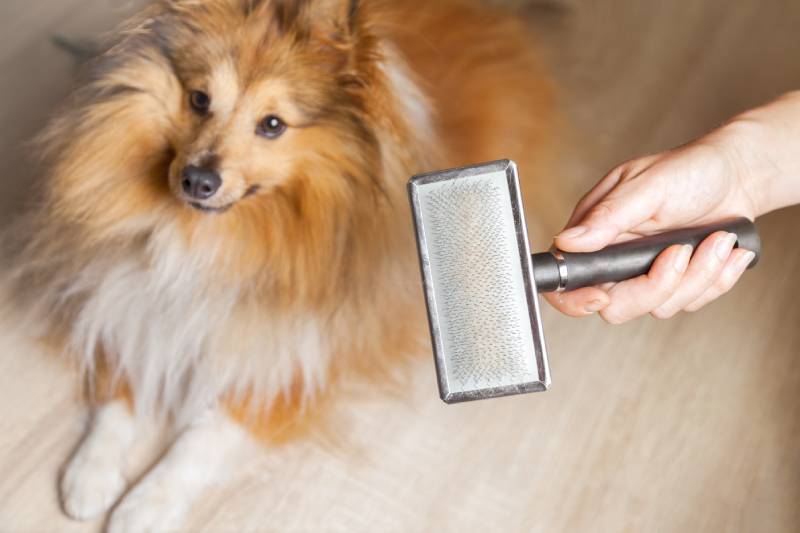
grooming with a dog brush on a shetland sheepdog

Shetland Sheepdogs are a popular dog breed known for their intelligence and affectionate personalities. These dogs are loyal family dogs that often bring cheerful energy into the home. However, they are also known for their heavy shedding, which is an important factor to consider before bringing one home.

If you’re considering bringing home a Shetland Sheepdog, it’s important to consider the dog’s grooming needs and other breed-specific care needs. Here’s what you need to know about a Shetland Sheepdog’s coat and what you can expect if you were to live with one.

Dogster divider_v3_NEW_MAY_24_

Shetland Sheepdog’s Coat

Shetland Sheepdogs have a double coat. The top layer has long, straight hair, and the bottom layer is denser and furrier. The double coat helps dogs regulate their body temperature in both hot and cold weather. The top coat also helps repel moisture and prevents dirt from getting stuck in between the hairs.

Shetland Sheepdogs shed year-round, and they’ll shed more heavily during their two shedding seasons in the spring and fall. Dogs will shed their coats in the spring so that they’re lighter for warmer weather. Then, they’ll shed again in the fall and prepare their winter coats for colder weather.

Fluffy smiling sable white shetland sheepdog standing
Image by: Lisjatina, Shutterstock

Shetland Sheepdog Grooming Needs

While they have a thick coat, Shetland Sheepdogs have relatively low grooming needs. They’ll benefit from getting brushed once or twice a week to prevent tangling and to pick up loose and dead hairs from their coats.

Brushing is usually more intensive during the shedding season, and you may have to brush them daily to prevent your furniture, carpets, and clothes from being covered in hair. You can also purchase grooming tools specifically designed for shedding. Some deshedding tools, rakes, and blades are specifically designed to reach down to a Shetland Sheepdog’s undercoat and pick up loose hair.

It’s also important to check a Shetland Sheepdog’s skin and coat health periodically. Dry, irritated, and itchy skin can cause more shedding. Sometimes, a fish oil supplement can help nourish the skin and coat. You can also try using dog-specific shampoo specifically made with a moisturizing and calming formula.

If you notice concerns with a Shetland Sheepdog’s skin and coat, it’s best to consult a veterinarian to determine the cause. Irritated and itchy skin can be caused by a variety of issues, like parasites, bacterial or yeast infections, or different types of allergies. So, it’s best to get a Shetland Sheepdog to a veterinarian for a physical exam, proper diagnosis, and treatment for their skin and coat issues.

If you need to speak with a vet but can't get to one, head over to PangoVet. It's our online service where you can talk to a vet online and get the advice you need for your dog — all at an affordable price!


PangoVet_Mention-in-Content Savings V1

Dogster divider_v2_NEW_MAY_24_

Are Shetland Sheepdogs High-Maintenance Dogs?

Shetland Sheepdogs are often affectionate dogs that quickly become beloved members of their families. They’re intelligent and relatively easy to train, making them a popular breed for dog sports like obedience competitions, agility, and herding trials.

The two main challenges that most Shetland Sheepdog owners will face are the breed’s grooming needs and exercise needs. Along with shedding a lot, Shetland Sheepdogs are energetic dogs that love to run around. These dogs won’t be satisfied with a brisk walk around the neighborhood. They’ll love having a large yard to run around in and will also enjoy going on outdoor excursions and hikes.

With these things in mind, Shetland Sheepdogs are best for people with active lifestyles and who have enough time to exercise their dogs daily. Shetland Sheepdogs also love human companionship and don’t do well being left home alone for long hours. So, while they’re easy to train and very affectionate, they require a lot of time and attention.


sheltie or shetland sheepdog running outdoors with a ball toy in its mouth
Image by: Barcs Tamás, Unsplash

Dogster divider_v1_NEW_MAY_24_

Conclusion

Shetland Sheepdogs are considered moderate to heavy shedders. However, once you get a good grooming routine established, the shedding can be more manageable. Just keep in mind that even if you use grooming tools and shampoos specifically made for shedding, you can expect to spend some extra time cleaning up dog hair in your home. It’s simply a natural part of living with Shetland Sheepdogs, but most people don’t even notice it because they’re some of the best companion dogs that anyone could ever ask for.


Featured Image Credit: Filmbildfabrik, Shutterstock

Want content like this delivered to you?

Sign Up For Our Newsletter

News, insights, expert advice, and everything dog

* By submitting, you agree to our Terms & Conditions and Privacy & Cookies Policy.


How useful was this post?

Click on a star to rate (you can leave written feedback after clicking submit)

Help us improve Dogster for pet parents!

Your feedback really matters.

What did you like about this post? Also how can we improve it?

Join the conversation

Leave a Reply

You’re very welcome to leave a comment or question. Please know that all comments must meet our community guidelines, and your email address will NOT be published. Let’s have a positive and constructive conversation.


Talk With A Vet Online

Peace of mind,
anywhere, anytime

Affordable vet advice

Ask Dr. Paola- Help! My Dog’s Sleeping Habits Have Changed! (May 18, 2026)

Welcome to our “Ask Dr. Paola” series, where every Monday we bring expert advice straight from Dr. Paola Cuevas (MVZ) to help our...

The Crate Setup Most Dog Owners Get Wrong (And How To Fix It!)

Most people assume that if their dog hates the crate, the crate is the problem. So they try a bigger one, a different...

1,500 Beagles Rescued from Wisconsin Lab Farm – Here’s Where They’re Going

You may remember that a few weeks ago, we reported on a tense situation at Ridglan Farms, Wisconsin, a facility infamous for housing...

Dogster’s Weekly Photo Contest Winners: Window Watchers (May 11, 2026)

Every week our team gets the privilege of sorting through our readers photos to choose what dogs will win this weeks contest! See...

More related

Can Dogs Eat Rotisserie Chicken? Vet-Approved Benefits, Risks, & FAQ

Who can resist the mouthwatering aroma of a perfectly cooked rotisserie chicken? Whether it’s a family gathering, a summer picnic, or a quick...

Why Do Dogs Bury Their Food? Vet-Verified Reasons & What to Do

Have you ever seen your dog try to bury their food? Maybe they take a treat and run to the backyard or drag...

How to Treat Noise Phobia in Dogs: 7 Vet-Approved Tips

Dogs have a highly keen sense of hearing which is more sensitive than ours. While most humans hear at frequencies of up to...

How Smart Is a Cavalier King Charles Spaniel? Canine Intelligence Explained

The Cavalier King Charles Spaniel is known for being affectionate, cheerful, loving, courageous, gentle, and loyal. However, as pretty as the dog is,...

Keep reading

Can You Judge Dog Food Solely by Its First Ingredient? Facts & FAQ

Judging dog food can be overwhelming. There is a lot that you need to keep in mind when checking out dog food. You may be tempted to shorten the process by only looking at the first ingredient. While you can...

Portrait of woman with small dog choosing preserves in pet shop

Can Dogs Eat Eel? Vet-Approved Feeding Facts

Many dogs love fish, whether a fishy food formula or home-prepared salmon or herring. However, when it comes to less conventional types of fish, like eel, it can be hard to know what’s safe and what isn’t. In brief, common...

Can Dogs Eat Eel

Can Dogs Eat Froot Loops? Vet-Reviewed Nutrition Facts

Many of us grew up eating cereal in front of the television while watching cartoons. Of the many cereal choices on the market, one of the most popular is Fruit Loops. These colorful loops are certainly tasty but not very...

Can Dogs Eat Froot Loops

Is Glycerin in Dog Food & Treats Bad for Dogs? Vet-Reviewed Safety Guide

We all know that one key to a healthy dog’s life is high-quality dog food. You look for ingredients such as whole meats and grains and ensure the diet is complete and balanced. You may not be looking for glycerin,...

dry dog food in bowl

10 Best Dog Foods for Colitis in 2026 – Reviews & Top Picks

So, your dog has been diagnosed with colitis. Colitis is a condition of a dog’s colon, the large intestine, or bowels. It is a common, inflammatory disease that is the main cause of diarrhea. Watching the stress and discomfort your...

white and brown dog eating in a food bowl

What Is Choline Chloride in Dog Food? Vet-Approved Facts & Benefits

If you’re one of the people who read the entire ingredients list on your dog’s food before purchasing it, you have likely spotted a few words you weren’t familiar with. One of the things you have likely seen in your...

Dog food in a bowl

9 Best High Fiber Dog Foods for Anal Gland Problems in 2026 – Reviews & Top Picks

Dealing with anal gland problems in your dog can be smelly, gross, and frustrating. Anal gland issues are uncomfortable for your dog, and some even develop abscesses and other serious infections related to anal gland problems. If you see your...

Ginger dog eating

What to Feed a Dog With Arthritis: Comprehensive Guide

An estimated 20% of dogs over 1 year of age have osteoarthritis, or degenerative joint disease (DJD), which is a progressive and complicated disorder. It can profoundly impact an animal’s quality of life and, sadly, has no cure. Instead, pet...

Disabled Senior Dachshund Dog Eating Pet Food At Home

Love Dogs? So Do We! Join the Dogster Community

Stay informed with expert pet care insights delivered straight to your inbox! Discover professional guidance on animal behavior, feeding tips, trusted product picks, and much more.


Sign up for the Dogster Email Newsletter