Teacup Dachshund: Do They Exist? Vet-Verified Facts & FAQ


In this article
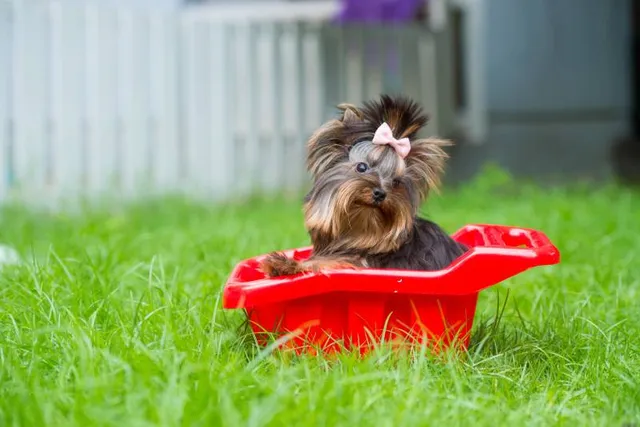
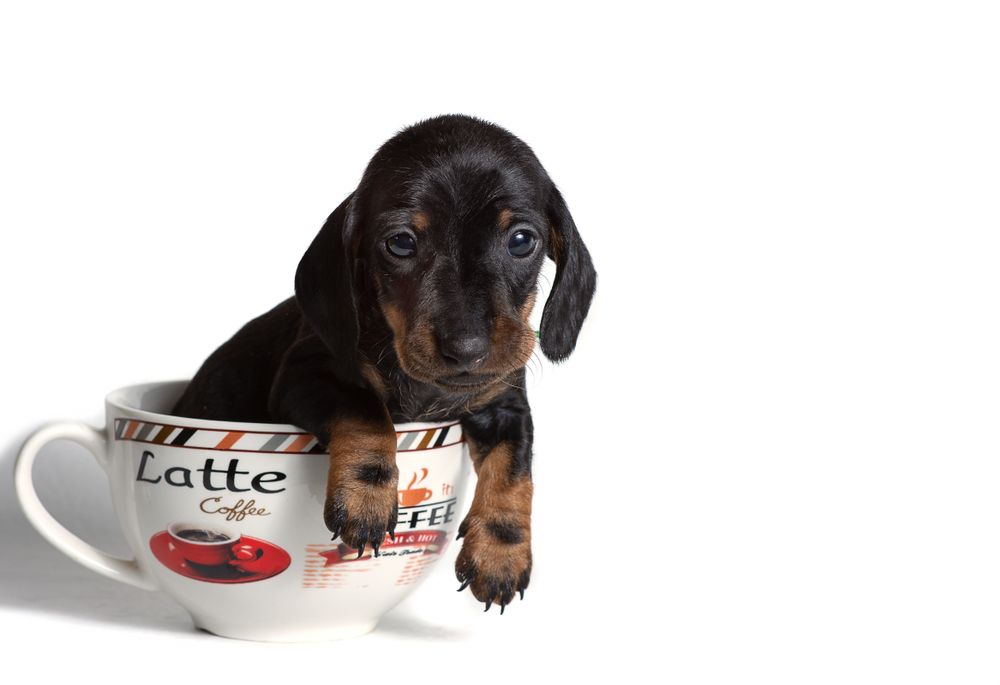
“Teacup” is a buzzword you probably won’t hear in the circles of reputable breeders. That’s because it’s not an official term. Teacup is used to describe dogs that weigh under 5 pounds (2.3 kilograms). It’s not a recognized breed size, even though you may see teacup Dachshund puppies advertised. Some people selectively breed them to fit this size category. However, the real concerns are the health consequences for these tiny pups and whether they should be bred this way.
Sadly, these dogs shouldn’t exist because of how the animals are bred and the potential health consequences. Teacup Dachshunds are not part of any kennel club.
People used to breed dogs for functional roles that often made large breeds desirable for roles like pulling carts or protecting property. Selectively breeding for conformation is a relatively recent phenomenon, resulting in the roughly 200–360 canine breeds (depending on the sources checked) that we know today. These numbers don’t include the so-called designer dogs and those outside the breed standards. The teacup Dachshund is one example. Let’s get into the details

How Does It Occur?
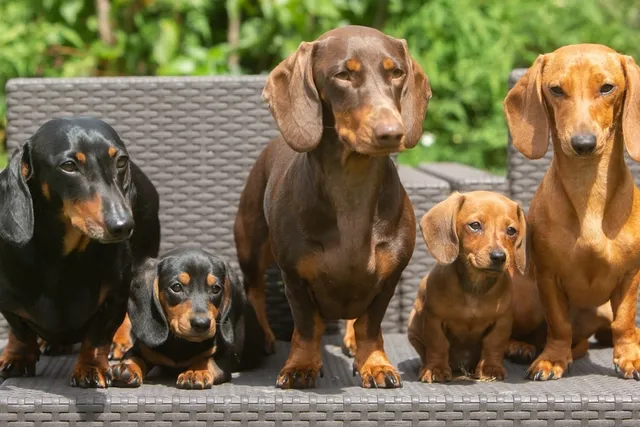
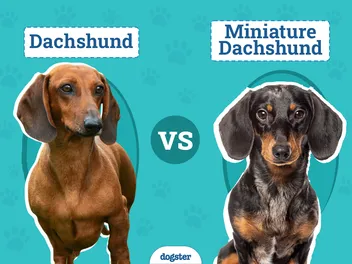
The American Kennel Club and The Kennel Club in the U.K. recognize the Dachshund as a breed in two sizes: miniature and standard. The Federation Cynologique Internationale lists the Rabbit or Kaninchen Dachshund as the smallest size. The standard for the dog’s chest circumference is 9.8–10.6 inches. By comparison, the miniature is 11.8–14.5 inches, a significant difference.
Individuals must breed two small dogs, typically runts, to get small pups. Suffice it to say they are the smallest puppies in a litter, putting them at a distinct advantage when it comes to maternal care and nursing. They may have a hard time competing with their more robust littermates, exacerbating these issues. However, that’s not to say a runt can’t develop normally with proper care.
Nevertheless, these dogs may not be the best breeding stock because of hereditary and congenital conditions they may carry and pass to their offspring. A teacup Dachshund may look adorable because of their size. However, that doesn’t necessarily mean they should be bred to be like this. Puppies that don’t get the proper nutritional support may not develop and grow as they should, but many other variables exist.

Why Do Breeders Encourage It?
Humans are naturally drawn to baby-like features. For example, almost everyone loves puppies, and we share kitten videos millions of times on the internet. The teacup Dachshund fits this bill. Sadly, unreputable breeders will sell these dogs at a premium despite the potential health issues they may face. Uninformed buyers may not realize the burden they incur if they bring one home as a pet. The cycle continues because someone is willing to pay for a pint-sized dog.
Fortunately, teacup Dachshunds aren’t nearly as common as many other toy-sized breeds. Popular dogs that have been bred to have a teacup size include the Chihuahua, Pomeranian, Yorkshire Terrier, Maltese, and Shih Tzu, and Poodle. The Poodle Club of America only recognizes three sizes of the latter: Toy, Miniature, and Standard. The organization is also a vocal opponent of designer dogs, which the teacup Dachshund would be for their disregard for the official standard.
The Problem With Teacup Dachshunds
The problems with teacup Dachshunds start soon after birth. The runt has a hard time competing to nurse, setting up the perfect storm for low blood sugar, or hypoglycemia. Puppies must be fed often to support their growth and receive the necessary energy. Another health issue that may cause pups to be small and fail to grow is a liver shunt. This is typically a congenital condition (meaning a dog is born with it) in which blood bypasses the organ because of improper blood vessel connections.
One must also consider the ethical issues of disregarding breed standards. Parent clubs work diligently to maintain their dogs, with their professional input helping to decide veterinary matters. Breeding a teacup Dachshund flies in the face of dedicated enthusiasts striving to protect the integrity and health of the breed.
Intervertebral Disc Disease
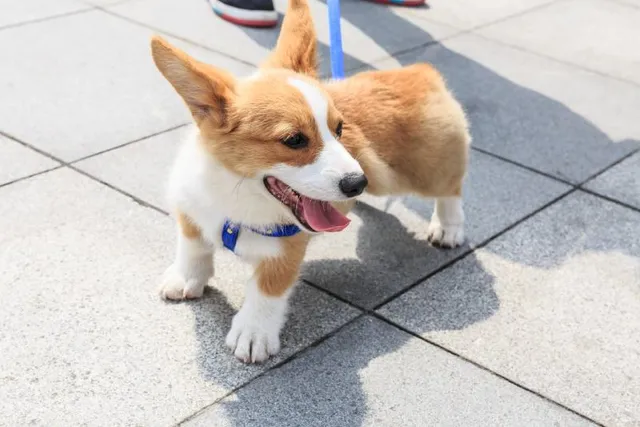
Another concern rests with the physical nature of the breed. Scientists have determined that a genetic mutation causes the short legs in Dachshunds, Corgis, and other breeds. They theorize that it interferes with fetal development, resulting in this physical manifestation. Science refers to this trait as chondrodysplasia. It is dominant, so only one parent needs to contribute the gene copy or allele for it to appear.
Chondrodystrophy (CDDY) describes a different mutation associated with intervertebral disc disease (IVDD). It is also dominant, requiring only one allele to present visually. The condition causes an abnormal premature degeneration of the intervertebral disc, making it susceptible to herniation. Still, other multiple factors can be involved in disc herniation.
Teacups Dachshunds have a limited gene pool to ensure their desired size because there are few individuals that meet the requirements. However, that likely increases the risk of passing IVDD onto the dogs’ offspring. If one parent contributes the CDDY variant, half of the puppies will have a greater chance of developing the disease. Remember that breeding two runts—and possible carriers of IVDD—is necessary for teacup Dachshunds. A small gene pool means less diversity in the alleles.
Frequently Asked Questions
How Can I Ensure I Get a Healthy Teacup Dachshund?
We strongly urge you to get a Miniature Dachshund if you want a small dog instead of a teacup Dachshund. We also suggest only buying from sellers who conduct the recommended health screenings.
The Dachshund Club of America advises breeders to have their dogs evaluated for patella luxation before breeding them. They should also have an eye examination done by a board-certified ophthalmologist because of the heightened risk of eye problems, along with a cardiac evaluation for heart issues. Dogs that meet these basic health screening requirements will receive a Canine Health Information Center certification.
Are a Toy Dachshund and a Teacup Dachshund the Same Animal?
You may see the dog described using either term. It’s a marketing choice by the breeder. Remember that there aren’t official sizes, as only the standard and the miniature Dachshunds are recognized.
What Else Should I Know About Teacup Dachshunds?
Veterinary care can be challenging with these pups because of their small size. You may also find it difficult to get pet insurance.
Conclusion
The teacup Dachshund is an example of breeders seeking to capitalize on people’s desire for a smaller version of a favorite breed. No official registries in the United States recognize these animals. While genetic testing is available, it’s still a dicey game of genetic roulette when getting any pet from backyard breeders without the oversight of a national parent club.
We recommend getting a pup from a reputable breeder who conducts the suggested pre-breeding health screenings and offers a guarantee. Teacup Dachshunds are outside of the official standards developed by experienced individuals. We strongly urge you to avoid getting a teacup Dachshund as a pet.
Sources
https://www.bluecross.org.uk/advice/dog/wellbeing-and-care/what-is-a-teacup-dog
https://www.cell.com/action/showPdf?pii=S2211-1247%2817%2930456-4
https://poodleclubofamerica.org/just-say-no-to-designer-dogs/
https://vcahospitals.com/know-your-pet/portosystemic-shunt-in-dogs
https://www.aspcapetinsurance.com/resources/dog-hereditary-conditions/
Featured Image Credit: Akifyeva S, Shutterstock
Expert dog care, straight to your inbox
News, insights, expert advice, and everything dog.

No spam — unsubscribe anytime.
By signing up, you agree to our Terms & Conditions and Privacy & Cookies Policy.
How useful was this post?
Click a star to rate. You can leave written feedback afterwards. (We read all feedback.)
Since 2009, Chris has written on a variety of topics. Her motto with all of her writing is “science-based writing nurtured by education and critical thinking.” She specializes in scientific topics, with a special love for health and environmental topics, and of course, pets of all shapes and sizes.
Chris lives happily with her husband and three cats in the land of 10,000 lakes, writing, wining, and boating as much as she can. She and her husband, Norm, were awarded the State of Kentucky Colonel Honor for their restoration work at Mammoth Cave National Park.