Bernese Mountain Dog vs Newfoundland - Which Should I Choose?

In this article
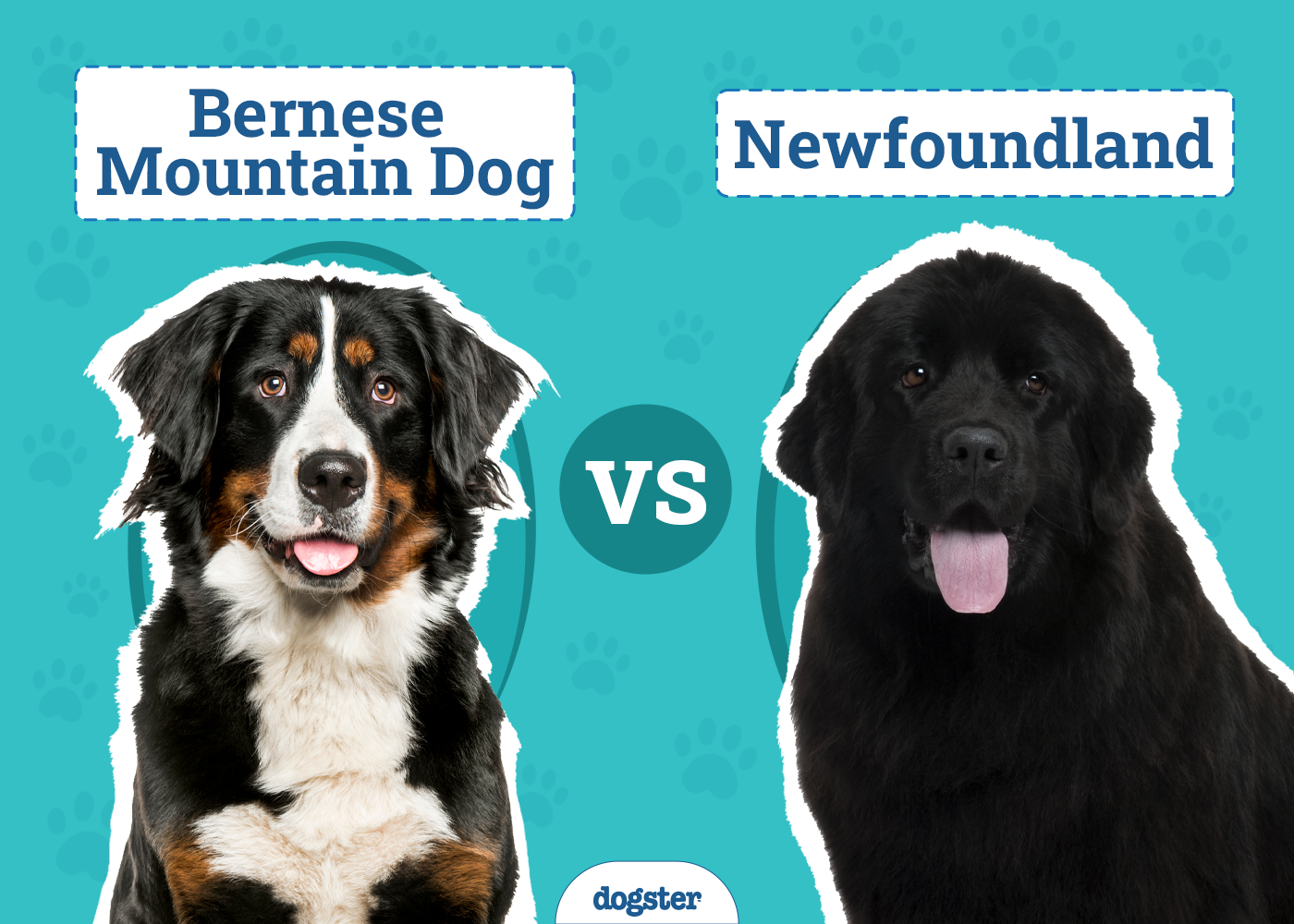
If you aspire to be the pet parent of a large dog, you might be torn between the Bernese Mountain Dog and the Newfoundland. Both breeds are big and fluffy and have admirable appearances and temperaments.
But which one is better?
The dogs have numerous similarities, but they have their differences as well. Dive in for a detailed comparison of these two breeds. We will analyze the breed profiles, care needs, and more to help you decide which animal best suits your lifestyle.
Let's get started!

Visual Differences

At a Glance

Bernese Mountain Dog Overview

Bernese Mountain Dogs are a crossbreed between the Mollosser and traditional farm dogs and are native to Switzerland. They were initially bred as work dogs and carried out the duties of driving cattle, guarding farms, and pulling heavy loads. These robust and hard-working dogs are today kept as devoted family pets because of their gentle and goofy character.
Appearance
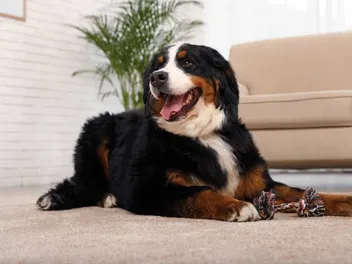
Bernese Mountain Dogs are classified under large dog breeds. Adult males can weigh up to 120 pounds, while females can weigh as much as 110 pounds. Males are slightly taller at 25 to 28 inches tall, while females are 23 and 26 inches tall.
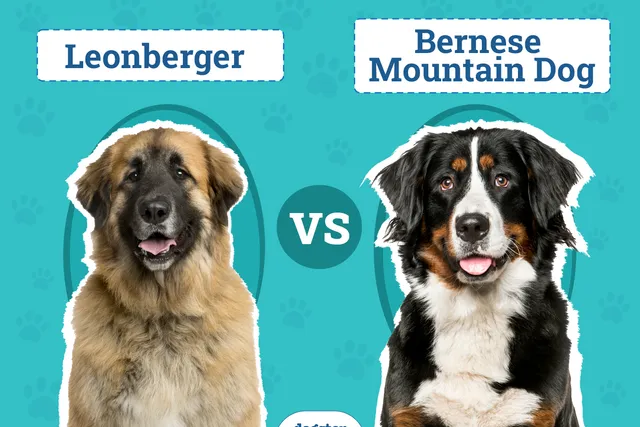
Berners have a sturdy build and a distinctive long, silky, and slightly wavy tri-colored coat. The coat's base color is always black with white and rust markings above the eyes, corners of the mouth, on all four legs, and on the sides of the chest. Compared to Newfies, Berners are heavier shedders, especially during shedding season.
Other features include a wide, flat-topped head, floppy ears, and a bushy low-lying tail. Even though Newfies drool more, Berners also tend to drool, especially after meals or when watching people eat.
Personality / Character
Bernese Mountain Dogs are affectionate towards their owners and members of the family. They are always eager to please, which also makes them crave attention and affection. Your pup will want to cuddle with you for hours, engage in interactive playtime, or explore the outdoors during long walks or hikes.
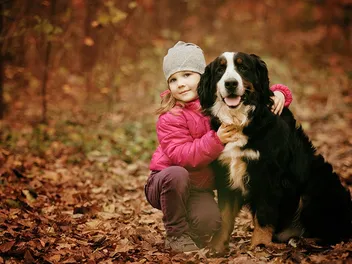
Thanks to their calm nature, Berners are good with children and get along with other pets. While these large dogs are adorable bundles of fluff, they tend to forget their size and strength. If you have a full-grown adult Berner, monitoring play sessions between the dog and kids under four years old is necessary.
Berners have a sturdy structure and are always alert. They make excellent watchdogs and are protective of members of their families. Although some act reserved around strangers, socialization can make your pup more comfortable around new faces.

Training 🎾
Like most dogs, providing obedience and household manners training for your Berners when they are still puppies is best. During training, remember that Bernese Mountain Dogs mature slowly, both physically and mentally. It is crucial not to push your puppy too hard.
Moreover, always use positive reinforcement instead of harsh correction. Berners are sensitive dogs and will strive to please you if you reward them with praise, treats, or a good round of petting.
Exercise 🐕
Berners need plenty of rigorous exercises, especially during their puppy years. Adolescents and adults need medium-intensity exercises for 30 to 60 minutes daily to help regulate their weight and keep their joints in good shape.
Compared to Newfies, Berners have more energy and need more exercise. Taking long walks will make your pup adequately exhausted to discourage destructive behavior.
Health & Care
Berners are prone to hereditary conditions that impact their health and longevity. The list of health concerns they are susceptible to includes but is not limited to the following.
- Von Willebrand's disease
- Elbow dysplasia
- Hip dysplasia
- Progressive retinal atrophy
- Gastric torsion
- Histiocytosis
On average, Bernese Mountain Dogs have a longevity range of 6 to 8 years. Regular vet visits, proper nutrition, and daily exercises can help ensure your pup lives a happy, healthy, and long life. Still, it is not unusual for complex health concerns to pop up and shorten the dog's lifespan.

Suitable For:
Bernese Mountain Dogs make excellent companions for individuals or families that can provide lots of attention and affection. They tend to be needy and can develop separation anxiety if deprived of attention. You'll find Berners perfect for your lifestyle if you can provide lots of play sessions and outdoor activities.
Pros
- Very affectionate and loyal
- Patient and gentle
- Intelligent and easy to train
- Great with kids
Cons
- Heavy shedders with lots of furs
- Clumsy and can knock down young ones
- Sensitive and require gentle correction

Newfoundland Overview

The Newfoundland, native to Newfoundland, Canada, was also originally bred as a working dog. Newfies are believed to be crossbreeds between Water Dogs, Sheepdogs, and Mastiffs.
The Canadian fishermen on the Atlantic coast found the pups useful for their exceptional swimming abilities and strength. They used the dogs for hauling nets and pushing cartloads of fish. In modern households, Newfies are beloved pets adored for being one of the most kid-tolerant dog breeds.
Appearance
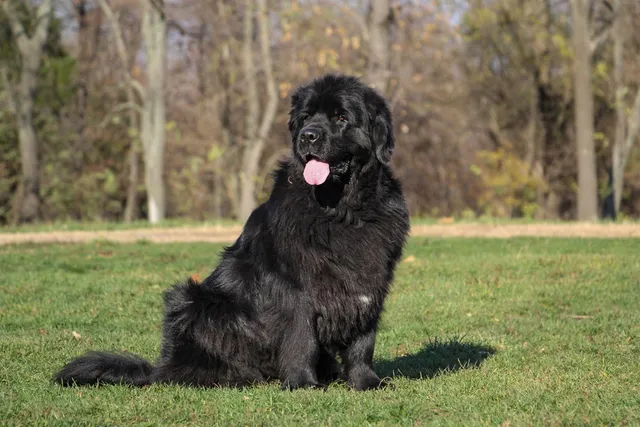
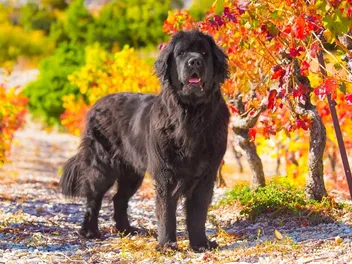
The Newfoundland is classified as a giant dog breed, and full-grown adults are massive and powerful. Males are considerably larger than females and weigh between 130 and 150 pounds, with a height of up to 28 inches. Females grow up to 26 inches tall and weigh between 100 and 120 pounds.
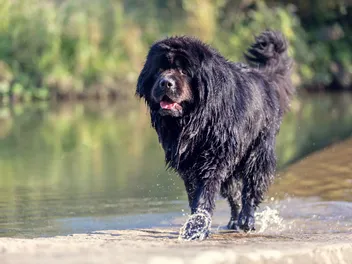
Looks-wise, Newfoundland pups have solid black, white & black, brown, or gray coats with white markings on the chest and tail tip. The double-layer coats have soft, dense undercoats and coarse, water-resistant outer coats. This, coupled with the webbed feet, make Newfies excellent swimmers.
Other features include a broad, massive head and relatively small, triangular-shaped ears with rounded tips. The eyes of Newfies are also relatively small and deep-set. They are dark brown and seem to be spaced widely apart because of the dog's broad face. Newfoundland pups have brown or black muzzles and straight tails that are broad at the base and covered in long, dense fur.
Personality / Character
Newfoundland dogs are patient and have docile personalities. They are family-oriented and are happier around people. Unlike Berners, which can be reserved with strangers, Newfies are more open to meeting new faces and becoming friends. Proper training and socialization can help your dog grow confident and adopt acceptable manners.
Newfies are always alert and will be quick to protect family members. Still, these dogs don't bark too much and have a low tendency to be aggressive. Often, the only thing that can push a well-mannered dog to growl or bite is pain. Even though Newfies are kid-tolerant, they dislike rough play, especially after developing joint problems.
Training 🎾
Newfies are as curious as they are intelligent. Unfortunately, they are oblivious to their size and can cause chaos in your household without proper training. They are easy to train and quickly learn more than just basic commands. You can teach them how to sit politely or carefully let down an item they are holding with their teeth.
Early socialization is also essential for these gentle giants. It helps ensure your pup plays nice with kids, other people, and pets. Like Berners, Newfies are people pleasers, and training is more successful when you use positive reinforcement strategies.
They excel at dock jumping, herding, obedience training, tracking, and more. They almost always win in drafting and carting competitions. The trick is to start training once your puppies are at least four months old. Be prepared for the dog's stubborn streak, which can be a potential drawback. Even if your pup gets stubborn, be patient and never use punitive training techniques.

Exercise 🐕
Daily exercises for at least 30 minutes are crucial in ensuring your Newfoundland pup remains calm, happy, and healthy. The dog has medium exercise needs, although engaging in strenuous aerobic exercises every other day is good. Newfies can quickly turn into couch potatoes and face a greater risk of becoming obese.
Unlike Berners, who have more energy and prefer running, slow walks over shorter distances are enough to make your Newfie adequately exhausted. Remember that unhealthy weight can shorten your pup's already limited lifespan. To be safe, always exercise until your dog starts panting.
Health & Care
Newfies, like most oversized dogs, are vulnerable to several congenital health concerns. While they generally live longer than Berners, they live for only about 9 to 10 years. These dogs are susceptible to the following health issues.
- Elbow and hip dysplasia
- Dilated cardiomyopathy (DCM)
- Gastric dilatation-volvulus (GDV)
- Cystinuria (genetic kidney defect)
Most health problems affecting Newfoundland pups can be treated or managed using drugs or dietary adjustments. You can also avoid significant vet bills by getting your puppies from reputable breeders dedicated to promoting the breed's health. Ensure you also invest in pet insurance coverage to help you manage vet bills.

Suitable For:
Newfies have a sweet disposition and make loyal companions for families or individuals. They are natural voyagers perfect for anyone that loves swimming or fishing. Because of their size and weight, they are suitable for households with enough indoor and outdoor space to accommodate a giant dog breed. Also, ensure you have the budget to accommodate their enormous appetites and nutritional needs.
Pros
- Gentle giants with charming personalities
- Intelligent, patient, and family-oriented
- Highly tolerant of kids and other pets
- Don't bark a lot
Cons
- Shed and drool a lot
- Can be stubborn
- Require lots of space and food
Which Breed Is Right for You?

In the end, there is no right or wrong choice. The Berner and the Newfie are well-natured dog breeds that will likely offer you more joy than you bargained for. Still, it is crucial to consider your lifestyle and budget.
The Newfoundland pup is best for you if you have a lower health budget. Berners have a shorter life expectancy and are more prone to congenital concerns because of their rarity and limited gene pool. However, the Bernese Mountain Dog is likely the perfect choice for individuals that want to go for long walks or hikes with their large dogs.
Related Reads:
Featured Image Credit: Top - Shayna Douglas, Unsplash | Bottom - Pandas, Shutterstock
Expert dog care, straight to your inbox
News, insights, expert advice, and everything dog.

No spam — unsubscribe anytime.
By signing up, you agree to our Terms & Conditions and Privacy & Cookies Policy.
How useful was this post?
Click a star to rate. You can leave written feedback afterwards. (We read all feedback.)
Nicole has loved animals of all sizes her whole life so it's no wonder she has dedicated her career to helping them through what she loves best: learning, writing, and sharing knowledge with others. She’s the proud mom of two dogs, a cat, and a human. With a degree in Education and 15+ years of writing experience, Nicole wants to help pet parents and pets around the planet to live happy, safe, and healthy lives.