Long-Haired Dachshund: Info, Pictures, Origin & History

In this article
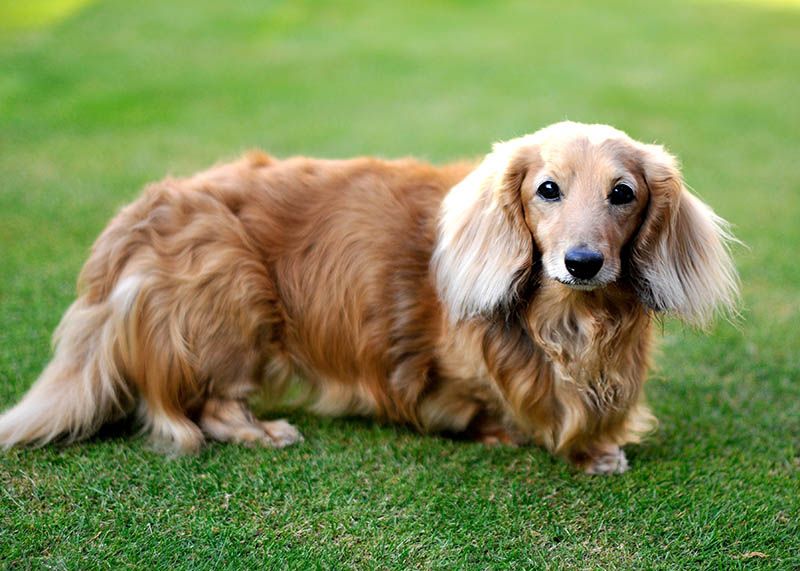
The long-haired Dachshund is one of three recognized types of Dachshunds. Apart from the obvious difference in coat type, they are very similar in most other respects. The other two types are the wire-haired Dachshund and the more common short (or smooth-haired) Dachshund.
Breed Overview
Height:
Weight:
Lifespan:
Colors:
Suitable for:
Temperament:
There is a wonderful variety of coat colors across all three types of Dachshunds, with certain colors being more prevalent in particular coat types. The long-haired Dachshund is most likely to be solid red, black & tan, red & tan, or merle and may exhibit brindle, sable, or piebald coloring but are equally likely to be one solid color.
Dachshund Characteristics

The Earliest Records of the Long-Haired Dachshund in History
The Dachshund—or doxie, as it is affectionately nicknamed—is a very old breed, as documented records of them date as far back as the 1500s. There is some debate, but the common consensus is that they originated in Germany and were bred to be active hunting dogs—used especially because their short legs allowed them to “go to ground” after small burrowing animals like hares and badgers. It is believed that long-haired Dachshunds were favored for winter hunting when their long coats would keep them warm.
Although the long-haired doxie has been around for just as long as the other two, there are no clear records of how it was created. It is believed the short-haired variety was the original type and that they would occasionally produce long-haired puppies—indicating that the recessive gene was there all along, which would then be selectively bred. Another theory is that short-haired doxies were interbred with spaniels of various kinds until the long-haired Dachshund that we know today was created.

How Long-Haired Dachshunds Gained Popularity
The Dachshund made its international debut in the 1800s when Queen Victoria married Prince Albert in 1840, and he brought his pet wiener dogs back to Britain with him. The appealing little dogs soon became a popular choice as pets in both Britain and the United States. Sadly, with the advent of World War I, their popularity took a drastic knock because of their association with Germany.
Fortunately for doxie lovers, this political prejudice was overcome, and the doxie has since returned to its popular pet status, where it now ranks in the top 20 most popular dogs1. Historically, the short-haired Dachshund has been favored over the other two types, but the long-haired doxie is becoming an ever more popular choice these days.
Formal Recognition of the Long-Haired Dachshund
The Dachshund, including all three of its types, was officially recognized not long after it arrived in the United States. The breed received its American Kennel Club (AKC) recognition in 1885. The AKC recognizes two sizes: standard and miniature (16–32 pounds and 11 pounds and below, respectively), and although they are not classified separately—for competition purposes—they do fall into a different class division.
Temperament-wise, the AKC notes that the Dachshund is “…clever, lively, and courageous to the point of rashness…” and additionally that “any display of shyness is a serious fault”—an apt description for this spunky little dog2! We’ll delve a little deeper into their character further on.
Top 8 Unique Facts About Long-Haired Dachshunds
1. They Have an Interesting Name Translation
The name, Dachshund, translates from German into “badger-dog”. They were originally bred to be working dogs, and their job was to chase down badgers (and other small burrowing animals) and let their handlers know where the animals had gone to the ground.
2. They Come in a Third Size
Although not recognized by the AKC, a third size of Dachshund called “rabbit” exists. Also known as kaninchen (the German word for rabbit), this size doxie is the smallest of the bunch, weighing in at about two pounds lighter than the miniature. These teeny doxies were bred especially for rabbit hunting.

3. They Have Excellent Longevity
It is not uncommon for a long-haired Dachshund to live to the ripe old age of 20 years.
4. They Are Popular Apartment Dogs
In 76 of 190 major US cities, the Dachshund ranks amongst the top 10 most popular dogs to have as a pet if you live in an apartment, according to a survey by the AKC.
5. They Have Calmer Temperament
Many Dachshund experts reckon that the long-haired doxie has a milder temperament than either of the other two types. Although considered to be more even-tempered, the long-haired sausage dog is still highly independent and loyal but potentially just as obstinate as the other types!

6. There Are Many Nicknames
Aside from the more popular nicknames already mentioned (doxie, sausage dog, and wiener dog), these much-adored little doggies have been bestowed with a myriad of other nicknames, which is a true testament to how well they are loved as a breed. They are also referred to as sausies, teckel, datsun, doxie dog, dachies, dackel and even more.
7. They Have Health Issues
Like so many purebred dogs, doxies are genetically predisposed to several health conditions, such as spine and knee issues, hip dysplasia, eye problems, and obesity. Additionally, if the doxie exhibits the “double dapper” coloration, it is at an unacceptably greater risk of particular eye and ear problems and/or deformities. Ethical breeders, therefore, go to great lengths to ensure that this color pattern is not expressed, and it is also grounds for disqualification from competitions.
8. They Might Be Difficult to Train
Due to their above-average intelligence being coupled with an independent and self-driven nature, doxies can be difficult to train. They seemingly lack the desire to accommodate and please their humans in the way that many other dog breeds do. They are still fiercely loyal and dedicated, but they will sometimes exhibit obstinate disobedience for reasons known only to them!


Do Long-Haired Dachshunds Make Good Pets?
Long-haired doxies make wonderful pets! There are, however, a few things to be aware of regarding their personalities before deciding to welcome a doxie into your home. The breed, including the reputedly calmer long-haired type, has a (not unfounded) reputation for being a bit aggressive or snappy.
Their small stature and cuteness make them seem perfect for in-arm cuddles, to children in particular. Unfortunately, they have a very low tolerance for this kind of petting—probably because their disproportionately long backs result in it being a repeatedly painful experience for them, leading to an associative fear. For this reason, it might be prudent to reconsider introducing the doxie as a new pet to your home if you have small children.
Additionally, they may exhibit this same snappiness towards other strange people and animals. This may be attributed to their fiercely loyal dedication to their own chosen human—which, in itself, is an admirable and endearing quality within a manageable environment.
Bearing in mind that doxies were originally bred to be athletic hunting dogs, they will flourish if they receive regular exercise. Although they are a fantastic choice as a pet for your smaller urban space, they will need to be taken to the park daily for fresh air and gallops! The pint-sized doxie is equally at home, ranging from a large garden or even a farm.
Although they do not shed excessively, you can expect to have to groom your long-haired doxie fairly regularly to keep their luscious locks in tip-top condition.
Final Thoughts
Long-haired doxies are the full (albeit small) package. They are intelligent, loyal, athletic, regal, and cute as a button with a boast-worthy history to boot. There were no humble beginnings for this canine, as they were bred for an important purpose and fulfilled it with vigor.
Although in certain regions the doxie is still used as a potent hunting partner, these days you are more likely to see one keeping someone’s lap warm or being a devoted shadow to their human. One could even say that they approach their new role as companion dogs with the same zest they exhibited on the hunting fields in times gone by!
Featured Image Credit: Valeria Head, Shutterstock
Expert dog care, straight to your inbox
Vet-reviewed advice, training tips, and the best of Dogster. Free, and you can unsubscribe anytime.
By signing up, you agree to our Terms & Conditions and Privacy & Cookies Policy.
Nicole has loved animals of all sizes her whole life so it's no wonder she has dedicated her career to helping them through what she loves best: learning, writing, and sharing knowledge with others. She’s the proud mom of two dogs, a cat, and a human. With a degree in Education and 15+ years of writing experience, Nicole wants to help pet parents and pets around the planet to live happy, safe, and healthy lives.
Join the conversation
Ask a question, share your story, or send private feedback.