How Much Do Beagles Shed? Hair Cycle & Vet-Approved Grooming Tips


In this article
Beagles may not have lush, fluffy fur, but these dogs still shed. In fact, Beagles shed moderately throughout the year, and they have a double coat, so they tend to shed more heavily during seasonal coat change.
While you can't stop your Beagle from shedding, you can make the situation more manageable with proper care. Read on to learn more about why Beagles are moderate shedders and how to groom them properly.

Understanding a Dog's Hair Growth Cycle
Like human hair, dog hair grows cyclically, depending on the activity phase of the hair follicle. There are three main phases of activity:
- Anagen phase: Growth phase
- Catagen phase: Transition phase
- Telogen phase: Resting phase (hair stops growing)
After the telogen phase, a new anagen phase begins, and the new hair that begins to grow causes the previous hair to fall out.
Also, the duration of each phase depends mainly on the breed of the dog. For example, the Poodle and the Schnauzer lose little hair due to the long growth phase (anagen phase). The Beagle, however, has a double coat, which produces more abundant hair loss. A good part of the phenomenon of shedding is genetically determined.
Other factors can also affect the hair growth cycle of dogs, such as diet, stress, skin parasites like fleas, hormonal imbalances, and general health.
Why Do Beagles Shed So Much?
The main function of dogs' hair is to protect their skin against external elements such as sun, heat, and cold. Hair also serves to regulate your pet's body temperature. Some dogs, like the Beagle, have a dense undercoat that acts as insulation and enables them to stay warm or cool depending on the environmental temperature.

When Do Beagles Shed the Most?
Although they are moderate shedders all year round, Beagles tend to shed more heavily about twice a year, i.e., during shedding periods.
What Is the Purpose of Seasonal Shedding in Beagles?
The function of seasonal shedding is to renew worn or damaged hair and to adapt the Beagle's coat to the new climatic conditions that are coming (replacement of the light summer coat with a thick winter coat and vice versa).
For this reason, it traditionally takes place in the fall and spring. However, spring shedding tends to be more noticeable because more undercoat is being released. The process can last several weeks as the coat gradually renews itself. Fortunately for the dog, shedding typically occurs gradually rather than all at once, helping keep the skin protected.
How to Properly Groom Your Beagle
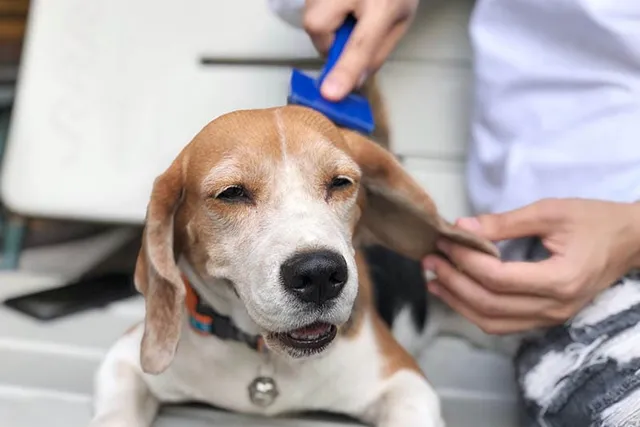
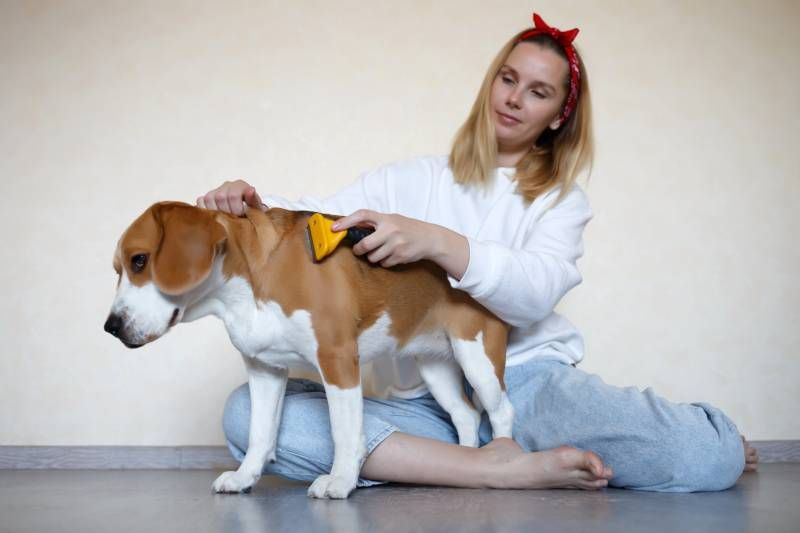
Grooming the Beagle's short coat isn't too difficult. Regular grooming with a brush appropriate for short-haired dogs is sufficient to remove loose hair and minimize hair buildup throughout your home.
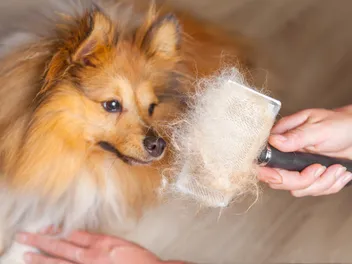
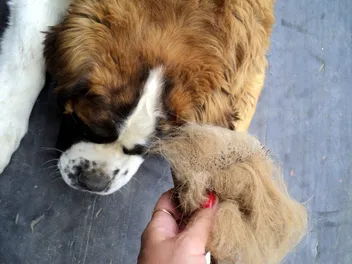
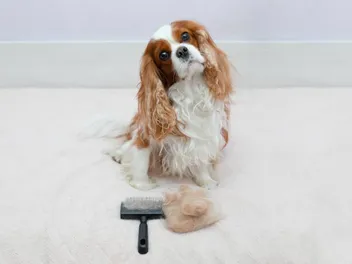
However, during shedding seasons, hair loss is more obvious than usual. Brushing your Beagle's coat more frequently (once or twice a day) and grooming them outside more often will help remove dead hair.

Should You Shave Your Beagle?
Never! Dogs, especially double-coated breeds like Beagles, need hair to protect them from the elements and to regulate their body temperature. Therefore, you should never deprive them of this natural defense system!
When Should You Visit the Vet?
A consultation with your veterinarian is recommended if your dog sheds in clumps or has other skin signs, such as itching, hair loss, unpleasant smell, scabs, or skin redness.
Indeed, excessive shedding can be a sign of a skin infection, external parasites, hormonal imbalances, allergies, or certain autoimmune or other diseases.
Final Thoughts
Your adorable Beagle's hair is similar to your own hair: It grows, enters a resting phase, falls out, and is replaced by new hair. However, due to their double coat, Beagles shed more during the two seasonal shedding periods, which can be daunting when trying to keep a clean home.
There is no quick fix to your Beagle's normal shedding, but proper and regular grooming of their coat during these times will help get rid of loose hair faster. Grooming or brushing your dog outdoors when possible may also help reduce hair buildup inside your home. If you notice abnormal hair loss and other skin signs, like itching and red, inflamed skin, you should contact your veterinarian.
Featured Image Credit: Aleksandra_Iarosh, Shutterstock
Expert dog care, straight to your inbox
News, insights, expert advice, and everything dog.

No spam — unsubscribe anytime.
By signing up, you agree to our Terms & Conditions and Privacy & Cookies Policy.
How useful was this post?
Click a star to rate. You can leave written feedback afterwards. (We read all feedback.)
A biologist and science writer, Genevieve has a special fondness for capuchin monkeys, pumas, and kangaroos, which has inspired her to volunteer and work at wildlife rehabilitation centers in countries like Bolivia, Guatemala, Canada, and Australia. Now living as a Canadian expat in Argentina, she enjoys the sight of horses and cows outside her home office window every morning. Genevieve is the proud owner of three rescue dogs—Lemmy, Nala, and Pochi—and a lively kitten named Furiosa. She finds happiness and fulfillment in sharing her passion and extensive knowledge of animals with others.