How Good Is a Vizsla With Cats? Vet-Verified Tips, Instincts & FAQ



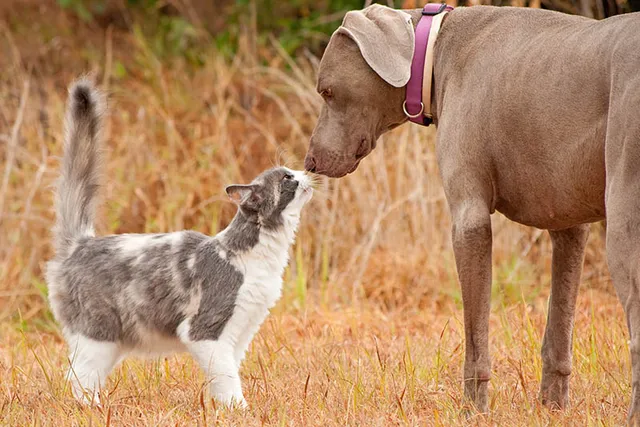
Although dogs and cats are traditionally considered unlikely friends, many members of the two species can coexist happily. Not all dog breeds and individual dogs are considered feline-friendly, though, depending on personality and socialisation, especially those bred for hunting, which have a high prey drive. However, despite their hunting heritage, Vizslas can be good with cats—with proper socialization and introductions. Keep reading for tips on how to help a cat and Vizsla live together in harmony. You’ll also learn which pets you should avoid pairing with this breed.

What Is a Vizsla?
The Vizsla is a high-energy, sleek red dog that originates from Hungary. They were bred to serve as bird hunters and affectionate companions, but the Vizsla is growing in popularity as a family pet.
Vizslas and Cats
As hunters, Vizslas helped sniff out, point, and retrieve game (mostly birds) for their human companions. While this job requires them to have a reliable prey drive, it’s generally not as strong as that of other breeds, such as Terriers, that were bred to kill what they caught. With proper socialization and supervision, Vizslas and cats can live together safely.
However, individual dogs can vary in how they react to felines. If your adult Vizsla shows a tendency to chase and harass neighborhood cats, it may not be the best idea to add a kitty to the house. Similarly, if your cat is shy and runs away from any dog they encounter, they may not appreciate canine company, or your Vizsla may be more likely to chase them.

Vizslas and Other Small Pets
While Vizslas can learn to get along with cats in most cases, you should ideally keep them away from other small pets like birds and rodents. These prey animals may trigger the dog's hunting instincts. In addition, just being around a predator-type animal can cause harmful stress and fear for pets like rabbits.
The 4 Tips to Help Vizslas and Cats Get Along
1. Play Matchmaker
Introducing a cat and a Vizsla may be easier if you pair a young dog or a puppy with the cat. Adult animals may sometimes accept young ones more easily. In addition, puppies are easiest to socialize with other pets and people when they’re still learning and growing.
Adult Vizslas may view tiny kittens as prey even if they don’t mind adult cats, so be especially cautious if you’re adopting a young feline. If you’re adopting an adult cat, try to choose one that’s already lived with dogs if you have the option.
2. Separation and Scent Exchange
When you bring a new cat or dog into the household, it’s essential to keep them separate at first. Set up a safe room for the cat to use while they get used to their new home. Allow the dog and cat to sniff each other under the door, without seeing one another, and get used to hearing and smelling the new arrival. This can also be done through scent exchange when you swap the blankets the two animals use, so they can familiarize themselves with each other’s scent and get used to it without feeling stressed or scared.
You can also let the cat out to explore the house briefly while the dog is outside or on a walk. The two should be used to each other’s scent before they meet.

3. Make Introductions Slowly
When it’s time to meet face to face, ensure everyone’s safety by keeping the Vizsla on a leash until you see how the dog and cat react to each other. Make sure the kitty has the option to escape if they feel uncomfortable.
Watch your Vizsla for signs of aggression or too much interest in the cat, such as stiff body language, barking, growling, or lunging at the kitty. Monitor the cat for signs of anxiety or fear too, such as flattened ears, hissing, growling, and crouched body language.
If you notice that the two animals aren’t getting along, it is okay to take a break and go back to letting them get used to each other’s scent. There’s no set timeline for how long this should take.
4. Use Positive Reinforcement
Help the cat and Vizsla form good feelings about each other by rewarding them when they interact calmly or even ignore each other. Feed the two animals on either side of a door or baby gate to help build a positive association as they get to know each other. Offer both pets treats when they start interacting face-to-face, as long as they both remain calm and relaxed.
Keep your attitude calm and positive during the introduction process. Animals often pick up on their owner’s tone, body language, and behavior. Vizslas are especially sensitive and attached to their owners, so they’re likely to take their cues from you.
If you need guidance on training your dog, we suggest you speak to a behaviorist or a vet.
Conclusion
With patience and supervision, many Vizslas can be good with cats, depending on the personalities of the individual animals. If you’re considering adding this breed to your animal family, carefully research them. They need a lot of exercise and don’t like being left alone often. Vizslas aren’t the best fit for every owner, but for active owners with time to train and spend outdoors, they can be ideal companions.
See also: Surprising Vizsla Facts
Featured Image Credit: Chiemsee2016, Pixabay
Expert dog care, straight to your inbox
News, insights, expert advice, and everything dog.

No spam — unsubscribe anytime.
By signing up, you agree to our Terms & Conditions and Privacy & Cookies Policy.
How useful was this post?
Click a star to rate. You can leave written feedback afterwards. (We read all feedback.)
Elizabeth Gray is a lifelong lover of all animals great and small. She got her first cat at 5 years old and at 14, she started working for her local veterinarian. Elizabeth spent more than 20 years working as a veterinary nurse before stepping away to become a stay-at-home parent to her daughter. Now, she is excited to share her hard-earned knowledge (literally--she has scars) with the readers. Elizabeth lives in Iowa with her family, including her two furry kids, Linnard, a husky mix and Algernon, the worldʻs most patient cat. When not writing, she enjoys reading, watching all sports but especially soccer, and spending time outdoors with her family.