


While it’s not always in our control, nobody wants to buy a new puppy only to deal with health problem after health problem. Bloat is a very serious condition that can be life-threatening, and while any dog can get it, some breeds are more prone than others.
You need to know when to remain extra vigilant, which is why we took the time to highlight 10 dog breeds that are prone to bloat.

What Is Bloat in Dogs?
Bloat, also called gastric dilatation, is a condition where a dog’s stomach fills with food, gas, or fluid. It can be very uncomfortable until the pressure is released. Sometimes it can develop further into gastric dilatation-volvulus (GDV) where the bloated stomach twists around itself, potentially cutting off blood supply to the organ. Both conditions can develop without any warning signs and are always considered an emergency.
When a stomach gets filled with gas, fluid, or food, it then puts pressure on the other organs and blood vessels, potentially decreasing blood flow to tissues and in return to the heart. This can result in tissue damage and shock. Every minute without treatment increases the risk of further damage.
Large, deep-chested breeds are more prone, and it most commonly occurs when a dog exercises after eating a large meal. While large breeds are more likely to be affected, it can occur in smaller breeds as well.
The 10 Dog Breeds Prone to Bloat
1. Great Danes
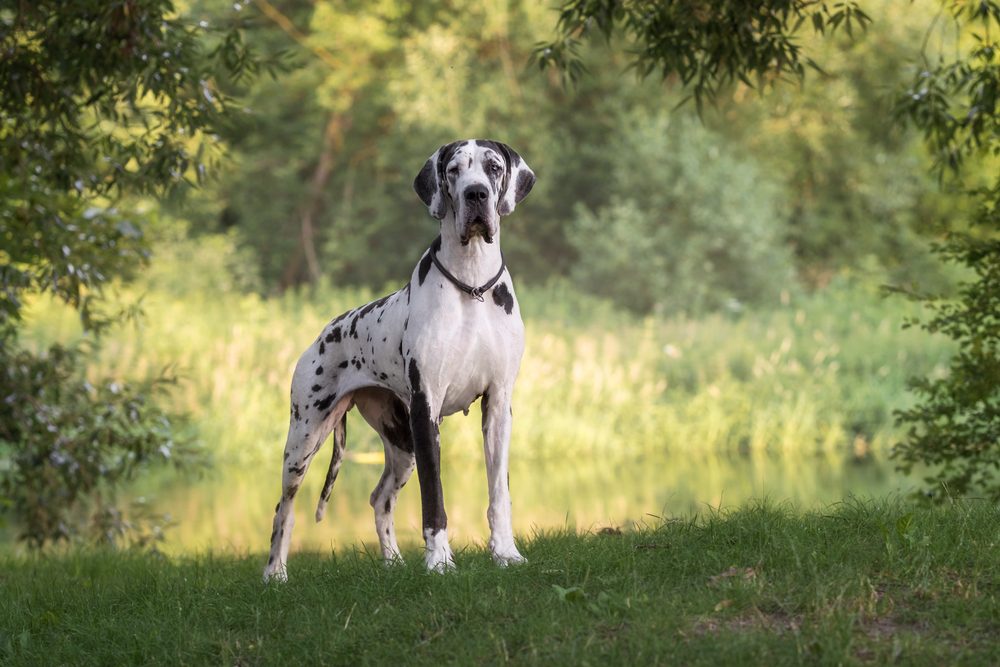
| Origin: | Germany |
| Lifespan: | 7 to 10 years |
| Height: | 28 to 32 inches |
The larger the dog, often the more likely they are to develop bloat, so it’s no surprise that the Great Dane is one of the dog breeds most likely to develop this condition. These are some of the largest dogs in the world, and while they’re incredibly lovable, bloat is just one of the many potential health conditions that lead these pups to have much shorter lives.
Even if they don’t get bloat, they generally live shorter lives than other breeds, but it’s hard to find a more lovable companion!
2. Saint Bernards
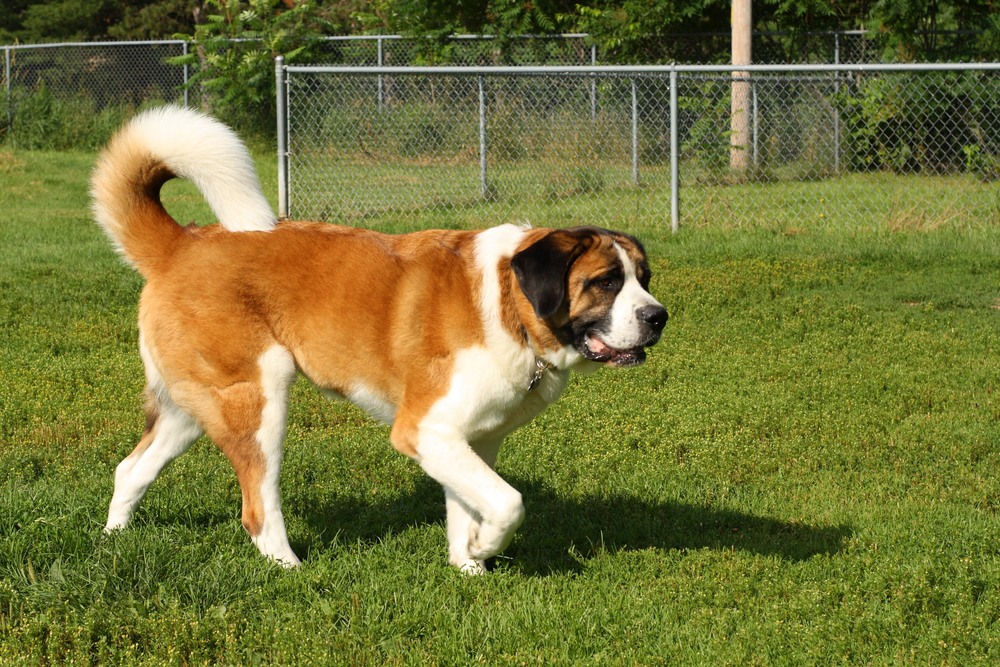
| Origin: | Switzerland |
| Lifespan: | 8 to 10 years |
| Height: | 26 to 30 inches |
While the Great Dane might be the tallest dog on our list, the Saint Bernard just might be the heaviest. These dogs are massive, and like most other large dogs, it makes them far more susceptible to bloat.
They’re the definition of a lovable giant and are often great family dogs that don’t make much noise, but it’s important to train them early on. This is because they can be a bit stubborn, and if you don’t tackle this early, their large size ensures you won’t be able to muscle them into listening.
3. Weimaraners

| Origin: | Germany |
| Lifespan: | 10 to 13 years |
| Height: | 23 to 27 inches |
The Weimaraner isn’t quite as tall as the Great Dane or as heavy as the Saint Bernard, but that hasn’t saved them from an infamous reputation for developing bloat. They’re another amazing family dog, but with their almost non-stop energy drive, you better have more than enough space for them!
It’s best if these dogs have an activity to keep them busy, making them one of the best working dogs around. They need a bit of training, but with a non-stop energy drive and a desire to work and please, they can make the perfect helper.
4. Irish Setters
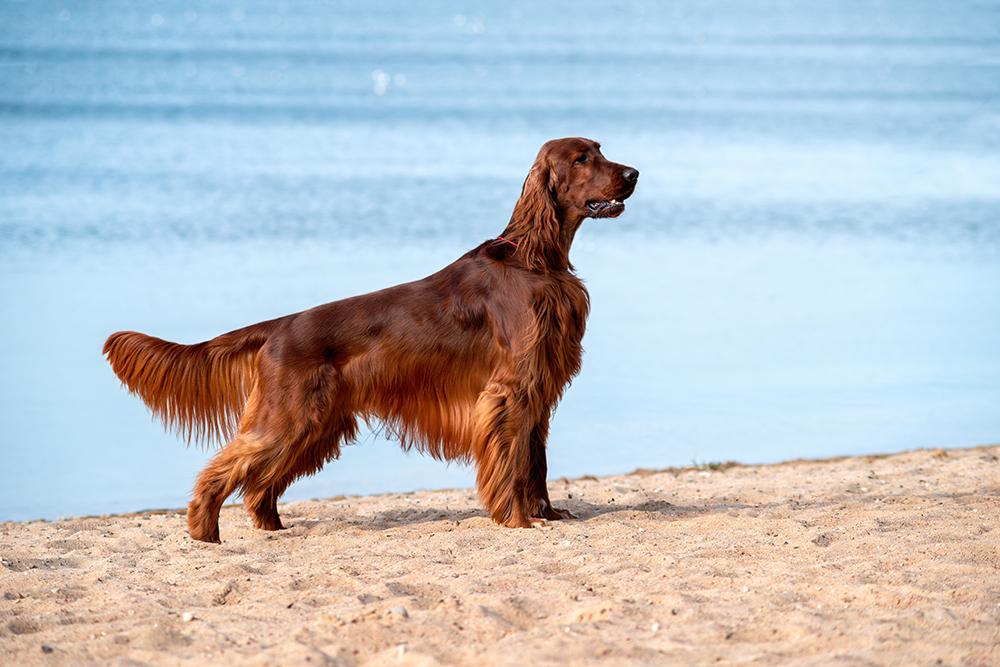
| Origin: | Ireland |
| Lifespan: | 12 to 15 years |
| Height: | 25 to 27 inches |
Irish Setters are amazing companions that also get along great with other pets, making them an outstanding choice for most families. However, they do have a ton of energy, so it’s best if you have plenty of space for them; otherwise, you might find it extremely challenging to meet their exercise needs.
Their deep, long body and energy level may also lend themselves to developing bloat, so be sure you are aware of the warning signs and get them to a vet should you suspect anything is wrong.
5. Standard Poodles
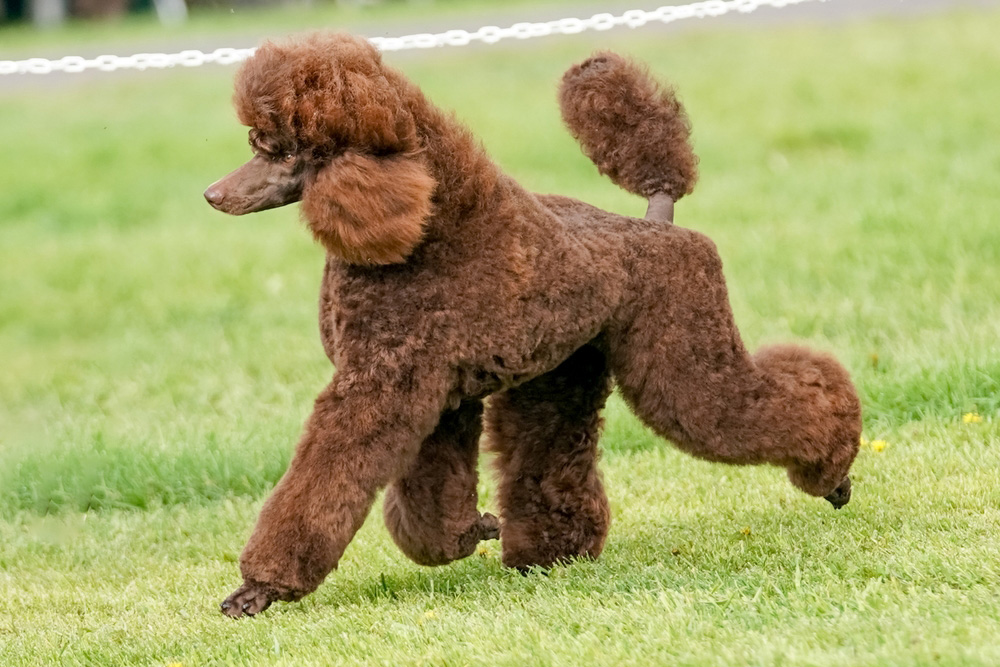
| Origin: | Germany |
| Lifespan: | 10 to 18 years |
| Height: | Over 15 inches |
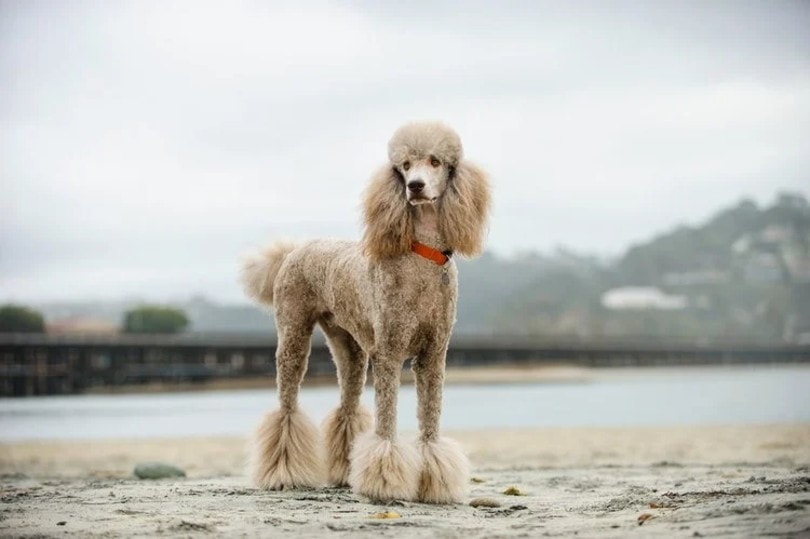
Poodles come in all sorts of sizes, but it’s the Standard Poodle that is most susceptible to bloat. Their larger size also makes it more likely that they’ll have shorter lifespans, but compared to other large dog breeds, they can have much longer lifespans, sometimes exceeding 15 years!
Another perk of the Standard Poodle is that they’re extremely intelligent and considered hypoallergenic (although no dog is truly hypoallergenic), making them highly trainable and the perfect choice for people with mild pet allergies.
6. Doberman Pinscher
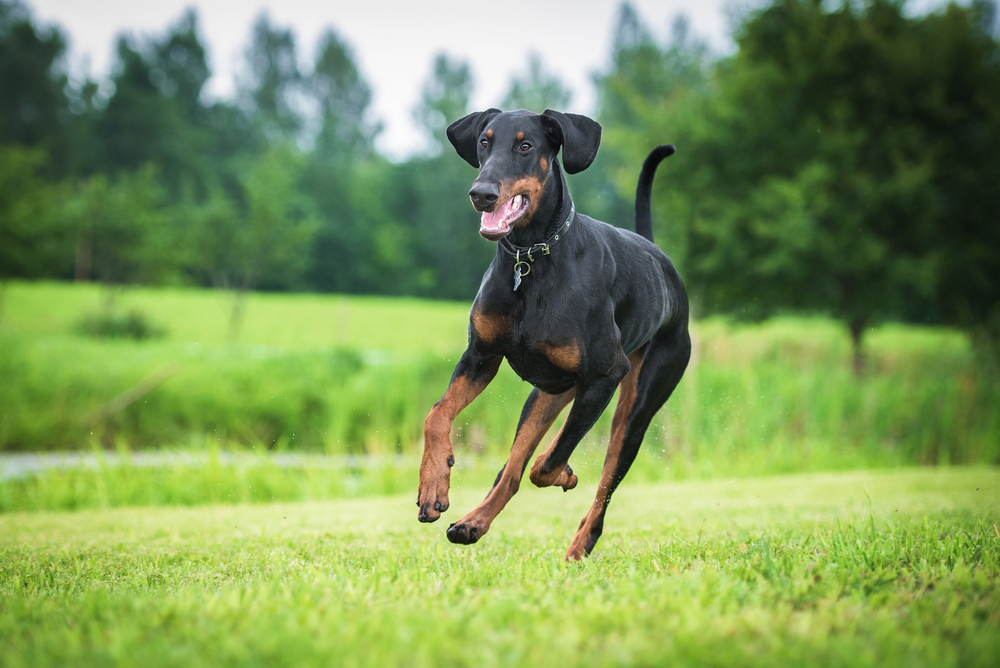
| Origin: | Germany |
| Lifespan: | 10 to 12 years |
| Height: | 24 to 28 inches |
The Doberman Pinscher is another amazing family dog that, unfortunately, suffers from bloat all thanks to their deep and narrow chests. They’re also great guard dogs, and because of this, they’re not always the best with other dogs in the home.
Just know that you’ll need to take the time to train them early on, and even then, it often takes an experienced hand to train them properly. They can also have a fair amount of energy, so we recommend having a fenced-in yard before getting one.
7. Gordon Setters

| Origin: | Scotland |
| Lifespan: | 12 to 13 years |
| Height: | 23 to 27 inches |
A Gordon Setter might not be as well-known as a Great Dane or a Poodle, but they’re amazing dogs that are very loving. They’re not always the best family dogs, but if you need a working dog that can keep up with any task, the Gordon Setter is your pooch.
These dogs tend to bond strongly with one person, and they can make amazing guard dogs if you train them properly. They’re not the best choice for first-time dog owners, but if you want a beautiful pup and are up for a challenge, they’re a good choice!
8. Irish Wolfhound
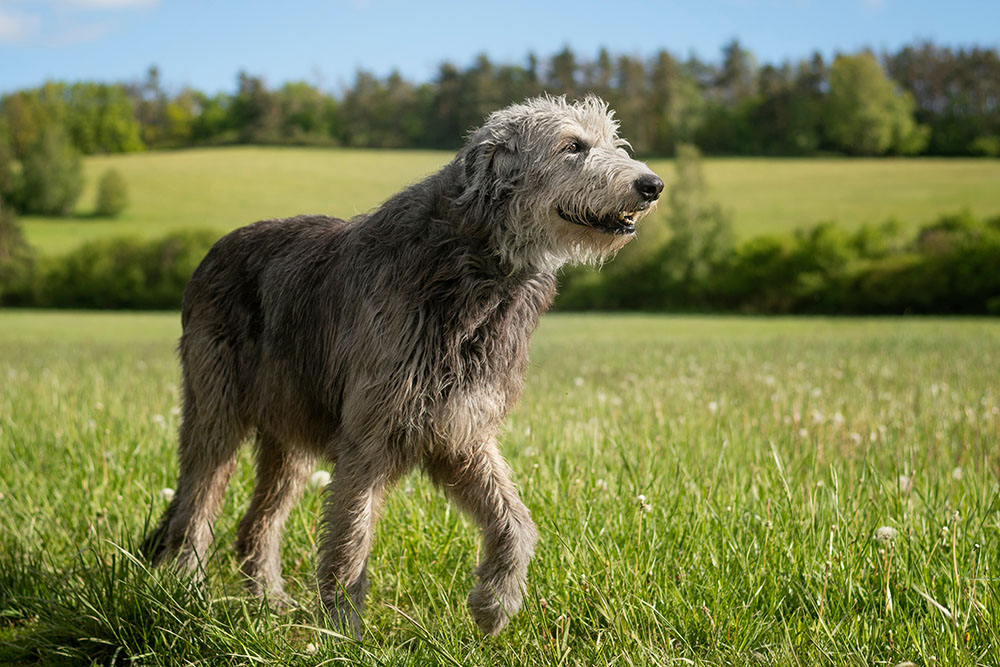
| Origin: | Ireland |
| Lifespan: | 6 to 8 years |
| Height: | 30 to 32 inches |
Another shockingly large pup is the Irish Wolfhound, thus making them another dog prone to bloat. They’re massive, and they’re also one of the breeds with an unfortunately short lifespan. Still, that doesn’t mean that these dogs don’t deserve just as much love as any other breed, although you’ll have to be especially careful about bloat.
9. Basset Hound
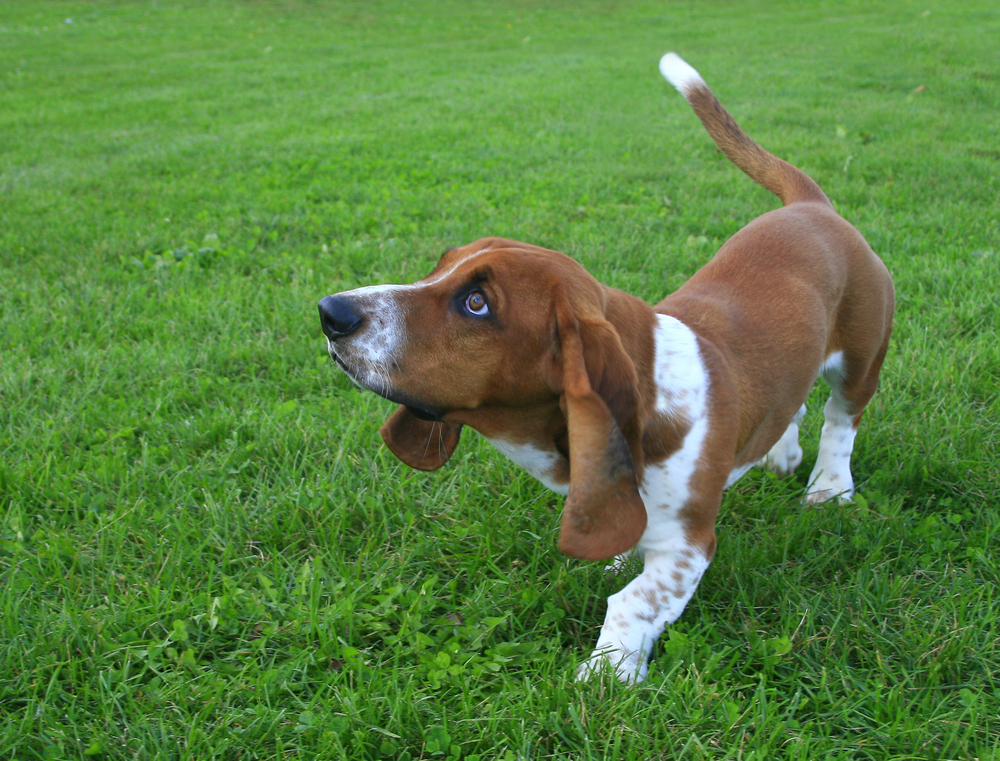
| Origin: | France |
| Lifespan: | 12 to 13 years |
| Height: | Up to 15 inches |
When you think of large dogs, you really don’t think of the Basset Hound since these dogs are so short-short but heavy and large chested. This increases their propensity for developing bloat. Bloat isn’t their only health concern, as those long ears can attract ear infections and other issues and those crooked legs can have more joint problems.
Like some of the other breeds on our list, they’re loving and their low energy levels lean more towards snoozing on the couch than playtime in the park.
10. Old English Sheepdog
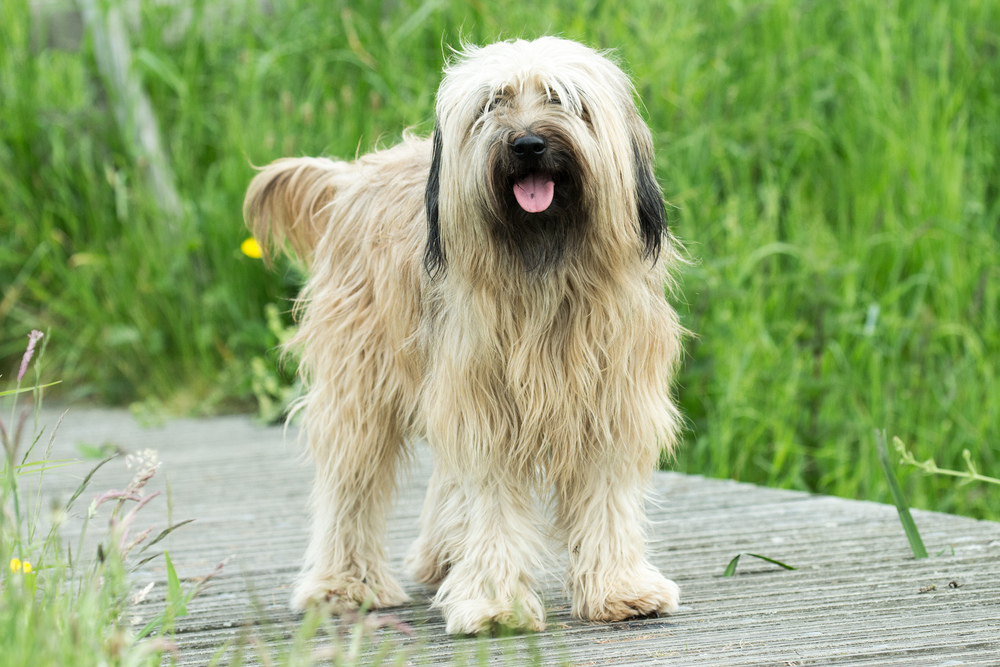
| Origin: | England |
| Lifespan: | 10 to 12 |
| Height: | Over 21 inches |
If you want a big, lovable oaf with tons of fur, the Old English Sheepdog is the pooch for you. They have a unique appearance that you simply don’t find with other dogs, but like many other large breeds, they develop bloat more often than we’d like.
They usually get along great with kids and are extremely affectionate, but you should be a bit more careful when introducing them to other animals. They’re adaptable, but just know that when they want to play, they want to do it now, and you might not be able to do much about it!
Conclusion
Even if your pup isn’t one of the dog breeds that are most prone to bloat, they can still get it. If you suspect your dog is suffering from bloat, take them to a vet immediately, even if it’s during off-hours or on a holiday. Bloat is a life-threatening condition, and without quick medical intervention, it can be deadly.
Finally, keep in mind that while some dog breeds are more susceptible to bloat, any pup can get it, so always remain vigilant and err on the side of caution!
See also:
Featured Image Credit: Billion Photos, Shutterstock
 What Is Bloat in Dogs?




























2 Responses
Thanks for such an informative yet concise article about bloat and the dog breeds that are more prone to this condition. I really learned a lot about each breed described. I am a diehard rough collie owner for the last thirty five years. I know of someone that lost their collie to bloat. Recently my male collie suffered from a bout of gastrointestinal discomfort. He is much better now.
Hi Cyndi,
I’m glad the article was helpful, and I’m really sorry to hear about the Collie who passed from bloat. It’s a scary condition. I’m glad your boy is feeling better now, and it’s great that you’re staying alert to any GI changes, early attention can make all the difference. If symptoms ever come back, a vet check is always the safest move.
Have a great day!