19 Bird Hunting Dog Breeds (With Info & Pictures)

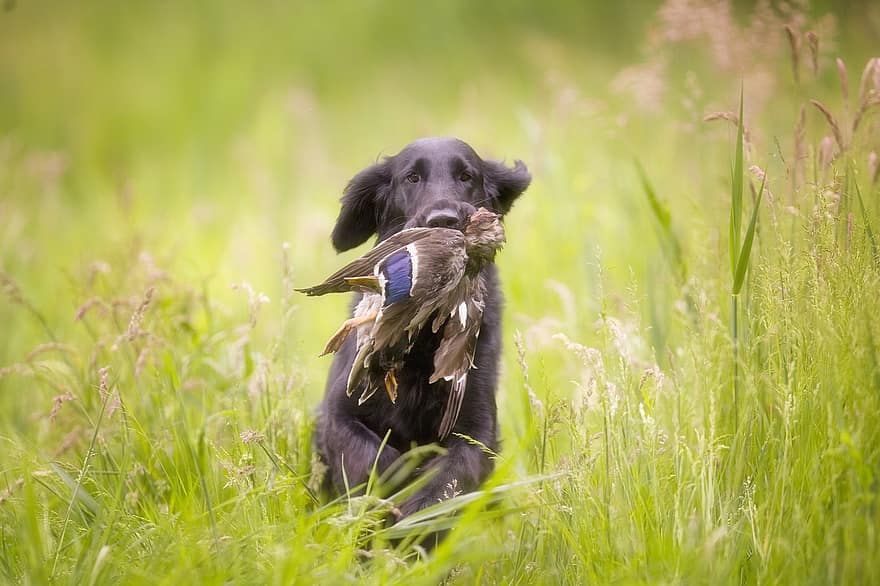
Bird-hunting dogs need to be alert and energetic. They also need to have a degree of independence while still listening to commands given to them by the hunters. While some bird dogs flush out birds for the hunters, others point them out, and still others retrieve the downed game.
Many breeds were originally developed to assist in these tasks. Here are 19 bird-hunting dog breeds.

The 19 Bird-Hunting Dog Breeds
1. Boykin Spaniel

Breed Overview
Height:
Weight:
Lifespan:
Bred in South Carolina in the early 20th century, the Boykin Spaniel was used to hunt ducks, turkeys, and waterfowl. They get their name from the town of Boykin, which in turn, got its name from the town founder, Lemuel Whitaker Boykin. The breed was created by crossing various spaniel breeds and Chesapeake Bay Retrievers, and they have become popular across the U.S. The dog has webbed feet for improved movement in water. They also have a powerful sense of smell and are sweet-natured with their humans.
2. Bracco Italiano

Breed Overview
Height:
Weight:
Lifespan:
The Bracco Italiano, or Italian Pointer, is an ancient breed with origins dating back to the 4th century B.C. They were used to flush birds into nets, and when guns were introduced, they turned their skills to the retrieval of downed birds. However, it wasn’t until the 1980s that the breed was introduced to the U.S. and the U.K., and they were only accepted by the AKC in 2001.1
3. Brittany

Breed Overview
Height:
Weight:
Lifespan:
The Brittany is a French pointer breed that originated in the Brittany region and was first bred at least as early as the 17th century, though their history is likely longer than this. They were something of an-rounder in the bird hunting world, being able to flush, hunt, and retrieve. They have an acute sense of smell, are quick and athletic, and are built to run through thick brush. They found their way to the U.S. in the 1930s and were accepted by the AKC in 1934.
4. Chesapeake Bay Retriever

Breed Overview
Height:
Weight:
Lifespan:
The Chesapeake Bay Retriever hails from Virginia and Maryland, where they were developed in the 19th century to retrieve game and help with other tasks like pulling fishing nets in. They are said to be bred from Newfoundlands and a combination of retrievers, spaniels, and hounds. The Chesapeake Bay Retriever has a thick coat that helps them hunt in cold winter Cheseapeake waters. They have webbed feet, are strong and muscular, and were one of the first breeds to be registered in the U.S., with formal recognition from the AKC offered in 1884.
5. Cocker Spaniel

Breed Overview
Height:
Weight:
Lifespan:
The Cocker Spaniel originated in Spain sometime around the 14th century. They are a relatively small bird-hunting dog. The original Spaniel breed was divided into Springer and Field Spaniels. Field Spaniels became known first as Cocking Spaniels and then as Cocker Spaniels. They are excellent at scenting and despite their small size, are well-equipped to carry large game back to their handlers.
6. Curly-Coated Retriever

Breed Overview
Height:
Weight:
Lifespan:
Originating in England in the 19th century, the Curly-Coated Retriever was first bred as a general-purpose bird-hunting dog. Although early examples of the breed had somewhat wavy hair, Poodles were introduced to the line in the late 19th century, which brought the curly coat that Curly-Coated Retrievers are now known for. The coat keeps them warm in cold water and protects against injury from thickets and thick brush. They are hardworking dogs, but they need to be given a job to do, or they can become bored.
7. English Pointer

Breed Overview
Height:
Weight:
Lifespan:
The English Pointer is an English breed, though it is likely that they were bred from Spanish, Portuguese, or French Pointers. The first English Pointers were heavy-set dogs, but they were bred with Greyhounds to reduce their size and increase their speed. The breed traveled to the U.S. in the late 19th century and is now well-known for being a hard worker that can turn their attention to any bird-hunting task.
8. English Setter

Breed Overview
Height:
Weight:
Lifespan:
The English Setter is an old breed, having originated in England in the 14th century. They were used to collect game from the water and on land. They were first recognized by the AKC in 1878. When they were used for traditional hunting, the Setter would lie down when they found their quarry, waiting for the hunter. After guns were introduced, the Setter became skilled at pointing.
9. English Springer Spaniel

Breed Overview
Height:
Weight:
Lifespan:
The English Springer Spaniel is an old breed with origins in England. Bred in the 14th century from Spanish Spaniels, they were used to locate birds in long grass and then flush them out. They are known for their “spring” and are considered eager to please and generally easy to train. Spaniels are also known for having a “soft mouth,” which means they can pick up birds without damaging the carcass.
10. German Shorthaired Pointer

Breed Overview
Height:
Weight:
Lifespan:
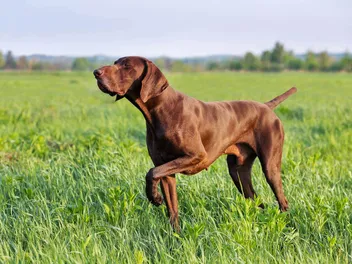
The German Shorthaired Pointer was first bred in Germany in the 19th century and was used to point and retrieve birds in water and on land. This medium-sized breed is muscular, strong, athletic, and determined. They made their way to the U.S. in the 1920s and were recognized by the AKC in 1930. They have webbed feet and can work long days in the field. When they aren’t working, they need a lot of exercise to ensure that they are busy.
11. German Wirehaired Pointer

Breed Overview
Height:
Weight:
Lifespan:
The German Wirehaired Pointer is similar and closely related to the German Shorthaired Pointer. The main difference is in the coat. While the Shorthaired Pointer has a short coat, the Wirehaired Pointer has a wiry coat. This helps protect them against thorns and sharp brush. Otherwise, they have the same webbed feet as the Shorthaired and the same ability to hunt.
12. Golden Retriever

Breed Overview
Height:
Weight:
Lifespan:
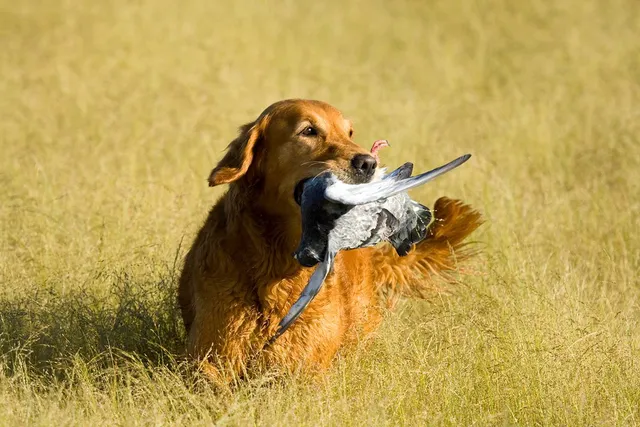
The Golden Retriever is one of the most popular breeds in the world, and while they might be best known as a guide dog, therapy dog, or service dog today, they were originally bred to retrieve game. They were first developed in Scotland in the 19th century. Their long coat kept the dog warm and protected while hunting in the difficult Scottish terrain. Today’s Golden Retriever is quick to learn and eager to please and loves being given a task to perform.
13. Gordon Setter

Breed Overview
Height:
Weight:
Lifespan:
The Gordon Setter is a large setter breed and originated in the U.K., where they were first bred in the 17th century. They are highly determined and have excellent stamina levels. Their size also means that they are powerful and muscular. The AKC officially recognized the breed in 1884 and changed their name from Gordon Castle Setter to Gordon Setter in 1892.
14. Irish Setter

Breed Overview
Height:
Weight:
Lifespan:
The Irish Setter was developed in the 19th century in Ireland, where they were bred to have a strong sense of smell and agility. This fast breed is especially skilled at covering lots of flat ground. They are well known for their red coat, though the original breed had a red and white coat before the white was bred out. The glossy coat does serve a purpose, repelling water and helping keep the dog dry. The Irish Setter was officially recognized by the AKC in 1878. The breed is strong, athletic, and fast and has a good sense of smell.
15. Labrador Retriever

Breed Overview
Height:
Weight:
Lifespan:
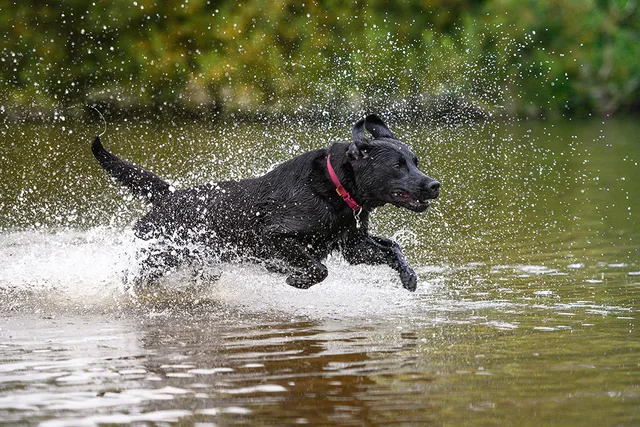
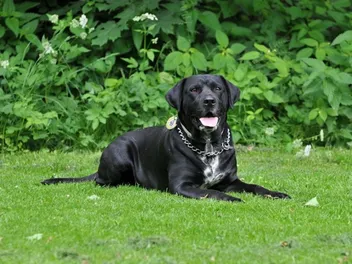
The Labrador Retriever was first bred in the 19th century and originated in Newfoundland. The breed did retrieve birds for hunters but also retrieved fish. They are at home in the water, and having been bred with British hunting breeds, they have lots of stamina, strength, and intelligence and are eager to please. The Lab is more commonly used as a search-and-rescue dog, guide dog, or therapy dog today but still has the skills to be an efficient bird hunter.
16. Nova Scotia Duck Tolling Retriever

Breed Overview
Height:
Weight:
Lifespan:
The Nova Scotia Duck Tolling Retriever has a somewhat unusual bird-hunting technique. They would play with a ball or stick, attracting the attention of game birds that would fly toward the playing dog. At this point, the hunter would stand from a hidden position, causing the birds to fly away and giving the hunter the chance to down them. Then, the Nova Scotia Duck Tolling Retriever would retrieve the birds from the water.
17. Poodle

Breed Overview
Height:
Weight:
Lifespan:
The Poodle is perhaps best known as a show dog today, gracing rings and exhibitions around the world. However, the breed was originally developed to hunt birds. They were bred in Germany, though later, they became the national breed of France. Their name means to splash in water, which points to their skill in and love for water. The curly coat protects against water and physical damage. This breed is also known for being highly intelligent.
See Also: Pudelpointer Dog Breed
18. Vizsla

Breed Overview
Height:
Weight:
Lifespan:
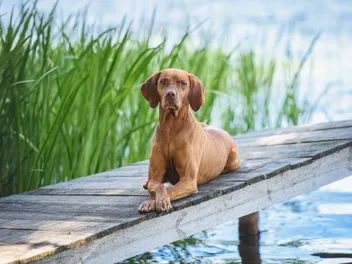
The Vizsla is an ancient breed whose history can be traced back to Hungary around 1,000 B.C. They're a fast and versatile hunting dog that did not arrive in the U.S. until around 1950, gaining formal recognition in 1960. The breed is strong but surprisingly fast and agile, has an excellent sense of smell, and is commonly used as a guide dog or service dog because they like to be given tasks to perform and are unwavering in their completion of those tasks.
19. Wirehaired Griffon

Breed Overview
Height:
Weight:
Lifespan:
The Wirehaired Pointing Griffon originated in the Netherlands in the 19th century and was used to hunt, point, and retrieve game. They were bred to work a variety of different terrains, and besides having a water-repellent coat, they have an exceptional sense of smell and are skilled in the water. The Wirehaired Griffon gained formal recognition from the AKC in 1887.
Conclusion
Dogs are not used in bird hunting as commonly today as they once were, but the skills and characteristics of these breeds make them excellent as service dogs and in other professional settings. They can also make great pets, though prospective owners need to be aware of the high energy requirements that most of these dogs have, as they'll have to find ways to keep them busy and entertained.
Related Reads:
Sources
Featured Image Credit: PxFuel
Expert dog care, straight to your inbox
Vet-reviewed advice, training tips, and the best of Dogster. Free, and you can unsubscribe anytime.
By signing up, you agree to our Terms & Conditions and Privacy & Cookies Policy.
Rachael has been a freelance writer since 2000. In this time she has had an opportunity to research and write about many different topics while working to master the art of fusing high-quality content with effective content marketing strategies. She is an artist at heart and loves to read, paint, and make jewelry. As a vegan, Rachael is obsessed with helping animals in need, both in her community and anywhere in the world where she feels she can make a difference. Animals also happen to be her favorite topic to write about! She lives off the grid in Hawaii with her husband, her garden, and her rescue animals including 5 dogs, a cat, a goat, and flock of chickens.
Join the conversation
Ask a question, share your story, or send private feedback.