Curly-Coated Retriever Dog Breed: Info, Pictures, Care & More

In this article
Golden and Labrador Retrievers may hog the retriever breed spotlight, but their lesser-known relative, the Curly-Coated Retriever, can make a fantastic companion, too. The Curly, as you may have guessed from the breed’s name, has a unique curly coat and a slightly more independent nature that sets them apart from other retrieving breeds. Read on to learn more about these beautiful dogs to determine if one would be a good fit for your lifestyle.
Breed Overview
Height:
Weight:
Lifespan:
Colors:
Suitable for:
Temperament:
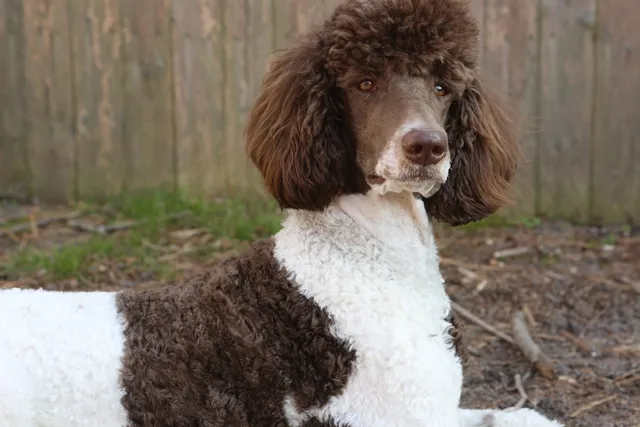
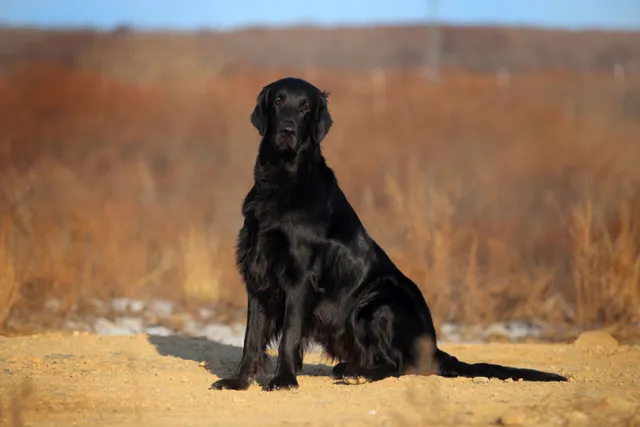
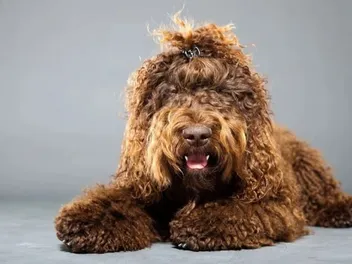
Curly-Coated Retrievers may look like a cross between a Poodle and a Labrador Retriever, but these unique pooches are a breed all their own. They were likely developed by breeding game breeds like English Water Spaniels and Retrieving Setters, both of whom are now extinct.
Curly-Coated Retriever Characteristics

Curly-Coated Retriever Puppies

Curly-Coated Retrievers are a rather rare breed, with only around 150 getting registered annually. This means that finding a puppy may be a long and somewhat arduous task. At the time of writing, there were only three Curly litters listed on the American Kennel Club's marketplace. These breeders are located in Washington, Florida, and New York. If you live outside of these states, you may need to pay extra to have the puppy shipped to you.
Of course, as with any breed, you'll want to do your research to ensure the breeder you're supporting has their puppy's best interests at heart. Reputable breeders will happily provide potential adopters with health certificates for their dogs.
Curlies are interesting puppies because they mature slower than other breeds. This means that owners will have a dog with puppy-like energy and personality for longer. Once they have grown out of puppyhood, however, these dogs are happy to tag along for jobs or lay around watching Netflix with their humans.
Curly-Coated Retriever Origin & History
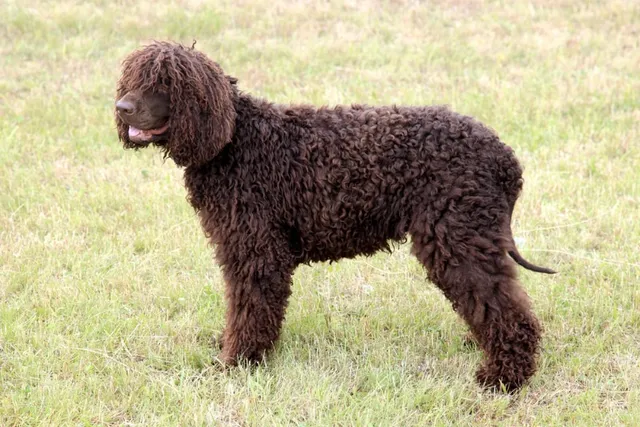
The Curly-Coated Retriever is a very old retriever breed; however, no written records of their early history exist. Experts believe that they descended from two extinct breeds, the English Water Spaniel and the Retrieving Setter. However, Irish Water Spaniels and the St. John's Dog (a small type of Newfoundland) likely also played a part in establishing the breed. Additionally, during the late 19th century, Poodles were introduced into the mix to help create the CCR we know and love today.
The Curly was originally bred in England for waterfowl hunting.
Temperament & Intelligence of the Curly-Coated Retriever 🧠
Curly-Coated Retrievers are self-confident, proud, and intelligent. These charming pups make determined and reliable hunters, but because they're so smart and biddable, they're just as easy to adapt to life as companion pets.
When compared to other retrieving breeds, Curlies aren't as energetic, nor are they as dependent and needy. While they can be more reserved than other retrievers, they're not overly timid. They can be extremely playful and are known for their good-natured disposition, traits that lend themselves well to family situations.
While these dogs can sometimes be aloof around strangers, they're very affectionate and loyal toward their families. They're calm and well-mannered, provided they've been given proper training and an outlet for their energy.
Since Curlies can be a little stubborn and have a mind of their own, they require a confident and experienced owner who won't let them run the show. They are very smart and can be manipulative if they aren't trained properly. This high intelligence means they can become bored easily, which can cause undesirable behaviors such as barking or chewing.

Are These Dogs Good for Families? 👪
Curly-Coated Retrievers make fantastic family pets. They're very confident, active, and enthusiastic, so they're great companions for active families that spend much time adventuring outdoors. Despite their bravery, however, they may be wary of strangers until they've had a chance to get to know them.
Like most retriever breeds, Curlies use their mouth for many tasks. Owners with children should consider this before adopting one, especially if their children are still quite young. Early training and socialization can address the breed's tendency to nip.
Does This Breed Get Along With Other Pets? 🐶 😽
The Curly-Coated Retriever can get along with other household pets. They're not known for aggressive tendencies, so they generally do well in homes with other dogs. However, it should be noted that they do have a prey drive that may make them interested in chasing smaller animals like cats. That's not to say they cannot live harmoniously alongside their feline counterparts. Still, the chances of them living happily together are higher if the two animals are brought up together from a young age.
Things to Know When Owning a Curly-Coated Retriever
Food & Diet Requirements 🦴
Curly-Coated Retrievers, as with all dogs, require a high-quality diet. Since this is a high-energy and athletic breed, it's important to focus on providing a protein-rich diet. If they are expected to work and hunt, they will require more energy and calories than their non-hunting counterparts.
Because larger breeds like the Curly are prone to developing gastric dilatation-volvulus (GDV), it's best to feed them smaller meals rather than one large one. Owners should also be mindful of the risk of GDV when planning out their dog's meals and exercise times, as vigorous exercise after a meal can increase the risk.
Exercise 🐕
Curly-Coated retrievers don't need a huge home or backyard so long as their owner is willing to take them out for exercise regularly. These athletic pups have a lengthy history as working dogs, so they aren't destined to be couch potatoes, though. They require a fair amount of exercise, at least an hour a day, preferably more. These pups can become destructive if they're not given enough opportunities to burn off excess energy.
Curlies can excel at dog sports like agility or flyball if given the opportunity.
The Curly is happy to tag along on any outdoor adventures with their owners, including hiking, jogging, and swimming. Remember, these pups were bred to retrieve waterfowl, so they absolutely adore being in the water. Curlies love being outside in general, but they're also happy to spend time inside as long as they're with their humans. They don't enjoy being left alone for too long, so potential owners should keep that in mind.

Training 🎾
The Curly is a highly intelligent and responsive breed that is easily trainable. They're very eager to learn, so owners should begin with basic obedience lessons as early as eight weeks. Curlies may not learn as quickly as other dogs, but this isn't because they're dumb. In fact, it's because they are easily bored with repetition. Owners should keep training sessions interesting by incorporating a variety of exercises to keep their pups engaged.
Grooming ✂️
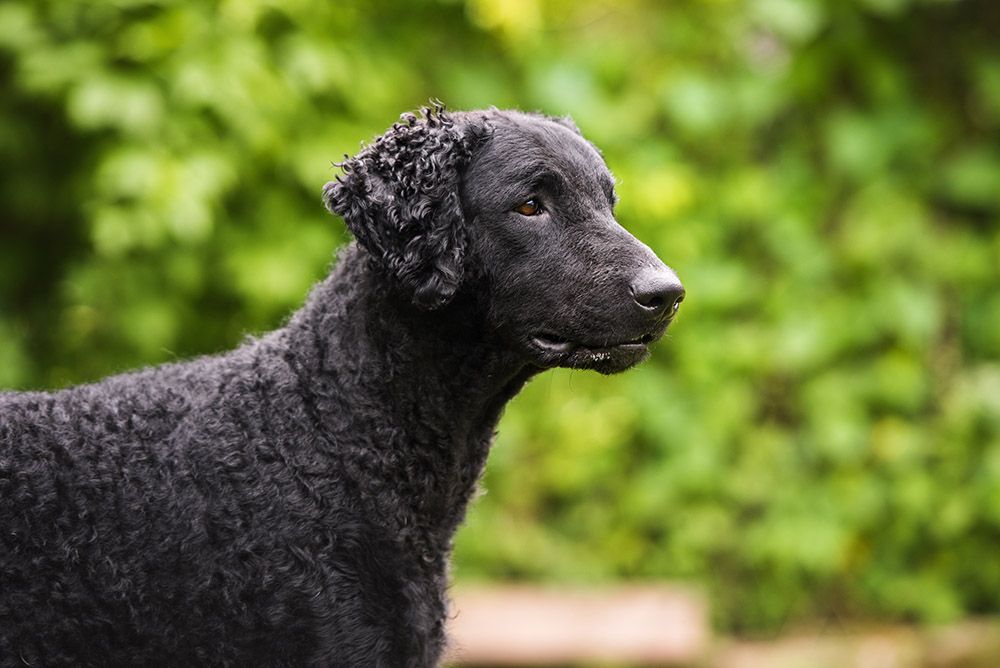
One look at the Curly-Coated Retriever, and you'll see that this breed has a very unique coat. Their coat consists of very tight and crisp curls, which were necessary for this breed at its inception as they could repel water and burrs and provide protection.
Despite their high maintenance-looking coats, Curlies only require very minimal grooming. Owners will not need to brush or comb them regularly, and baths using a gentle shampoo are only necessary when the dog is visibly dirty. Brushing the coat will cause frizzing.
The CCR does shed, however, and light brushing can be useful in catching falling hair. Females will shed a fair amount twice annually, which may make them look quite bare when they're not in their full coat. A rake-type grooming tool is useful to have on hand during shedding season.
Health and Conditions 🏥
Curlies are a generally healthy breed, thanks to responsible breeders screening their dogs for hip, eye, and heart abnormalities. However, they may be susceptible to some health conditions such as hip dysplasia, cataracts, cancer, and gastric dilatation volvulus. According to the Curly-Coated Retriever Club of America, the breed may also be prone to epilepsy and craniomandibular osteopathy (a bone disease that causes thickening of the jaw bone). Like all dogs, Curly-Coated Retrievers may develop skin sensitivities and ear infections.
Male vs Female
The biggest difference between female and male Curly-Coated Retrievers is their size. Females are smaller than their male counterparts, though this isn't always the case. Males average between 25 to 27 inches, while females are between 23 and 25 inches.
Females shed more than males, to the point where they almost look bare-skinned during peak shedding season.

3 Little-Known Facts About the Curly-Coated Retriever
1. Curly-Coated Retrievers are perhaps the oldest retriever breed.
The Curly-Coated Retriever is one of the oldest (and tallest!) retriever breeds. They were originally developed in England for waterfowl hunting and were commonly seen on large estates. Artwork from over 300 years ago features imagery of these unique dogs, and there are written accounts dating back to the early 1800s.
2. Curlies mature slowly.
Curlies are a slow-to-mature breed, meaning that owners will have a puppy longer than they might initially expect. This isn't necessarily a good or bad thing, but it is something worth knowing if you're considering adopting a Curly. They will remain playfully puppyish and somewhat boisterous for longer than other breeds, but this can be addressed with proper training and socialization.
3. Curlies aren't totally curly.
Though the Curly-Coated Retriever's coat is its trademark, the entire coat doesn't consist of these small, tight, and crisp curls. The Curly's face and the front of their legs are straight-haired.

Conclusion
The Curly-Coated Retriever is a unique-looking dog with many redeeming personality traits. They're highly affectionate and loyal toward their humans, though they can be aloof with strangers until they've had a chance to feel them out. They're generally more reserved and dependent than other retriever-type dogs, but they're still very energetic and playful.
Curlies require a fair amount of exercise to stay happy, healthy, and well-behaved. They don't need a huge backyard to romp around in, so long as their owners are very diligent about getting their pups the recommended amount of exercise they need.
The Curly-Coated Retriever can make a great companion or hunting partner. Curlies love spending time with their humans and absolutely want to be a part of all the adventures that come with being part of a family.
Sources
Featured Image Credit: otsphoto, Shutterstock
Expert dog care, straight to your inbox
News, insights, expert advice, and everything dog.

No spam — unsubscribe anytime.
By signing up, you agree to our Terms & Conditions and Privacy & Cookies Policy.
How useful was this post?
Click a star to rate. You can leave written feedback afterwards. (We read all feedback.)
Chantelle is passionate about two things in her life – writing and animals. She grew up on the prairies of Canada surrounded by animals and as an adult, she choose to share her home with five cats, two guinea pigs, and a bearded dragon. Chantelle, her husband, and their child take great pride in being great animal parents- the ones who spend a thousand dollars on wall-mounted cat shelves so that their cats can have an indoor jungle gym all year round. When Chantelle isn’t snuggling her cats on the couch or taking pictures of them being funny, she’s outside exploring in the Rocky Mountains, binging the same shows on Netflix over and over, and reading about whatever random topic pops into her brain.