Get

In Your Inbox

Dogster is reader-supported. When you buy via links on our site, we may earn an affiliate commission at no cost to you. Learn more.

Bernedoodle vs Bernese Mountain Dog: Main Differences (With Pictures)

Share

Bernedoodle vs Bernese Mountain Dog

Bernedoodles are a cross between the Bernese Mountain Dog and Poodle, but identifying traits in mixed breeds can be challenging. What are some of the differences between the Bernedoodle and the Bernese Mountain Dog? In this article, we’ll examine their differences, health problems, and more below.

divider dog paws 2 oct 2024

Visual Differences

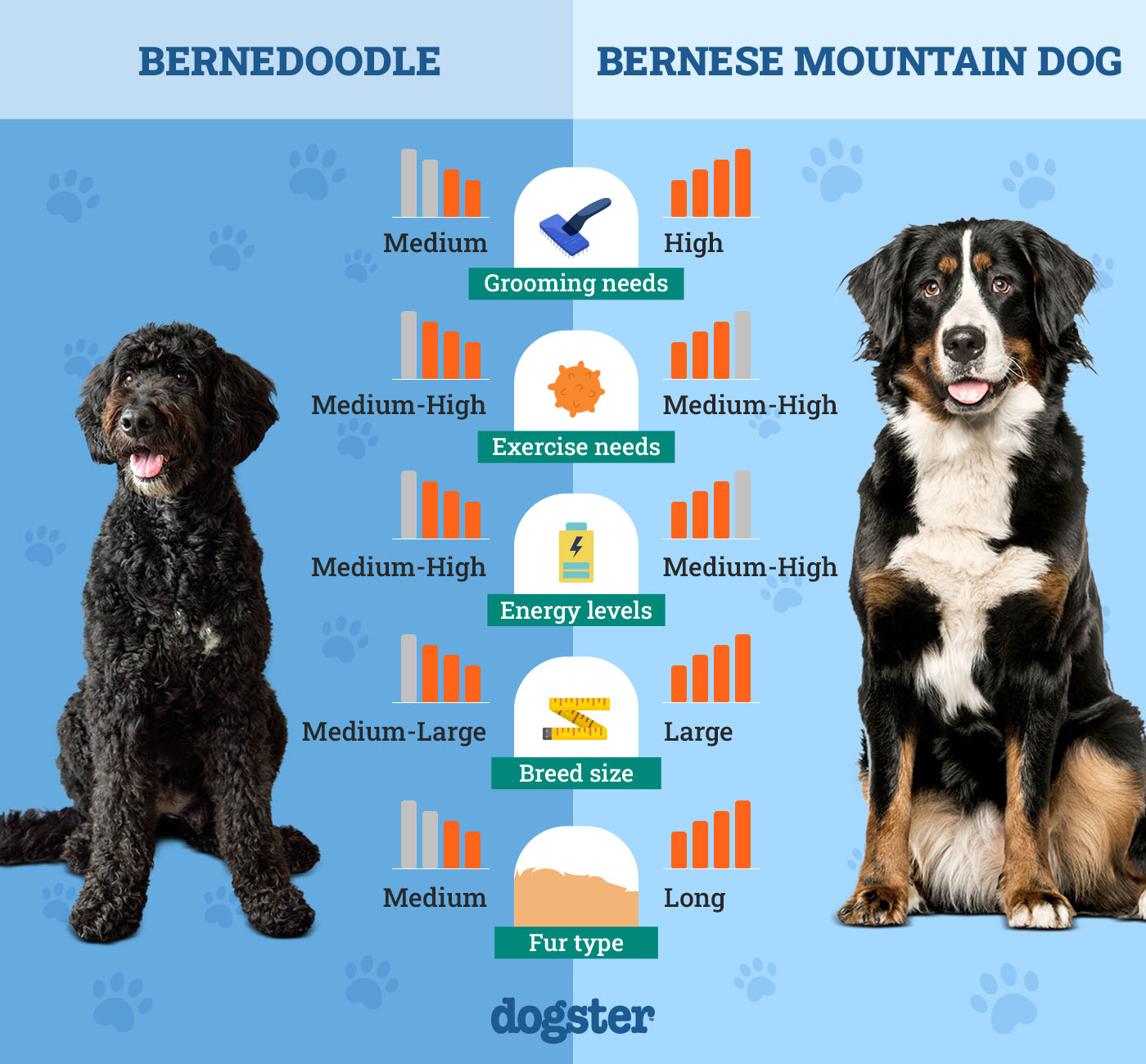
Dogster_Side by Side Comparison_ Bernedoodle vs Bernese Mountain Dog
You’re welcome to use our images, but we require you link directly to this site for credit (ex. Image from Dogster)

At a Glance

Bernedoodle
  • Average height (adult): 21–26 inches
  • Average weight (adult): 55–90 pounds
  • Lifespan: 10–13 years
  • Exercise: 2+ hours a day
  • Grooming needs: Moderate to high
  • Family-friendly: Yes
  • Other pet-friendly: Mostly
  • Trainability: Intelligent, stubborn, trainable with positive reinforcement
Bernese Mountain Dog
  • Average height (adult): 23–28 inches
  • Average weight (adult): 70–115 pounds
  • Lifespan: 7–10 years
  • Exercise: 1+ hours a day
  • Grooming needs: High
  • Family-friendly: Yes
  • Other pet-friendly: Often
  • Trainability: Intelligent but stubborn and friendly

divider dog paws 2 oct 2024

Bernedoodle Overview

Bernedoodle Puppy lying on the ground
Image Credit: jcburke, Shutterstock

Bernedoodles are a cross between the Bernese Mountain Dog and the Poodle, which means they share both dogs’ characteristics. Their coat colors range from white, black, brown, and rust. They have fluffy, curly fur that needs regular care to stay brilliant and gorgeous but have an affectionate temperament. They share the Bernese Mountain Dog’s appearance and many of the Poodle’s personality traits.

An important characteristic to note is the difference in their lifespans. Bernedoodles live longer than Bernese Mountain Dogs, living an average of 13 years compared to just 7 to 10 years.

Grooming

As a Poodle offshoot, Bernedoodles need more frequent brushing and grooming than Bernese Mountain Dogs. The silver lining is that they shed less, but they’ll still shed a lot in the hot summer months to keep them cool.

Personality & Temperament

Any crossbreed involving the Poodle will be affectionate, and the Bernedoodle is no exception. They’re an energetic, friendly hybrid that does well with active families or single people. The Bernedoodle needs thorough training and socialization to become a well-behaved dog, but due to the Poodle’s influence, they may be easier to train than a Bernese Mountain Dog.
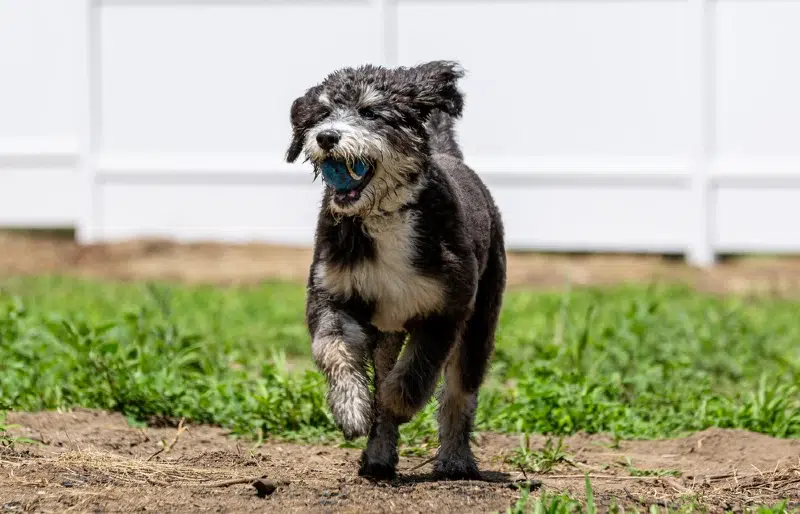
bernedoodle puppy running with toy ball in its mouth
Image Credit: jcburke, Shutterstock

Health Issues

While healthier than Bernese Mountain Dogs, Bernedoodles can inherit some of their issues and some of the Poodle’s common health problems. From the Bernese Mountain Dog, elbow and hip dysplasia are risks to keep an eye on, and the Poodle can pass down ocular diseases like cataracts from retinal degeneration.

Suitable for:

Bernadoodles are suitable for active individuals or families that get a moderate to high amount of exercise. Bernedoodles have a lot of energy and need a lot of exercise to wear them out compared to Bernese Mountain Dogs, so that needs to be planned accordingly when you adopt one.

The Bernedoodle may also inherit the Poodle’s aloof character. Bernese Mountain Dogs are more sociable, but Bernedoodles can take more work to socialize with unfamiliar family members or pets. They’re better suited for families without other pets, but you can socialize them with patience.

divider dog paws 2 oct 2024

Bernese Mountain Dog Overview

Bernese mountain dog
Image Credit: otsphoto, Shutterstock

Bernese Mountain Dogs are herding dogs native to the Swiss Alps, with long wavy fur in several common color configurations: white, black, brown, and rust. Atypical colorings may be mixed in from other breeds, but those are the most common. They were slower to come to the United States than other breeds but enjoy great popularity today.

Grooming

Like most long-haired large dogs, Bernese Mountain Dogs need a regular grooming routine for their fur to stay clean and untangled. When neglected, a Bernese Mountain Dog’s fur can become tangled or matted over time. They need to be brushed daily to remove loose, dead hair. Around the feet are problem areas, and regular trims are needed to prevent shaggy toe hair that could obscure long nails.

Ancestry

Also known as the Berner Sennenhund, Bernese Mountain Dogs can trace their ancestry to herding dogs in the Swiss Alps. Most historians believe the breed is descended from the Mastiff-type hunting dogs brought to the country during the Roman expansion over a millennium ago, which were bred with local herding dogs to make the Bernese Mountain Dogs we know and love today.

Woman walking two bernese mountain dogs a sunny day in the park
Image Credit: tugol, Shutterstock

Health Issues

Sadly, Bernese Mountain Dogs are more vulnerable to health conditions, including cancer and hip and elbow dysplasia, than most breeds. Dysplasia is a painful joint condition where the joints don’t grow and develop normally, so you’ll have to watch out for it and have your Bernese Mountain Dog regularly checked out to prevent it.

Suitable for:

The Bernese Mountain Dog is suitable for nearly any family with experience with large dogs. They are undemanding compared to many other breeds. Despite their lineage as hunting/herding dogs, Bernese aren’t energetic dogs and only need about an hour of vigorous exercise per day. As long as you exercise them, maintain veterinary appointments, provide a balanced diet, and keep them well-groomed, a Bernese Mountain Dog could be the ideal pet.

divider dog paws 2 oct 2024

Which Breed Is Right for You?

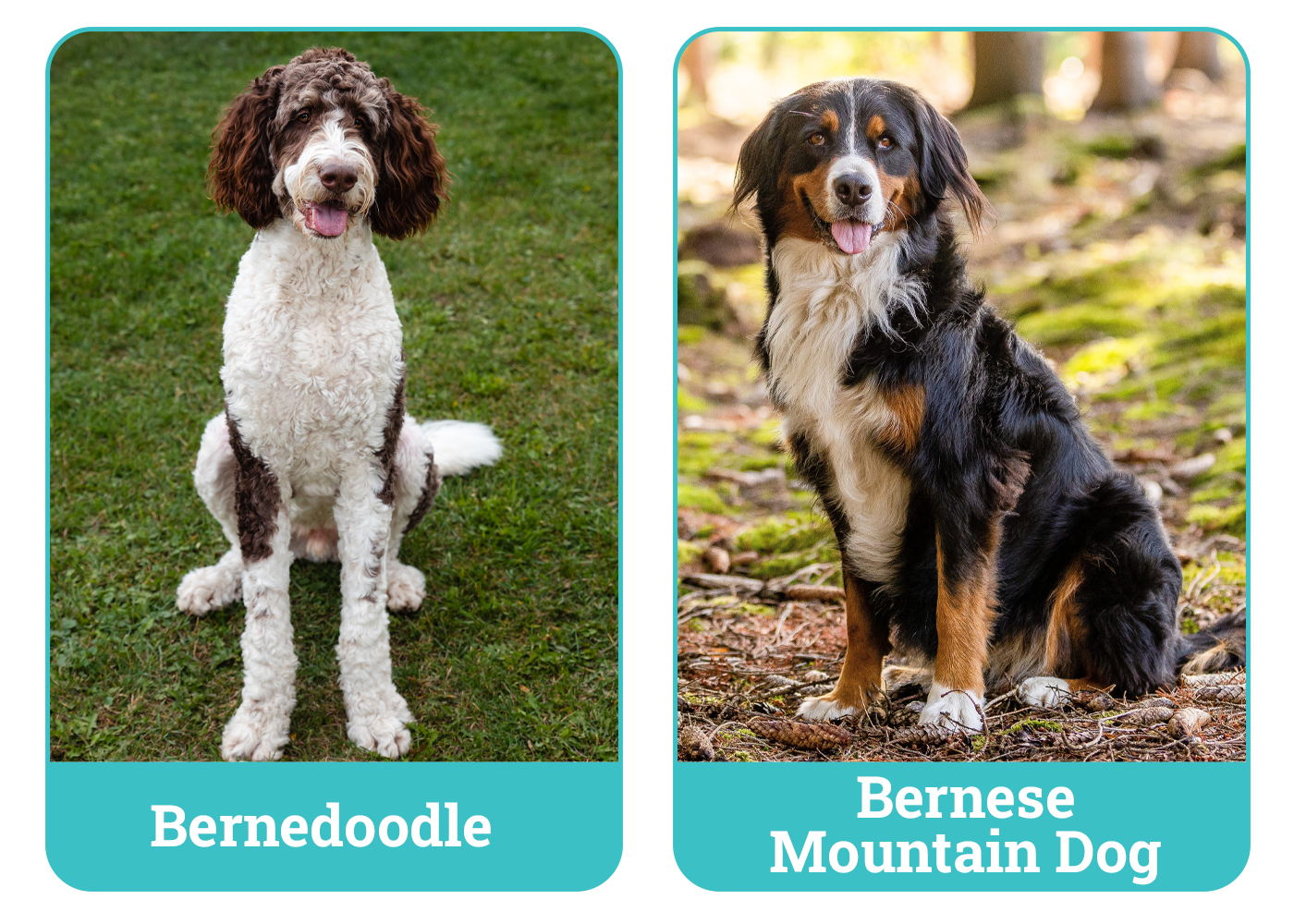
Bernedoodle vs Bernese Mountain Dog
Image Credit: Left: (Cavan-Images, Shutterstock); Right: (Nicole Lienemann, Shutterstock)

If you have a high-energy house, perhaps with smaller kids, the Bernedoodle is probably more suitable for you. They’re more energetic with an overall smaller size than the Bernese Mountain Dog but may inherit some health issues from either parent.

The Bernese Mountain Dog is a great pet for nearly any house in need of a large dog. They aren’t especially hyper and require an average amount of exercise, but they need more regular grooming and vet checks to stay healthy and happy.

See Also:

Want content like this delivered to you?

Sign Up For Our Newsletter

News, insights, expert advice, and everything dog

* By submitting, you agree to our Terms & Conditions and Privacy & Cookies Policy.


How useful was this post?

Click on a star to rate (you can leave written feedback after clicking submit)

Help us improve Dogster for pet parents!

Your feedback really matters.

What did you like about this post? Also how can we improve it?

Join the conversation

Leave a Reply

You’re very welcome to leave a comment or question. Please know that all comments must meet our community guidelines, and your email address will NOT be published. Let’s have a positive and constructive conversation.


Talk With A Vet Online

Peace of mind,
anywhere, anytime

Affordable vet advice

Do Dogs Know When You’re Sad? Interesting Facts & Tips

If you aren’t a dog lover, you may not understand the connection between an owner and their canine best friend. Dogs are often...

Can Dogs Eat Mahi Mahi? Vet-Reviewed Facts

Providing your dog with the best possible diet is a top priority for all dog owners, but sometimes we may feel like our...

7 Common Miniature Schnauzer Health Problems: Vet-Verified Causes, Signs & Treatment

As the saying goes, good things come in small packages. And this is also true for our canine companions. On the other hand,...

Can Dogs Eat Shiitake Mushrooms? Vet-Verified Nutrition Facts & FAQ

Mushrooms are a complex food. While many types offer a nutrient-loaded, low-calorie, savory, and meaty addition to your recipes, others can be deadly...

More related

Can Dogs Eat Sour Patch Kids? Keep Your Dog Healthy!

If your dog begs for any food you put in your mouth, it probably won’t stop just because you’re eating something unsafe for...

How to Train a Weimaraner: 10 Expert Tips & Common Mistakes

Are you a proud owner of a Weimaraner dog, but struggling with training them to be their best selves? If so, look no...

8 Samoyed Mixed Breeds: Info, Pictures & Facts

Samoyeds are popular due to their magnificent all-white coats and lively demeanor. Samoyed mixed breeds can be developed by crossing them with other...

How to Clean Dog Hair Out of a Washing Machine: 4 Simple Removal Steps

If you own a shedding dog, you know that their hair can get everywhere. It gets stuck to clothes, furniture, and bedding. Unfortunately,...

Keep reading

How Much Food Should My Havanese Eat Per Day? Vet Reviewed Guidance

A lot goes into feeding a dog, so if you’re stumped on how much to feed your Havanese, you’re not alone. The truth is, there is no set answer on how much to feed your Havanese. Each dog requires a...

Havanese dog eating

What Is Powdered Cellulose in Dog Food? Vet-Approved Safety Facts & FAQ

Choosing the best food for our furry companions is no easy task. With more options and specialized diets available than ever, pet parents are often left in the dark about what goes into their pet’s food. Cellulose is a fiber...

Powdered cellulose in a wooden bowl

Can Dogs Eat Caviar? Vet-Reviewed Nutrition Facts

As dog owners, we want the best for our pets, including what they eat. However, some dog parents take things to the next level by offering their pups gourmet human foods, such as caviar. While dogs can occasionally eat caviar,...

Can Dogs Eat_Cassava

Can Dogs Eat Blueberries? Vet-Verified Nutrition Facts & Tips

Many fruits are completely dog-friendly and are even put into commercial dog food recipes to enhance nutrition. Still, it’s always best to check the safety of certain plant-based foods before you offer them to your pet. So, are blueberries safe...

Can Dogs Eat_blueberries

Can Dogs Eat Tamarind? Vet-Verified Nutrition Facts & Info

Tamarind is a pod-like fruit with a tangy and sweet flavor. It’s native to tropical Africa, though it can grow in some places in the United States (namely Southern Florida). Though it is not as easy to find in most...

Dogster-Can-Dogs-Eat-Tamarind

Can Dogs Have Snow Cones? Vet-Approved Health & Nutrition Facts

Few treats are better for cooling us down on a hot summer day than a crisp, flavorful snow cone. As the furriest members of the family, our dogs can often use the relief from the heat more than anyone. There...

Snow Cone in a bowl

How to Cook Pumpkin for Dogs: Recipes & What to Know

Pumpkin is a staple vegetable, especially during autumn, when it even becomes a symbol for the season and we all proudly sport our pumpkin-themed sweaters and show off our pumpkin carving skills. A lot of us get our dogs involved...

homemade pumpkin puree in a bowl

Can Dogs Have Twizzlers? Vet Approved Facts & FAQ

Dogs enjoy eating many human snacks, and it’s really difficult to resist sharing your food when your dog is giving you puppy eyes. Fortunately, there are many healthy snacks like fruits and vegetables that you can give to your dog...

Dogster-Can-Dogs-Have-Twizzlers

Love Dogs? So Do We! Join the Dogster Community

Stay informed with expert pet care insights delivered straight to your inbox! Discover professional guidance on animal behavior, feeding tips, trusted product picks, and much more.


Sign up for the Dogster Email Newsletter