In this article
If you’ve been thinking of adding an Australian Shepherd (Aussie) to your household, you should first get to know the breed to ensure that they would be a good fit. For example, knowing whether a breed has aggressive tendencies is essential! But is the Aussie capable of aggression?
Australian Shepherds are not known to be aggressive, but their herding instincts can make them pushy and bossy. Also, no matter how loving a breed is reported to be, any dog is capable of aggression depending on the circumstances.
Here, we take a closer look at the Aussie’s temperament, along with methods that you can use to curb any unwanted behaviors.

A Short History of the Australian Shepherd
The Australian Shepherd was bred for herding and eventually became a popular ranch dog in California. Their ancestors originally came from Spain’s Basque region and were brought to Australia in the early 1800s.
From here, the Basque shepherds emigrated to California, where the ranchers assumed that these dogs were Australian, and the name took hold.
They became popular in rodeos for their herding skills and for their energy, intelligence, and capability to learn tricks that were to be performed in front of many audiences.
The Australian Shepherd is technically an American breed, as they were bred and refined in the States to become the Aussie that we are familiar with today.

The Temperament of the Australian Shepherd
Aussies are loving and exuberant dogs! They are high energy and athletic and equally friendly and social.
They develop strong bonds with their family. They are also loyal, sweet tempered, and protective dogs that make excellent family pets.
Where things can be tricky with the Aussie is their background. Their herding instinct is quite strong and can be challenging to deal with.
Many herding dogs try to herd almost anything that moves. This can include cars and bikes outside and family members and other animals in the house. Herding behavior consists of an almost stalking-like body language, followed by the Aussie herding by nipping at the subject’s heels.
This behavior is not aggressive in any way — it’s just a natural instinct that kicks in. But this is why training is essential, as it can be dangerous for the dog and annoying for everyone else.

What Signs of Aggression Should You Look Out For?
All dogs are capable of aggression. It’s not typical behavior for Australian Shepherds, but under the right circumstances, it’s possible.
Dogs in pain or that feel threatened can show signs of aggression even when they are typically good-natured.
Here are a few common signs of aggression in dogs:
- Bared teeth
- Growling
- Rigid tail and stiff body
- Lunging
- Biting
There’s also the potential for aggression toward other animals. These dogs have a protective nature, which might come into play if they believe that their family is under threat.
If your Aussie seems to regularly display these signs, you should speak to your vet and get advice from an animal behaviorist.
If you need to speak with a vet but can't get to one, head over to PangoVet. It's our online service where you can talk to a vet online and get the advice you need for your pet — all at an affordable price!
How to Help Your Dog Avoid Aggression
The potential for aggression can start at a young age, but it can be dealt with through socialization, training, and physical and mental stimulation.
1. Socialization
Socializing your dog is vital! The better the dog is socialized, the less likely that they’ll have behavioral and aggression problems.
The best time to start socializing a dog is between 7 weeks to 4 months of age. But if you’re adopting an adult dog, you can still socialize them. It just takes more time and patience.
Socialization means you should expose your puppy or dog to as many new environments, people, and other pets as possible. Your dog should meet different people of various ages and genders and pets, like cats and other dogs.
Socialization will give your dog self-confidence, and they will approach most situations with interest rather than fear or aggression.

2. Training
The next essential step is to ensure that your Aussie has at least basic training. Australian Shepherds respond quite well to reward-based training; like most dogs, they are food motivated and eager to please.
Never use any punishment if your dog does something wrong, as they will only learn to fear you. Just redirect and start over. When your dog gets something right, give them a treat and plenty of praise.
At a minimum, they should learn to “stay,” “sit,” and “come,” in addition to walking on a leash. Find a treat that your dog absolutely loves and only give it to them during training. This will make your Aussie that much more motivated.
3. Physical and Mental Stimulation
Dogs that are bored and don’t get a reasonable amount of exercise, particularly high-energy dogs like the Aussie, are likely to act out in destructive ways. It’s rare that an Australian Shepherd will act out aggressively, but you could still end up with a dog that is difficult to control.
Aussies need a minimum of 1 to 2 hours of exercise every day to meet their needs. They are working dogs, which means they are happiest when they have a job to do, so you can involve them in agility or herding trials, as well as obedience or dock diving.
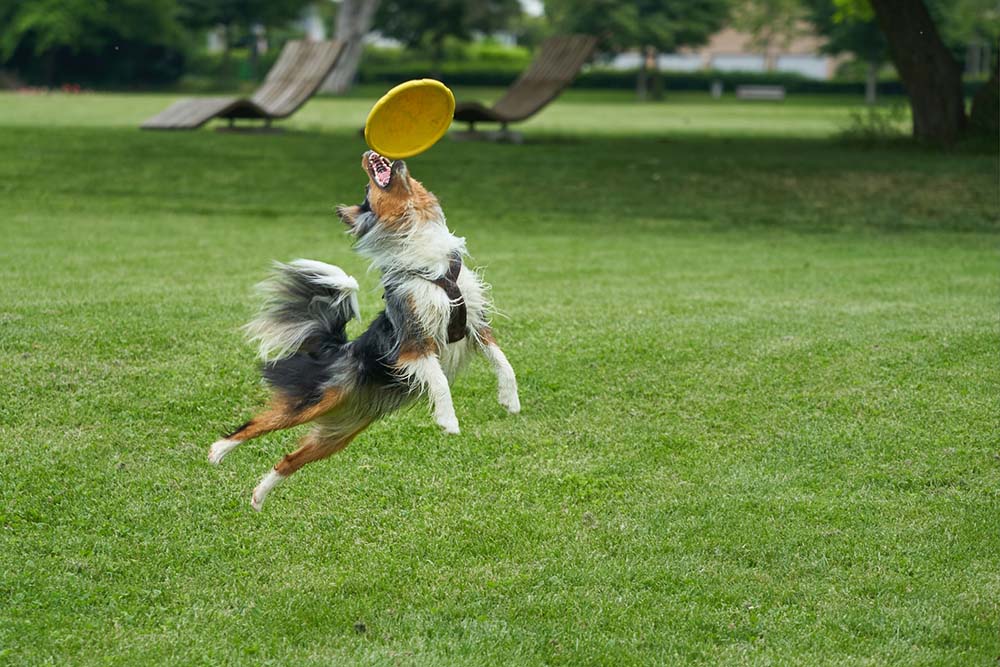
You should walk your dog every day and play with them too. Throw balls and Frisbees, go for hikes, and take them swimming. Many of these activities will forge an even stronger bond with your dog and help them release all that pent-up energy.
Other Causes of an Aggressive Australian Shepherd
There are a few other factors that can make a normally docile dog act aggressively.
Stress
Stress can be destructive for any of us. If your dog is suffering from stress, this can potentially lead to aggression.
Most dogs react similarly to the same kinds of stress, which are broken down into phobias, fear, and anxiety.
- Fear: This can be triggered by being put into a frightening and unfamiliar experience. It’s typically in response to an external threat.
- Anxiety: This is where separation anxiety can come into play, except the reaction might be more extreme. This stress is related to the anticipation of a threat or danger.
- Phobias: The most common phobias are related to noise, such as loud noises, thunderstorms, and fireworks.
Speak to your vet if you suspect that your Aussie has stress and anxiety issues. There are medications that your dog can take if their stress levels are significant. There’s also the use of desensitization.
Pain or Illness
When a dog is ill or in pain, they can lash out aggressively. If your Aussie was fine one day and suddenly nipping at you the next, you should bring them to the vet to rule out any ailments or injuries.
This is crucial: If you attempt to understand your dog’s sudden aggression without seeking help, you might misinterpret the cause, which could lead to making the behavior worse.

Different Types of Aggression
- Territorial: This is a common one. When dogs perceive a threat to their space, they can be territorial and appear aggressive.
- Fear: When a dog is frightened, they might hide or attack if they are cornered.
- Defensive: This is similar to fear aggression, but the dog doesn’t necessarily retreat but rather goes on the defensive. They usually give clear signs that they want to be left alone.
- Possessive: This is where resource guarding comes into play. Some dogs don’t want to share their toys or food and can exhibit aggression toward anyone trying to take these things away.
- Protective: Aussies are quite protective of their owners, and if they believe that their humans are under threat, they can lash out.
In Conclusion
While Aussies are not known to be aggressive, there is always a chance that they could act that way under certain circumstances. But as long as your Australian Shepherd has been socialized and trained well and you provide them with plenty of exercise and love, your dog will be a gentle and loyal addition to your family.
Related posts:
- How to Take Care of a Pet Rat: Fact Sheet & Advice
- English vs Australian Shepherd: The Differences (With Pictures)
Featured Image Credit: Alexandra Morrison Photo, Shutterstock