In this article
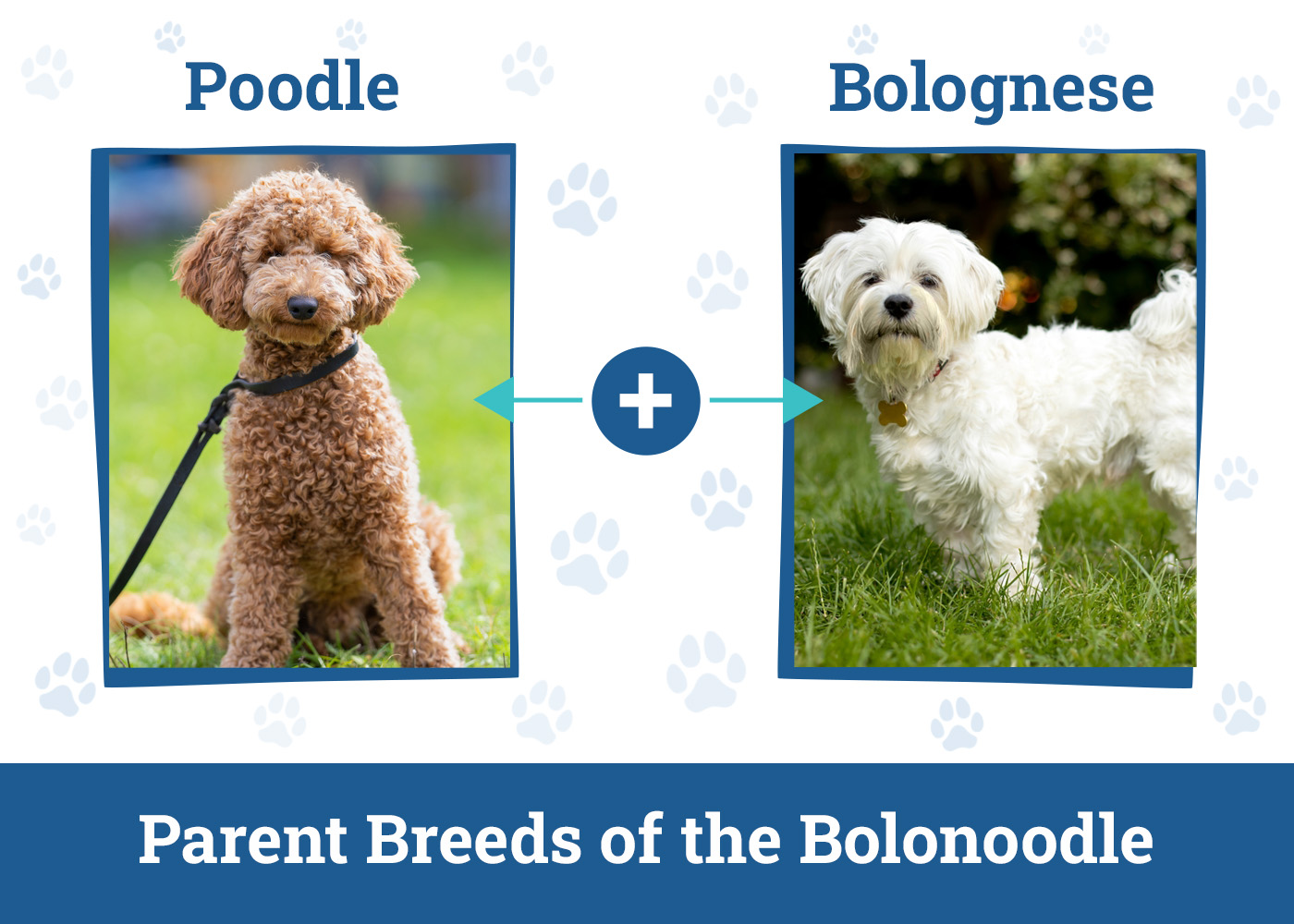
View 8 More +A relatively recent addition to the designer dog scene, the Bolonoodle is a cross between a Poodle and a Bolognese. While poodles are pretty prevalent pooches, Bolognese are far less common, making this hybrid breed a rather rare specimen. But if you can find one, Bolonoodles have a lot to offer, from their friendly disposition to their low-maintenance upkeep, these dogs are ideal companion pets.
Breed Overview
Height:
10 – 12 inches
Weight:
6 – 12 pounds
Lifespan:
12 – 15 years
Colors:
Cream, white
Suitable for:
Any family or individual that wants a low-maintenance, low-allergy companion dog
Temperament:
Playful, affectionate, friendly, inquisitive, mischievous, outgoing
Highly intelligent canines, Bolonoodles will need plenty of mental stimulation. Thankfully, the breed isn’t terribly energetic, so they don’t require too much in the way of exercise. They’re also very compact dogs, never standing taller than 12 inches or weighing more than 12 pounds. As such, they don’t require much space, making the Bolonoodle a great choice for anyone in an apartment or other small abode.
Bolonoodle Characteristics

Bolonoodle Puppies
Since the Bolonoodle breed is still in its infancy stage, there aren’t any breed standards to go by. No standardized prices are set for the breed. However, because the breed is not officially recognized, Bolonoodles can’t come with papers and pedigrees. There are no show-quality Bolonoodles because they can’t be entered into shows. If you want to purchase a Bolonoodle, you’re going to have to search hard for an individual who’s breeding them, and they might not be the most reputable breeder around.
When you find a breeder of these dogs, make sure you do some due diligence and check on the breeder a bit. Find out if there are any complaints against them and take a close look at the conditions the puppies are kept in to make sure that everything seems safe. You don’t want to bring home a diseased dog that’s going to be accompanied by hefty vet bills shortly down the line.
Temperament & Intelligence of the Bolonoodle 🧠
Friendly and good-natured, the Bolonoodle is a breed that gets along with everyone. These dogs are extremely social and don’t tend to be shy with anyone, even strangers. They’re playful and fun, but without excess energy that you’ll need to burn off. Anytime you want to play, your Bolonoodle will be ready as well, but if you want to cuddle up on the couch instead, your Bolonoodle will be equally ready for that.
Are These Dogs Good for Families? 👪
Because they’re so friendly and social, Bolonoodles make excellent family pets. They want to be friends with everyone, soaking up all the attention they can get. These dogs get along great with children too. Just make sure that kids don’t play too rough with them. Bolonoodles are quite easy to hurt due to their small stature.
Does This Breed Get Along with Other Dogs? 🐶 😽
The Bolonoodle’s propensity to make friends with everyone doesn’t end with humans. These dogs are just as friendly with other dogs. However, you’ll have to be careful. Since Bolonoodles are pint-sized pups, they can often be in danger around larger dogs. Even if the bigger dog is friendly and not threatening, it might accidentally step on the Bolonoodle, which could cause injury to a dog under 12 pounds, depending on how large the other dog is.

Things to Know When Owning a Bolonoodle
Food & Diet Requirements 🦴
At less than 12 inches tall and 12 pounds in weight, Bolonoodles are some seriously small dogs. As such, they don’t require much food. There’s very little chance of underfeeding your Bolonoodle, though these dogs are highly susceptible to obesity. Make sure to monitor your dog’s food intake and prevent overfeeding. It doesn’t take much to overfeed such a small dog.
These dogs will do best on high-quality dry food that’s geared towards small breeds. Ideally, it will be fortified with glucosamine and chondroitin to reduce your Bolonoodle’s chance of experience hip dysplasia, which is common in the breed. Alternatively, you can supplement your dog’s diet with a joint health chew like the PetNC Natural Care Hip and Joint Mobility Support Soft Chews.
Exercise 🐕
Thankfully, Bolonoodles aren’t the most energetic dogs. They have plenty of energy for playtime, but not so much that you’ll need to set aside time to wear your dog out. If you take your Bolonoodle for two good walks each day, you’ll be offering plenty of physical activity for a dog of this size and energy level.
Training 🎾
Bolonoodles are very smart dogs. They come from two smart parent breeds, which should make them pretty easy to train. For the most part, this is the case, though female Bolonoodles are often stubborn and independent, which can make them harder to train than males.
Grooming ✂️
By appearance, you might expect a Bolonoodle to require some serious grooming and upkeep. After all, they have a ton of hair, and it can grow into a tangled mess. But remember, these dogs are also hypoallergenic and they don’t shed much. In truth, Bolonoodles need only moderate grooming. If you leave its coat long, you’ll need to brush it every day. But if you keep your Bolonoodle’s coat trimmed shorter, then you’ll only need to brush it two to three times a week.
- You might also be interested in: 11 Best Dog Wipes: Reviews & Top Picks
Health and Conditions 🏥
It’s generally thought that the offspring created by crossing two different dog breeds are healthier than either parent breed. If a particular breed is highly susceptible to a certain health condition, then crossing them with another breed that’s resilient to that condition can make the hybrid dog less likely to experience it. However, this doesn’t seem to be the case with the Bolonoodle; a breed that’s susceptible to quite a few health concerns.
- Obesity: Obesity is the most common preventable disease experienced by dogs in North America, affecting 25%-30% of the domestic dog population. A dog is considered obese when it’s 20% or more above its ideal body weight. Obesity will shorten a dog’s lifespan and increases its vulnerability to disease.
- Diabetes: Diabetes in dogs is similar to diabetes in humans. It comes in two forms: insulin-deficiency diabetes and insulin-resistance diabetes. Both are manageable, though neither is curable. For dogs, insulin-deficiency diabetes is the most common type.
- Urolithiasis: More commonly known as urinary stones, urolithiasis is when hard stones form in the urinary tract, caused by the buildup of minerals.
- Sebaceous Adenitis: Sebaceous adenitis is a pretty rare immune-mediated condition that leads to inflamed skin that forms scales and crust.
- Hip Dysplasia: Hip dysplasia is one of the most common health conditions that plague older dogs, and it’s just as common in tiny toy breeds as in large breeds. With this condition, the femur and hip fail to form correctly, causing the femur to rub on the hip socket, resulting in pain, deterioration of the bone, and loss of mobility.
- Retinal Dysplasia: Retinal dysplasia is an early-onset form of progressive retinal atrophy that usually becomes noticeable around 2-3 months old. It’s when the eye’s photoreceptor cells form incorrectly, which causes loss of vision and blindness.
- Patellar Luxation: Patellar luxation is a kneecap that dislocates. It’s usually noticed first as skipped steps, though can eventually lead to lameness.
- Progressive Retinal Atrophy: Progressive retinal atrophy is the degeneration of photoreceptor cells in the eyes that leads to vision loss and blindness.
- Mitral Valve Disease: Mitral valve disease is when the mitral valve of the heart begins to leak. It can cause heart murmurs and congestive heart failure.

Male vs Female
Physically, there’s not a lot of difference between male and female Bolonoodles. All Bolonoodles are small dogs, so size differences between the sexes are minimal. However, there are notable temperamental differences between males and females.
Females tend to be independent and stubborn. Males are usually the friendlier dogs that want to please their owners. This makes males much easier to train. The stubborn independence of a female Bolonoodle can be difficult for anyone to train, but especially for a new dog owner.
3 Little-Known Facts About the Bolonoodle
1. They’re Generally Considered to Be Hypoallergenic
Both Poodles and Bolognese are considered to be hypoallergenic dogs. It only makes sense that their offspring, the Bolonoodle, would also be hypoallergenic. Though it might seem surprising when looking at the matted mass of fur that Bolonoodles grow, these dogs don’t shed much at all, and they tend to have a minimal effect on allergy sufferers.
2. They Become Mischievous Without Mental Stimulation
Bolonoodles are highly intelligent canines. Poodles are widely considered to be some of the smartest dogs in the world, and Bolognese are thought to be the smartest of the Bichon-type breeds. Put them together and you get a very smart dog that needs a lot of mental stimulation. Without enough mental engagement, your Bolonoodle could easily become mischievous and even destructive. You can avoid this with games that offer rewards for achieving goals, like the Frisco Hide and Seek Plush Volcano Puzzle Dog Toy.
3. Many Bolonoodles Love the Water
Today, poodles are mainly kept as companion pets, but that wasn’t the intention when the breed was first created. Like the Labrador Retriever, Poodles were originally created to be water retrievers that would retrieve waterfowl shot down by hunters in bodies of water. To be successful, these dogs had to be great swimmers and love the water, which is a trait still shared by Poodles and their offspring today, including the Bolonoodle.

Conclusion
Bolonoodles make great companion pets. They have minimal maintenance needs and are incredibly friendly, playful dogs. Bolonoodles need only moderate amounts of exercise and space, so they’re a great fit for apartment dwellers. These dogs have enough energy to be playful and fun, but not so much that you’ll need to devote hours of time to ridding them of excess energy. Highly intelligent canines, Bolonoodles do require lots of mental stimulation to alleviate boredom and prevent mischievous behavior.
Thanks to hypoallergenic parents and a coat that sheds very little, Bolonoodles are generally hypoallergenic as well. They have long coats that need only minimal maintenance, particularly if you keep them trimmed somewhat short. Overall, they’re excellent companion pets, though finding one can prove to be the hardest part about keeping one!
If you’re having trouble finding this combination, there are lots of other Poodle Mixes out there!
Featured Image Credit: SasaStock, Shutterstock