In this article
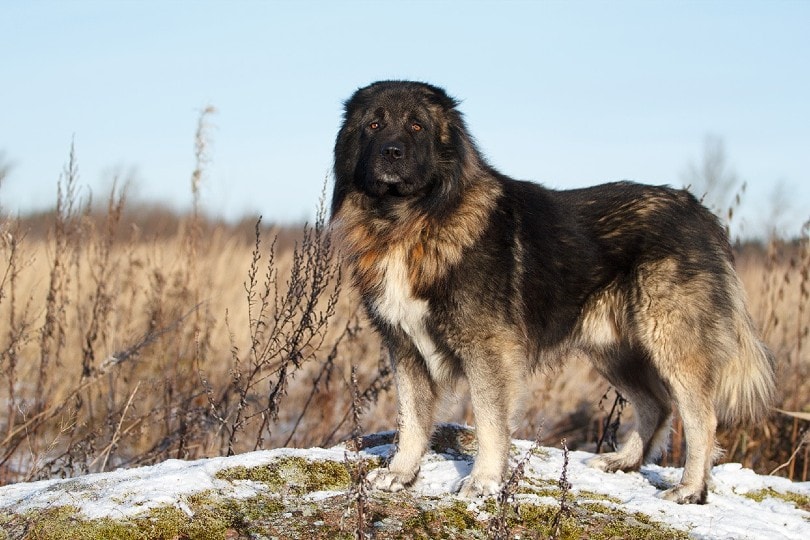
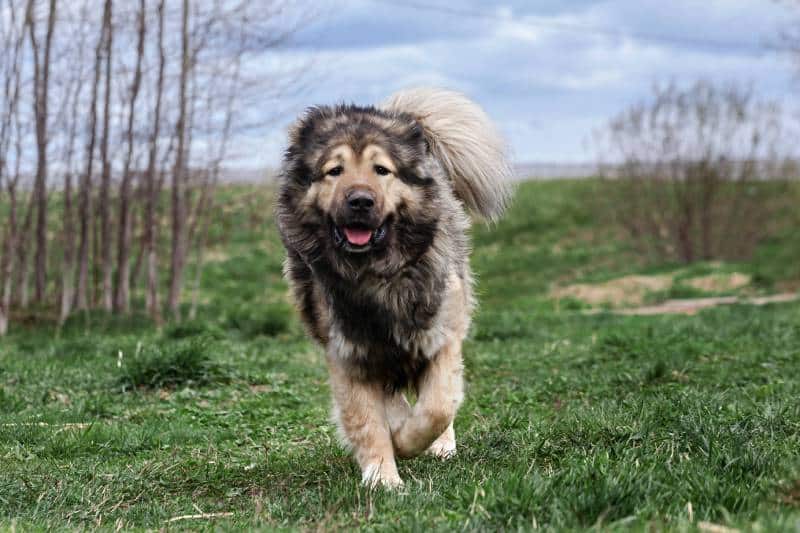
View 8 More +The Caucasian Ovcharka, also known as the Caucasian Shepherd, is a giant working dog breed originating in the Caucasus region of Europe. Don’t let their adorable fluffy exterior fool you, though. This is a fiercely protective guardian bred to protect at all costs. This breed is suitable only for a hardy few; are you one of them? Read on to learn more.
Breed Overview
Height:
23–30 inches
Weight:
99–170 pounds
Lifespan:
10–12 years
Colors:
White, fawn, cream, gray, rust
Suitable for:
Experienced dog owners, active families with older children
Temperament:
Stubborn, independent, friendly, loving, aggressive toward strangers
The Caucasian Ovcharka is a cute, fluffy dog, but their personality doesn’t always match their adorable outward appearance. This is a fierce guardian with highly evolved predatory instincts, though they are capable of being soft and submissive with the right owners.
Caucasian Ovcharka Characteristics

Caucasian Ovcharka Breed Puppies
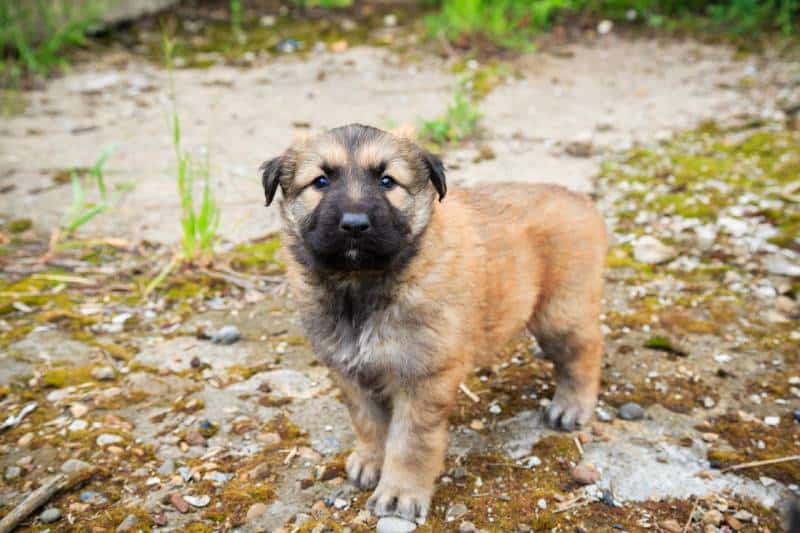
The Caucasian Ovcharka is a rare breed, but it’s not impossible to find in North America. You may have better luck adopting one from a local rescue or shelter than from a breeder. Puppies can be challenging to find because many unethical breeders will slap the “Caucasian Ovcharka” label on anything that remotely resembles them. That said, you can check out the American Kennel Club Marketplace to find legitimate breeders in the U.S.
Temperament & Intelligence of the Caucasian Ovcharka 🧠
The Caucasian Ovcharka is a guardian dog that should always be taken seriously. The Caucasian Ovcharka was originally bred as a livestock guardian, defending sheep from predators like wolves and thieves. They have also served as bear-hunting dogs and even worked as guards for prisons in Russia.
They’re very bold, confident, and fierce when they sense nearby threats. However, they’re soft, loyal, and kind toward their family members. These beautiful dogs are loving toward their families but can be weary of strangers, highly territorial, and protective. They can be laidback, but they’re not a dog that will back down from a fight, be it with the mailman or a wolf trespassing on your property.
Caucasian Shepherds are intelligent, but they can be stubborn. This may make training them challenging. For this reason, they should be adopted only by experienced dog owners who are well-versed in training. Just because training is hard doesn’t mean it can be skipped. An improperly trained and socialized Caucasian Ovcharka can become an absolute menace. They need firm boundaries, consistency, and a patient and dedicated owner.
Are These Dogs Good for Families? 👪
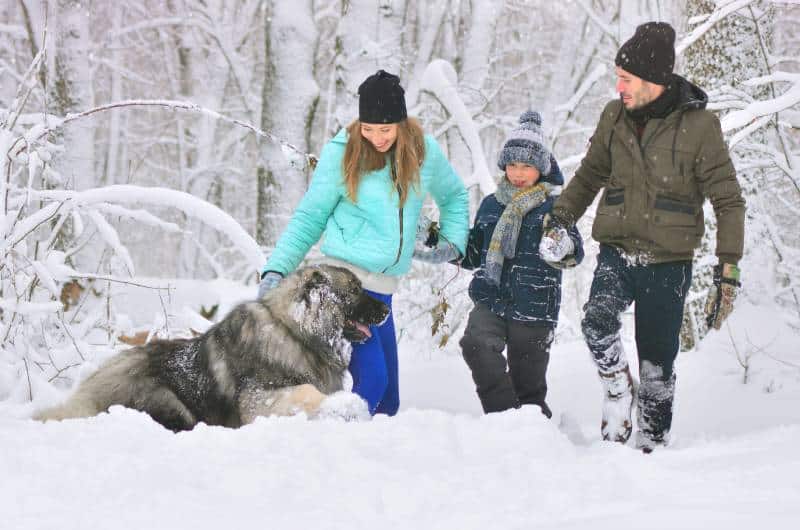
The Caucasian Ovcharka may be a suitable dog for families with older children, provided they receive proper training and socialization. It is important to remember just how big this breed can get (up to 170 pounds!) when considering their suitability for your family. Additionally, they do have a potential for aggression, which doesn’t make them the best choice if your children are still young.
Because they are so loyal and protective, the Caucasian Ovcharka can make a fantastic watchdog and companion in the right home.
Does This Breed Get Along With Other Pets? 🐶 😽
The Caucasian Ovcharka may be able to live harmoniously alongside other pets if they’re brought up together and both trained and socialized properly. However, the breed’s propensity toward aggression may make them incompatible with other animals. Early socialization is key to increasing the likelihood of introducing a Caucasian Ovcharka to other household pets.

Things to Know When Owning a Caucasian Ovcharka
Food & Diet Requirements 🦴
As an extra-large breed, the Caucasian Ovcharka require a well-balanced dog food appropriate for their life stage. Most large and extra-large dogs should be fed two to three times daily. Giant dogs need to eat more calories to maintain their weight, but you don’t want to feed them too much in a single meal because this can increase the likelihood of gastric dilatation-volvulus (GCV) or bloat. GDV is a life-threatening condition that occurs when the stomach fills up too quickly with gas and rotates on itself, blocking the entrance and exit of the stomach.
As puppies, owners must feed them puppy food designed specifically for large-breed dogs to account for their rapid growth and development.
Exercise 🐕
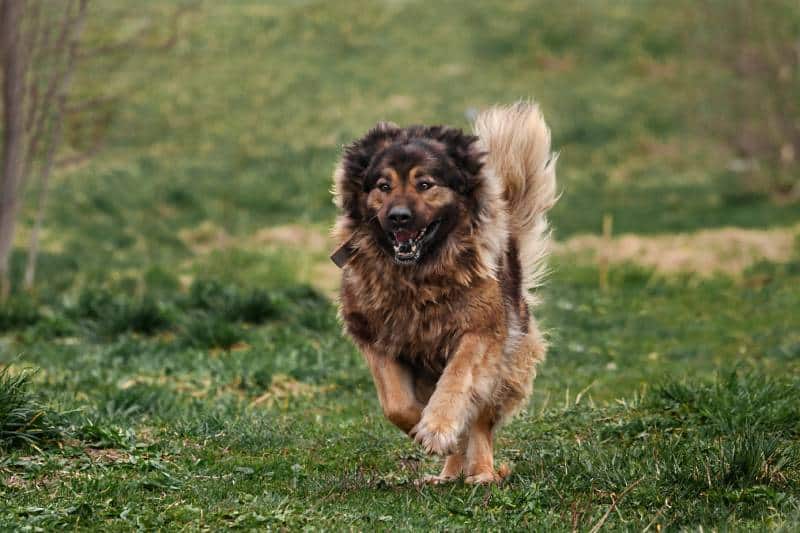
Caucasian Shepherds are happiest and healthiest in homes with a yard for them to be active in. This is not an apartment dog. They do well with families that stay active and will take them for their daily walks. It’s important to keep them leashed when on outings with them and to ensure your yard is properly fenced in to prevent escapes.
Though they are low energy compared to other large breeds, the Caucasian Ovcharka should have good enough stamina for walking and hiking.
Training 🎾
Training a Caucasian Ovcharka is an absolute non-negotiable for these large and powerful dogs. Without proper training, they can become unruly, possessive, and aggressive. They need a lot of obedience training and positive reinforcement from a young age to grow to be well-rounded adults. The Caucasian Ovcharka isn’t known for having patience. Their stubbornness and strong will can also make training challenging. Owners may wish to consult with professional dog trainers or behaviorists to help them get off on the right foot.
Grooming ✂️
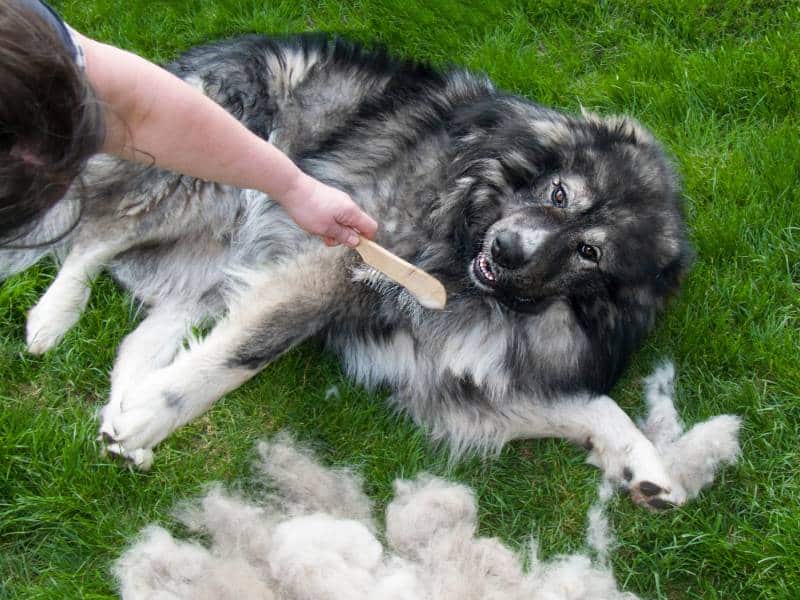
These beautiful dogs can have short-, medium-, or long-length coats, so their grooming requirements will vary from dog to dog. Those with long coats will require daily brushing, especially around the ears and rears, where they’re prone to matting. Those with shorter coats can stand to be brushed weekly to remove loose fur and prevent matting.
This breed isn’t a constant shedder, though they may shed differently if living in certain climates. They will drop their coats once yearly, though.
Health and Conditions 🏥
The Caucasian Ovcharka is a relatively healthy breed. However, due to their giant size, they tend to have shorter lifespans. A new 2024 study found the median lifespan for the breed to be just 5.4 years, while other estimates have them in the 10- to 12-year range.
They may be prone to health conditions like entropion (an inward-growing eyelid), cataracts, and hip and elbow dysplasia. Their large size also puts them at risk of developing GDV and obesity.
Be sure to ask your breeder to show evidence that your Ovcharka’s parents have had their hips and eyes evaluated. Responsible breeders will screen their dogs for genetic conditions and only use the best species for breeding.
- Entropion
- Cataracts
- Hip dysplasia
- Elbow dysplasia
- GDV
Male vs Female
Male Caucasian Ovcharka are bigger in every respect than their female counterparts. Their heads are large, they’re more muscular, and they weigh more. However, they may have shorter bodies than females.
Males generally grow to be between 28 and 30 inches tall, while females are shorter at 26 to 28 inches. Females weigh around 100 pounds minimum, while males typically weigh 110 pounds or more.
3 Little-Known Facts About the Caucasian Ovcharka
1. They hail from the Caucasus Mountain region.
The Caucasian Ovcharka is native to countries of the Caucasus region, most notably Dagestan, Armenia, and Georgia. However, the Soviet Union was responsible for developing the breed in the 1920s with dogs from the Caucasus Mountains and Southern Russia.
2. They are banned in some countries.
The citizens of Denmark, Italy, Russia, Ukraine, and Belarus are not permitted to own Caucasian Ovcharkas due to restrictions against owning dangerous dogs.
3. There are two breed types.
The Caucasian Shepherd can be broken down into two breed types: the Mountain Type and the Steppe Type. The Mountain type is marked by a longer coat and a heavier body mass, whereas the Steppe type has a shorter coat and a lighter body mass.
Final Thoughts
The Caucasian Ovcharka is a born and bred working dog. Their large size and aggressive tendencies make them unsuitable for many homes and lifestyles. They require a certain owner, one who knows their way around a stubborn dog and is dedicated to training and socializing them despite the challenges that will inevitably arise.
The Caucasian Ovcharka can make a fantastic watchdog and loving family companion in the right home. They’re best suited for homes with a large, fenced-in backyard and older children who know how to respect boundaries and won’t be as easily hurt by an overly excited 100+ pound dog.
Featured Image Credit: DragoNika, Shutterstock