Brain Games Dogs (And Vets) Love


Most dog owners focus on physical exercise as the primary measure of whether a dog is getting enough activity. Walks, runs, time in the yard. These things are important, but they only address part of what a dog needs. Mental stimulation is just as important for behavioral health, and dogs that do not get enough of it tend to make their owners aware of that fact in ways that are difficult to ignore.
The good news is that brain games do not require expensive equipment or a lot of time. Most of what works is simple, and dogs of almost any age and energy level can benefit. Here are eight games worth trying.
Hide and seek
This is one of the simplest brain games available and also one of the most effective, because it puts a dog's most powerful sense to work. Hiding treats, toys, or even a person around the home or yard and encouraging the dog to track them down activates natural scent-tracking instincts in a way that is genuinely tiring in the best sense. Starting with easy hiding spots and increasing difficulty as the dog gets the idea keeps the game engaging over time.
Puzzle Feeders
Puzzle feeders turn an ordinary meal into a problem-solving exercise. Rather than eating from a standard bowl, the dog has to figure out how to access the food by nudging, pawing, or manipulating compartments. The range of designs now available goes from straightforward beginner options to genuinely challenging multi-step puzzles, which means you can match the difficulty level to individual dogs. For dogs that solve puzzles quickly, adding a small amount of water to each compartment and freezing the whole thing significantly extends the challenge and the engagement.

Interactive Toys
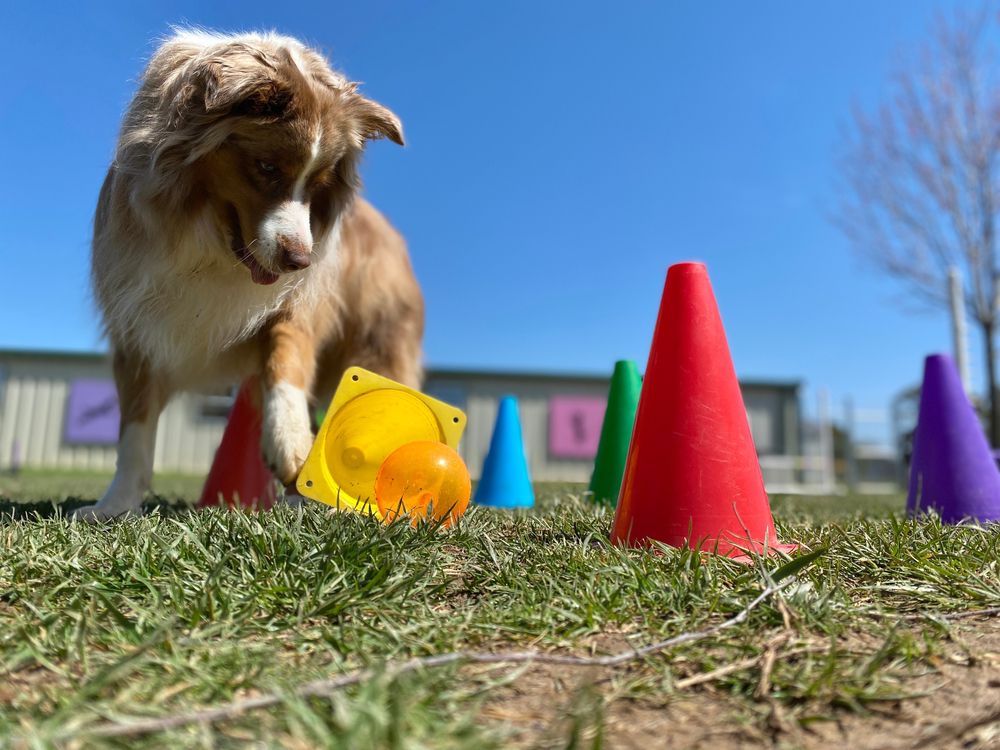
Treat-dispensing balls and similar interactive toys operate on the same principle as puzzle feeders but tend to involve more movement. The dog rolls or manipulates the toy to release food, combining a light physical element with the mental work of figuring out the mechanism. Choosing a toy that is appropriately sized and calibrated for the dog's skill level keeps the experience rewarding rather than frustrating.
Structured Tug-o-War
Standard tug-o-war is a good physical outlet, but adding structure turns it into a mental exercise as well. Teaching the dog to release on command, wait for a signal before starting, or respond to specific cues during play requires focus and self-control that is genuinely cognitively demanding. Dogs that learn to play tug within a clear set of rules tend to show better impulse control in other contexts too, and are less likely to become possessive over toys.

Name That Toy
Dogs are capable of learning and reliably distinguishing between named objects, and this game puts that ability to work. Placing several toys in a row and asking the dog to retrieve a specific one by name, then rewarding correct choices with praise and treats, develops both memory and the ability to respond to precise verbal cues. Starting with two toys and building up from there keeps the learning curve manageable.
DIY Obstacle Course
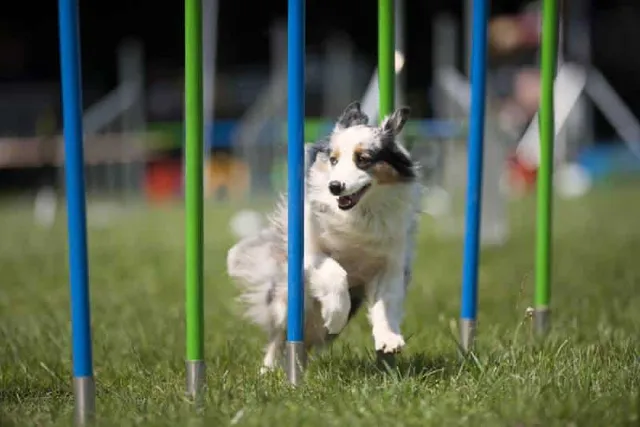
Household furniture and everyday items, cushions stacked as hurdles, blankets draped to form tunnels, chairs arranged as weaving poles, can be assembled into a simple obstacle course that requires the dog to think and coordinate at the same time. Guiding the dog through using treats and positive reinforcement keeps the session upbeat, and the combination of physical movement and problem-solving makes it one of the more complete brain games on this list.

Frozen Kong
Stuffing a Kong toy with peanut butter, wet food, or a mixture of treats, then freezing it, gives a dog a sustained, focused activity that can occupy a significant stretch of time. The challenge of extracting frozen contents requires patience and persistence, and the reward is built directly into the process. One note on peanut butter: a teaspoon or two is a reasonable amount for most healthy dogs, but the label should always be checked for xylitol, an artificial sweetener that is highly toxic to dogs.
Scent Trails
Dogs have a sense of smell estimated to be tens of thousands of times more sensitive than a human's, and scent work taps into that ability in a way that is both natural and deeply satisfying for them. Creating a basic scent trail by rubbing a treat or toy along the ground and asking the dog to follow it to the source gives them a task that mirrors what their noses were built for. Extending the trail length, adding turns, and eventually introducing different scents increases the complexity as the dog improves.

Why Vets Say Brain Games Are Important
Dogs that are not mentally engaged tend to find their own outlets, and those outlets are rarely things owners appreciate. Destructive chew, excessive barking, and persistent restlessness are often expressions of a brain that has nothing meaningful to do. Research supports the connection between mental stimulation and reduced problematic behavior, and the effect is consistent across breeds and ages.
There is also a longer-term dimension worth considering. Dogs that are regularly challenged with problem-solving activities tend to maintain sharper cognitive function as they age. The brain, like any other system, benefits from regular use, and games that ask a dog to think, plan, and adapt contribute to that over time.
The games above require nothing more than what most households already have: a handful of treats, a toy, and a few minutes of your time. Start with one or two and build from there, depending on what the dog responds to and enjoys. You’ll probably find yourself enjoying planning and creating these brain games almost as much as your dog!
Featured Image Credit: Ryan Brix, Shutterstock
Did You Know?
- Our brand-new posts are rounded up and included in our weekly emails. Don't miss out on the latest - sign up for our newsletter below!
Expert dog care, straight to your inbox
Vet-reviewed advice, training tips, and the best of Dogster. Free, and you can unsubscribe anytime.
By signing up, you agree to our Terms & Conditions and Privacy & Cookies Policy.
Dan has been working in the dog world for over 4 years, covering dogs and all other pets, helping pet parents keep their companions happy, healthy, and totally spoiled! Originally from London, Dan now works remotely, which sadly means no pets at home, but plenty of opportunities to fuss over other people's furry friends.
Join the conversation
Ask a question, share your story, or send private feedback.