Cracking the Window Won't Cut It: AKC Backs Its New Rule With Fines Up to $10,000
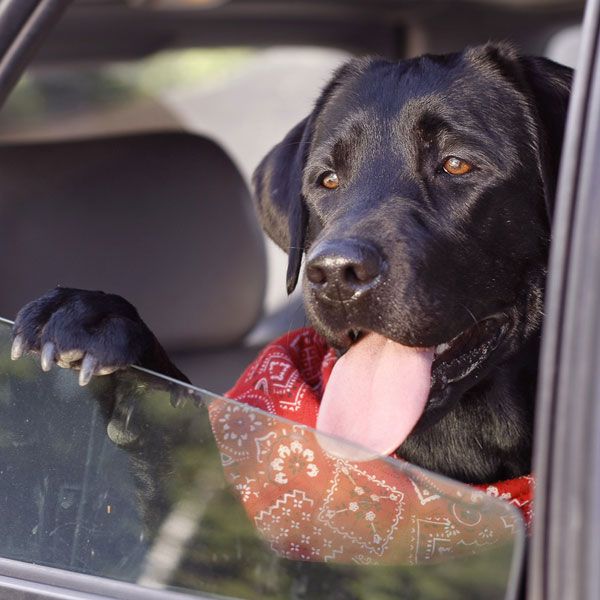
Reign was two years old, accomplished in the show ring, and still had her whole life ahead of her. Instead, she died inside a parked vehicle in Chester County, Pennsylvania, after her handler returned home to help her own dog whelp a litter and, according to investigators, forgot Reign was still in the vehicle. The handler now faces animal cruelty and neglect charges. At its July 2026 meeting, the American Kennel Club responded with a policy that makes the responsibility of exhibitors much more explicit: the new Unattended Dogs in Vehicles Policy took effect immediately and allows penalties ranging from a one-year suspension to a lifetime suspension and fines of up to $10,000.
It is an important development for the dog-show world, but the lesson reaches far beyond the show ring. Because when it comes to dogs and parked vehicles, one of the most dangerous phrases in our vocabulary may be, “I’ll only be a few minutes.”
A Car Can Become a Oven Faster Than We Expect
We tend to judge heat by how it feels to us. If we open the car door and think, “It’s warm, but not terrible,” we may assume the dog will be uncomfortable but okay. Unfortunately, canine physiology does not work according to our comfort scale.
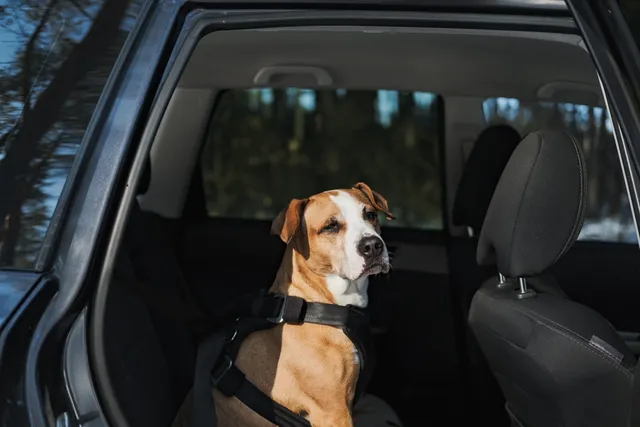
When the temperature inside a vehicle can rise by about 19 degrees Fahrenheit in just 10 minutes and nearly 30 degrees within 20 minutes, cracking a window does little to prevent that accumulation of heat.
And the dog inside the vehicle is producing heat, too.
Dogs rely primarily on panting to dissipate body heat. Panting increases airflow over moist surfaces in the respiratory tract, allowing evaporation to remove heat from the body. It is an elegant cooling system, but it has limits. As the surrounding air becomes hotter, the dog’s ability to transfer heat to that environment becomes increasingly compromised.
This is why heatstroke can seem to come out of nowhere. It often doesn’t. The dog’s body may have been struggling to regulate temperature long before the owner recognizes obvious distress.

Heat That Damages DNA
Heatstroke is not simply a dog being “too hot.” Once a dog’s core temperature rises significantly, the problem becomes systemic.
Initially, we may see intense panting, restlessness, drooling, or a dog that cannot settle. As heat stress progresses, weakness, altered mentation, loss of coordination, vomiting, diarrhea, collapse, seizures, and other serious signs can develop. Severe hyperthermia can damage the gastrointestinal tract, kidneys, liver, brain, cardiovascular system, and the body’s ability to control blood clotting. If the body stays too hot for too long, there can be damage to the cells, proteins, and even DNA.
Some dogs are especially vulnerable. Brachycephalic dogs already have anatomical limitations affecting airflow and heat dissipation. Puppies, senior dogs, and dogs with certain respiratory, cardiovascular, or other medical conditions may also be at higher risk.
But before you think, “My dog isn’t one of those breeds, so we’re fine,” a healthy dog can develop heatstroke, too. Being fit, young, or accustomed to exercise does not make a dog immune to an unsafe environment.
A Fan, Air Conditioner, or App Is Not Enough
The AKC policy specifically addresses something that many conscientious handlers may consider a reasonable safety measure: using technology to monitor the dog.
A fan is helpful when it works. Air conditioning is helpful when it works. A temperature-monitoring device is helpful when it works.
The problem is that the dog is still completely dependent on that equipment continuing to work.
Batteries fail. Power systems malfunction. Air-conditioning units stop. Cellular connections disappear. An alert may arrive on a phone that is in a pocket, in a building, or simply not being watched at that moment.
More importantly, a number on a screen cannot tell us everything about a dog.
Two dogs in the same environment may respond very differently. One may become anxious and begin panting heavily. Another may have an underlying condition that makes coping with heat more difficult. A dog can also deteriorate while the environment still appears, on paper, to be within a seemingly acceptable temperature range.
That is why the AKC has placed the responsibility on a person physically monitoring the dog rather than on a device.
Heatstroke Isn’t Just For Summer
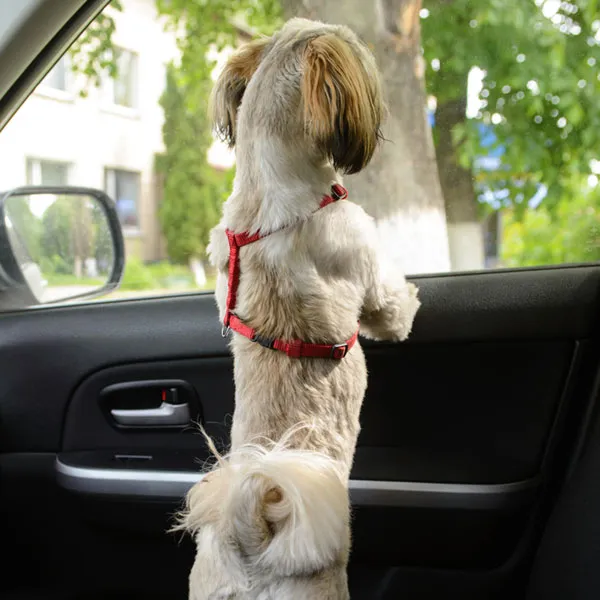
Another important detail is that the policy is not limited to hot summer days. Even on a relatively cool day, a vehicle left in the sun can reach dangerously high temperatures.
The AKC’s policy applies to cars, SUVs, trucks, vans, dog trailers, motorhomes, and RVs. The concern is leaving a dog unattended in an enclosed space without adequate ventilation and airflow, and that can happen all year round.
The inclusion of these vehicle types makes particular sense in the show world. For exhibitors, a vehicle or trailer can function as much more than transportation. It may become the dog’s temporary kennel between events, during meals, or while the handler is occupied elsewhere.
But a temporary kennel still needs to be a safe environment.
And safety is not static. A system that was functioning perfectly when you walked away may not be functioning ten minutes later. A door can remain closed longer than expected. Weather can change. A dog can become distressed. What was safe when you left may not remain safe simply because the original plan was “to be right back.”
New Rule, Real Consequences
Under the new policy, leaving a dog unattended in circumstances prohibited by the AKC is considered conduct against the best interests of purebred dogs and the sport. In line with this, the most serious penalties are a lifetime suspension and a $10,000 fine.
The AKC has also introduced another significant change: when a dog is seriously injured or dies in connection with an AKC event, an Event Committee hearing is now required, including sworn testimony and documented review. This creates an opportunity to examine the chain of events.
What was the dog doing? Who was responsible for monitoring them? What environmental conditions existed? What failed? And, importantly, what could prevent the same sequence from happening again?
Courtney McGinn, Director of Humane Litigation for the Pennsylvania SPCA, which investigated Reign’s death, emphasized the preventable nature of the incident. Her observation gets to the uncomfortable heart of the matter: an animal cannot compensate for a human mistake.

Reign’s Legacy
Perhaps one of the most difficult aspects of cases like Reign's is that they aren’t about cruelty. Not intentional cruelty, anyway. Sometimes the dangerous situation begins with something much more ordinary: a busy day, a change of plans, a distraction, the assumption that there is plenty of time.
The new rule may not prevent mistakes, but if it helps bring situations like Reign’s to the front of people’s minds, it is doing what needs to be done.
If you have to leave an animal unattended in a vehicle, only do so if you know without a shadow of a doubt that the conditions inside will be safe for them if you were to be gone for an hour. Do not assume you’ll only be a minute. Don’t tell yourself that ‘it’s not that hot’.
Dogs die in hot cars every day, mourned by owners who thought they’d be okay for a few minutes.
Reign’s breeders, Colleen Nicholson and Cindy Kelso, have been distributing bracelets as reminders since her death. The message is beautifully simple: Remember to Check.
We cannot change what happened to Reign. But perhaps the most meaningful legacy of her story is preventing another handler from discovering, too late, that “just a few minutes” was enough.
Feature Image Credit: Shutterstock
Expert dog care, straight to your inbox
Vet-reviewed advice, training tips, and the best of Dogster. Free, and you can unsubscribe anytime.
By signing up, you agree to our Terms & Conditions and Privacy & Cookies Policy.
Dr. Paola Cuevas is our Senior In-House Veterinarian at Dogster and Pangolia. She has over 19 years of experience working with an array of species and loves sharing her knowledge and experience with our readers and aims to provide assistance with any issue presented by your non-human family members. She received her degree from the University of Guadalajara, Mexico.
Her passions are animal welfare and preventive medicine, and has skills in the fields of nutrition, microscopy, clinical pathology, diagnostic imaging, and endoscopy. Paola frequently contributes pet care insight to various media outlets like PetMD, The Daily Record, Parents.com, etc.
Paola is also an animal behaviorist with extensive experience in positive reinforcement animal training.
Join the conversation
Ask a question, share your story, or send private feedback.