Dogs Were Crossing the Americas Long Before Cortés
In this article
Long before Hernán Cortés arrived in Mexico in the 16th century, starting the conquistador invasion that would eventually lead to the fall of the Aztecs, dogs were already living, thriving, and accompanying humans throughout the South American continent.
In the past, it has been difficult to piece together exactly how they got there and how they moved south. But now, ancient DNA is helping researchers fill in some of those gaps.
A 2025 study of ancient canine genetics analyzed 70 complete mitochondrial genomes from archaeological and modern dogs, with samples ranging from Central Mexico to Chile and Argentina. The results suggest that dogs reached South America through a gradual expansion that coincided with major archeological changes, including the spread of agriculture and maize.
Before Maize, There Were Dogs
Dogs arrived in the Americas thousands of years before people began farming.
Genetic and archaeological evidence indicate that dogs were already traveling with human populations entering North America at least 15,000 to 16,000 years ago; the only domesticated animals known to have accompanied those early migrations. These early communities were hunter-gatherers, and dogs likely had different roles depending on the time and place, and were not necessarily viewed the way we think about dogs today.
Archaeological evidence also shows that people sometimes ate dogs. At Hinds Cave in Texas, for example, researchers found evidence of dog consumption dating back about 9,260 years. That does not mean dogs were simply a food source. Their roles varied among different communities and over time, gradually taking on positions of guardians, herders, and companions.
As people continued moving across the Americas, their dogs moved with them. But the genetic history of dogs suggests that the next major expansion south happened much later than previously believed.

Reading the Family Tree in a Dog’s DNA
Researchers looked at mitochondrial DNA, which is passed from mother to offspring. This makes it useful for tracing maternal lineages through generations and comparing dogs that lived in different places and at different times.
By analyzing 70 complete mitochondrial genomes from ancient and modern dogs collected across Central and South America, they found that dogs from Central and South America belonged to a particular maternal lineage that had diverged from North American dogs long after dogs had already entered the continent.
Rather than a gradual migration of dogs from North America into South America, the populations became increasingly distinct as the geographic distance between them increased, a pattern known as isolation by distance. This suggests that the dogs found in South America hadn’t just made their way naturally, but had been accompanied by humans.
When Farming Changed the Dog Map
The researchers estimate that the major divergence among North, Central, and South American dog populations happened roughly 7,000 to 5,000 years ago; about the same time agriculture and maize were spreading into South America, suggesting that the movement of domestic dogs into the southern continent follows the spread of early agriculture. As people established new communities and expanded into new areas, their dogs traveled with them.
The researchers describe this as a dual dispersal of dogs and agriculture.
How Far Did Those Dogs Travel?
In a separate 2026 paper, researchers studying ancient dogs from Maya sites in Chiapas, Mexico, reported that the chemical signatures of most of the dogs in the area did not match the locations they were buried. The evidence suggests they were imported from distant areas and moved between Maya communities across the region.
Although the two studies used different methods and focused on different periods, both found evidence of dogs being transported through human networks.

Then Europeans Arrived
For thousands of years, dogs of the Americas lived alongside Indigenous communities. Then, as it usually did, European colonization brought major change.
The ancient DNA study found that new dog lineages appeared in South America after European contact, likely originating from European dogs. Over time, in a pattern reflective of human population dynamics in colonization, the European lineages became much more common than those that had been living in the Americas for thousands of years, and the Indigenous American A2b mitochondrial lineage and its associated nuclear ancestry are now extremely rare.
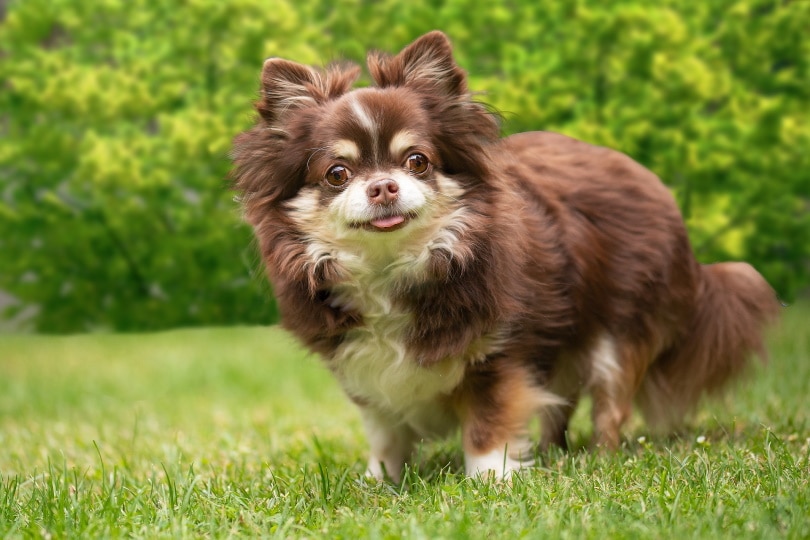
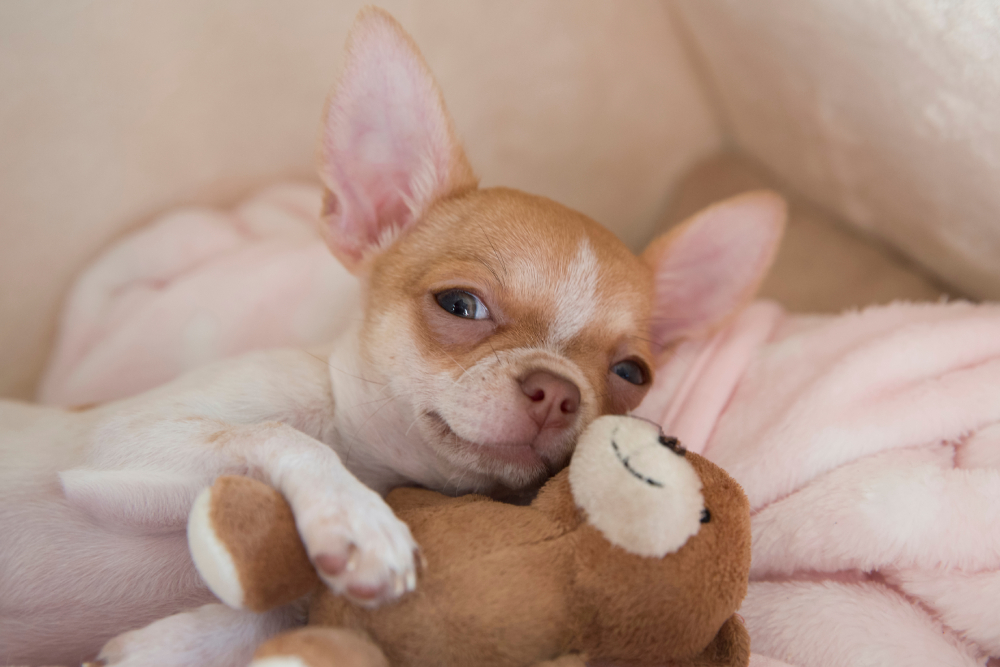
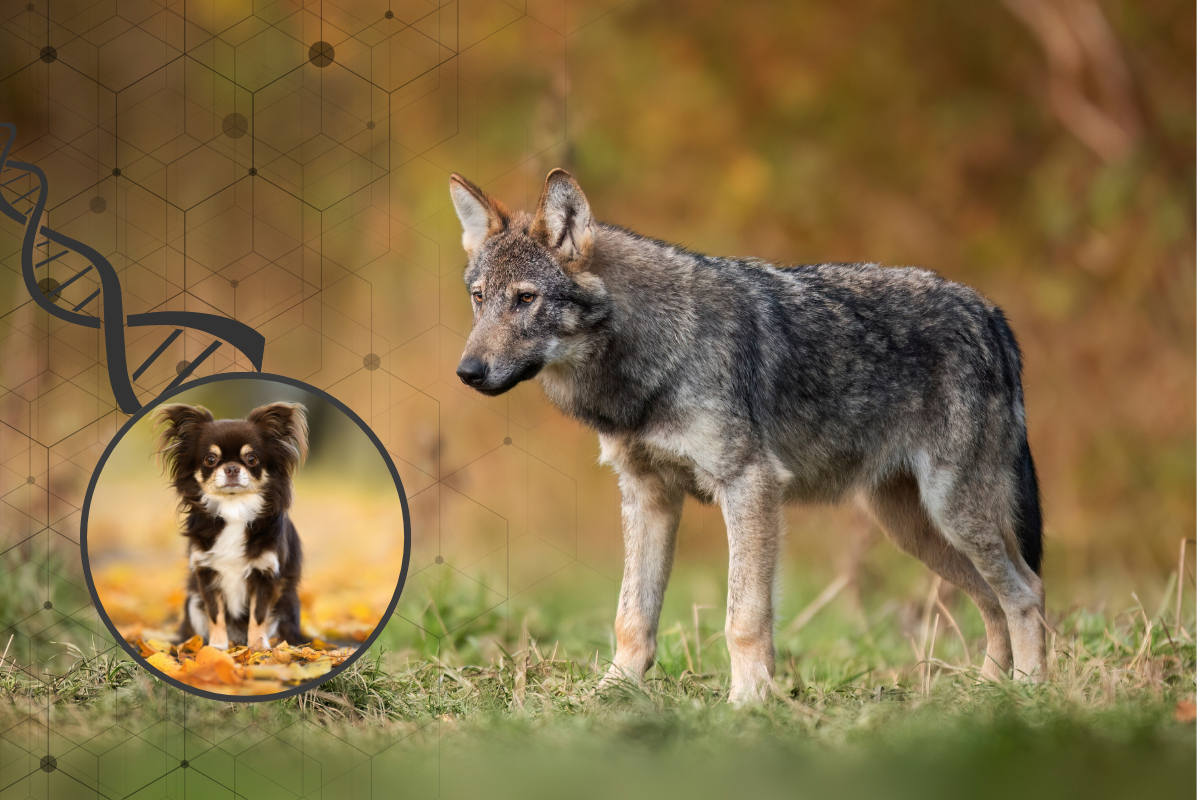
But traces survived in a dog many of us know well today: the Chihuahua.
A Little Dog With a Big History
Some modern Chihuahuas carry a maternal lineage connected to dogs that lived in Mesoamerica before Europeans arrived.
That does not mean today’s Chihuahua is a surviving prehistoric dog. Believed to have origins as the ‘Techichi’ in the Toltec civilization around the 10th century, the modern Chihuahua has its own history, shaped by selective breeding.
What the genetic evidence does indicate, however, is that some Chihuahuas retain maternal ancestry from the older Mesoamerican lineage. So while much of the ancient canine ancestry of the Americas was eventually replaced or absorbed by dogs of European origin, a small piece of that older history persists in some dogs today.
Perhaps this is why these tiny canines insist on being noticed.

A Very Old Connection
The history of dogs in the Americas is also a history of how closely dogs have lived and evolved alongside people. As communities moved, traded, settled in new places, and changed the way they obtained food, their dogs were part of those changes too, and some of that history is still written in canine DNA today.
A Chihuahua may fit comfortably in your lap, but within that tiny package is a rich history spanning thousands of years of human and canine development.
Feature Image Credit: Piotr Krzeslak and otsphoto, Shutterstock
Expert dog care, straight to your inbox
Vet-reviewed advice, training tips, and the best of Dogster. Free, and you can unsubscribe anytime.
By signing up, you agree to our Terms & Conditions and Privacy & Cookies Policy.
Dr. Paola Cuevas is our Senior In-House Veterinarian at Dogster and Pangolia. She has over 19 years of experience working with an array of species and loves sharing her knowledge and experience with our readers and aims to provide assistance with any issue presented by your non-human family members. She received her degree from the University of Guadalajara, Mexico.
Her passions are animal welfare and preventive medicine, and has skills in the fields of nutrition, microscopy, clinical pathology, diagnostic imaging, and endoscopy. Paola frequently contributes pet care insight to various media outlets like PetMD, The Daily Record, Parents.com, etc.
Paola is also an animal behaviorist with extensive experience in positive reinforcement animal training.
Join the conversation
Ask a question, share your story, or send private feedback.