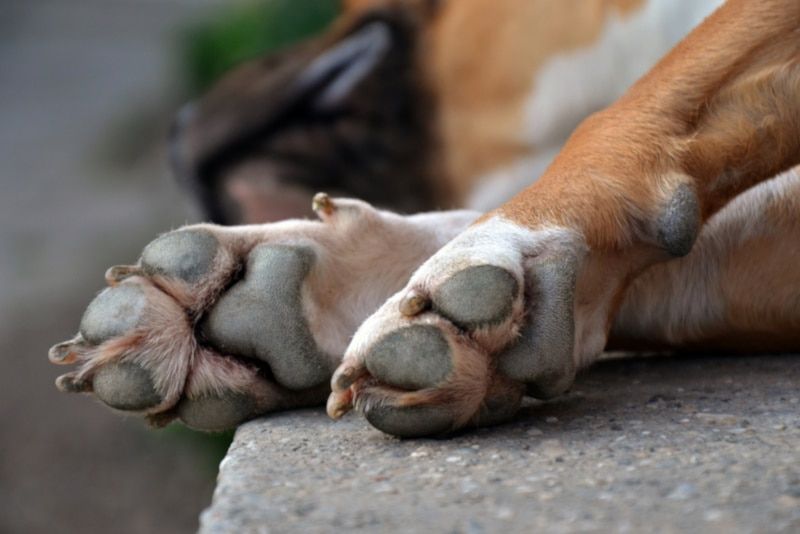
Why Is My Dog’s Paw Swollen? Our Vet Discusses Reasons, Signs & Treatment

In this article
A swollen paw can be a big source of discomfort for your furry friend. But what has caused this? Dogs can develop injured paws for a variety of reasons ranging from infection to trauma. Continue reading to learn more about this ailment in your furry companion.

The 7 Potential Reasons for a Swollen Dog Paw
1. Infection

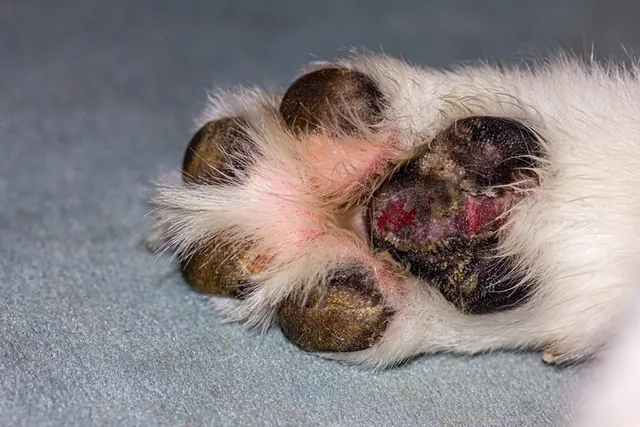
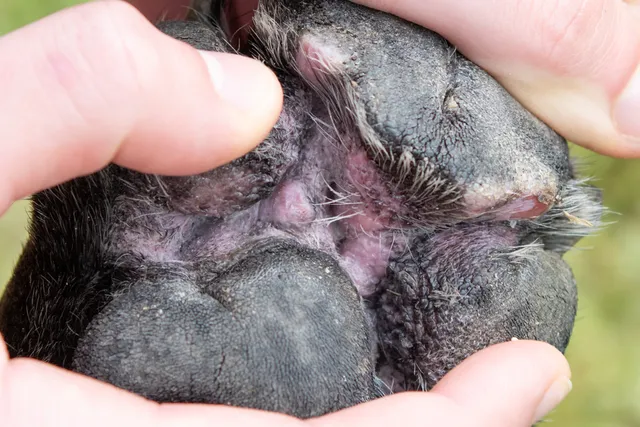
There are several different reasons an infection may occur on your dog’s foot, resulting in visible swelling. A common reason infection occurs on the feet is self-trauma. Self-trauma can occur when a dog has endured irritation and has resorted to excessive licking. An example of this is a dog suffering from allergies and overgrooming their itchy feet, thus resulting in a skin infection.
Alternatively, foreign bodies may cause an infection if they become embedded within the skin or cause a puncture. Other conditions, like nail bed infections and interdigital furuncle, can also occur.
2. Soft Tissue Injury
Similar to humans, dogs can experience soft tissue injuries. Soft tissue that can be affected includes muscles, ligaments, and tendons. These types of injuries are usually acutely painful, and it can be difficult to determine the location of the injury due to the diffuse swelling that can occur.
Dogs will often exhibit lameness and favor a certain limb. In cases of soft tissue injury, strict exercise restriction is needed. Additionally, anti-inflammatory medication will likely be prescribed to assist in discomfort and reduce swelling.
Consulting a veterinarian is recommended for the best course of action.
3. Bone Fracture

There are many bones in the ankle/wrist and foot of a dog. When a fracture occurs to one of these bones, significant discomfort and swelling may be noted diffusely over the foot. Depending on the location of the fracture, wrapping or immobilizing the paw may be necessary. In some situations, surgery may be warranted. Dogs with this type of injury will need significant exercise restrictions to allow the bone time to heal. Pain medication will likely be necessary as well.
4. Bites and Allergic Reactions
Bee stings and snake bites are possible with dogs, along with other sources of allergic reactions. Swelling and sensitivity may be noted on the affected foot. Antihistamines and anti-inflammatories may be warranted if this is the case.
5. Bandaged Foot

Sometimes a bandage is placed to help prevent further trauma or pain. If done incorrectly, this can restrict blood flow which results in swelling. This can cause severe damage to the affected appendage, in this case, the foot. Removing the bandage or wrap will be imperative. If significant tissue damage has occurred, additional care may be necessary, like surgery.
6. Tumors
Dogs can develop tumors on their feet, often impacting their digits. Squamous cell carcinomas and melanomas are some of the more common cancerous tumors that occur on the foot. Surgical removal may be necessary to achieve a biopsy and definitive diagnosis. In some cases, amputation of the digit may be recommended.
7. Lacerations

Trauma to the paw pad is not uncommon due to the surfaces dogs walk on. Deep lacerations may require surgical intervention along with antibiotics and pain control, whereas superficial lacerations may just need mild supportive care.
Signs of a Painful Paw
- Visible swelling
- Lameness
- Excessive licking
- Non-weight bearing
- Lethargy
- Protective behavior over the affected foot
My Dog’s Foot Is Swollen. What Should I Do?
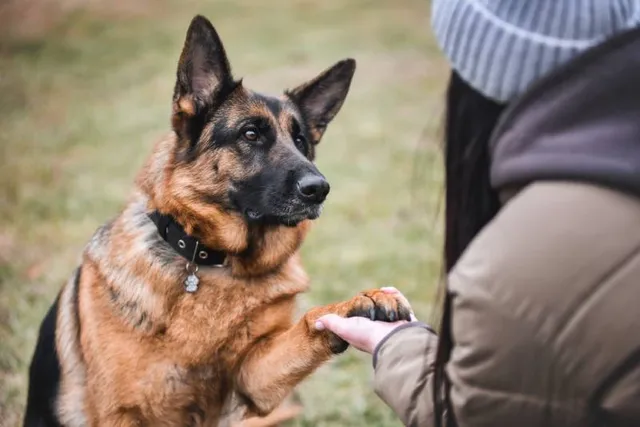
If it is safe to do so and if your pet is not overtly uncomfortable, you may be able to gently look for signs of a problem by evaluating your pet’s foot. In many cases, a swollen foot is very painful, so your pet may be unwilling to allow you to look at it unassisted or without the benefit of pain control.
If your pet is experiencing a swollen paw, you should schedule an appointment with a veterinarian. The veterinarian will evaluate your dog and ask questions about their history to better understand what may be occurring. In many situations, the veterinarian may need to provide your pet with pain medications or even sedation to allow for a thorough examination.
Radiographs or X-rays will likely be recommended to check for fractures or breaks.
How to Care for Your Dog at Home
It will be crucial to follow instructions provided to you by the veterinarian. If the veterinarian suggests exercise restriction, it will be imperative to implement this recommendation to promote healing and reduce the chances of re-injury.
You will need to closely monitor your dog for signs of improvement or worsening in their condition. Quick intervention is key.
Conclusion
Your dog may likely injure their paw at some point during their lifetime. Knowing the possible causes will help you care for your pet in the best way possible. Do not hesitate to schedule a consultation with a veterinarian to quickly facilitate care for your companion.
Sources
Featured Image By: Djordje Novakov, Shutterstock
Expert dog care, straight to your inbox
Vet-reviewed advice, training tips, and the best of Dogster. Free, and you can unsubscribe anytime.
By signing up, you agree to our Terms & Conditions and Privacy & Cookies Policy.
Dr. Marti Dudley DVM (Veterinarian)
Dr. Marti Dudley is a small animal veterinarian with a strong interest in preventative medicine and pet parent education. She enjoys being a resource for pet owners as she believes that having a team approach leads to the best possible care of pets. Dr. Dudley enjoys writing and has been able to use this skill as another avenue to educate pet owners outside of the traditional office setting.
Dr. Dudley has been practicing veterinary medicine since 2014. She has an interest in preventative care and emphasizes the importance of pet owner education. Dr. Dudley’s experience in veterinary medicine is broad, as she has worked as a general practitioner, which has allowed her to see and treat many different types of conditions.
Dr. Dudley received her bachelor’s degree in biology from Longwood University in Virginia. She earned her Doctor of Veterinary Medicine (DVM) degree from Ross University.
Join the conversation
Ask a question, share your story, or send private feedback.