Why Does My Dog Smell So Bad Even After a Bath? (Vet Answer)

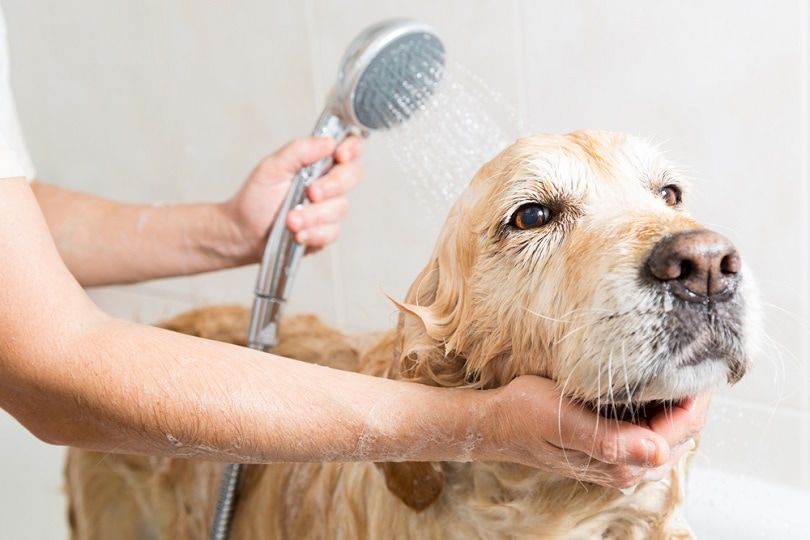
If you’re a dog owner, you’ll know that your canine companion can sometimes smell less than fresh. Whether it’s from rolling in dead matter or because it is due for its regular groom, dogs can sometimes get smelly. However, a bath should rectify the situation. Immediately after a bath, your dog may have that distinctive “wet dog smell”, but that smell should go away once dry.
If your dog is smelly even after being bathed and dried, it could indicate an underlying medical condition that needs to be addressed. Common medical issues such as periodontal disease, skin infections, otitis externa, anal sac (gland) disease, and flatulence can cause a dog to develop an offensive odor. This article will go over these issues that might be affecting your dog.

The 5 Reasons Dog Smells So Bad Even After a Bath
1. Periodontal Disease
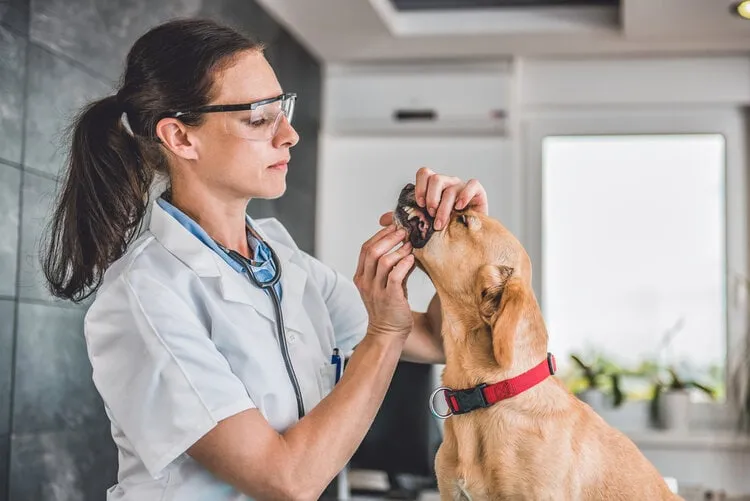
If your dog remains smelly after a bath, it may be suffering from periodontal disease. Often, the first sign of periodontal disease is “halitosis” or smelly breath. As the disease progresses, affected dogs may show signs of oral pain, such as a reluctance to eat, lip licking, abnormal chewing, drooling, or food dropping from their mouth. Some dogs also become grumpy and undergo a personality change due to the pain.
Periodontal disease is caused by plaque accumulation on the surface of a dog’s teeth. Plaque is a sticky film of bacteria that eventually hardens into tartar. If plaque is not removed, it leads to inflammation and infection of the tissues surrounding and supporting the teeth. Periodontal disease begins with gingivitis or inflammation of the gums. If periodontal disease is left untreated at this stage, the infection can spread deeper into the tooth socket, destroying the bone.
A study by the American Veterinary Dental Society showed that 80% of dogs have some degree of periodontal disease by the time they are three years of age, making periodontal disease the most prevalent disease affecting our canine companions.
Periodontal disease is more common in small breed dogs. Brachycephalic breeds are also more prone to dental disease due to the rotation and crowding of their teeth.
This disease decreases a dog’s quality of life by causing oral pain, infection, and inflammation. It can also lead to other health problems by causing inflammatory or degenerative changes in the kidneys, liver, and heart.
If you notice a bad smell coming from your dog’s mouth, you should get your dog checked by a veterinarian. Under normal circumstances, your dog’s teeth and gums should be checked at least once a year by a veterinarian.
If your dog is diagnosed with periodontal disease, your veterinarian will need to anesthetize your pet to perform a complete oral exam, including intraoral X-rays, to evaluate the health of the jaw and tooth roots below the gumline. Only then can a final treatment plan be made.
Treatment for periodontal disease involves scaling the teeth to remove plaque and tartar, as well as polishing them. Extractions may also be necessary depending on the severity of the disease. Your dog may also need antibiotics and pain control after the procedure.
Home care is crucial to prevent periodontal disease. Regularly brushing your dog’s teeth is the most effective way to keep your dog’s teeth clean. Many products claim to improve dental health, but not all of them are effective. Your veterinarian is the best person to advise on dental products, treats, and dental-specific diets for your dog.
2. Otitis Externa
Infection of the outer ear canal of dogs is called otitis externa. If your dog develops otitis externa, you will likely notice an offensive odor coming from its ears. Bathing will not help to get rid of the bad smell. Other signs of otitis externa include head shaking and scratching due to pain and discomfort. The inside of the affected ear will also appear red and inflamed, and you may see a dark brown or yellow discharge coming from within the ear canal. In chronic cases, the ear canal may be thickened.
If you notice any of these symptoms, it’s important to get your dog checked by a veterinarian. Your veterinarian will start by examining your dog’s ear canals with an otoscope to determine if the eardrum is intact and if there is any foreign material in the ear canal. Your veterinarian will then take a swab of the discharge and examine it under the microscope to look for fungi, bacteria, or ear mites. Your vet may need to send a sample of the discharge away to the lab for culture and sensitivity. This helps determine the exact organism causing the infection and the correct medication for treatment.
The results of the examination will help determine treatment. Treatment involves cleaning and flushing the affected ear canal and appropriate oral or topical medications. During the consult, your veterinarian will also identify any underlying diseases or factors which may have caused your dog to develop otitis externa in the first place. Dogs with floppy ears, hair in their ear canals, and dogs that enjoy swimming are at risk for developing otitis externa.
Food and environmental allergies and endocrine disorders, like hypothyroidism, can also cause chronic or recurrent ear infections. If your veterinarian suspects that your dog is suffering from an underlying disease, the disease will need to be diagnosed and treated. Your vet may advise blood work and other tests to do this. If the underlying disease is not addressed, your dog will likely suffer from recurrent bouts of otitis externa.

3. Anal Sac Disease
If your dog is still smelly after a bath, anal sac disease may be to blame. Dogs have two anal sacs on either side of their anus. These sacs are located at approximately four and eight o’clock positions to the anus. The glands lining these sacs produce a bad-smelling fluid that dogs use to mark their territory.
These sacs are supposed to empty naturally as a dog defecates, but sometimes the fluid does not pass, and the sacs become impacted. The fluid thickens, and the sacs become distended. If this happens, you will likely notice your dog “scooting” or dragging its rear along the ground or biting its anus. Dogs with impacted anal glands are often smelly and have a fishy smell. Treatment of impacted anal glands involves expressing or emptying the sacs. It’s best to let your veterinarian do this.
In some cases, impacted anal glands may become infected, forming an anal sac abscess. The abscess will appear as a painful, inflamed swelling on one or both sides of the anus. If the abscess bursts, you’ll notice a discharge that contains blood and pus. An anal gland abscess is extremely painful and requires antibiotics and other medications to control the pain. In some cases, the abscess will need to be flushed under sedation or a general anesthetic.

4. Skin Infections
Skin infections are often smelly, with an unpleasant odor that lingers after a bath. Skin infections may be fungal or bacterial in origin.
Malassezia dermatitis is caused by a yeast called Malassezia pachydermatis. Affected dogs are extremely itchy and have an unpleasant, musty smell. In severe cases, the skin appears thickened and pigmented.
Malassezia is normally found on the skin, but if the skin conditions change or if the immune system is suppressed, yeast overgrowth can occur, and infection ensues. Allergies and endocrine disorders can affect the skin and lead to a Malassezia infection. Humid weather and the presence of skin folds also predispose a dog to develop Malassezia dermatitis.
To diagnose this infection, your vet will take samples from affected areas of the skin and examine them under a microscope. Treatment includes medicated shampoos, topical creams, and oral medications in severe cases. Treatment will also aim to address the underlying cause of the yeast infection.
Bacterial skin infections affect the hair follicles and surrounding skin of dogs. As with yeast infections, bacterial skin infections have an underlying cause, such as allergies, endocrine disease, parasites, or immunosuppression. Bite wounds and foreign bodies such as grass seeds can also lead to foul-smelling bacterial skin infections. Breeds with excessive skin folds, such as Bulldogs and Spaniels, are also prone to developing skin infections due to moisture being trapped between their skin folds.
Dogs with bacterial skin infections are often extremely itchy. The skin appear inflamed, flakey, and be covered in small pus-filled bumps. Affected dogs may also lose hair.
To diagnose a bacterial skin infection, your vet may want to take samples to examine under the microscope or send them to the lab for bacterial culture and sensitivity. If your dog is suffering from chronic skin infections, your vet will want to figure out the underlying cause of the infection and may want to run blood tests. Treatment includes special medicated shampoos, ointments, and antibiotics, as well as other medications aimed at treating the underlying cause.

5. Dog Flatulence
If your freshly washed dog is still smelly, it may be due to flatulence. Flatulence is the excessive formation of gas in the intestinal system with the subsequent expulsion of the gas from the anus.
Passing occasional wind is normal for dogs, but it could indicate a gastrointestinal problem when it becomes excessive or starts smelling worse than usual. Excessive flatulence is often caused by a dog eating something new, such as a change in diet, table scraps, or scavenging while on walks or in the park.
Food intolerances and allergies can also cause flatulence. Dog food formulated with poorly digestible ingredients, like soybeans or peas, can also cause excessive gas formation. Brachycephalic or flat-faced breeds, such as Bulldogs and Pugs, tend to swallow a lot of air when they eat or drink, leading to flatulence. This is also true for dogs that eat quickly. Other gastrointestinal issues, such as irritable bowel disease (IBD) and enteritis, can also cause excessive flatulence.
Treatment of flatulence is based on diagnosis and commonly involves a change in diet.
Conclusion
If your dog continues to smell after a bath, it’s usually a sign that something is wrong. It’s best to get your dog checked by a veterinarian if you notice that your dog smells bad. This could indicate that your dog is suffering from a medical condition that needs treatment.
In addition to being smelly, your dog could be experiencing pain and discomfort because of the condition. This is not always obvious. Don’t try to disguise the issue with fragranced sprays or wash your dog excessively, as this can strip their coat and skin of natural oils. A monthly bath is sufficient unless, of course, your dog rolls in something bad-smelling.
Related Reads:
Featured Image Credit: 135pixels, Shutterstock
Expert dog care, straight to your inbox
News, insights, expert advice, and everything dog.

No spam — unsubscribe anytime.
By signing up, you agree to our Terms & Conditions and Privacy & Cookies Policy.
How useful was this post?
Click a star to rate. You can leave written feedback afterwards. (We read all feedback.)
Dr. Lindsay Bisset BVSc (Veterinarian)
Lindsay is a veterinarian living in the vibrant city of Cape Town, South Africa with her husband and their rescue animals, Blizzard and Harrison. Lindsay received her bachelor's degree in veterinary science from the University of Pretoria and currently works in small animal practice. When she’s not working, you can find her enjoying time outdoors in nature hiking with Blizzard, or writing.