Why Are My Dog’s Anal Glands Leaking? Our Vet Explains

In this article
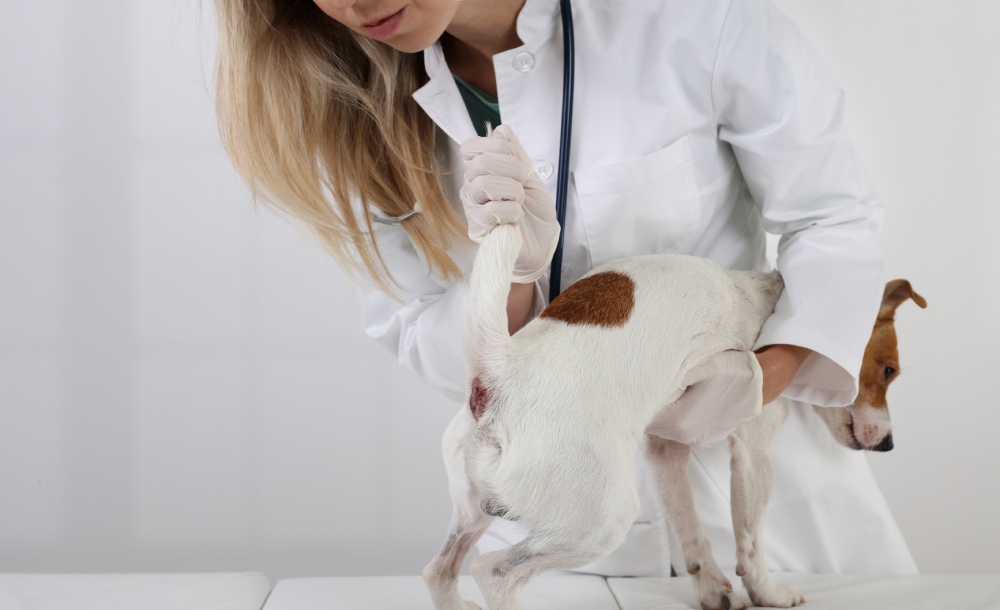
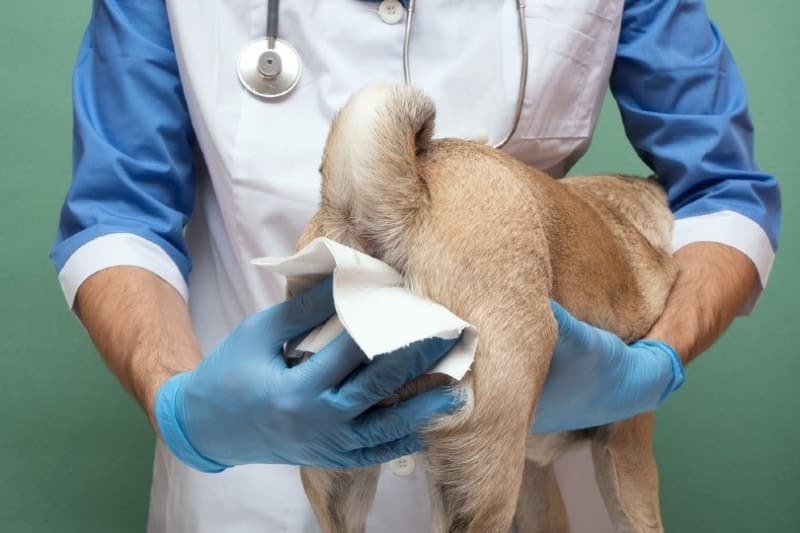
Nobody ever said that dog ownership was glamorous, and the very existence of anal glands in dogs can be a consistent reminder of that. They produce a secretion that has a characteristic rotten fish smell that once you’ve experienced it, you are unlikely to ever forget it! Normally, this secretion is only released when a dog defecates, but sometimes, certain anomalies, such as impaction or infection, can cause them to leak.

What Are the Anal Glands in Dogs?

Two anal glands sit at the eight and four o’clock positions in the anus of a dog. These consist of small sacs that have drainage ducts that open just inside the rectum. Within this sac is the anal sac secretion. It is thought that this secretion acts as a scent marker between dogs, a way for them to mark their territory. When a dog has a bowel movement, these glands are naturally compressed, and the secretions are squeezed out over the feces. It may explain why dogs are so interested in the smell of one another’s fecal matter.
All dogs have anal glands, no matter the sex or breed. However, small dogs seem to be more affected by anal gland problems than their larger counterparts.
What Causes Anal Glands to Leak?
1. Anal Gland Impaction
Anal gland impaction is the most common cause of anal gland leakage. This can occur when the fluid within the gland becomes too thick or granular to be able to make its way easily through the duct. Impaction can also occur if there is not enough external pressure on the gland due to poorly formed feces, which is why a good diet plays a role in appropriate drainage of the anal glands.
Sometimes, though, there may be no clear indicator as to why a dog can’t express their anal glands properly. It’s likely due to an anatomical variation, such as having narrow ducts, whether that’s just the way that it was made or because of previous inflammation or pathology of the gland. The impacted anal gland becomes larger and more painful, and this is when you may notice obvious clinical signs that there is a problem with your dog’s bottom.

2. Sacculitis or Infection
Long-term impaction can lead to an infection and an abscess. This is incredibly painful for the dog and can result in the leakage of yellowish or blood-tinged fluid. It may also result in a perianal fistula, whereby an opening erupts a couple of inches away from the rectum through the skin.
3. Anal Gland Tumor
A less common cause of anal gland leakage is an anal gland tumor. It’s usually non-painful but may be associated with certain clinical signs, such as irritation, scooting, and difficulty defaecating. Your veterinarian will be able to feel a firm mass when they palpate the gland and will find it difficult to squeeze out any secretion. A tumor can only be confirmed by a biopsy, which is done under general anesthesia.

Signs of Anal Gland Leakage
Signs of leaking anal glands include:
Seek veterinary advice if you’re concerned about your pet’s well-being.
How Is Anal Gland Leakage Treated?
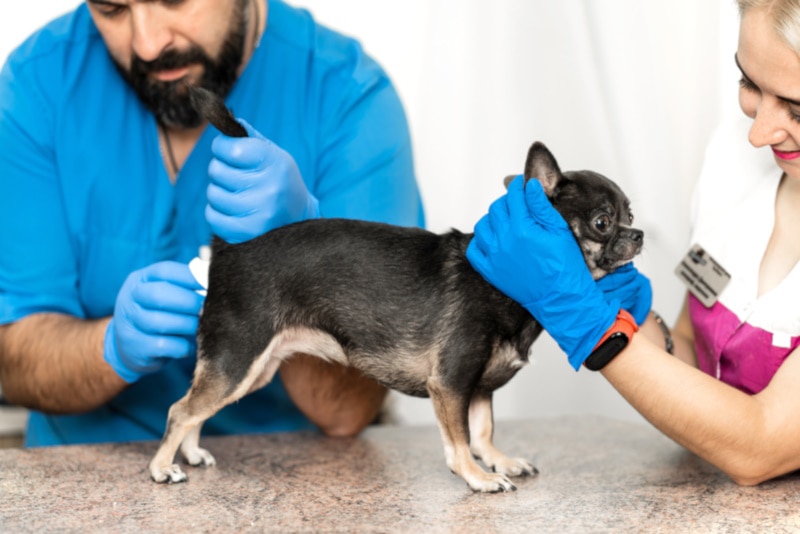
If you notice abnormal anal gland leakage from your dog, especially with other clinical signs, get your dog checked out by your veterinarian. They will feel the anal glands and attempt to express them. If they are simply enlarged but feel otherwise normal and the secretion is a normal color and consistency, it may just be that your dog needs to have them regularly expressed. If they have previously had soft feces or an upset stomach, they may need treatment to help them settle it down and restore their stools to a good, firm consistency.
If the anal gland is difficult to express and the material has become solidified or it is infected, it may need to be manually flushed out and infused with antibiotics or anti-inflammatories. This procedure is a bit more invasive, and dogs normally require sedation or anesthesia for this, especially when the glands are painful.
For infections, your dog is likely to go home with a course of antibiotics and anti-inflammatories and have regular rechecks to make sure the infection is clearing and the gland is returning to normal. For dogs that have repeated infections and problems with their glands, they can be surgically removed to eliminate the issue entirely.
If a tumor is diagnosed on biopsy, your options will be considered based on the type of tumor that it is and whether it has spread. A veterinary oncologist will be able to guide you to the most appropriate treatment, and it may involve surgical removal of the anal gland, radiation, and chemotherapy.

How Do I Prevent Anal Gland Problems in My Dog?
If your dog is prone to anal gland problems, having them manually expressed frequently is recommended. The frequency is tailored to each canine patient: Some may only be able to go 4 weeks before needing their glands emptied, while others can go a few months. Regardless, expression prevents impaction and avoids subsequent infection and abscessation. You may be able to learn how to do this at home yourself, but please do it first under veterinary guidance.
For those dogs with rarely problematic anal glands, there are things that you can do to try to limit issues with them. Giving your dog a well-balanced nutritious diet that has adequate fiber will hopefully keep their stools nice and healthy, which is mandatory for well-functioning anal glands. If your dog is prone to having soft stools, chat with your veterinarian about how you can improve them.
Also, overweight dogs tend to have more problems with their anal glands than those at a healthy weight. Excess body fat around the glands results in less pressure during defecation. There are countless other health benefits to your dog being at an appropriate weight, so if you are worried about your dog’s body condition, please approach your veterinarian for advice.
Conclusion
Anal gland problems are common among dogs. Although your dog may find that having them expressed is unpleasant, it provides them with immediate relief, and you will notice that they become more comfortable after having it done. So, if you have noticed that your dog has had any anal gland leakage, is scooting, or is preoccupied with licking their bottom, please book a visit with your veterinarian or vet nurse, as they will be able to advise you further.
Sources
Featured Image Credit: Yekatseryna Netuk, Shutterstock
Expert dog care, straight to your inbox
Vet-reviewed advice, training tips, and the best of Dogster. Free, and you can unsubscribe anytime.
By signing up, you agree to our Terms & Conditions and Privacy & Cookies Policy.
Dr. Megan Barnes BVSC MRCVS (Veterinarian)
Meg is an Australian veterinary surgeon, dog expert, and writer, currently living and working in Scotland with her family. She is a passionate advocate of preventative medicine, educating clients, and believes medicine never has a one size fits all approach. When not vetting, her happy place is out walking the hills with her baby daughter and over-excited Labrador in tow, and writing.
Join the conversation
Ask a question, share your story, or send private feedback.