Umbilical Hernias in Dogs: Our Vet Explains Causes, Signs & Treatment

In this article
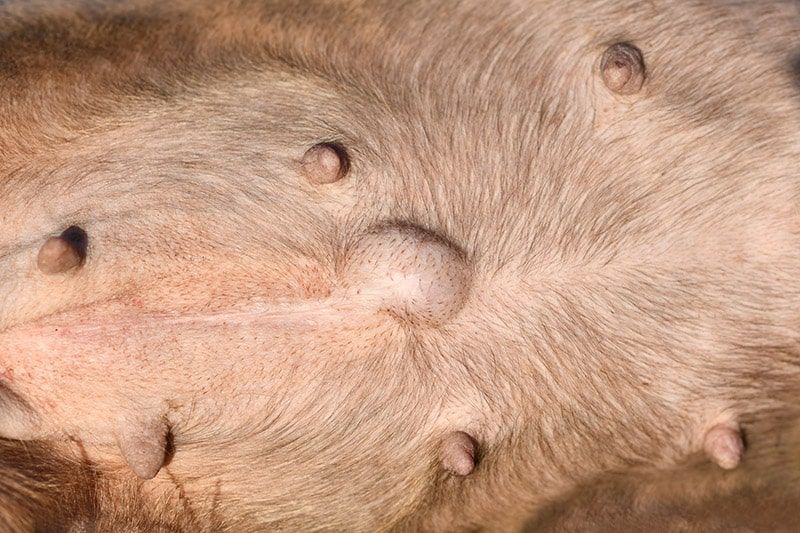
Umbilical hernias are a relatively common condition seen in dogs. They present as a soft bulge over the area where the belly button is located. They occur due to a weakness in the abdominal wall where the umbilical cord has been attached. They vary in severity and the prognosis largely depends on if there are any abdominal organs involved. They can resolve spontaneously on their own.
Some can present as a medical emergency if the intestines have become stuck inside and the blood supply is compromised, but surgical correction is usually curative. Umbilical hernias are normally harmless. They should always be examined by a vet and monitored closely.

What Is an Umbilical Hernia in Dogs?
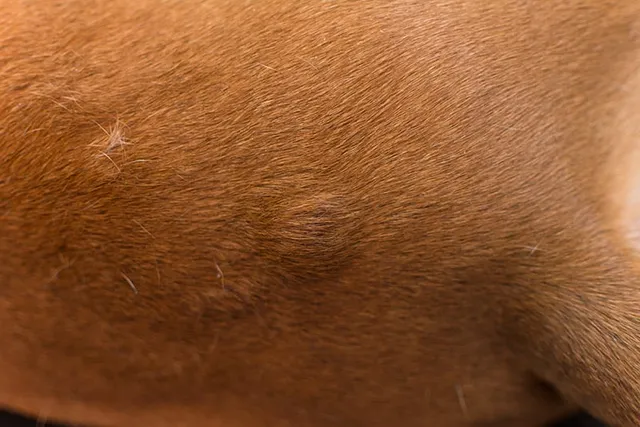
An umbilical hernia is a condition found in dogs where there is a weakness in the abdominal wall at the umbilicus (the dog's belly button). This weakness causes an opening that allows abdominal contents, such as intestines or fat to protrude through the opening. Owners will usually report a soft bulge or swelling under the skin over the area of the belly button.
Depending on what sort of tissue is herniating, they can be small, reducible, and non-painful, or large, non-reducible, and cause a lot of pain.

What Are the Signs of an Umbilical Hernia in Dogs?
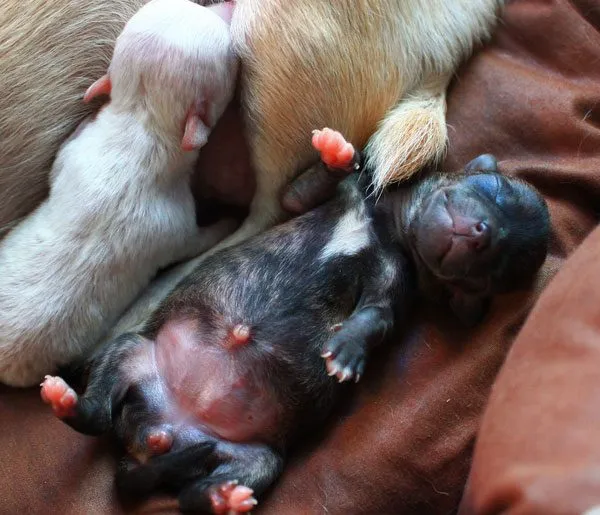
Clinical signs of an umbilical hernia vary greatly depending on how large the opening is, and what is inside it. Umbilical hernias can be classed as complicated or uncomplicated. A complicated hernia will involve contents of the abdominal cavity, for example, a portion of the intestine. Typically, the intestine passes through the opening, twists, and then becomes trapped and swells up.
An uncomplicated hernia usually involves a small bit of subcutaneous fat and there is usually a soft swelling over the navel. The swelling may be intermittent as the fat slips in and out of the opening. Umbilical hernias can also be described as reducible, non-reducible, and strangulated. Reducible hernias are usually small, and they can be gently pushed back through the hole without any pain or discomfort.
Non-reducible hernias occur when the protruding tissue cannot be pushed back into the abdomen and becomes trapped. Often this is due to scar tissue forming around the umbilicus trapping the tissue in the incorrect position. This is a serious situation and requires veterinary attention.
Strangulated hernias occur when the tissue moves through the opening and cannot return, so it becomes trapped. The blood supply to the tissue in the hernia can get cut off and the tissue starts to become devitalized and die. This is a medical emergency and requires immediate veterinary attention.
Clinical signs seen with an uncomplicated hernia include:
Clinical signs seen with a complicated hernia include:

What Are the Causes of Umbilical Hernias in Dogs?

The majority of umbilical hernias are inherited as a genetic defect. Traumatic injuries are also a common cause.
The usual causes of umbilical hernias include:
Certain breeds of dogs are genetically predisposed such as Airedale Terriers, Maltese and Pekinese terriers, Basenjis, Poodles, and Yorkshire terriers. Umbilical hernias do tend to appear in family lines. This would imply that genetics play a role in determining whether the dog is likely to have an umbilical hernia.
Diagnosis of an Umbilical Hernia in Dogs
Diagnosis of an umbilical hernia is usually straightforward. The swelling can be seen on physical exam. The location is key to diagnosis. Umbilical hernias will only be present over the belly button area, just below the dog's ribcage.
If the hernia is more complicated, further diagnostics such as abdominal ultrasound scans or contrast studies using X-rays can be used. This will enable the vet to determine what is involved inside the hernia.
How Do I Care for a Dog with an Umbilical Hernia?

Treatment of an umbilical hernia depends on the type and severity of the hernia present. In mild cases, as long as the hernia is reducible and does not involve abdominal organs, it can be left and monitored until the dog is due to be neutered. Some hernias will spontaneously close on their own. This usually occurs by 6 months of age.
Sometimes the abdominal wall seals over the hernia, leaving a small piece of fat bulging out. More severe hernias normally require surgical correction. Any abdominal contents that have moved out of the body will be checked over and then replaced. A strong suture material will be used to pull the edges of the umbilical ring together. If there is a very large hole, a mesh may be used to prevent abdominal organs from moving outside the body wall.
As the problem is usually identified at a young age, often it works out well to repair the hernia when the dog is neutered, under the same general anesthetic. In female dogs, the incision for the spay just needs to be extended slightly to incorporate the hernia. In male dogs, a separate incision will need to be made.
If a small hernia is present, often the owners will opt to monitor it as it may resolve on its own. Larger hernias should always be repaired as there is a high chance of serious complications.

Frequently Asked Questions (FAQ)
Is it possible to prevent umbilical hernias in dogs?
Unfortunately, it is not possible to directly prevent umbilical hernias. There are, however, ways to reduce the risk of them occurring. Any reputable breeder will not use a dog for breeding if they have a large umbilical hernia. They will also not use two dogs that have small umbilical hernias. Good owner education is important so that people are aware of which breeds are genetically predisposed and therefore more likely to have hernias.
It can help to maintain a healthy weight to reduce strain on the abdominal wall. Keeping up with regular vet visits and health checks can help to ensure your dog is as fit as possible.
Are umbilical hernias dangerous?
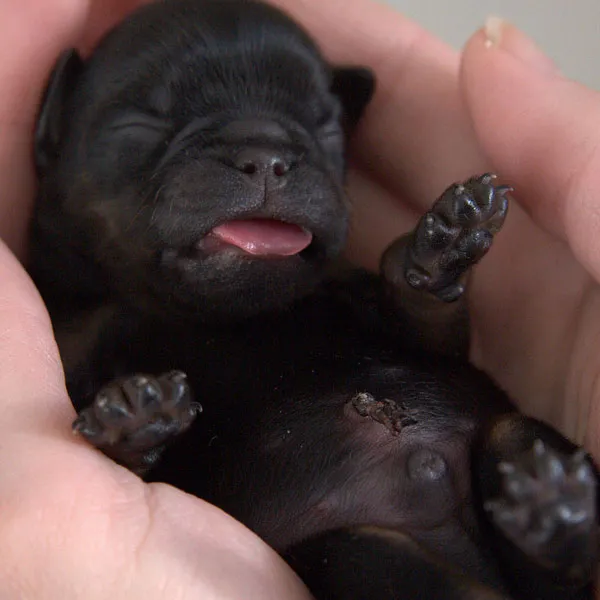
Usually, umbilical hernias are not dangerous and just present a cosmetic issue. If they are small, they are usually non-painful and do not pose a threat to the dog's health. The issue arises when strangulation occurs. This happens when the abdominal contents pass through the hole then twist around and have their blood supply cut off. If this occurs, it is a medical emergency that requires immediate assistance.
It is extremely painful and depending on how long the intestines are trapped, can require a big operation where damaged parts of the guts need to be removed. If the hernia is large, depending on the size of the dog, sometimes they can drag on the floor and the skin over them can become damaged.
Can my dog live a normal life with an umbilical hernia?
In most cases, dogs with small umbilical hernias can lead a normal life. The hernia must first be assessed by a vet to determine if surgery is required and if there are any abdominal organs present. It is vital that the hernia is monitored closely and that regular vet visits take place to allow the vet to palpate the hernia.
If other health conditions such as a cough, vomiting, and diarrhea should occur, extra care should be taken as this can place extra stress and pressure on the hernia. Always consult a vet if you have any concerns when a hernia is present.
Conclusion
Umbilical hernias are a commonly seen problem, particularly in certain breeds of dogs. They must always be assessed by a vet initially to determine the severity and decide on an appropriate course of action. Early diagnosis and prompt intervention generally lead to a good prognosis. Small hernias may be fine to leave and monitor and they may even resolve spontaneously. Strangulated hernias require immediate veterinary attention.
Dogs that have hernias should not be bred from as the condition can be passed onto their offspring. If you are concerned about a mass near your dog's belly button, arrange for an appointment with a vet for an assessment. Early intervention can prevent serious complications and ensure your dog is healthy and not in any pain.
Sources
Featured Image Credit: Firn, Shutterstock
Expert dog care, straight to your inbox
News, insights, expert advice, and everything dog.

No spam — unsubscribe anytime.
By signing up, you agree to our Terms & Conditions and Privacy & Cookies Policy.
How useful was this post?
Click a star to rate. You can leave written feedback afterwards. (We read all feedback.)
Dr. Emma Chandley BVM MRCVS (Veterinarian)
Dr. Emma is a experienced vet who is happy to share her knowledge and expertise about dogs with readers. With a focus on surgery, she is eager to engage in discussions on all topics related to animal care. Dr. Chandley graduated from The Royal Vet College and since graduation has worked in general practice in Great Britain. Her credentials include a postgraduate certificate in Small Animal Surgery and recognition as an Advanced Practitioner. She is also passionate about expanding her knowledge in clinical pathology, animal behavior, nutrition, and clinical pathology.