Roundworms In Dogs: Our Vet Discusses Signs, Causes & Treatment


In this article
While you may wish that it wasn’t true, dogs do get parasites, both inside their body and on it. Some canines get them quite frequently, even those that spend most of their time indoors. One of the most common types of intestinal parasites is roundworms. When your pup is infested with these invaders, it might not be obvious right away, so here, we explain what roundworms may look like in dogs, how they get in their bodies, and what you can do about it.

What Are Roundworms?
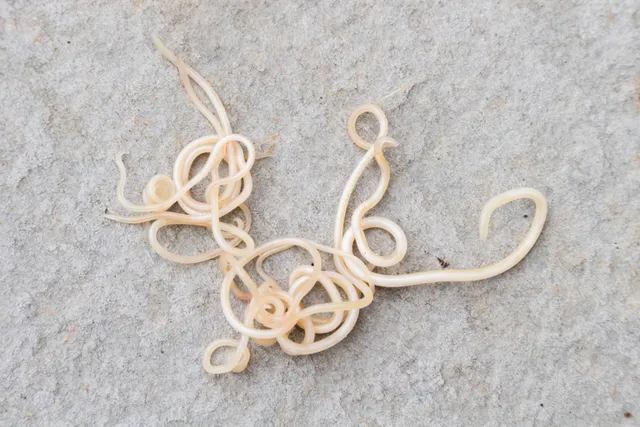
Roundworms are among the many types of parasitic nematodes that can take up residence in your dog’s intestines. They are named as such because they are round in shape—though “tubular” is a bit more accurate. Many people describe them as looking like cooked spaghetti.
These parasites reside in the intestines because they feed off of partially digested nutrients. One or a few roundworms living in your dog’s guts usually doesn’t cause major health problems, but when many of them are living in there, it becomes a major issue, as they are sucking up the nutrients that your dog needs.
Roundworms can also be transmitted to humans, making this an infestation that you and your dog can share. Properly disposing of your dog’s feces, washing hands after handling their feces and petting them, and keeping your pet updated on regular parasite control and testing are the best ways to keep your own body roundworm-free.

What Are the Signs of Roundworms in Dogs?
Roundworms can affect any dog anywhere, but they are more likely to be noticed in puppies because they can be born with them or get them through nursing and their bodies are so small that they are less able to deal with adversities like roundworms. Also, a small number of roundworms typically won’t cause signs, while a large number likely will.
These signs may include:
You may also see adult worms in your dog’s vomit or feces. Remember, these things look like pieces of cooked spaghetti, and you may be surprised at just how long they can get.
The signs may come on gradually, so it may take a while to notice changes like weight loss or slowed growth. This is why it’s so important to keep regular appointments with your vet, especially if you have a puppy, to make sure your dog is maintaining a healthy weight and to catch any other slight changes before they become a big deal.
How Do Dogs Get Roundworms?
Roundworms are one of the most common parasites that infect dogs. Microscopic eggs are shed in the dog’s feces, which become infective after several weeks and can survive in the environment for years. Dogs may become infested when they ingest grass, lick soil, or get attached to their paws or fur when walking around. Dogs can also catch them by eating small prey, which can have larvae inside. So, getting roundworms is a fairly easy thing for most dogs. Here’s how it works.
Infested dogs and other animals shed roundworm eggs in their feces. Inside those eggs, the larvae develop over the course of a couple of weeks. That pile of feces or the dirt where the feces were laid then essentially becomes a ticking time bomb, waiting for the next critter to come along.
When another dog enters the area, they can pick up the larvae, usually when they are sniffing or even tasting the interesting things that they find while investigating their environment. Once the larvae enter the dog’s digestive system, they migrate through the walls of the intestines and into various tissues, such as the liver or lungs. The larvae can be coughed up by the lungs, swallowed, and then allowed to mature in the intestines, where they will have a never-ending supply of nutrition from the food that your dog eats. The adults then start to lay eggs, which can be detected on a fecal test done by your veterinarian.

Another way that dogs get roundworms is as puppies before they are even born. When the parasites are making their journey through a pregnant dog’s body, they can pass through the placenta and into the developing fetuses, causing the puppies to be born with roundworms already in their bodies. Roundworm larvae can also migrate into the mammary glands and enter a puppy’s body when they nurse.
People can get roundworms in the same ways. Typically, they can become exposed when cleaning up their infested dog’s feces and then eating something without washing their hands first. Roundworm infestations tend to be more common in babies and toddlers because they are less discriminate about what they put in their mouths, increasing their chances of picking up a roundworm egg.

How Do I Care for a Dog With Roundworms?
Nobody wants their pup to have a belly full of worms. Not only is it potentially dangerous for them, it’s also a risk for us. This is why routine visits to your veterinarian are so crucial. Most vets will perform fecal tests during a dog’s annual exam to check for roundworm eggs and other internal parasites.
A negative fecal test for a dog that isn’t showing any signs of illness is typically sufficient, especially if they are on any kind of flea, tick, or heartworm preventative. Most of these medications will also affect various internal parasites and keep a dog roundworm-free. However, if your dog is showing signs of a poor hair coat, weight loss, diarrhea, or slowed growth, and the regular fecal flotation test still comes up negative, a fecal antigen test may be in order.
If roundworm eggs are found on a fecal test, your vet will prescribe an appropriate dewormer, typically having you administer one dose right away and another about 2 weeks later. Dewormers can only kill adult worms, not the larvae or eggs. Waiting to give the second dose allows any immature critters to become adults that will be susceptible to the medication. This way, they can be wiped out completely. Also, most heartworm preventatives and even certain flea-and-tick medications will take care of roundworms. The most common and effective dewormers for dogs include fenbendazole, pyrantel pamoate, milbemycin oxime, and moxidectin. It’s important to consult your vet to determine which product is best suited for your dog. However, note that not all of these require a prescription.
Since puppies are especially susceptible to roundworm infestation because they can be born with them or get them through nursing, routine deworming is vital. Your puppy will receive multiple doses of dewormer as they progress through their puppy shot series and beyond. Pregnant dogs should also be dewormed within 3–4 weeks of whelping and then again while nursing to prevent transmission to their puppies.
Most dogs with a roundworm infestation will respond well to the dewormer. Dogs with heavy worm loads may vomit dead worms, or you may see dead worms in your dog’s feces for up to a week or more after treatment. Dogs with very high worm loads may experience an intestinal blockage following treatment due to the massive amounts of dead parasites trying to exit the system. This is rare, but if you see signs of vomiting, not eating, stomach pain, and straining to defecate, see your vet immediately.

Frequently Asked Questions (FAQ)
How Long Does It Take to Get Rid of Roundworms in Dogs?
Most dewormers will kill adult roundworms within a day or two of administration. They can’t do anything against larvae or eggs, though, so reinfestation can happen immediately. If your pup has issues with reinfestations of roundworms, your vet may recommend deworming your dog monthly.
Can You Prevent Roundworms in Dogs?
Since roundworm eggs are passed in the feces, keeping your yard clean and your dog away from other animal feces is one of the most important steps in preventing infestations. Deworming your dog regularly is another great way to keep worm issues under control, both roundworms and other parasites. Your vet will establish the most appropriate frequency of administration of the antiparasitic medication for your dog depending on the risk of exposure and environment.
Do I Need to Clean My House If My Dog Has Roundworms?
Since people can get roundworms too, a good, thorough cleaning is typically recommended. Dogs can shed eggs in their feces, so vacuuming and scrubbing floors is a good idea. You should also wash the bedding and furniture that your dog frequents. Wash your hands after handling your dog’s feces or grooming them near the rear end. You’ll also want to deworm all animals in the house at the same time.

Conclusion
Dealing with roundworms can be part of the responsibility of having a dog. They are easily transmitted from dog to dog and even to humans through contact with infested feces or soil. Puppies can also become infested before they are born or while nursing.
To control roundworms, keep your dog on a monthly preventative or get regular fecal testing to check for roundworm eggs. Most of the time, a roundworm infestation won’t severely affect your dog’s health, but it is something that you’ll want to treat immediately, not only to prevent spreading to other dogs or humans but also because heavy worm burdens can lead to nutrient depletion, typically seen as weight loss and a poor coat.
Sources
Featured Image Credit: Iryna Imago, Shutterstock
Expert dog care, straight to your inbox
Vet-reviewed advice, training tips, and the best of Dogster. Free, and you can unsubscribe anytime.
By signing up, you agree to our Terms & Conditions and Privacy & Cookies Policy.
Dr. Chyrle Bonk DVM (Veterinarian)
On top of caring for animals and writing for veterinary publications, Dr. Chyrle Bonk owns a small cattle herd! When she’s not busy with those things, she can be found somewhere enjoying the Idaho outdoors with her husband and two kids. Dr. Chyrle Bonk received her Doctor of Veterinary Medicine (DVM) from Oregon State University in 2010.
Chyrle has practiced in a mixed animal clinic for over a decade. She also writes for various veterinary websites and magazines, like Dogster!
Join the conversation
Ask a question, share your story, or send private feedback.