Neurological Disorders in Dogs: 11 Vet-Explained Signs

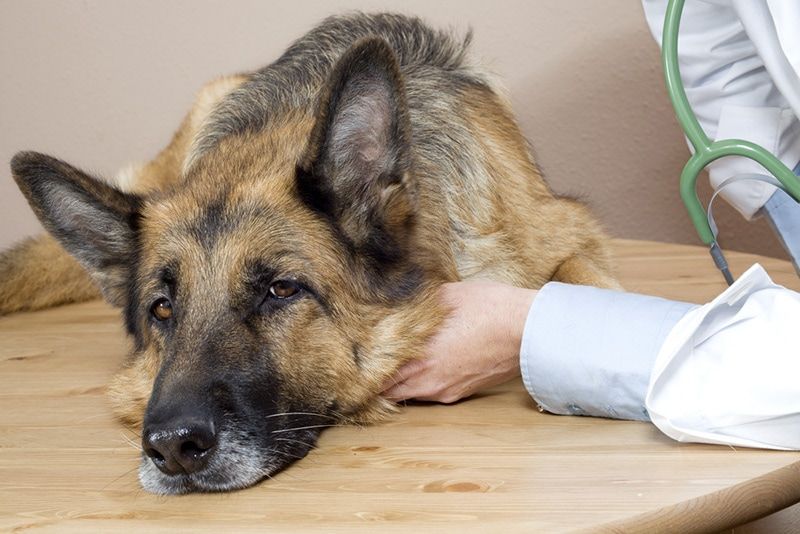
Neurological disorders in dogs can be alarming for owners to witness and often tricky to diagnose and treat. The nervous system is essentially the electrical system in the body and comprises the central nervous system (CNS) and the peripheral nervous system (PNS). The CNS is the brain and the spinal cord, and the PNS involves all the nerves outside of the brain and spinal cord.
It is responsible for receiving input, processing the information, and formulating a response. When it becomes diseased or starts to fail, the network becomes impaired. The signs of neurological disease occur quickly, and prompt evaluation at the veterinary hospital is essential. However, certain clinical signs may be subtler and in the early stages, easy to miss.
Here are the signs that indicate that your dog may have a neurological disorder.

The 11 Neurological Disorder Signs in Dogs
1. Incoordination
A straightforward sign to recognize is that your dog’s gait has changed. This may range from a slight misstep of the hindlimbs when they are turning around to a complete loss of connection from their brain to their spinal cord, resulting in an inability to understand where to put their paws as they are walking.
Their gait may resemble that of a drunken sailor trying to walk on a ship in a stormy sea, and it probably somewhat feels like that too. We call this sign, “ataxia.”

2. Changed Mental State
One of the first things that a vet looks at is your dog’s demeanor. This can be assessed as you walk down the hallway and into the room, and most owners probably don’t realize that the vet is doing it! A normal “mentation” requires an intact, normally functioning neural pathway, from the sensory receptors to the part of the brain called the “cerebral cortex.”
If you notice that your dog is acting abnormally or is depressed, forgetful, or perhaps just not as alert or responsive as normal, it may be worth a visit to your veterinarian.
3. Vestibular Signs
Common vestibular signs include disorientation, head tilt, sudden loss of balance, and flickering eye movements called “nystagmus.” There are several causes for vestibular signs, such as ear disease, injury, tumors, and hypothyroidism. Vestibular disease is more common in older dogs and may be termed “canine geriatric vestibular syndrome.”
There is no known underlying cause, and the signs improve over a period of 1–2 weeks with supportive care.

4. Knuckling of the Paws
Knuckling of the paws is when the top of a dog’s paw drags along the ground as they are standing or walking. In less severe cases, you may only see knuckling if you flip your dog’s paw so the top is the weight-bearing surface. It is a natural and subconscious reflex for the dog to right it immediately.
However, with many neurological disorders, the signal to position the paw correctly may not make it from the brain to the paw, and the reflex is delayed or doesn’t occur, or when it finally does occur, the paw is placed in the wrong position.
5. Weakness of the Hindlimbs
Patients can present with varying degrees of weakness. Some dogs may be able to stand normally but have trouble as they pick up speed, and others may be completely unable to use their hindlimbs effectively. During any motor activity, a signal is sent from the brain, down the spinal cord, and to the peripheral nerves that innervate the muscles. Any disruption along this pathway can cause weakness.
That said, other causes for this weakness, such as cardiac, metabolic, and orthopedic disease, must also be ruled out.

6. Incontinence
Spinal disease and injury, brain lesions, and disruption of the nerves that control bladder and bowel function can cause issues with urination and defecation. Dogs may be constantly leaking urine and feces and being unable to hold it, or they can’t eliminate at all and are constantly straining to go to the toilet.
Incontinence is often associated with other clinical signs of neurological disease, such as weakness, incoordination, knuckling of the limbs, and paralysis.
7. Muscle Tremors and Twitching
There are many causes of muscle tremors. Toxicities, genetic diseases, trauma, metabolic disorders, severe pain, and neurological disorders can cause involuntary and rhythmic muscle movements. Sometimes, there may be no obvious cause for it at all, which is when it’s called “idiopathic.”
Tremors may affect the whole body or just a localized part of the body, such as the head, and this can be diagnostically challenging for clinicians. A common cause of tremors in dogs is the atypical presentation of seizures.

8. Seizures
Seizures are often the manifestations of epilepsy, of which there is no known cause, but it is a common canine neurological disease. Other causes of seizures are brain tumors, trauma, toxins, and liver or kidney failure. Seizures will often involve full-blown grand-mal fits that result in a complete loss of consciousness, with the dog experiencing collapse, paddling motions of the legs, urination, defecation, and a period of confusion and disorientation afterward.
However, sometimes, the seizure activity may be subtler, such as looking dazed, experiencing facial twitching, lip licking, or simply having an unusual change in behavior.
9. Inappetence
Certain neurological conditions, especially those that affect the vestibular system and balance, can cause nausea and a decreased appetite. Inappetence is an early warning sign of something not being quite right, especially when coupled with any other sign on this list. A dog that is experiencing out-of-character appetite loss warrants a visit to your veterinarian.

10. Blindness
Vision loss, especially when it’s complete and sudden, can be incredibly alarming to witness. However, it is essential to remain calm and be a source of comfort for your pet, who will be far more alarmed in this situation than you!
Your veterinarian will conduct a vision assessment and ophthalmologic investigation, and they will endeavor to localize the lesion that has resulted in vision loss, which can occur anywhere along the visual pathway, from the eye itself to the nerves that innervate the eye and the central nervous system.
11. Pain
A wide, non-specific sign of neurological disease that we can assume that many dogs experience is pain. This may result in whimpering, abnormal vocalization, shivering, trembling, hiding, disengagement with the family and the activities that they usually enjoy (such as playing and going for walks), and a general change in behavior.
It also may result in a general lack of appetite and a sense that something is “just not quite right” with them.
If you're concerned about your dog's health we suggest you speak to a vet.
Conclusion
If you suspect that your dog is suffering from a neurological disorder, book an appointment with your veterinarian, even if the changes are minor. Dogs that are displaying neurological signs often require the expertise and diagnostic capacities of neurology specialists to determine a diagnosis to enable treatment.
Fortunately, despite the distressing nature of how these disorders often manifest in the body, many conditions are treatable.
See also:
Back Pain in Dogs: Our Vet Explains Signs, Causes & Treatment
Canine Degenerative Myelopathy in Dogs: Vet-Approved Signs & Treatment
Sources
Featured Image Credit: Roger costa morera, Shutterstock
Expert dog care, straight to your inbox
News, insights, expert advice, and everything dog.

No spam — unsubscribe anytime.
By signing up, you agree to our Terms & Conditions and Privacy & Cookies Policy.
How useful was this post?
Click a star to rate. You can leave written feedback afterwards. (We read all feedback.)
Dr. Megan Barnes BVSC MRCVS (Veterinarian)
Meg is an Australian veterinary surgeon, dog expert, and writer, currently living and working in Scotland with her family. She is a passionate advocate of preventative medicine, educating clients, and believes medicine never has a one size fits all approach. When not vetting, her happy place is out walking the hills with her baby daughter and over-excited Labrador in tow, and writing.