Malocclusion or Teeth Misalignment in Dogs: Vet-Explained Signs, Causes & Treatment

In this article
Dental disease can be a source of chronic pain and infection in dogs. For this reason, dental disease should not be overlooked. One common dental disease is malocclusion. It’s more common in dog breeds with flat faces (brachycephalic breeds), such as the Shih Tzu, Pekingese, Pug, Boxer, Bull Mastiff, or Boston Terrier.
In this article, you will learn what malocclusion is, its causes and clinical signs, and how to take care of your dog suffering from this condition.

What Is Malocclusion?
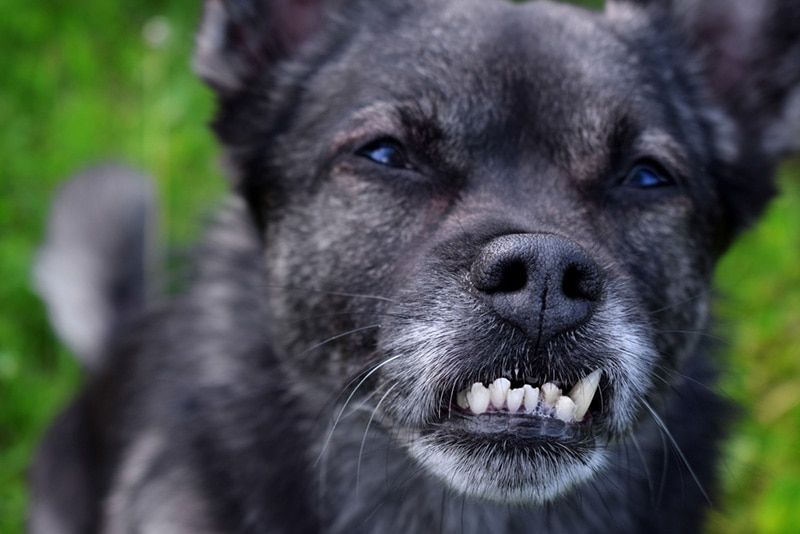
Dental malocclusion is a tooth alignment problem, i.e., an incorrect alignment that leads to an abnormal bite, with negative effects on dental health and a dog’s quality of life. This condition is of two types:
- Skeletal
- Dental
In skeletal malocclusion, the jaw is longer than normal. This abnormal length leads to a faulty alignment of the teeth. Puppies born with this problem may recover on their own if the difference between the two jaws is not too big. However, a dog's bite will be definitively formed 10 months after birth. Beyond this moment, the remedy of the dental problem will not occur without medical intervention.
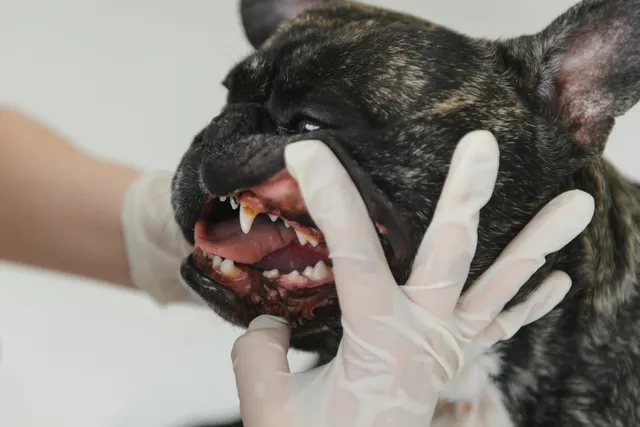
Dental malocclusion occurs when one or more teeth are not properly aligned, but the upper and lower jaws are of normal length. Most cases of malocclusion are hereditary and, generally speaking, do not require treatment. However, a veterinarian and, sometimes, a veterinary dental specialist should be consulted. In some situations, tooth extraction may be necessary.
With the appearance of permanent teeth, malocclusion can cause severe problems. When it causes trauma to the surrounding tissues or other teeth, it is called a non-functional or traumatic malocclusion and needs treatment.

What Are the Signs of Malocclusion in Dogs?
Clinical signs are not obvious in mild cases, and the owner may not realize that something is wrong with their dog. In severe cases, dogs with malocclusion may show the following clinical signs:
- Choosing a certain type of food (usually a wet one with large chunks)
- Pain
- Discomfort
- Inability to close their mouth
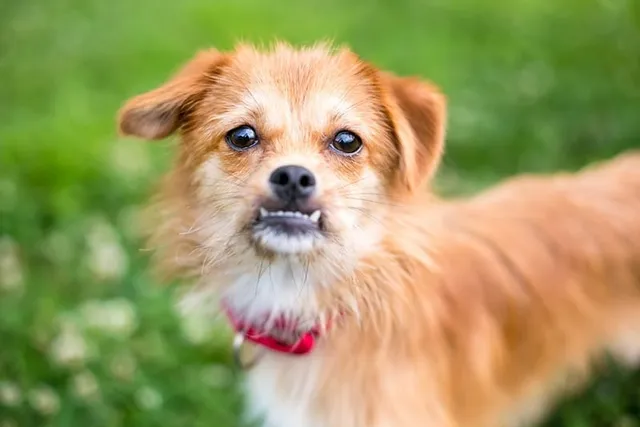
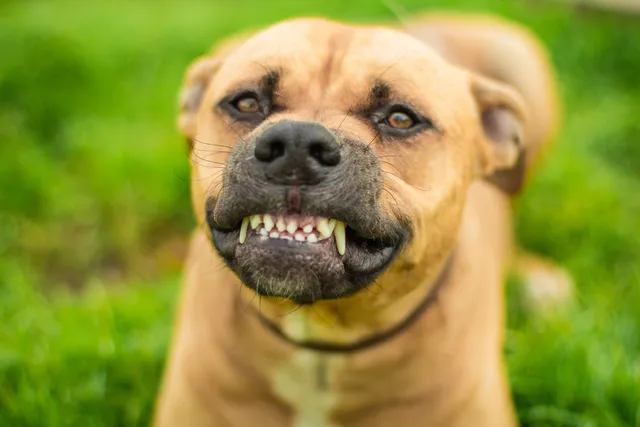
- Abnormally long jaw, with visible overbite or underbite
- Mixed dentition (puppy and adult teeth)
- Food falling out of their mouths
- Halitosis (bad breath)
- Gingivitis and tartar deposits
If your pet is showing these signs, we suggest you speak to a vet.
Types of Malocclusions in Dogs
There are two types of malocclusions in dogs, and each is divided into subtypes.
Skeletal malocclusion
- Overbite, overshot, mandibular mandibular brachygnathism, or class 2 malocclusion — The lower jaw is shorter than the upper one.
- Underbite or class 3 malocclusion — The lower jaw is longer than the upper one.
- Maxillomandibular asymmetry — Each jaw consists of two halves, which develop independently. When there is a difference in length between the two halves, it is called rostrocaudal asymmetry (superior and/or inferior). When the two jaws do not center over each other, it is called lateral asymmetry. When there is an abnormal space between the two jaws (upper and lower) it is called an open bite.
Dental malocclusion
- Rostral crossbite — One or more of the lower incisors are positioned in front of the upper incisors when the dog's mouth is closed.
- Caudal crossbite — One or more of the lower cheek teeth point more toward the cheek than the opposite upper cheek teeth when the mouth is closed.
- Lingually displaced canines or base narrow canines — One or both lower canines are directed inward.
- Lance canines or mesioverted maxillary canines — This can be inherited or appear secondary to persistent puppy canines.

What Are the Causes of Malocclusion in Dogs?
In dogs, the most common cause of malocclusion is persistent puppy teeth (deciduous teeth) that interfere with the eruption of adult teeth (permanent teeth). Other causes include:
- Certain genetic, hereditary anomalies.
- Trauma
- Wrong development of the teeth during the growth period

How Do I Care for a Dog With Malocclusion?
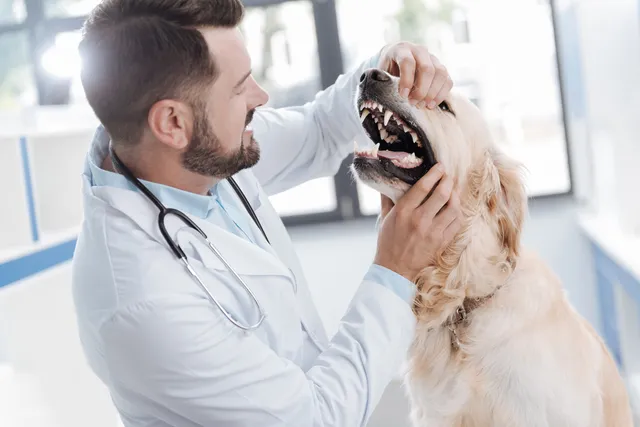
The first thing to do if you notice malocclusion in your dog’s teeth is to book an appointment with your vet to assess the severity of the problem. Your vet may recommend you to visit a veterinary dental specialist, who can recommend the best treatment plan for your dog’s needs. In some cases, the problem is not severe and dogs don’t seem to be affected by it. However, the fact that your dog is eating and appears to cope well doesn’t mean they are not experiencing pain or discomfort.
Moreover, malocclusion can cause dogs to drool, drop food, or make them more prone to dental disease since the overcrowding of teeth results in tartar deposits. Malocclusion can cause injuries to the gums and lead to damage and premature teeth wear, favoring the occurrence of periodontal disease. In severe cases, malocclusion can also lead to jaw fracture.
Regardless of the type of malocclusion, great attention must always be paid to your dog's teeth; they must be brushed daily to prevent the accumulation of dental plaque.
Frequently Asked Questions
What Is a Class 1 Malocclusion in Dogs?
With this type of malocclusion, the dog has a normal bite, and there are no gaps between the mandible and the maxilla, but the teeth are crowded or with larger spaces between them. It is the least severe class of malocclusion and the most common. There is also class 2 malocclusion (overbite) and class 3 malocclusion (underbite), which are more severe because being skeletal malocclusions, they involve the upper or lower jaw.
How Do You Fix a Dog’s Malocclusion?
In most cases, malocclusion does not need treatment, but this must be assessed by a veterinarian. If the condition is severe, there are two types of treatment: tooth extraction (the most common) or crown reduction with endodontic treatment. In some cases, dogs might even need braces. These will help dogs with severe malocclusion to bite and eat normally.
We recommend you consult a veterinarian for the best advice on which would be the best treatment for your pup.
Conclusion
Malocclusion in dogs is among the most common dental diseases that dogs can suffer from. There are two types: skeletal and dental. Skeletal malocclusion refers to the two jaws (upper and lower), while dental malocclusion involves the teeth. With skeletal malocclusion, dogs can have one of their jaws longer or shorter, or the two halves of each jaw can develop independently and abnormally. With dental malocclusion, the numerous teeth (due to the persistence of puppy teeth) or the large spaces between them can lead to a defective bite and difficulty feeding. In most cases, malocclusions are mild and do not require treatment. In severe cases, however, dental extractions, crown reduction, or even braces can be recommended.
You might also want to check out:
Sources
Featured Image Credit: Kcuxen, Shutterstock
Expert dog care, straight to your inbox
News, insights, expert advice, and everything dog.

No spam — unsubscribe anytime.
By signing up, you agree to our Terms & Conditions and Privacy & Cookies Policy.
How useful was this post?
Click a star to rate. You can leave written feedback afterwards. (We read all feedback.)
Dr. Iulia Mihai, DVM MSc (Veterinarian)
Dr. Iulia Mihai is a veterinarian with more than 13 years of experience in laboratory, cancer and pet pathology. Dr. Mihai studied at the University of Agronomical Sciences and Veterinary Medicine of Bucharest, Romania. She has a master’s degree in equine and pet pathology and studied epithelial cancer for her Ph.D. Iulia has a passion for internal medicine and parasitology and started volunteering at the faculty’s clinic in her third year of college. She enjoys writing and educating people about disease prevention, nutrition, behavior, and treatment. She has worked in a couple of veterinary clinics over the years as an internal medicine specialist.