Dog Stomach Ulcers: Our Vet Explains the Signs, Causes & Care

In this article
Stomach (gastric) ulcers in dogs occur when the protective lining of the stomach, known as the mucosal barrier, becomes damaged. The purpose of the mucosal barrier is to protect the lining of the stomach from its acidic contents.
The strength of the mucosal barrier depends on multiple factors:
Anything that increases the amount of stomach acid or changes the mucosal barrier can lead to an ulcer which, once present, will often get worse without treatment. This is because one change often spirals into a cascade of further damage.

What Causes Stomach Ulcers in Dogs?
Stomach ulcers do not just happen spontaneously, particularly in young healthy dogs. One study showed the most common causes of stomach ulcers in dogs to be liver disease and non-steroidal anti-inflammatory drug (NSAID) administration. However, many factors can contribute to the development of stomach ulcers.
If you are concerned about the health and well-being of your pet, seek veterinary advice for the best course of action.
1. Medications
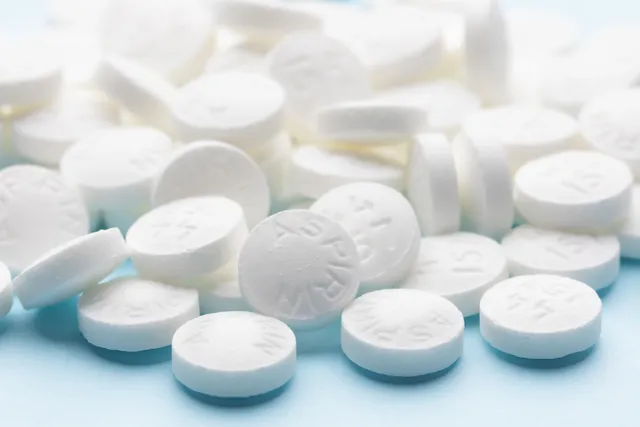
Non-steroidal anti-inflammatory drugs (NSAIDs) are common culprits, including both human products (e.g., aspirin and ibuprofen) and veterinary products (e.g., meloxicam). Corticosteroids (e.g., prednisone and dexamethasone) have also been implicated.
It is important to note that corticosteroids and NSAIDs (or multiple NSAIDs) should never be given together, as this increases the risk of stomach ulcers. A “washout” period is typically recommended if a patient needs to switch from one type of medication to the other, and stomach protectants may be given proactively.

2. Certain Medical Conditions
Stomach ulcers frequently occur in dogs with liver disease and kidney disease. Other conditions such as pancreatitis, irritable bowel syndrome (IBS), and critical systemic illness (e.g., sepsis) have also been associated with stomach ulcers.
3. Reduced Blood Flow to the Stomach
Blood flow to the stomach can be reduced in acute situations like general anesthesia, hypovolemic shock, and gastric dilatation-volvulus (GDV). It may also occur in some chronic diseases like hypoadrenocorticism (Addison’s Disease).
4. Dietary Indiscretion
Dogs who eat things they shouldn’t (e.g., physical objects or toxic substances) can injure the mucosal barrier.

5. Hyperthermia (Heat Stroke)
Stomach ulcers are common in severe cases of heat stroke.
6. Exercise-induced Gastric Disease (EIGD)
EIGD has been noted in high-level canine athletes performing physically demanding activities, particularly endurance-racing sled dogs.
7. Neoplasia (Cancer)
Cancer can lead to stomach ulcers in two ways:
8. Spinal Cord Injury
Trauma to the spinal cord, including intervertebral disc disease (IVDD), has been associated with stomach ulcers in dogs.

What are the Signs of Stomach Ulcers in Dogs?
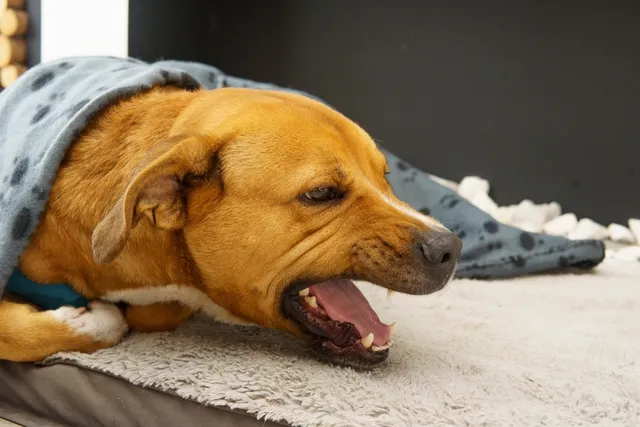
The signs of stomach ulcers are often not very specific, and some dogs may not show any signs.
Clues to watch for include:
Sometimes, an ulcer can progress to a perforation in the stomach. This warrants urgent veterinary attention!
Affected dogs may:
Unfortunately, dogs with perforated stomach ulcers have a guarded prognosis.
If your dog is showing any of these signs, we recommend speaking with a vet.
How Are Stomach Ulcers Diagnosed?
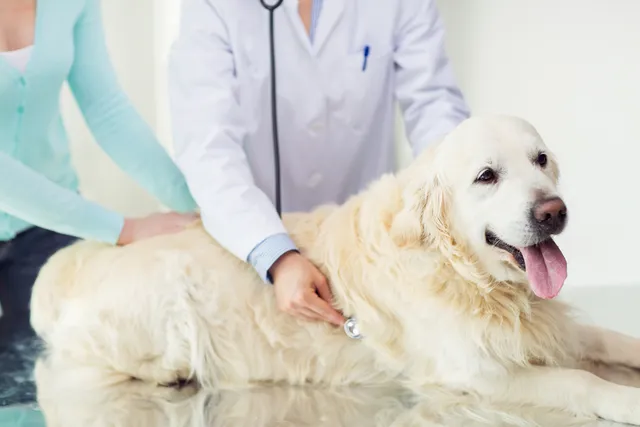
Your veterinarian may suspect a stomach ulcer if your dog has one or more predisposing factors and shows any of the signs listed above. They will perform a thorough physical examination, likely bloodwork, and other diagnostic tests to rule out other causes of stomach upset. If no apparent concerns are revealed, a trial of ulcer medication(s) may be suggested to see if your dog’s signs improve.
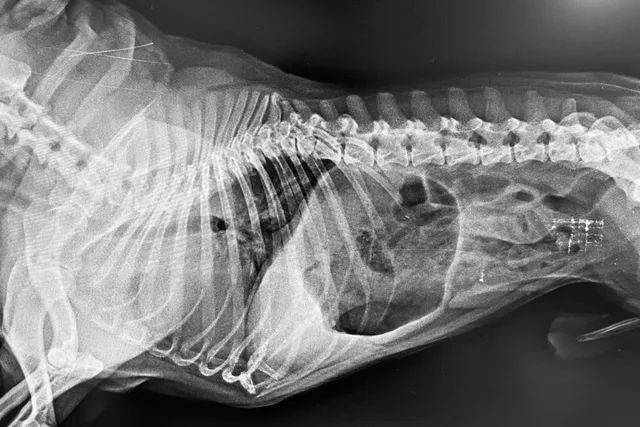
An endoscopic exam may be recommended to diagnose stomach ulcers. This involves general anesthesia so that a small camera can be passed through the mouth, esophagus, and stomach to look for evidence of bleeding or ulceration. If abnormalities are identified, samples (biopsies) of the affected areas can be taken to determine exactly what’s happening.
In some cases, exploratory surgery may be helpful. The signs associated with stomach ulcers are similar to many other causes of gastrointestinal (GI) upset. While surgery is more invasive than endoscopy, it provides an opportunity to examine the entire GI tract and other abdominal organs. It also allows for biopsies.

How Are Stomach Ulcers Treated in Dogs?
Medical conditions that may contribute to the development of stomach ulcers should be managed as much as possible. Some patients may require a hospital stay for intravenous (IV) fluids and other supportive care.
Briefly, here are the medications commonly used to treat stomach ulcers. They are all human medications currently used off-label in dogs:
1. Proton-pump Inhibitors (e.g., omeprazole)
This class of medication is extremely good at reducing stomach acid secretion.

2. Histamine-2 Receptor Antagonists (e.g., famotidine)
These also lower the amount of stomach acid produced but not as effectively as proton-pump inhibitors.
3. Prostaglandin Analogues (e.g., misoprostol)
Misoprostol inhibits stomach acid production and protects the cells lining the GI tract. Pregnant people should not take this drug, as it may cause miscarriage.
4. Cytoprotective Agents (e.g., sucralfate)
Sucralfate binds to damaged areas inside the stomach, protecting the cells from further damage. It also increases mucus production. Due to its stomach-coating properties, it can block the absorption of other substances. Sucralfate should be given at least 1-2 hours apart from food and other medications.
It is worth noting that patients who have been receiving proton-pump inhibitors or histamine-2 receptor antagonists for longer than a month should be weaned off the medication gradually to avoid the possible rebound effect of increased stomach acid production.
How Long Do Stomach Ulcers Take to Heal?
Healing time for stomach ulcers is highly variable. It depends on the severity of the ulcer and whether there are underlying factors (e.g., liver or kidney disease) that will continue to contribute to ulcer development.

Can Stomach Ulcers Be Prevented?
While not all stomach ulcers can be prevented, there are some things you can do to reduce your dog’s risk:
If you have any concerns about your dog’s potential to develop ulcers or are worried that they may have a stomach ulcer, please contact your veterinarian for help.
See Also:
Featured Image Credit: New Africa, Shutterstock
Expert dog care, straight to your inbox
News, insights, expert advice, and everything dog.

No spam — unsubscribe anytime.
By signing up, you agree to our Terms & Conditions and Privacy & Cookies Policy.
How useful was this post?
Click a star to rate. You can leave written feedback afterwards. (We read all feedback.)
Dr. Sharon Butzke DVM (Veterinarian)
Sharon has been drawn to animals for as long as she can remember. She was raised in Ontario, Canada and fulfilled her childhood dream when she obtained her Doctor of Veterinary Medicine (DVM) degree from the Ontario Veterinary College in 2009. Since then, she has worked in a variety of small animal clinics, with a focus on cats and dogs. She loves sharing her knowledge and empowering people to take the best possible care of their pets! Sharon currently resides in British Columbia with her husband, daughter, and a loveable Great Dane named Parker.