My Dog Ate a Squirrel: Should I Be Worried? Our Vet Explains

In this article
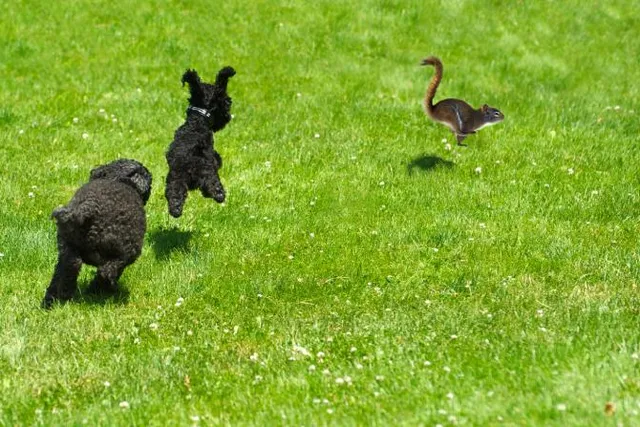
If you have just witnessed your dog eating all or part of a squirrel, your initial reaction could fall anywhere along the spectrum from horror and disgust to, “What’s the harm in that?” Coyotes and wolves probably eat squirrels all the time! While there is some truth to this (so if your dog ate a squirrel you probably don’t need to panic), there are a few things to consider:
We will discuss each of these points in more detail below.

The 7 Potential Concerns of Eating a Squirrel
1. Rabies
One of your first thoughts might be, “What if the squirrel had rabies?” Fortunately, the risk is considered to be very low. A large study reviewed all cases of rabbits and rodents tested for rabies in the United States between 1995 and 2010 and found that, out of 21,977 squirrels submitted, only nine were positive for rabies(0.04%).1
However, the risk is not zero, so if your dog has eaten a squirrel, contacting your veterinarian is a good idea to ensure their rabies vaccination is up-to-date.
2. Bite Wounds
If there was a skirmish before your dog killed and ate the squirrel, there is a chance that they sustained bite wounds.
We have established that the likelihood of the squirrel having rabies is very low, but puncture wounds can be painful and become infected. Check your pup carefully for wounds and inform your veterinarian of any concerns.
3. Bacterial Diseases
Squirrels commonly carry bacteria that can be transmitted to dogs (and people).
Examples include:
An effective vaccine is available to protect dogs from leptospirosis, which your veterinarian may recommend if you live in a high-risk area.
4. Ringworm
Squirrels can have ringworm, which is highly contagious to other animals (including dogs and people). The name is misleading because ringworm is a fungal infection! Signs of this condition in dogs include hair loss and occasionally redness of the skin or scabbing.
It does not tend to be itchy. Some affected dogs may not show any signs at all. If you are concerned that your pup may have ringworm, ask your veterinarian about diagnostic testing and treatment options.

5. Parasites
Squirrels often carry fleas, ticks, and intestinal parasites like roundworms and tapeworms. If your pup has eaten a squirrel, your veterinarian can prescribe medication to clear out any unwelcome bugs they might have picked up.
6. Secondary Rodenticide Poisoning
If your pup found and ate a squirrel that was already dead, the possibility that it died from rodenticide poisoning (i.e., mouse or rat bait) should be considered. If you use rodenticide on your property and suspect the squirrel may have ingested it, contact your veterinarian immediately!
If your dog ate the squirrel very recently, it might be possible to induce vomiting. It is probably a good idea to run some tests to check for proper blood clotting to be safe.
It is important to note that signs of rodenticide toxicity take at least a few days to appear.
Please do not simply assume your dog is okay because they aren’t showing obvious signs of toxicity right away!
7. Gastrointestinal (GI) Obstruction
If you have a small dog or one that tends to swallow things whole without chewing, they may be at risk for a gastrointestinal (GI) blockage. If this occurs, your veterinarian may need to perform surgery to remove the obstruction.

How Can I Keep My Dog Safe?
Here are some tips to help protect your pup:
If you suspect your dog may have eaten a squirrel, it is a good idea to call your veterinarian because:

Summing Up
Do not forget to keep yourself safe! If you find a dead squirrel (or part of one) on your property, be sure to handle the body safely. Avoid touching it with your bare hands; wear gloves or use a shovel to pick it up and place it in a plastic bag. Check your local regulations before disposing of the squirrel in your garbage (some municipalities may have other requirements).
See also:
Expert dog care, straight to your inbox
News, insights, expert advice, and everything dog.

No spam — unsubscribe anytime.
By signing up, you agree to our Terms & Conditions and Privacy & Cookies Policy.
How useful was this post?
Click a star to rate. You can leave written feedback afterwards. (We read all feedback.)
Dr. Sharon Butzke DVM (Veterinarian)
Sharon has been drawn to animals for as long as she can remember. She was raised in Ontario, Canada and fulfilled her childhood dream when she obtained her Doctor of Veterinary Medicine (DVM) degree from the Ontario Veterinary College in 2009. Since then, she has worked in a variety of small animal clinics, with a focus on cats and dogs. She loves sharing her knowledge and empowering people to take the best possible care of their pets! Sharon currently resides in British Columbia with her husband, daughter, and a loveable Great Dane named Parker.