Demodectic Mange in Dogs: Signs, Causes & Treatment (Vet Answer)

In this article
Demodex are mites normally found in low numbers in the hair follicles of dogs. They live their entire lives on the host and are usually harmless. But when the host’s immune system malfunctions, enabling the Demodex mite to populate out of control, it leads to various issues. Some dogs may have mild hair loss, while others may develop severe skin problems. Let’s focus on demodectic mange and the signs, causes, and treatment of the condition.

What Is Demodectic Mange?
Mange is a skin disease caused by parasitic mites. There are two different types of mites in dogs that can cause disease: sarcoptic mange mites and demodectic mange mites. The medical term for skin disease caused by Demodex mites is demodicosis. Sarcoptic mange mites, also known as scabies, burrow just under the skin’s surface, causing intense itching. Demodectic mange, also known as Demodex or red mange, lives in the hair follicles and sebaceous glands of dogs1. These tiny, cigar-shaped mites with eight stubby legs are the most common form of mange in dogs, and most healthy dogs normally have a few mites in their hair follicles2.
So, if the Demodex mite is a normal ectoparasite of dogs, how does it cause disease? It all has to do with the strength of the dog’s immune system. Dogs with immature or compromised immune systems may have difficulty keeping Demodex numbers in check, enabling them to populate out of control and causing skin disease.

What Are the Signs of Demodectic Mange?
Healthy dogs have a low number of Demodex as a normal part of their skin flora, and they’re usually harmless when the immune system is functioning normally.
Demodex can cause clinical signs of disease in dogs with immature or depressed immune systems, including:
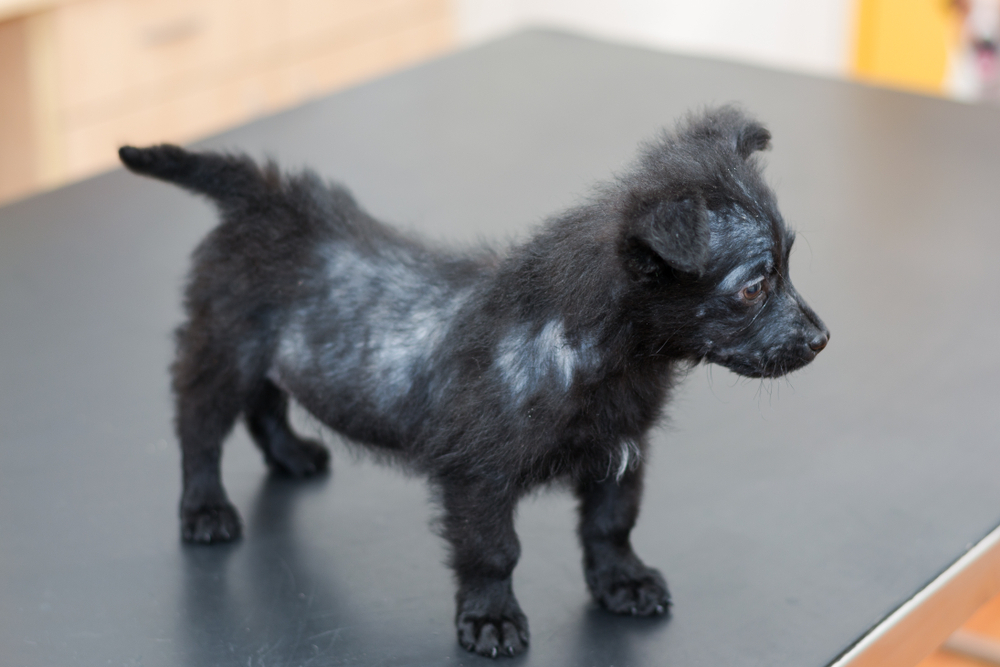
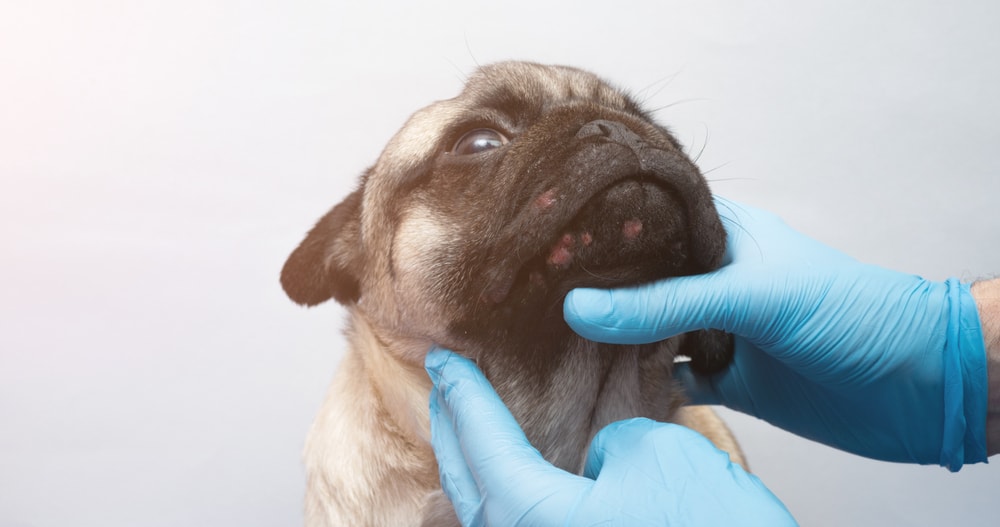
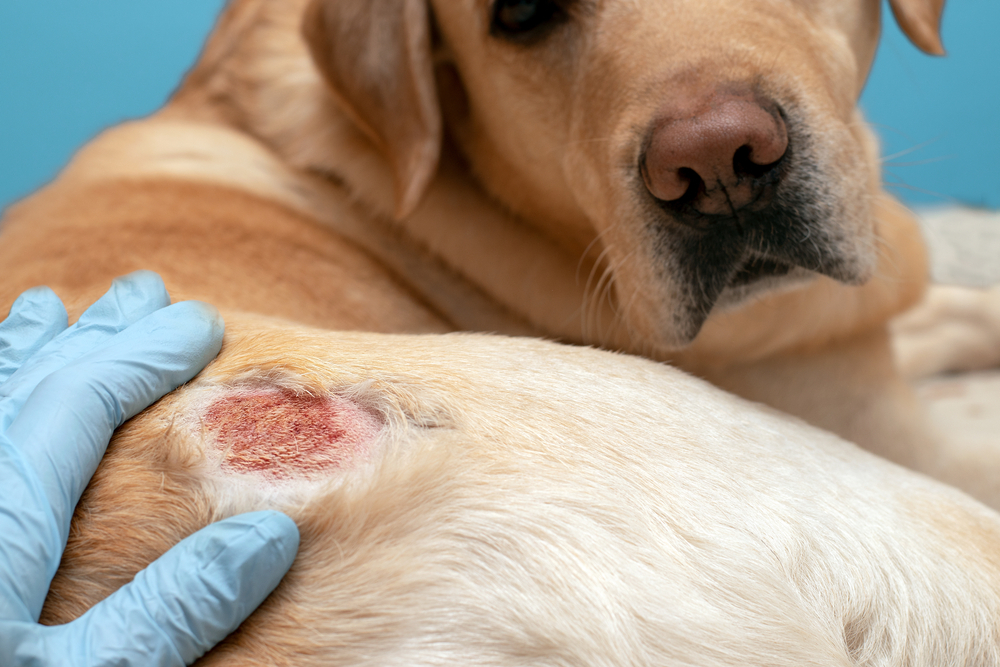
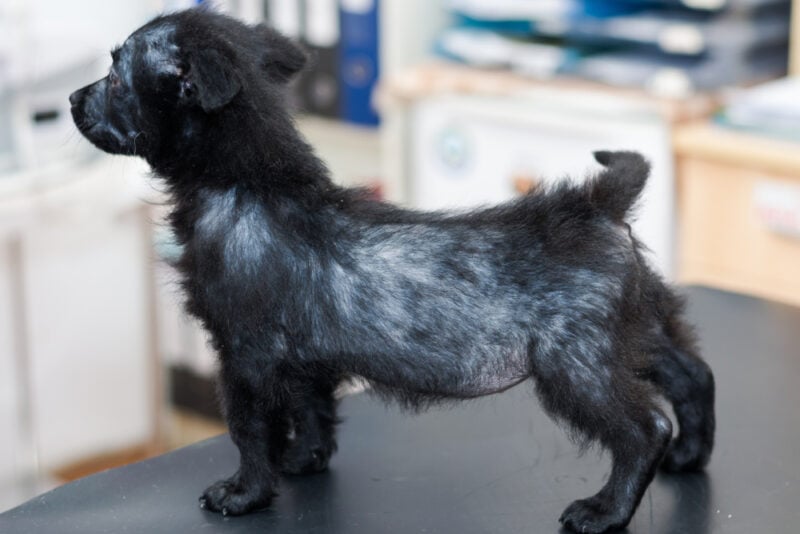
Hair loss in dogs and puppies with demodectic mange typically begins around their head, face, and eyes. As the disease progresses, hair loss may be localized to only a few areas on their skin, or they can have generalized bald patches all over their body. Dogs may or may not itch depending on how widespread the lesions are or if there is an infection present. Some dogs experience severe skin irritation that can lead to secondary skin infections. These dogs often have red and inflamed skin, which is where the term “red mange” comes from. In severe cases, dogs can have signs of pain, lethargy, enlarged lymph nodes, infected wounds, and a fever. Demodex can even cause ear infections if a sufficient number of the mites occupy the ear canal.
Is your dog presenting any of these signs? Talk with one of our experts here:
What Are the Causes of Demodectic Mange?
Three species of demodectic mange mites can cause disease in dogs. The most common species is Demodex canis, but Demodex injal and Demodex corneican can also be found, albeit less commonly. Mother dogs often pass Demodex mites on to their puppies through close contact within 72 hours after birth. Demodex only causes issues when there is immune system dysfunction, such as immaturity in young dogs or immunosuppression due to a variety of reasons.
There are three forms of demodectic mange in dogs: localized form, juvenile-onset generalized form, and adult-onset generalized demodicosis. Localized demodicosis usually occurs in dogs less than 1 year of age and often corrects itself as the dog and their immune system mature. About 90% of demodicosis cases resolve on their own within eight weeks. A small percentage of dogs may progress to the more generalized form, however.

Juvenile-onset demodicosis is often inherited in young dogs and is characteristic of severe generalized lesions with secondary skin infections. When adult-onset demodicosis occurs in older dogs, it is usually due to an underlying cause that has weakened the immune system, such as hypothyroidism, cancer, hyperadrenocorticism, or diabetes mellitus. Clinical signs in adult dogs are similar to the juvenile form of the disease. Hereditary or genetic factors, illness, poor diet, or certain medications can all weaken the immune system, triggering the proliferation of the mange mite. Dogs with juvenile-onset generalized demodicosis should not be used in breeding programs due to the hereditary or genetic component of this disease and the risks of passing on an abnormally functioning immune system to their puppies.
It is important to note that this mite is species-specific, meaning your dog will not transmit it to you. We have our own form of Demodex, which is also specific to humans and is not contagious to dogs. Demodectic mange is also not contagious from one dog to another, as the mite lives its entire life cycle on the dog and relies on a dysfunctional immune system to escape the body’s defenses in order to proliferate and cause disease.
| Type of Demodicosis | Age of Onset | Lesion Location | Clinical Signs |
| Localized | <1 year of age | Six or fewer lesions around the eyes, lips, and forelegs but can be found in other areas | Circular areas of hair loss or thinning, redness, and scaling; absent or mild itching |
| Juvenile-onset | <1 year of age | Lesions found on six or more areas of the body, two or more paws affected, or a large portion of the body is involved | Redness, papules, hair loss, greasy and flaky skin, skin swelling, hyperpigmentation, crusts, draining skin wounds, and infection |
| Adult-onset | ≥4 years of age | Lesions found on six or more areas of the body, two or more paws affected, or a large portion of the body is involved | Redness, papules, hair loss, greasy and flaky skin, skin swelling, hyperpigmentation, crusts, draining skin wounds, and infection |
How Do I Care for a Dog With Demodectic Mange?
After completing a thorough physical examination of your dog, your veterinarian will take a scrape of your dog’s skin or pluck a few hairs to examine under the microscope. Skin scraping is obtained by scraping the skin with a scalpel blade deep enough to cause mild irritation or bleeding, as this type of mite lives deep in the hair follicles and sebaceous glands. Demodex is confirmed when an increased number of mites, eggs, and larvae are seen in the scraping or hair pluck. Remember, seeing a few Demodex under microscopy is rare, so observing large numbers of the mite is abnormal. A biopsy of your dog’s skin may be taken if chronic skin infections occur or if your dog does not respond to therapy.
Not all dogs with Demodex need treatment, as certain mild, localized cases may resolve on their own within 1–2 months after clinical signs develop. The prognosis is usually good with spontaneous recovery. Dogs with a generalized form of the disease often require treatment because the disease is more widespread and severe, with a guarded prognosis. Localized Demodex may respond well to topical anti-parasitic therapy, but more aggressive treatment involving oral medications, along with topical medications, may be needed in generalized forms of the disease.

Clipping the hair and applying a shampoo containing benzoyl peroxide may be used to open up and clean out the hair follicles, as this allows for better contact with topical solutions. Dipping with amitraz every two weeks remains the only approved treatment for dogs with demodicosis in the United States. Many medications used for the treatment of Demodex in dogs occur off-label, meaning the medication is used in a way other than what the FDA approved it for. All treatments are to be followed as exactly as prescribed by your veterinarian.
Topical medications used off-label in dogs:
- Moxidectin + imidacloprid
- Fluralaner
Injectable medications used off-label in dogs:
- Doramectin*
Oral medications used off-label in dogs:
- Ivermectin*
- Milbemycin oxime
- Afoxolaner
- Fluralaner
- Sarolaner
- Lotilaner
*Ivermectin and doramectin are not recommended for use in dogs with the MDR1 allele mutation, which commonly occurs in purebred herding dogs or mixes of these breeds, including Collies, Shetland Sheepdogs, Old English Sheepdogs, Border Collies, and Australian Shepherds. These breeds are more sensitive to these drugs and may show signs of neurotoxicity. Dogs can be genetically tested for this gene mutation, which is recommended before starting treatment.
Corticosteroids in both local and systemic forms are not recommended as part of the treatment protocol for demodicosis because they can worsen the condition.
Treatment is continued until clinical signs resolve and two negative skin scrapings or hair pluckings are obtained in a row, four weeks apart from each other. Some dogs respond well to treatment, while others may need several months to recover. Demodex may recur in dogs with weakened immune systems 3–6 months after the initial therapy is stopped. Multiple skin scrapings may be needed during therapy to assess how well treatment is progressing. Dogs with secondary skin infections due to inflammation may require antibiotics and medicated shampoo to get the infection under control before starting therapy for Demodex.

Frequently Asked Questions
Should I Worry About Catching Demodex From My Dog?
No, canine Demodex is not contagious to humans.
Will My Dog Recover From Demodex on Their Own?
Some dogs with mild localized forms of the disease recover spontaneously on their own within 8 weeks. Dogs with more severe forms often require treatment to get the condition under control. This may take several months.

Does Demodex Live in the Environment?
No, Demodex does not live in the environment. It spends its entire life cycle living on its host, the dog. No special cleaning or treatments are needed for the environment, objects, or surfaces that come in contact with your dog.
Summing Up
Demodex is a skin mite that can cause disease when elevated numbers of mites, eggs, and larvae are detected under microscopy. Dogs can have localized or generalized forms of the disease, with a guarded prognosis in more severe cases. Treatment consists of anti-parasitic medications applied topically and/or given orally. Dogs with skin infections may need to be treated with antibiotics. The duration of treatment may take several months in some dogs with the condition.
Featured Image Credit: Todorean-Gabriel, Shutterstock
Expert dog care, straight to your inbox
Vet-reviewed advice, training tips, and the best of Dogster. Free, and you can unsubscribe anytime.
By signing up, you agree to our Terms & Conditions and Privacy & Cookies Policy.
Dr. Stacie Grannum DVM (Veterinarian)
Dr. Stacie Grannum was born and raised in Arizona, USA. When she was a little girl, an encounter with a little animal changed her life forever. A tiny bird fell high from its nest, and Stacie diligently cared for it. Sadly, despite her best attempts to save it, the baby bird did not survive. From this devastating loss came a new ambition, carving the path that Dr. Grannum followed. She knew that she wanted to pursue a career in veterinary medicine. She worked hard toward that goal and dedicated her time to pursuing the field.
Today, her focus is on pet health, particularly wellness and preventive medicine. She also enjoys writing about pet health and is eager to share what she has learned over the year with other animal lovers.
In 2014, Dr. Grannum earned her Doctor of Veterinary Medicine Degree from Colorado State University.
Join the conversation
Ask a question, share your story, or send private feedback.