Imodium for Dogs: Is It Okay to Give Your Dog OTC Human Medicine? (Vet Answer)

In this article
You’re cleaning up your dog’s third diarrhea mess of the night when you remember that bottle of Imodium in your medicine cabinet. Wouldn’t it be great if you could provide over-the-counter relief for your dog without contacting the emergency clinic? However, before you give your dog Imodium—or any human medicine, for that matter—be sure to speak to a veterinarian first. This way, you can determine if the medication is safe and get a proper dose if so.

What Is Imodium?
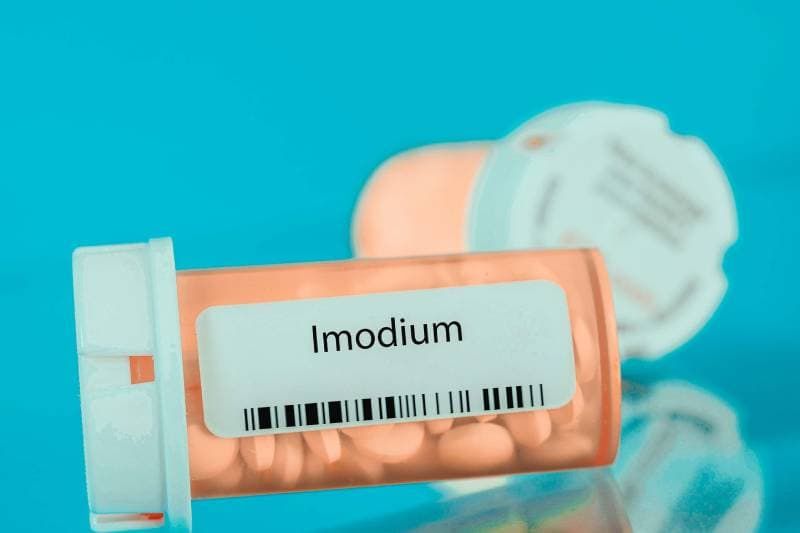
Imodium, or loperamide, is an anti-diarrheal medicine used in humans to help decrease the signs of diarrhea.
One of the many factors that contribute to diarrhea in dogs is abnormal motility. The intestines have a normal rhythm to the contraction of the smooth muscles surrounding them that “pumps” ingesta to where nutrients can be absorbed and waste products expelled. The many causes of diarrhea often result in an increased transit time through the intestine, making it harder for the body to absorb the water and some of the nutrients before the ingesta leaves the body. It just moves through too fast.
Imodium targets the intestinal smooth muscle to slow it down so the body has more time to extract the nutrients and water from it. This creates a less liquid, less voluminous bowel movement, hopefully also decreasing the frequency and urgency.
Imodium isn’t meant to help with all causes of diarrhea; it is mainly meant for mild things like stress, a dietary change, or eating something that you have a sensitivity to. Diarrhea from infections, parasites, or toxins shouldn’t be treated with Imodium because you actually want the intestines to move those nasty things out of the body as soon as possible.
So, even though Imodium may be in your medicine cabinet, you shouldn’t give it to your pup without consulting your vet.
How Is Imodium Given to Dogs?
Imodium is not FDA approved for dogs. This means there are no veterinary-specific versions. Instead, vets have to prescribe Imodium off-label and dose your dog based on the use of human formulations.
Human Imodium comes in a liquid form at a concentration of 1 mg / 5 mL or a 2-mg tablet. Generally, large dogs are given the tablet form, and small dogs can be more accurately dosed with the liquid formulation.
Imodium can be given with or without food, though giving it on an empty stomach can cause mild upset. If your pup has any issues with this, give the medication with food the next time. Imodium will usually help improve the signs of diarrhea within 1–2 hours.
Your veterinarian will be able to give you an accurate dose for your dog depending on their weight. Imodium shouldn’t be given unless you know the cause of your dog’s diarrhea, so always consult your veterinarian first.
What Happens If You Miss a Dose of Imodium?
When your veterinarian gives you the proper dose for your dog, they will also tell you how often you should give it. Typically, it is every 4–6 hours, so if you happen to miss a dose, give the next one as soon as you remember, and then wait the prescribed amount of time to give the following dose. Don’t give doses any more frequently than what is prescribed, and don’t double up on a dose if you happen to miss one.
Potential Side Effects of Imodium in Dogs

No medication is without potential side effects, including Imodium. The most common side effects for dogs taking Imodium at the proper dose are:
- Constipation
- Bloat
- Sedation, lethargy
Rarely, severe side effects can include:
- Paralytic ileus (loss of intestinal motility)
- Pancreatitis
- Intestinal inflammation
If your dog experiences any side effects from taking Imodium, be sure to report them to your veterinarian.
Dogs with an MDR1 gene mutation require increased caution when taking Imodium because they can have a more difficult time breaking down this medication (and others), and it can reach toxic levels in their system. Common breeds for MDR1 mutations are Australian Shepherds, German Shepherds, and Collies.
Frequently Asked Questions (FAQ)
What Needs to Be Monitored With a Dog That Is Taking Imodium?
Make sure your dog stays hydrated. Dogs with diarrhea can quickly become dehydrated because they can lose a large amount of fluid in their feces. You’ll also want to check that your dog doesn’t go the other way and become constipated. Maintaining hydration can help with this. Watch for and report any of these side effects to your vet.

What Are the Risk Factors for Imodium in Dogs?
Dogs with a known or suspected MDR1 mutation should use Imodium with caution or not at all. Dogs with hypothyroidism or kidney or liver disease should also use this medication with caution. Pregnant and nursing dogs may want to use something else, and you should never give Imodium to cats. Be sure to report any illnesses that your dog has to the prescribing veterinarian.
How Do I Know If Imodium Is Right for My Dog?
You won’t know if you should use Imodium for your dog without talking to a vet. They will be able to determine if the cause of the diarrhea can be treated with this medicine. Since certain causes of diarrhea shouldn’t be treated with Imodium, you’ll want a proper veterinary diagnosis before using it.
What Other Medications Can Be Given to Dogs With Mild Diarrhea?
Most cases of mild diarrhea will clear up on their own with a bit of supportive care. If your dog isn’t showing any other signs of illness, try giving them a bland diet for a few days, such as boiled chicken and rice. You may want to add probiotics and boost their fiber intake with a small amount of canned pumpkin or green beans. Make sure they have plenty of water available at all times. Seek veterinary help if diarrhea lasts longer than 48 hours or if it gets worse.
Before giving any medication to your dog, we recommend you consult a veterinarian for the best advice on which would be the best treatment for your pup.
Conclusion
Imodium is a human anti-diarrheal medication that can be used off-label in dogs when prescribed by a veterinarian. It can help ease the signs of mild cases of diarrhea by slowing down intestinal motility, giving your dog’s digestive system more of a chance to absorb fluids and nutrients from the ingesta. However, it is not meant to treat every case of diarrhea, so be sure to speak to a veterinarian before giving it to your dog.
Sources
Featured Image Credit: luchschenF, Shutterstock
Expert dog care, straight to your inbox
Vet-reviewed advice, training tips, and the best of Dogster. Free, and you can unsubscribe anytime.
By signing up, you agree to our Terms & Conditions and Privacy & Cookies Policy.
Dr. Chyrle Bonk DVM (Veterinarian)
On top of caring for animals and writing for veterinary publications, Dr. Chyrle Bonk owns a small cattle herd! When she’s not busy with those things, she can be found somewhere enjoying the Idaho outdoors with her husband and two kids. Dr. Chyrle Bonk received her Doctor of Veterinary Medicine (DVM) from Oregon State University in 2010.
Chyrle has practiced in a mixed animal clinic for over a decade. She also writes for various veterinary websites and magazines, like Dogster!
Join the conversation
Ask a question, share your story, or send private feedback.