In this article
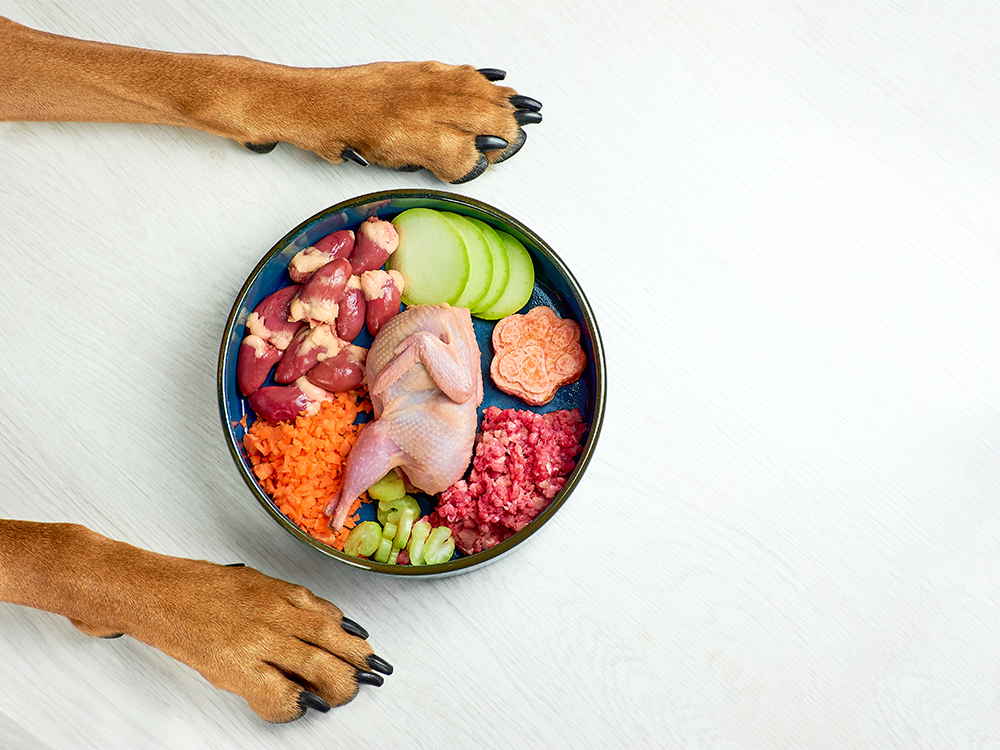
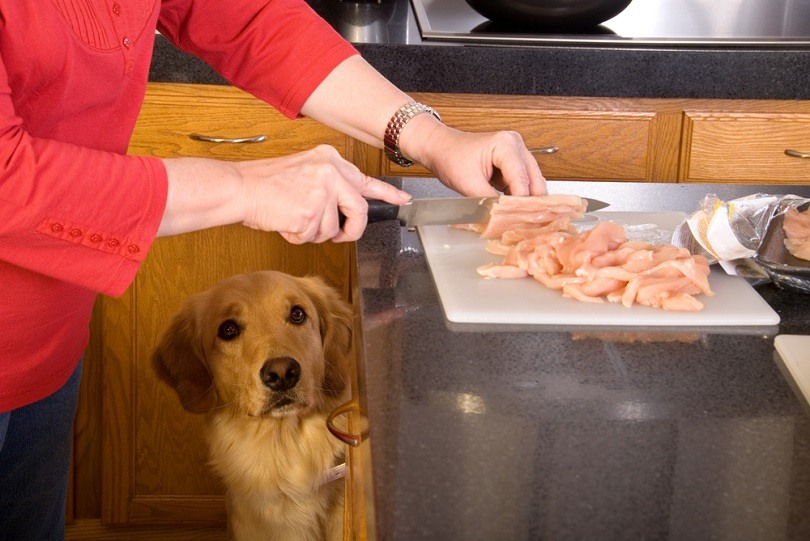
Chicken is a common ingredient in many dog food recipes. But, in fact, many dogs are allergic to chicken. It is one of the most common food allergies in dogs, along with beef, wheat, dairy, and lamb.
Allergies, in general, are extremely common. Dogs can be allergic to types of food and environmental stimuli (i.e., pollen, grass, fleas, etc.) and they can be allergic to more than one thing at a time (i.e., chicken and grass and fleas).
While it is common for dogs to be allergic to chicken, the percentage is still unclear, mostly because it is difficult to confirm the cause of an allergy. The prevalence of allergies is high, but the exact numbers are still unknown.

Are You Sure Your Dog Is NOT Allergic to Chicken?
Allergies in dogs do not necessarily look like human allergies, so many people do not realize their dog is having an allergic reaction.
Even if a dog eats a food they are allergic to, they usually have a reaction on their skin. And while they can sometimes develop hives like humans, usually they either don’t, or their hair hides the inflammation.
But most dogs with food allergies will have itchy feet. Since they can’t say their feet are itchy, dogs will just lick and chew them, which to a human mind does not intuitively scream chicken allergy. Often people are concerned they have fleas or think their dog is just being silly.
They can also get an itchy, red belly. And often, their ears will get itchy and inflamed, which snowballs into recurring ear infections. If your dog has never-ending ear infections, it might be worth considering a chicken allergy.
- Lick their feet
- Chew their feet
- Lick and scratch their belly
- Bright red spots on their feet or belly
- The white fur on their feet is stained brown (licking and the saliva staining their fur)
- Ear infections
Other less common signs of a chicken allergy are as follows:
- Vomiting
- Diarrhea
- Loose stool
- Flatulence
If you suspect your pet is suffering from an allergy, you should contact your vet directly for an assessment. They can provide you with more information and a care plan.
If you need to speak with a vet but can't get to one, head over to PangoVet. It's our online service where you can talk to a vet online and get the advice you need for your dog — all at an affordable price!

Dogs Are Omnivores
Despite the popular idea of dogs being relatives of wolves, dogs are not carnivores. They are omnivores—they eat meat and plants. Carnivores only eat meat. As omnivores, they need to eat meat and plants, so they need variety in their diet. It is not appropriate to only feed your dog meat. And chicken is not some magical diet food for dogs.
Chicken, beef, lamb, dairy, and wheat are common allergens for dogs because that is what most dogs eat most often. Dogs develop allergies to foods (and environmental stimuli) that they are repeatedly exposed to.
And not only are most commercial diets made up of these common ingredients, but human diets are often heavy on the chicken. Plus, for some reason, people really like to feed their dogs chicken and think it is a perfectly safe and perhaps even virtuous food to give them.
Diagnosing an Allergy
The first thing to remember is if your dog does have a chicken allergy, it might take a while to figure it out—weeks or even months. And it will likely require multiple vet visits and in-depth discussions.
The process takes time to experiment with foods and elimination diets, with lots of back-and-forth progress.

Curing an Allergy
There is no cure. A chicken allergy will be a lifelong thing that you will have to manage. Even exposure therapy is limited in its success and reliability.
Excluding exposure therapy, which is also expensive for unguaranteed results, and so consequently unavailable to many people, I find the best way to think about a food allergy is not in terms of curing it but in terms of managing it. Even if you know your dog is allergic to chicken—and only allergic to chicken—excluding chicken 100% from their diet is often impractical.
Especially since most dogs are not only allergic to chicken but are also often allergic to various things on different levels.
Working with your dog’s diet, their response to the food, and consulting with your vet to find a practical plan that mitigates allergic responses and itchiness is a better goal than curing it.
Benadryl is not a good long-term solution. If you want to consider medications that can help, talk to your vet; some very effective anti-itch medications are designed just for dogs now.

Frequently Asked Questions (FAQ)
How do I know if my dog is allergic to chicken and not beef?
If you see the signs of an allergy, the biggest problem is determining what the allergen is. While chicken is a common allergy, it’s not the only thing they could be allergic to.
Plus, it can take weeks for the signs of an allergy to go away. So, even if you did manage to eliminate chicken from your dog’s diet, you will not necessarily see immediate improvement. It can take weeks for the allergen to be eliminated from the body and for the signs of the allergy to go away.
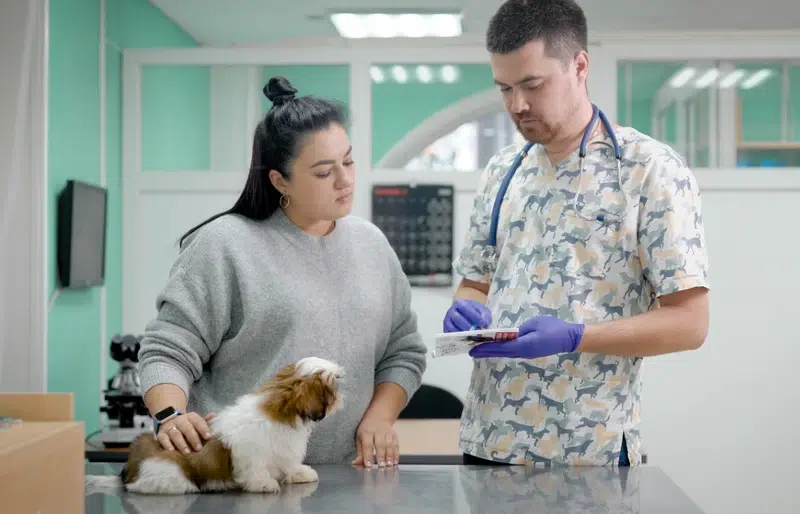
Begin your investigation with a vet visit. They can help establish a baseline of signs. Ensure that other problems have not snowballed on top of the signs (for example, it is common for dogs with food allergies to also develop bacterial skin infections). And they can help you come up with a strategy for a food trial—an allergen detox.
Serology testing does exist; however, the results can be inconsistent. So, work with your vet to formulate a plan.
Can my dog suddenly develop a chicken allergy?
Yes, even adult dogs who have lived their whole lives without any problems can suddenly become allergic to chicken.
Any breed can develop a chicken allergy at any time. It is particularly common in French Bulldogs, German Shepherds, Labrador Retrievers, and West Highland White Terriers.
What else is there to eat besides chicken?
The main goal is to not feed chicken but still ensure a well-balanced diet. There are many commercial diets that do not have chicken as their main source of protein. For example, fish, venison, or kangaroo.
There are also certain diets that are specially manufactured to be allergen-free. They are hydrolyzed: the proteins are hydrolyzed, smashed up too small for the immune system to recognize them as allergens.
These diets can be expensive but are an excellent way to do an allergen elimination diet trial. And they are often an excellent choice for dogs with extremely sensitive systems to eat long-term.
My dog is still itchy—what should I do now?
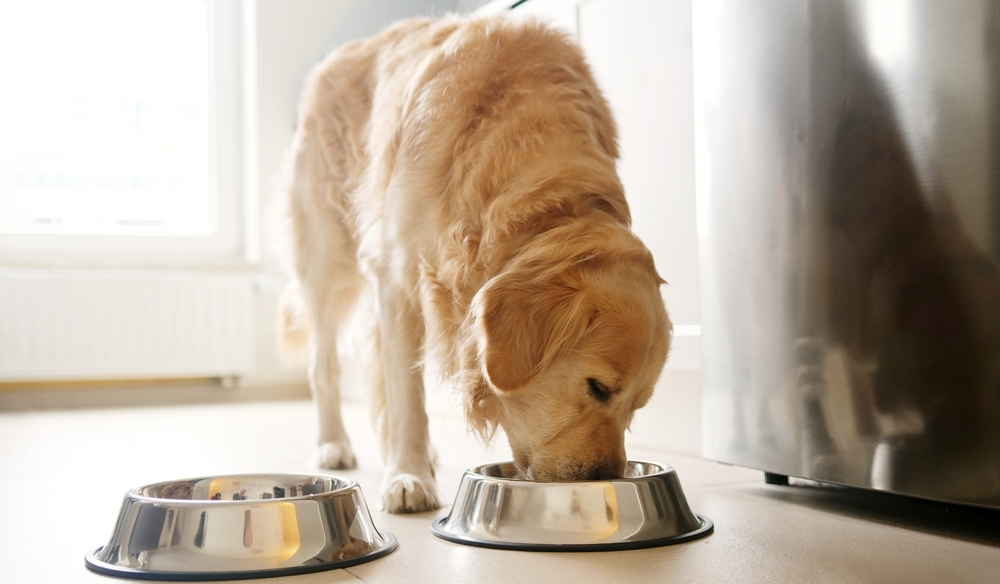
If you have eliminated chicken from your dog’s diet and they are still licking and chewing their feet, the most likely problem is that they are also allergic to something else. It could be another food, or it could be something in the environment.
The other main culprit is that they are still sneaking in bites of chicken. Sometimes chicken sneaks in through treats or they are very mischievous and steal their owner’s chicken dinner.
They also could have developed other skin problems, so it is good to have a vet double-check that they have not developed a yeast infection, atopic dermatitis, or some other skin condition on top of their allergy.
Final Thoughts
Chicken allergies are quite common in dogs. But that does not mean that we have a foolproof cure for them. Most dogs’ allergies will be relatively mild and not life-threatening—they do not usually go into anaphylactic shock. But their allergic response can be persistently irritating and can snowball into other problems.
Watch your dogs for itchy feet and bellies. And always remind your vet of their itchy feet. There are many tools that can help mitigate the problem.
See also:
Featured Image Credit: Sophie Louise Davis, Shutterstock