
As the parent of a pet, you hope to never see them in distress. When your dog is sick, it can be stressful and worrisome to wonder whether your dog will be okay or not. As much as we might try to prevent negative health conditions from ever occurring, there’s no way to truly put a stop to the possibility of infectious disease.
Like humans, dogs are susceptible to a myriad of illnesses, but the following 10 infectious diseases are among the most common. Read about each of these diseases and learn to identify the signs. That way, if your beloved dog starts to display signs related to any of these illnesses, you’ll be able to identify it right away and get them to the vet immediately. Early treatment will increase the chances of your dog making a full recovery.

The 10 Canine Infectious Diseases
1. Canine Influenza
This disease is also called “dog flu,” and it might seem to be similar to the influenza virus that affects humans. However, canine influenza viruses are different from the ones that cause human flu.
- Runny nose
- Loss of energy
- Lack of appetite
- Discharge from the eyes
- Fever
- Persistent cough
Not all dogs will show signs of canine influenza infection. Severity can range from practically sign-free to pneumonia. A majority of dogs will recover on their own in just a few weeks, though sometimes a secondary bacterial infection could develop. If this happens, pneumonia is likely to occur, which will greatly worsen your dog’s situation.

2. Canine Parainfluenza
Canine parvovirus virus (CPIV) is extremely contagious and also causes respiratory signs in dogs, though it is a different virus from canine influenza. Canine parainfluenza can be prevented through vaccination and is one of the main infectious agents in kennel cough or canine infectious respiratory disease complex. It is considered a non-core vaccine, but it’s highly recommended, especially in puppies, dogs with a weaker immune system, or those that socialize on a regular basis. Canine parainfluenza virus will break down the local immune system, making additional infections more likely, which will also increase the severity of the illness.
- Persistent harsh cough for up to a week
- Fever
- Nasal discharge
3. Parvovirus
Canine parvovirus is a serious, preventable disease. It’s highly contagious and can be fatal. Dogs contract it by direct contact with infected dogs or their feces or by contaminated surfaces. Transmission can also occur indirectly by a person who’s been exposed to an infected dog recently. Even contaminated water bowls, clothes, and leashes can lead to parvovirus infection.
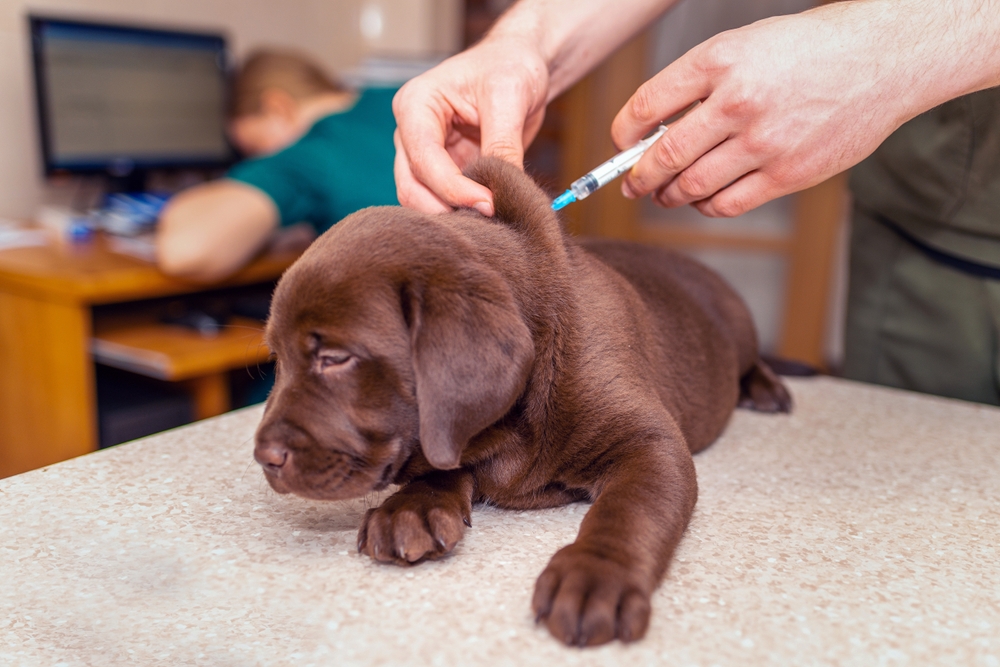
This disease targets the white blood cells and the digestive tract, destroying cells, disrupting the gut barrier, and preventing proper absorption. Puppies from 6 weeks to 5 months of age and unvaccinated or poorly vaccinated dogs are most likely to contract parvo. Vaccines are typically administered at 6 to 8, 10 to 12, and 16 weeks old.
Some breeds are more likely to contract parvo than others, including Rottweilers, Bull Terriers, Doberman Pinschers, German Shepherds, and English Springer Spaniels.
- Lethargy
- Severe, often bloody, diarrhea
- Vomiting
- Lack of appetite
- Weakness
- Depression
- Dehydration
- Fever
4. Canine Distemper
Canine distemper affects more than just dogs. It can affect many mammals, including foxes, ferrets, felines, pandas, skunks, and more. This is a dangerous and extremely contagious disease that attacks multiple bodily systems simultaneously, including the respiratory, gastrointestinal, and nervous systems.
Airborne exposure is the most common way that canine distemper is spread, though it can also be contracted by contact with contaminated items. In wildlife, the signs of canine distemper are very similar to those of rabies.
- Discharge from the eyes
- Nasal discharge
- Persistent coughing
- Loss of energy
- Lack of appetite
- Fever
- Vomiting
- Diarrhea
- Walking in circles
- Tilted head
- Muscle twitches
- Seizures
- Paralysis
This is a common viral infectious disease that occurs in dogs worldwide. It is different from the coronavirus that causes COVID-19, attacking the digestive system of dogs. The infection can be diagnosed at the vets easily and it usually involves a mild diarrhea that doesn’t require major treatment. However, it’s essential that your vet checks your dog if they have diarrhea or you suspect coronavirus infection because it can mimic the early stages of parvovirus, which is a much more serious infectious disease.
After the pandemic of 2020, most people are rightly terrified of anything with coronavirus in the name, but, as explained, canine coronavirus is a completely separate virus that is not transmitted to humans and doesn’t cause COVID-19.
Canine enteric coronavirus is most commonly contracted by contact with infected feces, dogs, or other contaminated items. This disease takes 1 to 4 days for incubation and usually lasts just 2 to 10 days, though dogs can still carry the disease for 150 days following infection.
- Diarrhea
- Lethargy
- Loss of appetite

6. Rabies
There are few infectious diseases your dog could contract that are worse than rabies. This disease is considered fatal once signs start to present, though it can be prevented by a vaccine, and that is why it is nowadays very uncommon in locations where vaccines are widespread. Rabies attacks the central nervous system (the brain and spinal cord), and it can affect any mammal. Rabies can be transmitted to humans, most commonly through bites or scratches from infected wild animals, and it is usually fatal unless post-exposure prophylaxis (PEP) is administered.
It’s most often spread through a bite from a wild animal, as rabies is present in saliva. Rabies vaccination is considered core, and it’s even a legal requirement in certain areas of the world. Rabies infection has several stages, and the signs displayed depend on the phase.
- Bite wound
- Fever
- Change in behavior
- Howling/vocalizing
- Drooling
- Difficulty swallowing
- Restlessness
- Irritability
- Aggression
- Staggering
- Seizures
- Paralysis
7. Ringworm
Ironically, ringworm (dermatophytosis) is actually a fungus, not a worm. This fungus can infect practically any domestic animal species. Luckily, ringworm infection is superficial and usually affects only a few parts of a dog’s body. That being said, it can be transmitted to people so it’s essential that you take your dog to the vet if you suspect ringworm infection. It’s spread through direct contact with either an infected person or animal or a contaminated item. Ringworm spores can live for up to 18 months, which is why it’s such a common infection.
Ringworm isn’t a fatal disease, and treatment is generally very successful. You’ll need a vet’s prescription to manage and treat your dog’s ringworm and prevent passing the infection to other animals or people.
- Round areas of hair loss
- Itchiness
- Dandruff
- Inflamed or scabbed skin patches
- Brittle and easy-to-break hairs
- Increased shedding
- Brittle, rough claws

8. Kennel Cough
Canine infectious respiratory disease complex (CIRDC), commonly called kennel cough, is the most common upper respiratory tract disease in dogs. It is easily spread through airborne contamination when your dog breathes in the particular bacteria or virus. Infections are common in places where multiple dogs gather, such as kennels, dog parks, boarding, dog training, or grooming facilities.
Some cases don’t require any specific treatment, but this should be determined by your vet based on your dog’s signs, age, breed, and general condition. The typical cough associated with kennel cough infection can be worrisome to watch.
- Persistent honking cough
- Discharge from the eyes
- Excessive sneezing
- Runny nose
- Lethargy
9. Canine Hepatitis
Infectious canine hepatitis is a viral contagious disease that has the potential to be deadly, with 10% to 30% of affected dogs dying from the disease. If the dog is simultaneously infected with parvo or distemper, then the outlook looks even worse. Thankfully, this disease is rather rare thanks to the widespread vaccination against adenovirus. The disease doesn’t have a specific treatment, so prevention is key, hence why this is considered a core vaccine.
- Fever
- Lethargy
- Lack of appetite
- Excessive thirst
- Discharge from the eyes and nose
- Abdominal pain
- Enlarged tonsils
- Apathy
- Vomiting (with or without blood)

10. Giardia
Giardia is a protozoan parasite that lives in the dog’s intestine either moving around or attached to the lining. It has a cyst form that is released into the world through feces, where they can live for weeks or months until they’re eaten by a new host, restarting the life cycle again. Giardia must be ingested for infection, so drinking contaminated water or eating contaminated food or feces are the only ways for your dogs to contract it.
Giardia is a common parasite and highly contagious. The most common sign of infection is diarrhea; however, some dogs can carry the parasite and have no signs of illness.
- Diarrhea
- Vomiting
- Weight loss
- Dehydration
- Worsening appearance of the coat
Seek veterinary advice if you’re concerned about your pet’s well-being.
If you need to speak with a vet but can't get to one, head over to PangoVet. It's our online service where you can talk to a vet online and get the advice you need for your pet — all at an affordable price!


Conclusion
No matter what you do, you can’t eradicate the possibility of infectious disease. Diseases can be caused by simply breathing in airborne bacteria, and even with proper prevention, it’s always going to be a possibility.
However, knowing the existence and signs of common canine diseases can help you to stay alert and identify the problems early on, giving your dog the best chance of a timely vet visit and a speedy recovery without any lasting effects.
Next on your reading list:
- How Do Dogs Get Mango Worms? What You Need To Know!
- 5 Most Common Dog Health Problems: Important Facts & Signs
Featured Image Credit: Syda Productions, Shutterstock
 The 10 Canine Infectious Diseases