
14 Surprising UK Dog Bite Statistics to Know in 2026


In this article
Note: This article’s statistics come from third-party sources and do not represent the opinions of this website.
There has been a notable increase in dog bite and dog bite fatality news reports in the UK in the past couple of years, which has come as a result of an increase in the number of bites and deaths across the country.
Dog bites can range in severity, with many not requiring medical treatment, but experts advise that if the bite breaks the skin, the victim should see their GP, at least. Postal workers have an increased likelihood of being bitten as they come into regular contact with dogs. However, the majority of dog bites happen in the home and are committed by dogs known to the victims.
Below, you can find 18 statistics related to dog bites, the specific incidents, and the rates of hospitalisation and fatalities that occur as a result of dog bites.

The 14 UK Dog Bite Statistics
There are 15.5 million dogs in the UK.
More than a third of all UK households keep dogs.
XL Bully breeds have effectively been banned in the UK since February 2024.
One in four people are bitten during their lifetime.
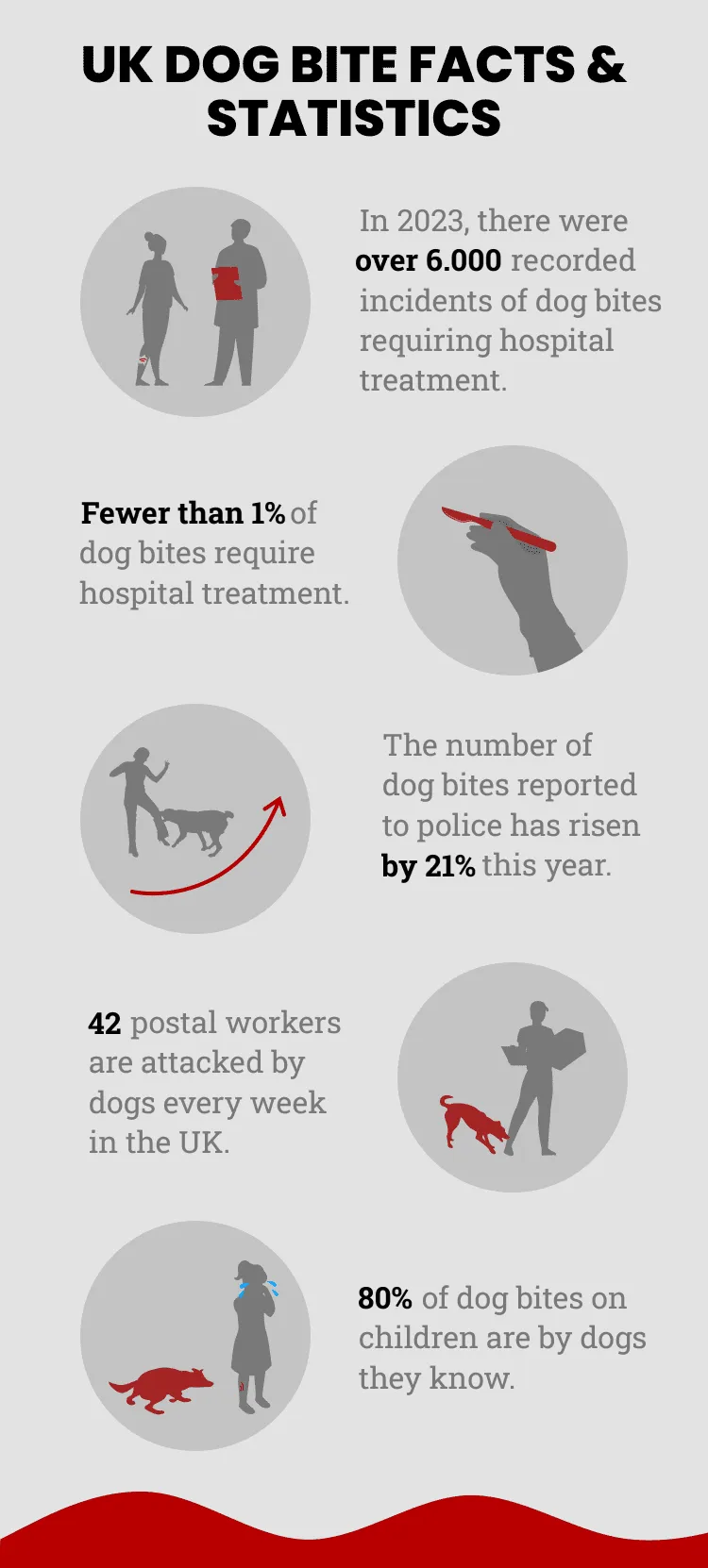
The number of dog bites reported to police has risen by 21% this year.
Fewer than 1% of dog bites require hospital treatment.
70% of dog bites happen in the home.
Young children aged between 0 and 4 years old are most likely to be bitten.
80% of dog bites on children are by dogs they know.
Surprisingly, the Labrador is the dog breed that is most likely to bite.
The highest rate of dog bite injuries in the UK is in Merseyside.
There were approximately 11 dog bite deaths in the recent figures
38 postal workers are attacked by dogs every week in the UK.
200 postal workers a year have a finger bitten off or severely injured.
UK Dogs
1. There are 15.5 million dogs in the UK.
(UK Pet Food)
The UK is a nation of dog lovers, with a population of around 15.5 million dogs in the country. The most popular breeds are Labradors, French Bulldogs, Border Collies, and Cocker Spaniels. The number of dogs outstrips the 12.5 million feline population also kept as pets in the country.
2. More than a third of all UK households keep dogs.
(UK Pet Food)
Such is the popularity of dogs that more than one-third of all households keep pet dogs. The average number of dogs kept by dog-owning households is around 1.4, which means most owners keep one dog rather than having multiple.
3. XL Bully breeds have effectively been banned in the UK since February 2024.
(BBC)
There is some debate over the effectiveness of breed bans. Opponents point to the fact that it isn’t the dog itself that is to blame for its aggression, but its handler or owner. They say that banning one breed simply means another will take its place and likely become the most aggressive breed.
Proponents, on the other hand, point to the fact that certain breeds are more likely to bite, and when they do bite, they are more likely to cause serious injury or even death.
The UK government has taken steps to ban XL Bullies following a rash of fatal attacks involving the breed. Owners must have official exemptions to keep dogs of this breed: a law that was first introduced in February 2024.


Dog Bites
4. One in four people are bitten during their lifetime.
(University of Liverpool)
Dog bites are more common than you might think, with one in four people being bitten during their lifetime. However, this figure includes bites of all severities from what might be considered nips to fatal bites.

5. The number of dog bites reported to police has risen by 21% this year.
(BBC)
Even if a bite requires hospitalisation, that doesn’t necessarily mean that the incident will be reported to police. If the dog belongs to the victim, they may not report the bite for fear of what will happen to the dog. And some victims may believe it to be their fault they were bitten.
However, the number of dog bites reported to the police has risen by more than 20% this year alone.
6. Fewer than 1% of dog bites require hospital treatment.
(University of Liverpool)
Fortunately, most dog bites do not require hospital treatment, with fewer than 1% of all bites leading to the victim receiving treatment this way. However, the figure doesn’t consider the number of victims who had to see their General Practitioner (GP) or receive treatment at facilities other than hospitals.
The most common injury types of cuts, abrasions, and lacerations, which can all range in severity from minor to very serious.

Dog Bite Specifics
7. 70% of dog bites happen in the home.
(First Aid for Pets)
While dog attacks can, theoretically, happen anywhere, it is estimated that around 70% of them happen in the home. The figure isn’t that surprising considering the amount of time people spend with their dogs at home compared to the time they spend outside, but it does mean that the majority of bites are likely committed by the victims’ own pets or by dogs that are known to the victims.
8. Young children aged between 0 and 4 years old are most likely to be bitten.
(NHS)
Keeping dogs and young children together can be a challenge. Not only do the dogs need to be trained to be respectful and gentle with the children, but kids also need to be taught how to behave around the dogs. That means trying to prevent them from grabbing at hair and ears.
Nips and bites can happen if the child surprises the dog or grabs at a painful part of the body. This is likely part of the reason that children aged between 0 and 4 years are the most likely age group to get bitten by dogs with those aged between 5 and 9 the second most likely group.

9. 80% of dog bites on children are by dogs they know.
(First Aid for Pets)
Although many dogs and children get along just fine, potentially forging strong bonds as they both grow and with many dogs being forgiving and understanding of a child’s behaviour, 80% of dog bites on children are by dogs they know.
This includes dogs within the same house, but potentially also dogs that visit the house.
10. Surprisingly, the Labrador is the dog breed that is most likely to bite.
(Hanne Grice)
In some ways, it is surprising to learn that the Labrador is the breed with the highest incidents of dog bites. But the Labrador is the most popular breed and it is also widely considered a good all-round dog breed that makes a good family pet. Also, while it might be inclined to nip, the Labrador is less likely to cause serious injuries or fatalities.

11. The highest rate of dog bite injuries in the UK is in Merseyside.
(Mersey News Live)
Dog bites and dog bite injuries occur across the country, but Merseyside is the region of the UK that has the highest number of reported dog attack injuries in the country. Between 2012 and 2023, there were 1,674 dog attacks reported to the police.
And Knowsley’s 24.2 hospital treatments per 100,000 people is the highest treatment per capita rate in the UK.
Dog Bite Fatalities
12. There were approximately 11 dog bite deaths in 2024
(ONS)
Although there are thousands of dog bites that require hospital treatment every year, thankfully only a comparatively small number of these end in fatalities. In 2024, there were 11 deaths directly attributed to dog bites, across England and Wales.
However, while the number is relatively low, it rose significantly from 6 deaths in 2022. Up to date figures for 2025 and 2026 aren’t currently available.

Dog Bites on Postal Workers
13. 38 postal workers are attacked by dogs every week in the UK.
(Royal Mail)
It might feel like an old cliché that dogs and postal workers don’t get along, but it turns out that the reputation is well deserved. On average, 38 postal workers a week are attacked by dogs with a total of 2,019 attacks on postal workers in 2025/26.
This includes fingers being bitten when the postie is pushing letters through letterboxes but likely also includes attacks as the postal work approaches properties.

14. 200 postal workers a year have a finger bitten off or severely injured.
(CWU)
Attacks through letterboxes are commonplace, and they can lead to severe injury. 200 postal workers a year have a finger bitten off or suffer severe injuries to fingers as a result of dog-bite injuries.
Frequently Asked Questions (FAQ)
Are dogs that bite put to sleep?
Strictly speaking, there is no law that states a dog must be put down if it bites. Generally, there will be an investigation and the owner of the dog will have to go to court. They may be ordered to have the dog put to sleep, but this absolutely isn’t necessarily guaranteed.
It is more likely following a vicious, unprovoked attack, or if the dog has a history of biting, however. (RSPCA)
Should you report a dog bite?
If you are bitten by a dog that is out of control and fear for your safety, or the safety of anybody else, you should report the bite to the police. The owner might face investigation and be forced to ensure the dog is under proper control, with possible action including making the owner muzzle the dog in public.

Should you go to the hospital if you’ve been bitten?
The first step if you’ve been bitten is to ensure you’re safe and not at risk of being bitten again. Clean the wound. If it has broken the skin, you should seek medical attention. Minor wounds can be treated at walk-in centres, or you can have your GP check the injury.
More serious injuries should be seen at a hospital, and for very serious injuries, you should call an ambulance.
Conclusion
Dogs are the most popular and populous pet in the UK, with a population of 13.5 million companion dogs living in more than a third of our households. For the most part, people and dogs live closely together without any problems, but dog bites do happen.
Most bites are committed by dogs we know, and they are most commonly targeted at young children, perhaps because children are more likely to grab at a dog’s coat, ears, or tail. Fatal dog attacks have, unfortunately, risen over the past couple of years, too, and they have dire consequences for all involved.
Featured Image Credit: Den Rozhnovsky, Shutterstock
Expert dog care, straight to your inbox
Vet-reviewed advice, training tips, and the best of Dogster. Free, and you can unsubscribe anytime.
By signing up, you agree to our Terms & Conditions and Privacy & Cookies Policy.
Matt is a freelance writer from the UK. He lives with his partner and daughter, as well as two cats and one dog. A data analyst by profession, Matt moved from numbers to words more than 15 years ago and has been writing ever since. Having volunteered at a local animal sanctuary, he has a lot of experience with dogs, cats, and horses. Matt has also kept bearded dragons, a variety of birds, fish, guinea pigs, hamsters, mice, and rats. His daughter has adopted the same passion for animals, keeping and breeding snakes. A geek at heart, Matt is a member of a local board gaming group and regularly forces his family to “enjoy” board games with him at home.
Join the conversation
Ask a question, share your story, or send private feedback.