Will a Calming Collar Work for a Dog? Vet-Approved Facts



In this article
Dogs are usually fun-loving animals, but some dogs get overly excited or stressed out for one reason or another. For example, your dog might get excited and jump on people when you’re in social settings, or maybe they get anxious and stressed when they are left at home alone. So, could a calming collar be a good solution to your dog's emotional issues? Do calming collars work well for dogs?
Overall, it will depend on your dog; there are people who claim calming collars work wonders with their dogs and others who say it doesn't do much. Read on for the detailed answer.

What Exactly Are Calming Collars for Dogs?
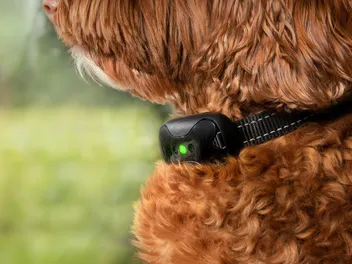
Calming collars are non-invasive, pain-free devices that are designed to help destress and relax dogs. They are not shock collars, and they are not meant to replace your dog’s regular collar. They are used in a variety of situations that may result in stress, fear, and/or anxiety. There are two basic types of calming collars.
- Pheromone Collars: These collars are infused with synthetic pheromones that are supposed to mimic the hormones that mother dogs release when they are caring for and nursing their puppies. There is scientific data that pheromones can affect the behavior of animals, including dogs. However, the quality, type, and amount of synthetic pheromones used in a calming collar may not be enough to affect your dog. You may have to try multiple brands before finding one that works.
- Aromatherapy Collars: These are relatively new to the market. Some clinical research has been done on the use of aromatherapy for dog behavior. These collars are infused with scents like lavender that are meant to help calm dogs down. The ASPCA includes lavender in the list of toxic plants for dogs.1 Some essential oils, like tea tree oil, are known to be toxic to dogs. You should talk to your veterinarian before considering using this type of calming collar.
If you’re unsure of which type of calming collar is safe for your dog, please contact your vet for a recommendation.
Do Calming Collars for Dogs Really Work?
Some people say that the collars work for their dogs, but others say that the collars don’t make any difference in their pets’ behavior. We cannot offer a definitive answer as to whether a calming collar will work for your dog. There are no scientific studies that prove or disprove whether all calming collars in the market will work for each stressful situation, so we can only speak in general.
However, there are some studies with Adaptil, a dog-appeasing pheromone (DAP) collar. For example, it has been proven to be effective at reducing sound-induced fear and anxiety in a group of Beagle dogs. It won’t hurt to try one of these collars out and see if it works for your dog. It may work for your dog all the time, on certain occasions, or never.
It depends on the type of collar you use and how your dog reacts to the collar.

How and When to Use a Calming Collar for Your Dog
A calming collar can be used when a stressful or anxiety-filled situation calls for it. You should read and follow each collar’s instructions carefully. For example, the Adaptil collar should stay on continuously for 4 weeks and be replaced afterward if it is still required.
Once you identify what situations make your dog anxious or stressed out, you can start putting on the calming collar a few days before those situations occur. Take off the collar after if it is no longer needed.
When putting a calming collar on your dog, don’t take their regular collar off. Calming collars are not strong enough to hold leashes. The calming collar should be tight enough to not fall off yet loose enough that it doesn’t rub tightly against your dog’s fur.

Conclusion
Some calming collars may work for your dog, but some others may not. The only way to find out is to try one (or a couple of different brands). It’s always important to check with your veterinarian before putting any calming collar on your dog, though.
They may be able to recommend specific types and brands of collars that they have had good experiences with. Alongside the use of a calming collar, your vet can assess your dog’s particular situation and recommend behavioral therapy to help your pup overcome the stressful situation they are facing.
You might be interested in: Mimi Green Custom Beaded Friendship Collar Review
Sources
Featured Image Credit: JumpStory
Expert dog care, straight to your inbox
News, insights, expert advice, and everything dog.

No spam — unsubscribe anytime.
By signing up, you agree to our Terms & Conditions and Privacy & Cookies Policy.
How useful was this post?
Click a star to rate. You can leave written feedback afterwards. (We read all feedback.)
Rachael has been a freelance writer since 2000. In this time she has had an opportunity to research and write about many different topics while working to master the art of fusing high-quality content with effective content marketing strategies. She is an artist at heart and loves to read, paint, and make jewelry. As a vegan, Rachael is obsessed with helping animals in need, both in her community and anywhere in the world where she feels she can make a difference. Animals also happen to be her favorite topic to write about! She lives off the grid in Hawaii with her husband, her garden, and her rescue animals including 5 dogs, a cat, a goat, and flock of chickens.