In this article
The wide frame, heavy bone structure, and mighty muscles make Bull Terriers one of the toughest dogs on the planet. Add a strong jaw and enduring nature, and you’ll see why they are the perfect beasts for taking down other dogs. And that’s what Bull Terriers were originally bred to do: participate in the brutal sport of pit fighting.
Thankfully, that didn’t last forever. In the early 19th century, this bloody sport was banned, and that’s when Bull Terriers turned into gentleman’s companions. Trained to become less aggressive and more sociable, today, they are loyal, intelligent, and capable dogs. But are they good pets? Should you adopt one? Read on to learn more about the fascinating history of Bull Terriers!

The 13th–19th Century: From Bull/Bear Baiting to Pit Fighting
The gruesome practice of baiting (pitting dogs against a tethered bull or bear) was introduced to Great Britain in the 13th century. By the 17th century, this bloody sport reached its peak and was almost as popular as theater. Back then, there were dozens of venues in GB and around the world built for the sole purpose of holding bull or bear-baiting events.
But the roots of the Bull Terrier breed take us back to the 1830s when cruel animal sports were banned. However, while that did largely put a stop to bull/bear baiting, the audience that liked the spectacle didn’t go anywhere. That’s when pit fighting was invented. People who used to run baiting events took the “show” underground (like in cellars and basements), where the law couldn’t reach them.
What Is Dogfighting? Which Breeds Were Involved in It?
Pit fighting involved two dogs clashing against each other in a pit, and in most cases, there was no winner until one of the canines was killed. And what about the dogs—which breeds were used for baiting? As you’ve probably guessed, Old English Bulldogs were the go-to dogs. But they weren’t the best candidates, as these slow-paced animals couldn’t always give the crowd the show it was craving for.

The Early 1800s: Crossing Bulldogs with Terriers
To make dog fights more entertaining, it was decided to cross the somewhat sluggish yet mighty Bulldogs with another breed. By nature, the Terriers are agile, have lots of stamina, and are used to overcoming obstacles. And so, they were the perfect mates for the Bulldogs. Bull Terriers are one of the new breeds (along with Staffordshire Bull Terriers) that were brought to life shortly after bull baiting was canceled.
Bull Terriers proved to be resilient, ferocious, and efficient in dog fights. To this very day, they have a huge distrust toward other dogs and tend to “welcome” them with a loud, aggressive bark. In the pits, they had to quite literally rip each other apart to stay alive. So, even after centuries of socialization and proper training, they’re still not very good around fellow canines.
The Mid-19th Century: Beasts Turned Companions
It didn’t take the authorities very long to put an end to dog fights. This started happening in the 1850s, and the ban practically made Bull Terriers, the new favorites in underground pits, useless. Originally, they were also bred by locals for vermin control (like catching and devouring rats and badgers). But that role was being filled by other breeds. Thankfully, this sudden change of events meant only good things for the Bull Terriers.
Breeders from Europe were given a task: to tame the predatory temperament and refine the dog’s appearance. While that didn’t happen immediately, eventually, they did turn the aggressive beasts into loyal, sweet pets. And that’s when young, wealthy British men started buying and adopting Bull Terriers to serve as their fashionable companions. So, that’s how former killer dogs turned into man’s best friends!
1885: Getting Recognized by the American Kennel Club
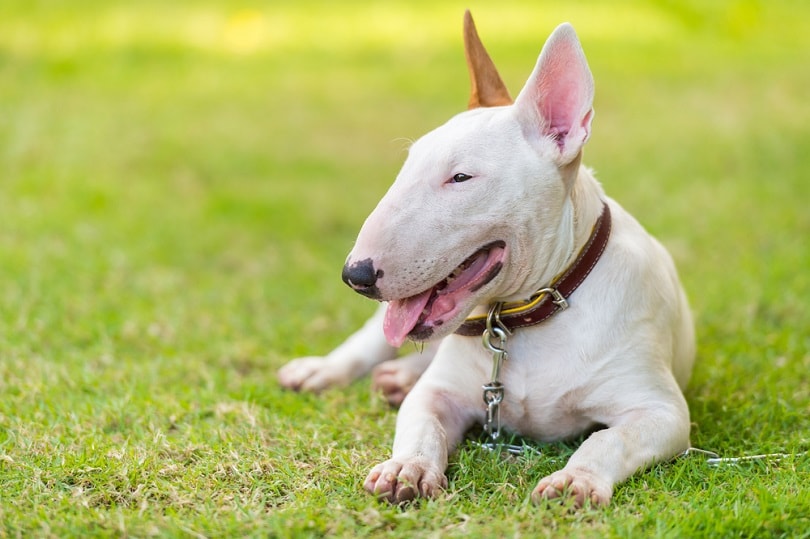
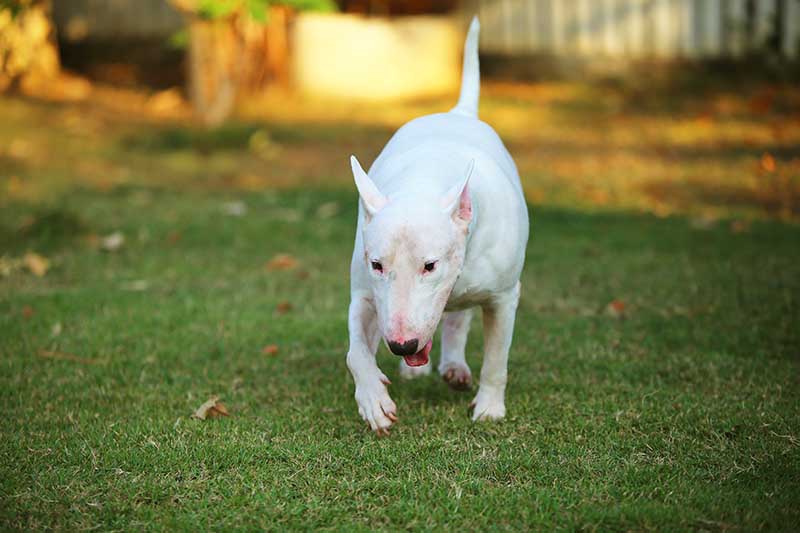
Bull Terriers were officially accepted and recognized by the AKC in 1885. The UKC (United Kennel Club) followed its example in 1948. This is interesting: most modern-day Terriers are bred in accordance with the rules set by James Hinks in the 1860s. He famously produced white-only Bull Terriers and turned them into a standard. For that, he created a cross-breed between regular Bull Terriers and English White Terriers.
These new dogs, dubbed “White Cavaliers”, were praised for their muscular bodies, stamina, and intelligence. However, the now-iconic egg face wasn’t developed yet. Hinks kept on experimenting with different breeds, including Dalmatians, Spanish Pointers, and the Borzoi. The goal was to breed a new dog with no stop, stronger legs, and a better head. And for many decades, White Terriers were very popular.
1936: Introducing the Colored Blue Terriers
However, all-white dogs had several medical issues. We’re talking about deafness (more than 20% of white Bull Terriers suffer from it), various skin allergies, rash and itching from bites, and more. That’s why in 1936, colored Bull Terriers were established and recognized as a standalone breed by the AKC. Right now, brindle is the dominant color, but other shades and hues are accepted as well.
For example, Bull Terriers can be brindle and white, red and white, black brindle and white, and white black and tan, to name a few. But no matter the colors, you’ll still get roughly the same robust, witty dog with great love for the outdoors. The triangular eyes, erect ears, and unique shape of the head will also be the same.
Bull Terriers Today: Rescuers and Service Dogs
Bull Terriers are incredibly gifted, capable dogs. When they put their mind to something, they get it done. A truly multi-talented breed, the Bull Terrier is often recruited to be part of bomb detection teams. They also excel at search-and-rescue missions. And then we have Bull Terriers performing the roles of therapy, assistant, and service dogs. Also, thanks to the loud bark, Bull Terriers are excellent guardians.
Their strong, muscular body, fearless nature, and distrust toward strangers help them scare potential thieves away. These days, Bull Terriers often compete in various dog competitions as well. Yes, they have gone a long way from being fight dogs! These four-legged champs like to be of service and are ready to go that extra mile for their owners. With that, Bull Terriers are free thinkers and often pick fun over discipline.
Frequently Asked Questions
Do Bull Terriers Make Good Pets?
True, Bull Terriers can be headstrong, stubborn, and a bit too playful, but in the right hands, they can be near-perfect pets. Bull Terriers are incredibly faithful and always put loved ones first. Affectionate, joyful, and ready to join you on a jog, hike, or camping trip, they are agile, enduring, and powerful. That makes BTs the right choice for an active family.
Still, as the owner, you will have to put time, effort, and patience into early socialization and training. To achieve success, it’s important to be a leader with a firm hand and use positive reinforcement to encourage the doggo. Also, daily mental stimulation is just as important as physical exercise. These dogs really like tracking, agility, and other obedience sports.

Are They Safe Around Children?
Bull Terriers are energetic, active, and slightly mischievous canines that don’t mind goofing around sometimes. And those trademark “eggheads”, pointy ears, and tiny eyes make them super cute. So, does that mean Bull Terriers are kid-friendly? No, not quite: despite their sweet, loving temperament, these buds aren’t very patient or tolerant with children. That’s why they’re more suited for families with adult kids, not toddlers.
Furthermore, Bull Terriers aren’t at all welcoming toward other dogs (although they don’t mind meeting new people). As mentioned, this is a “side effect” from the pit fighting past. Therefore, make sure never to leave a Bull Terrier one-on-one with another pup without proper supervision. Otherwise, one of the furry buds might end up getting hurt!
How Do You Take Care of This Doggo?
Bull Terriers are low-maintenance, trouble-free dogs. By nature, they are frisky, inquisitive, and upbeat, always ready to do something fun with their owners. So, if you spend at least an hour or two with the Bull Terrier per day, that will keep the pup’s joints, muscles, and immune system in great shape. On average, they live for 12–13 years and suffer from patellar luxation, dysplasia, kidney failure, and deafness.
To help the doggo stay healthy, make sure to visit a veterinarian once in 6–8 months. Also, only feed it premium-quality food that doesn’t include any filler ingredients. And let’s not forget about grooming! By taking proper care of the Bull Terrier’s fur, skin, eyes, ears, and nails, you’ll be able to avoid most health issues.
Final Thoughts
Bull Terriers haven’t always been sweet-tempered, faithful, or good around humans/other pets. Bred to fight fellow dogs as gladiators (often to death), they were angry, overly aggressive, and standoffish. However, once bull baiting and pit fighting became illegal, Bull Terriers got a chance to leave their horrible past behind and find a new purpose as companions, rescuers, and sniffers.
These “eggheads” are a great example of a diamond in the rough. While they can be a bit stubborn, free-willed, and destructive, with proper training, it’s very well possible to shape them into amazing pets. Early socialization, positive reinforcement, and patience—that’s how you turn a former pit fighter into a loving, caring, and happy canine citizen!
Featured Image Credit: tratong, Shutterstock