What to Put in a Dog Crate: 5 Vet-Approved Items & More


In this article
Dog crates can be powerful training accessories, especially for young puppies. However, not all dog crate set-ups are equal, and if you're looking to set up the coziest space for your pup, you need the right accessories.
If you're wondering what you should put in your pup's crate, we're here to help. Read on to find everything you need to put inside the crate to assist with training and keep your dog comfortable and entertained.

What Do You Put in a Dog Crate?
1. Plenty of Space
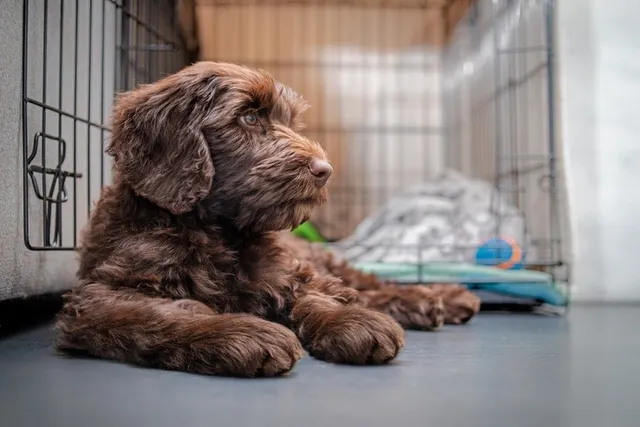
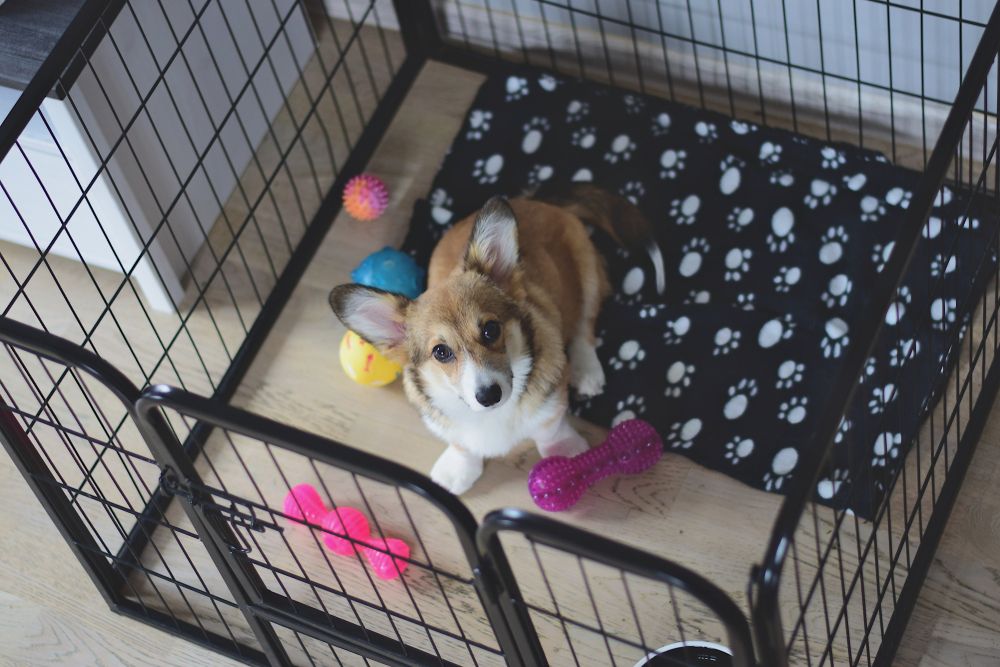
The key to making your pup's crate inviting and a place worth spending time in is ensuring there's space for them to get cozy in. A crate that's too small will feel cramped and not give your pup the separate spaces they need. The perfect-sized crate will be large enough for them to turn around, stand up, and lie down comfortably.

2. A Comfortable Bed or Mat
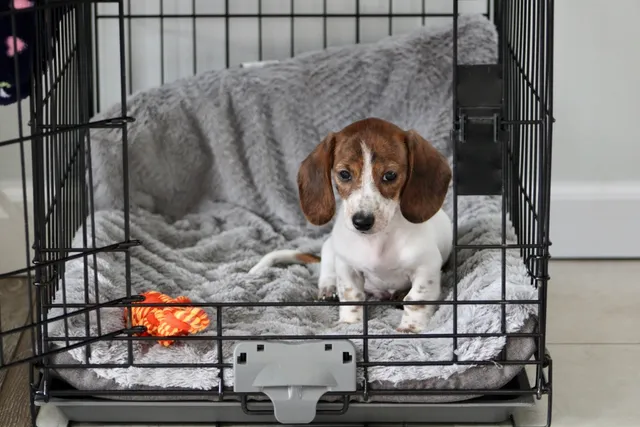
Most dogs use their crates as a resting place. They'll sleep there at night and may also even retreat there during their naps throughout the day. However, what works for your pup will depend entirely on their preferences. You may need to do some trial and error to find a bed or mat type they prefer, as some dogs like less padding while others want a cloud-like sanctuary to burrow in.
The ideal bedding is perfectly sized to fit the crate interior. It is made of high-quality materials and is easy to clean in your washing machine.
If your dog is still a puppy, whatever bedding you put in their crate should be both water- and chew-proof. You may need to continue using chew-proof bedding as your dog ages if they're prone to shredding any textiles that come their way.
3. Enrichment
Dogs need something in their crate that'll help them pass the time.
Toys are a great addition, but you need to be deliberate with the ones you choose by considering your dog's maturity level and personality. If your pet is still a puppy, the toys you put in the crate should be durable and appropriately sized for their mouth. Tough rubber toys like the KONG are a great choice as they are hard to destroy and designed for stuffing with yummy treats like peanut butter to help your pup pass the time. This type of toy will distract your dog from destroying their bedding, too.
Interactive puzzle feeders are a great addition as they are often durably made and offer a lot of entertainment. You don't need to stuff them full of food, just enough to keep your dog busy while you're away.

4. A Piece of Your Clothing
An article of clothing can be a comforting item for your pet, but not all dogs can safely be left alone with clothing in their crates. If your pup is a chewer, we do not recommend leaving clothing with your dog unattended. They can not only destroy your clothes, but if they eat them, you'll be looking at extremely high vet bills and a lot of stress that would have otherwise been avoidable.
However, if your pup isn't prone to chewing, leaving a piece of worn clothing in the crate is a great way to leave a "piece of you" behind when you can't be there with your dog.
5. Puppy Pads
Puppy pads aren't a necessity for your dog's crate, but they certainly can make your life easier, especially if your dog is still quite young and hasn't been fully housebroken yet. These absorbent pads can be one-time-use items, or if you purchase the washable kind, you can toss them in the washer when they get soiled.
Remember, however, if your pup's crate is sized properly, they may be less likely to pee or poop in it. You'll also still need to ensure you're giving your pet many opportunities to go outside to pee during the day and at night when their bladder control is still developing.

What About Food and Water?
You may have noticed that we left food and water out of our recommendations above. Water and food are primary resources your dog needs to survive, so leaving your dog for extended periods without access to fresh water is a big no-no. However, leaving water and food in the crate depends on the circumstances and how long your dog is in their crate for.
Food
Feeding your dog in their crate is a recommended crate training strategy that helps your dog associate their crate with pleasure. If you want to train your pup to really love their crate, most trainers recommend feeding their meals in the crate with the door open.
However, we don't recommend leaving a food bowl in the crate while you're away from home as food = pooping, and if you're not home to let your dog out for a potty break, you'll be dealing with a lot of accidents. Plus, it is unhealthy for the dog to be in a crate with feces or urine.
Instead, implement a feeding regimen that allows you to accurately guesstimate when your pup needs to make a bowel movement.
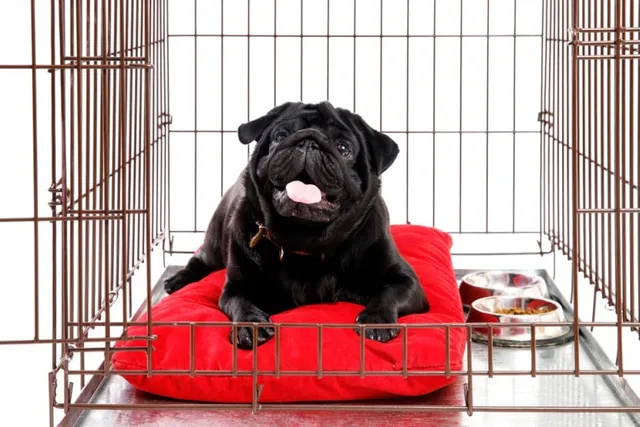
However, if you do choose to leave food for your dog in their crate, you need to use a durable bowl that your pup will not be able to destroy. We also recommend designating a specific area of the crate for the meals to reinforce good eating habits and keep food debris out of your dog's sleeping area.

Water
Choosing whether or not to leave water in your dog's crate is another decision that partly depends on the circumstances. As a general rule, a healthy adult dog that is mostly using their crate to sleep in for short periods of time, may not need water in their crate as long as they have had access to fresh water before and after this time.
If your dog is spending longer periods of time in their crate, then the crate needs to be large enough to leave water. Consider investing in clip-on water bowls that’ll make creating messes more difficult!
In hot weather your dog must have access to water at all times, and the same goes for puppies and dogs with health conditions that make them excessively thirsty, such as Cushing’s disease or diabetes.
What Do You Put in a Dog Carrier?
Pet carriers and crates are two separate things.
A dog carrier is designed to be light and mobile. They're available in a wide variety of sizes and material options, like nylon and plastic. As their name suggests, carriers are easy to carry. They are more affordable than crates and are generally used for travel purposes as they are too small to act as crates.
The best things to put in your dog's carrier to prepare them for travel are things with familiar scents. You may consider putting in your pup's favorite blanket or toys to keep them comfortable and distracted while you're on the go. We don't recommend putting food or water in the carrier as they can spill and make a mess. Instead, bring a collapsible bowl from which you can offer food and water occasionally. If your dog is incontinent or a nervous pee-er, we also recommend putting in a puppy pad to absorb any potential liquids from accidents.

Final Thoughts
A deliberately thought-out crate set-up can make or break your crate training process. The ideal set-up includes something cozy, something to pass the time, and plenty of space. Depending on your dog's age and personality, you may also wish to include puppy pee pads and an article of your clothing for comfort.
Featured Image Credit: Jus_Ol, Shutterstock
Expert dog care, straight to your inbox
News, insights, expert advice, and everything dog.

No spam — unsubscribe anytime.
By signing up, you agree to our Terms & Conditions and Privacy & Cookies Policy.
How useful was this post?
Click a star to rate. You can leave written feedback afterwards. (We read all feedback.)
Chantelle is passionate about two things in her life – writing and animals. She grew up on the prairies of Canada surrounded by animals and as an adult, she choose to share her home with five cats, two guinea pigs, and a bearded dragon. Chantelle, her husband, and their child take great pride in being great animal parents- the ones who spend a thousand dollars on wall-mounted cat shelves so that their cats can have an indoor jungle gym all year round. When Chantelle isn’t snuggling her cats on the couch or taking pictures of them being funny, she’s outside exploring in the Rocky Mountains, binging the same shows on Netflix over and over, and reading about whatever random topic pops into her brain.