In this article
View 4 More +When walking your dog safely and securely, you have two choices: a collar or a harness. Collars, of course, are the ubiquitous dog accessory that’s been around for decades. Harnesses have become more popular in the last few years for several reasons.
Harnesses are more comfortable for your dog and are safer, and your pet won’t get choked or hurt its neck if it pulls too hard. Harnesses also make it more difficult for your dog to slip or chew their way loose from their leash, so they have their advantages.
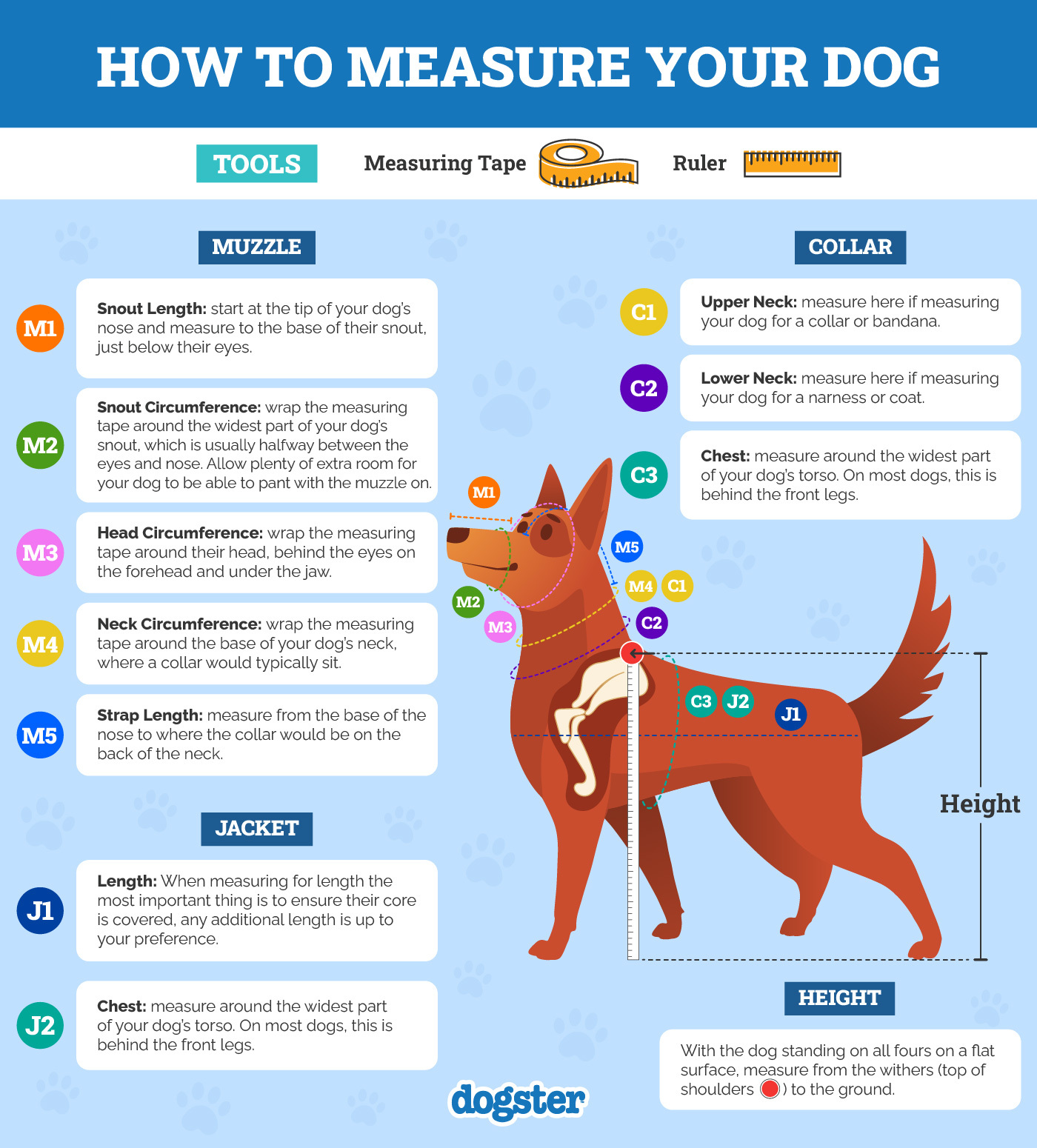
The only challenge most people have when buying their dog’s first harness is how to put it on correctly. It can be a little tricky, and there are three types of harnesses to make it even trickier. We’ll show you how to measure your dog and put on a dog harness correctly in seven simple steps (depending on the harness) below.

Standard Harness

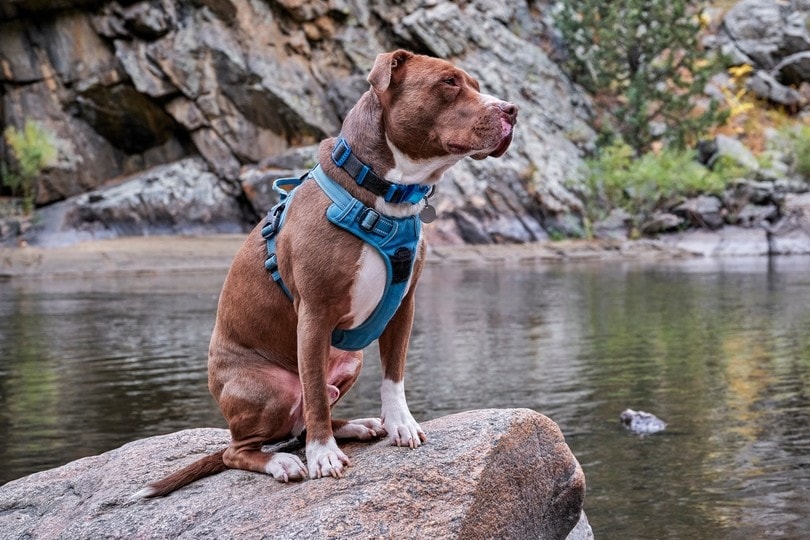
A standard dog harness typically has one loop around your dog’s ribs and another around its neck. On top, there’s a D-ting for clipping their leash. This type of dog harness is the one you’ll see the most since it’s the original design.
Below are the steps you’ll need to take to put the standard harness on quickly, easily, and correctly. You can also examine this diagram.
- Command your dog to sit. If they are well-trained, command them to stand and stay.
- Ensure that your dog is calm and staying still. This makes putting on any type of harness easier.
- Stand, squat, or sit down behind your dog, making sure they stay in position and still.
- Grab the harness at the front and back and gently place it over your dog’s head. The wider loop that has the buckle will go over your dog’s head first, followed by the more narrow loop. Make sure that the D-ring for attaching your dog’s leash is in the back, facing outward.
- Gently take your dog’s leg and place it through the harness’s first leg hole. When you do, its leg should be situated between the rib loop and neck loop.
- With your dog’s remaining front leg in the correct position, buckle the harness. If you can’t do that easily, check the harness and, if necessary, loosen it.
- Give the harness a once-over to ensure everything is in place and correctly attached. To be sure it’s comfortable and not hurting your dog, slide two fingers between them and the strap at any location. Your fingers should slide through firmly but easily. If they don’t, adjust the harness as needed.

Step-In Harness

A step-in harness is easier for some dogs, especially large ones or the ones that can’t sit still due to their excitement about going for a walk. A standard harness has webbing that forms a rectangle, while a step-in harness has webbing that forms a triangle.
Both methods have their supporters and detractors, but nobody will argue that the steps below are the correct way to put a step-in harness on your dog.
- Take the step-in harness and lay it flat on the ground, ensuring that the buckles are positioned over the D-rings
- Get your pet to step into the front triangles of the harness. If your dog is less trained, help put its left and right paw through the respective triangles.
- Take the two loose ends of the harness and gently pull them up and over your dog’s back. Bring the ends close and clip them together, checking that they’re locked in place.
- Adjust the harness.
- Your step-in harness should now be in place, with the D-ring facing upward, ready for you to clip your pup’s leash and get going!
Front Clip Harness
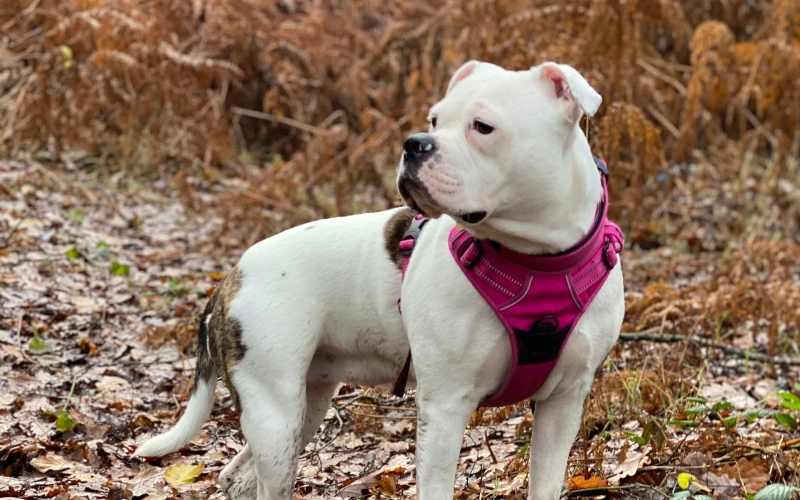
A front clip harness might be the solution if you have a dog that tends to pull far too much. A front clip harness has the D-ring clip over the dog’s chest in the front of the harness rather than on the back like a standard or step-in harness.
Some front clip harnesses are similar to the standard and step-in harness, respectively, but there’s a 3rd type that is slightly different. To put that dog harness on correctly, follow the easy steps below.
- Command your dog to sit. If they are well-trained, command them to stand and stay.
- Kneel to the side of your dog based on your dominant hand.
- Take the loop of the front clip harness and slide it over your dog’s head. The metal D-ring for the leash should be over your dog’s chest.
- Reach down and grab the belly strap on both sides, then fasten it in the center, over your dog’s belly.
- Adjust the harness for your dog. One thing you should make sure of is that, when you pull, you can’t pull the harness over your dog’s head accidentally. If you can, it needs to be adjusted.
Does a Dog Harness Go Over or Under Clothes?
If you live in an area where weather conditions can be severe, you might have clothes like jackets and sweaters that you put on your dogs. If you do, experts recommend putting a dog harness underneath your dog’s clothing.
That will ensure that the harness fits correctly and doesn’t cause the clothing to chaff or rub your dog. One thing to be sure of is that the D-ring that attaches the harness to a leash is visible and usable once your dog’s clothing is in place.

Should a Dog Harness be Tight or Loose?
A dog harness can’t be so tight that it hurts your dog, but it can’t be so loose that it can easily slip out of it. In other words, every dog and harness is different, and you need to practice using yours to ensure it fits correctly. Gently tug, pull, or move it until it feels “right.”
As mentioned earlier, being able to slip two fingers between your dog and its harness should be possible. Any tighter, and you should loosen the harness and vice versa.
Do Dogs Walk Better with a Harness?
Some dogs walk better with a harness, while others walk better with a regular collar. For example, a well-trained German Shepherd can easily be walked on a leash, but a Bulldog would do better in a harness because of its brachycephalic nature.
Most dogs that walk best with a harness share respiratory challenges. Dogs like Pugs, Pekingese, English Bulldogs, Shih Tzus, French Bulldogs, and more are better off using harnesses.
Conclusion
We hope the step-by-step instructions and other information we’ve provided today have been helpful and answered all your questions about correctly putting on a dog harness.
It’s not the most difficult dog-related task in the world, but putting on a dog harness correctly and quickly takes a little bit of practice. That said, if you plan always to use one when walking your favorite canine, you’ll be a harness expert in no time!
See Also:
- Easy Walk Harness: Instructions & Selecting the Right Type
- How To Take A Dog On A Motorcycle: 7 Safety Tips For Riding With Your Pup
Featured Image Credit: marekuliasz, Shutterstock