
In this article
View 5 More +Your dog comes in from outside, and they have a swelling underneath their eye. You might think it’s an insect note or sting, so you take them to the vet, who diagnoses a tooth infection or tooth root abscess. What can you do to treat this infection?

What Is a Dog Tooth Infection?
A tooth infection in dogs is also called a tooth root abscess. Typically, dogs develop tooth root abscesses secondary to periodontal disease, but it can also occur with trauma, where a tooth gets damaged or broken and allows bacteria to enter.
With a tooth root abscess, an infection sets up under the tooth’s root. This pocket of infection can cause swelling to develop under your dog’s eye and be incredibly painful. Dogs with tooth infections might have terrible chewing their food or be tender when you pet their head.
What Are the Signs of a Dog Tooth Infection?
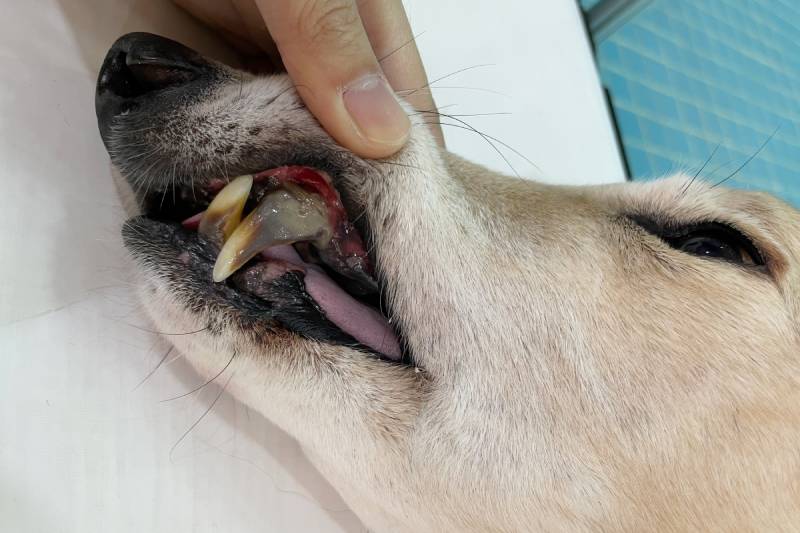
Tooth root infections in dogs are often diagnosed when a swelling appears below the dog’s eye. Sometimes, this swelling will burst, with purulent material oozing out. Sometimes, however, your dog won’t show any outward sign of an infection, and your veterinarian determines an infection is present with dental X-rays.
- Only wanting soft food or treats because it’s easier or less painful to chew
- Drooling, especially from one side of your pup’s mouth
- Chewing on one side of their mouth because the other side hurts if your dog tries to chew on it
- Not eating, especially if the pain is terrible
- Not wanting to play with toys because it hurts your dog’s mouth
- Halitosis or bad breath, which typically occurs because of the bacteria in the mouth
- Swelling under either eye because the infection is swelling into an area with less resistance
- Pawing or rubbing at their face because it hurts, including rubbing their face along the carpet
- Swelling under the jaw, which can indicate swollen lymph nodes, most notably the submandibular lymph nodes
If your dog struggles with any of the signs above, you should get in touch with a veterinarian.
If you need to speak with a vet but can't get to one, head over to PangoVet. It's our online service where you can talk to a vet online and get the advice you need for your pet — all at an affordable price!
What Are the Causes of Dog Tooth Infections?
1. Bacteria
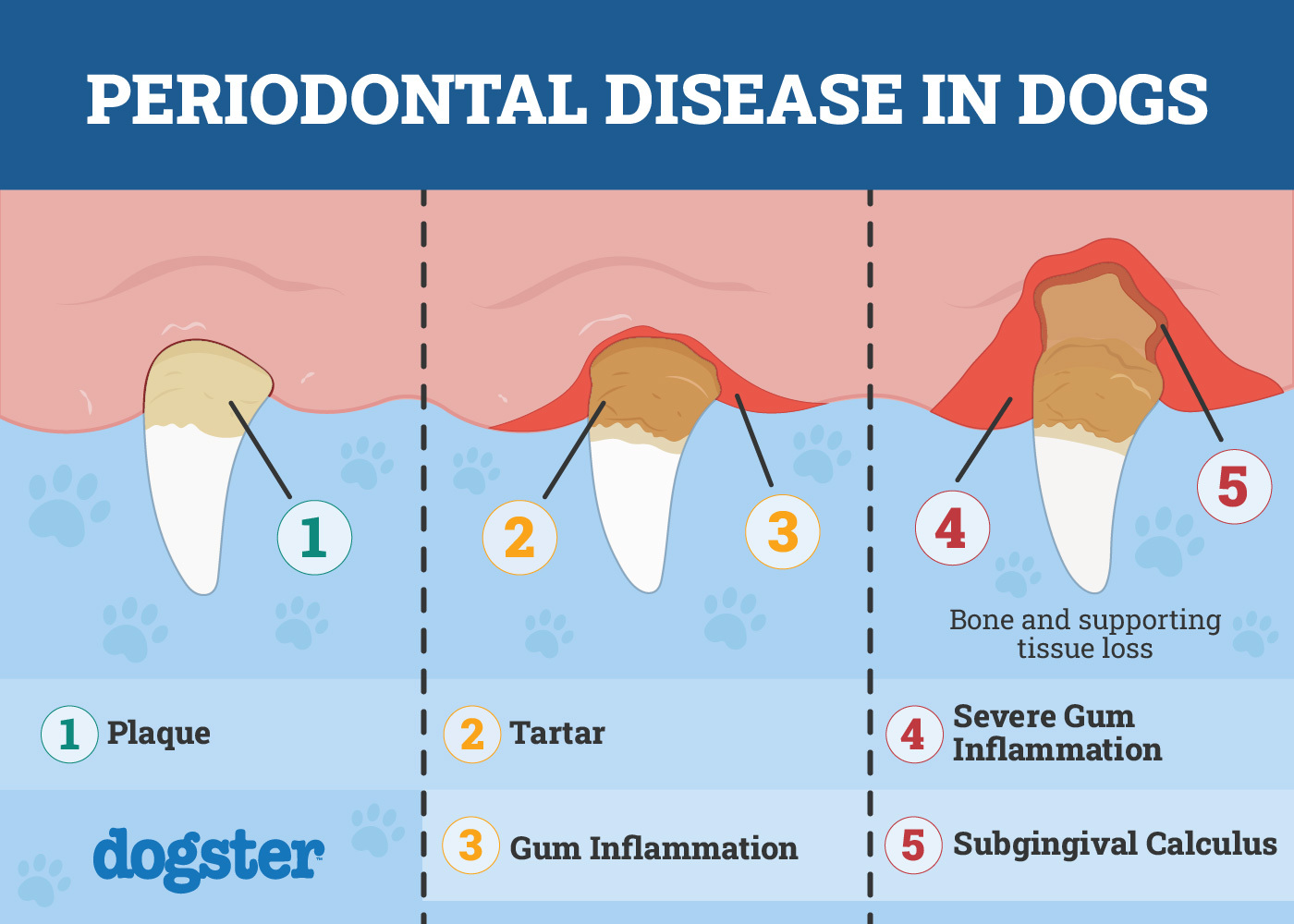
Dogs with periodontal disease are at a high risk of developing tooth infections because the bacteria in their mouth can travel below the gingiva and settle around your dog’s tooth root. And just because your dog’s teeth don’t look bad doesn’t mean they’re not at risk. Approximately 80% to 90% of dogs three years or older have periodontal disease.1
2. Plaque
Plaque is the main problem for dogs with dental disease. It’s a biofilm from bacteria and attaches to the tooth. It can migrate under the gum layer and cause inflammation, weakening the periodontal structures and setting your pooch up for an infection.
3. Trauma
Trauma to your dog’s mouth can also cause tooth root abscesses. It may be an even more significant cause of tooth root abscesses than periodontal disease, with as many as 1 in 4 dogs having traumatic injuries to teeth. While your dog’s teeth are tough, they’re not impervious to damage. If your dog likes to chew on hard objects, they can easily break teeth. Dogs chewing on bones or antlers is a common way they can develop a crown fracture.
If your dog’s tooth breaks, bacteria that would normally be blocked from reaching the root of the tooth can enter the pulp cavity and root. In numerous cases, a tooth fracture leads to a tooth root abscess. Dogs that are hit by a car may sustain tooth fractures. Other forms of blunt force trauma can also lead to a fracture of a tooth or teeth.
4. Dental Disease
Sometimes, teeth can weaken from other conditions. Enamel hypoplasia can occur. Significant periodontal disease can also weaken teeth and increase the possibility of a tooth cracking.
Other causes of a tooth root abscess include:
- Dental cavities
- Dentigerous cysts
- Dentigerous tumors
How Do I Care for a Dog With Tooth Infection?
If your dog has issues with its teeth or an odd swelling appears on its face, you need to have your canine friend evaluated by a veterinarian as soon as possible. Do not try to treat a tooth root abscess at home.
Unfortunately, surgery is the most surefire way to deal with a tooth infection. There are two major options: surgical extraction or a root canal.
Your veterinarian might place your dog on antibiotics to help treat the infection, but it is difficult for the antibiotics to penetrate and completely heal the infection. The tooth could become infected the same way it originally occurred, such as through a fracture in the enamel or bacteria traveling below the gum line from infected pockets. Common antibiotics include clindamycin and Clavamox, a type of amoxicillin antibiotic.
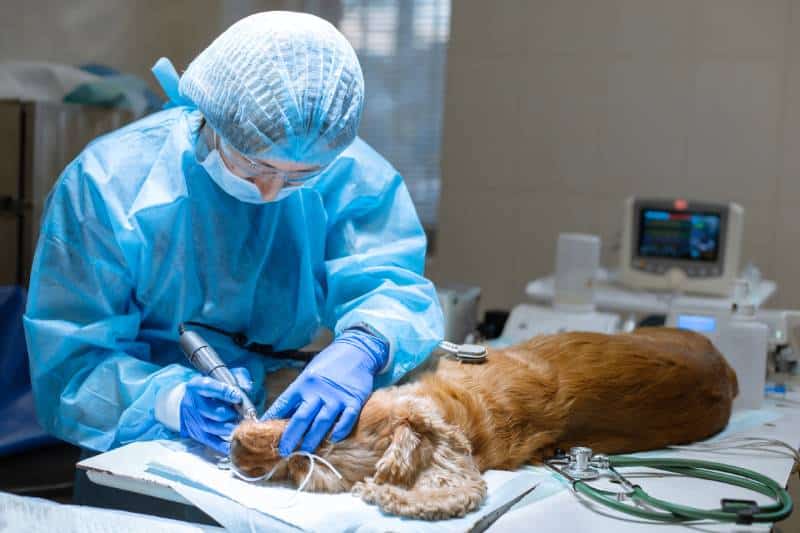
Your dog will need a surgical procedure under anesthesia. If your dog isn’t a good surgical candidate, your veterinarian might try a longer course of antibiotics. Typically, they’ll perform screening tests, such as blood work, to make anesthesia as safe as possible.
Once under anesthesia, your veterinarian will take X-rays of the affected tooth to understand what might be happening below the gum line and crown. To be safe, they’ll generally recommend full mouth images to assess all the teeth. These X-rays are essential for dogs with periodontal disease.
Depending on the tooth’s location and underlying disease, your veterinarian will create a plan to extract the tooth or teeth. Multi-rooted teeth often need to be sectioned into individual roots to be extracted. Your veterinarian may need to create a gingival flap to facilitate getting the tooth out with the least amount of trauma or difficulty. They’ll clean out the site, flushing it well. After they take more X-rays to ensure the entire tooth is removed, your veterinarian will suture the socket closed to aid in healing.
Sometimes, veterinarians will refer you to a veterinary dentist for evaluation and surgery. If you’d like to try to save the tooth by having a root canal done, this procedure typically needs to be done by a specialist.
Preventing Tooth Infections in Dogs
It can be hard to prevent tooth root infections in dogs because injuries can occur when you least expect it. You should keep your pet from chewing on hard objects like antlers. Talk to your veterinarian about suitable alternatives for your pup.
Effective home dental care is one way you can help your dog. From the time they’re a pup, brush their teeth with pet-safe toothpaste regularly, ideally every day.
- Water additives
- Dental chews
- Dental wipes
Helping fight tartar and plaque can significantly lessen the likelihood that your dog will develop dental disease and tooth root abscesses.
Frequently Asked Questions (FAQ)
Can I just use antibiotics to treat a tooth infection in a dog?
No, in most cases, your dog will need surgery to treat a tooth infection. While the antibiotic may treat the initial infection, it can easily recur, mainly when bony changes occur around the root, creating an excellent place for bacteria to hide.
Is a dog tooth infection an emergency?
Yes, a tooth infection in a dog is an emergency. In addition to being incredibly painful, the infection can spread through the bone and affect other tissues, including the eye.
What teeth are commonly involved in a tooth root abscess?
The most common teeth involved in a tooth infection or abscess are the canine and carnassial teeth. The carnassial teeth are the large teeth at the back of the mouth on the top and bottom. They are the maxillary (top jaw) fourth premolar and the mandibular (bottom jaw) first molar on each side.
Conclusion
A tooth infection in a dog can be a scary thing. If you notice that your dog is having issues chewing or eating, make an appointment with your veterinarian for an exam right away.
See also:
- Dog Tooth Abscess: Causes, Signs & Treatment (Vet Answer)
- My Dog’s Tooth is Discolored, What’s Wrong? Important Information
Featured Image Credit: Eric Isselee / Shutterstock