How To Keep Dogs From Going Upstairs: 8 Vet-Verified Tips


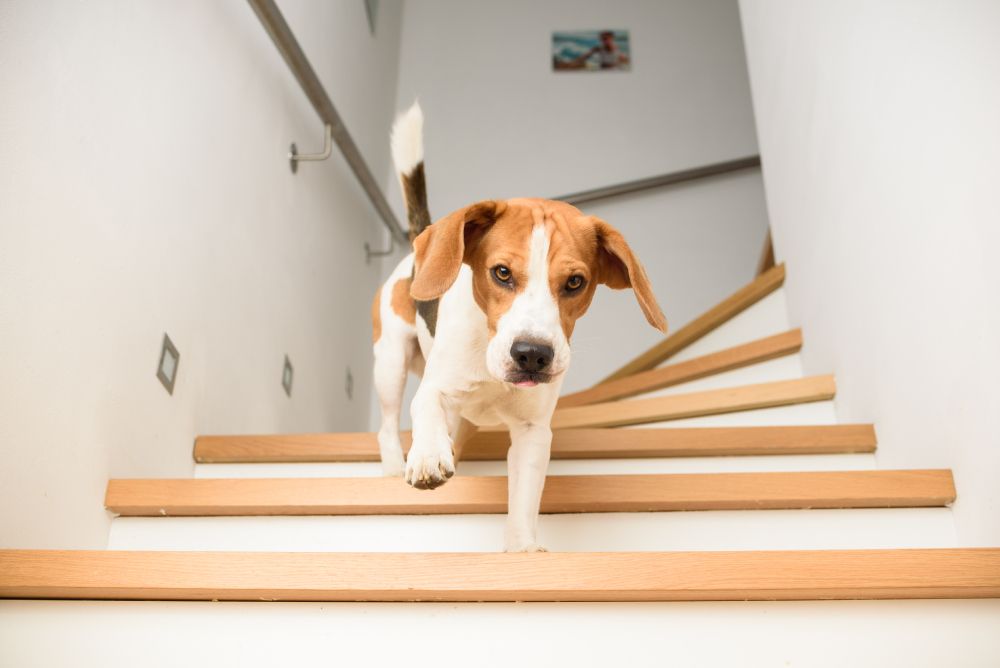
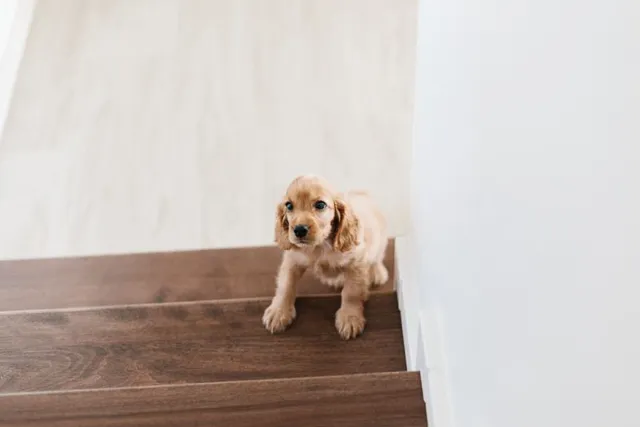
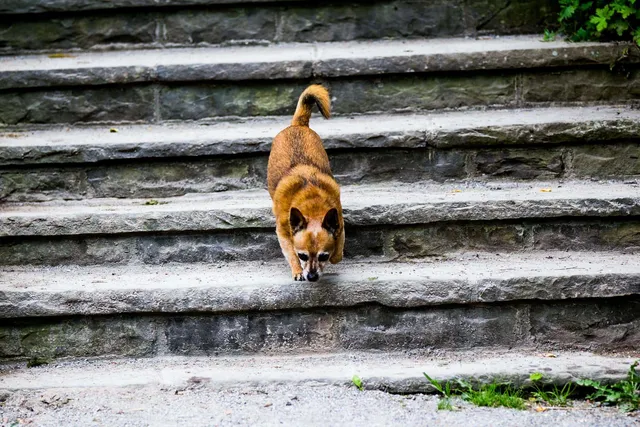
If you live in a house with multiple stories, it may be necessary to keep your dog out of one of the levels of the house. Whether it’s because you have a new baby or your dog is recovering from surgery and needs to avoid going up and down stairs, there are things you can implement to keep your dog from going upstairs. Be patient while you work through this, though, because it can be time-consuming to teach your dog not to go upstairs, especially if they’re used to being able to.

The 8 Tips for Keeping Your Dog From Going Upstairs
1. Teach Them Verbal Commands
Obedience training is important for multiple reasons, but especially because it can keep your dog safe by keeping them out of places and situations they shouldn’t be in. Teaching reliable cues like “stay” and boundary commands can help prevent your dog from going upstairs, especially when used consistently with reinforcement and management. Consistently use the command whenever they approach the stairs, and reinforce compliance with rewards and repetition over time. However, you can teach your dog other commands, like “come down” and “place” near the bottom of the stairs. In some cases, your dog’s place may need to be away from the base of the stairs if they may be tempted to go up them.

2. Use Positive Reinforcement
Most dogs take to positive reinforcement training well because it provides them with confidence and helps build trust between the two of you. Positive reinforcement can involve verbal praise, treats, toys, or other high-value rewards. Positive reinforcement training works best in conjunction with verbal commands. Use rewards and praise to encourage your dog to repeat the desired behavior, which, in this case, would be stopping at the base of the stairs, staying in a designated area, or responding to a cue to come back down when asked.
3. Utilize Deterrents
There are a variety of deterrents that can be used to discourage dogs from getting on your stairs. Deterrents can include objects placed on stairs that discourage stepping, as well as physical barriers that prevent access entirely, and these objects typically have a texture or create a sensation that your dog doesn’t like.
Things that are commonly used as deterrents include tin foil, sticky shelf liners, tape facing sticky side up, upside-down carpet runners, and commercial deterrents. Make sure you choose items that are not going to harm your dog when they step on them.

4. Create Barriers
Baby gates are the most common and effective barrier that people use to keep their pets downstairs. They come in a wide variety of widths and heights, as well as different features, like doors, cat doors, and quick-release latches. You can place a baby gate at the bottom or top of your stairs, depending on your specific need. Other temporary barriers can include furniture or freestanding panels, although purpose-built gates are generally safer and more reliable for restricting stair access.
5. Remain Consistent
The key to keeping your dog from going upstairs is to be consistent with your training. This means that everyone in the household needs to be on board with not allowing your dog to go upstairs. If some people allow it and others don’t, your dog may become confused and slower to learn the boundaries you’re setting because they don’t fully understand what’s expected of them. Always be consistent when training your dog to help your dog clearly understand expectations and learn the rules more reliably.

6. Keep Them Exercised
A dog that is bored and full of extra energy may be more likely to engage in unwanted behaviors and may have a harder time focusing on training or learning new things. Provide your dog with plenty of exercise every day to burn off any excess energy they may have. The amount of exercise that your dog needs will vary depending on their breed, age, weight, health, and personality, but the vast majority of dogs should be given some form of exercise every day.
7. Provide Enrichment
Enrichment activities provide exercise for your dog’s brain, which helps keep them happy and healthy. If you provide your dog with an enriching and engaging environment downstairs, it may help reduce their interest in going upstairs, especially when combined with training and consistent boundaries. Food puzzles, games, new toys, scent training, and other activities that work your dog’s brain are excellent for creating an enriching environment. The more appealing you can make the downstairs, the easier things will be for you, so get creative to keep your dog interested in staying out of your upstairs.

8. Start Crate Training
Training your dog to comfortably spend time in a kennel is a key skill for your dog to learn. Crates are a tool that allows you to keep your dog safe when they can’t be supervised or are in the way, as well as provide them with a safe space of their own that they can feel safe and comfortable in. Ideally, crate training should begin as soon as you bring your new puppy home, but adult dogs can learn to use a crate as well. Using a crate can help safely manage your dog and prevent access to stairs when they cannot be supervised. Consult a vet or a certified dog trainer for guidance on crate training techniques to ensure a positive experience.
Will It Make My Dog Sad to Not Go Upstairs?
Many of us struggle with doing things that we perceive may hurt our dog’s feelings. In some cases, things we do may cause stress or other negative feelings in our dogs. The potential for hurting their dog’s feelings is often the reason that people do not make rules like keeping their dog out of their upstairs or off of furniture. However, sometimes these rules are necessary for the safety and comfort of everyone.
Dogs are intelligent animals that can learn to adjust to new things at any age, especially with consistent training based on positive reinforcement. Because of this, you shouldn’t guilt yourself for making rules to keep your dogs out of certain areas. It may take time and adjustments in routine, but your dog will eventually adjust to the new rules.
Conclusion
Some dogs may be more challenging than others when it comes to teaching them to stay downstairs. Curious and independent dogs may take longer to train not to go upstairs. Being consistent in your training methods using positive reinforcement and getting the entire household on board with the rule to not allow the dog upstairs will lead to success in most cases. Oftentimes, you will need to combine multiple methods mentioned previously to fully train your dog to not go upstairs.
Featured Image Credit: Przemek Iciak, Shutterstock
Expert dog care, straight to your inbox
News, insights, expert advice, and everything dog.

No spam — unsubscribe anytime.
By signing up, you agree to our Terms & Conditions and Privacy & Cookies Policy.
How useful was this post?
Click a star to rate. You can leave written feedback afterwards. (We read all feedback.)
Brooke Billingsley spent 9 years as a veterinary assistant before becoming a nurse in 2013. She lives in Arkansas with her boyfriend, and loves all animals; currently sharing a home with three dogs, two cats, five fish, and two snails. She has a soft spot for special needs animals and has a three-legged senior dog and an internet famous cat with acromegaly and cerebellar hypoplasia. Fish keeping has become a hobby of Brooke’s and she is continually learning how to give her aquarium pets the best life possible. Brooke enjoys gardening and keeps a vegetable garden during the summer months. She stays active with yoga and obtained her 200-hour yoga teacher certification in 2020. She hosts a podcast focusing on folklore and myth and loves spending her free time researching and writing. Brooke believes that every day is an opportunity for learning and growth and she spends time daily working toward new skills and knowledge.