How to Keep a Weak Newborn Puppy Alive: Our Vet Explains the 11 Steps on What to Do
In this article
Having a newborn puppy be born can be an extremely exciting and exhilarating time, but if the puppy lacks vitality or seems weak, the tide of good feelings can quickly turn into a trying and stressful endeavor. What should you do if you find yourself in this situation?
Here, we’ll discuss a little more about puppies that are weak or not doing well, some steps of what to do if you encounter this situation, and some potential causes.

Weak Puppy Presentation
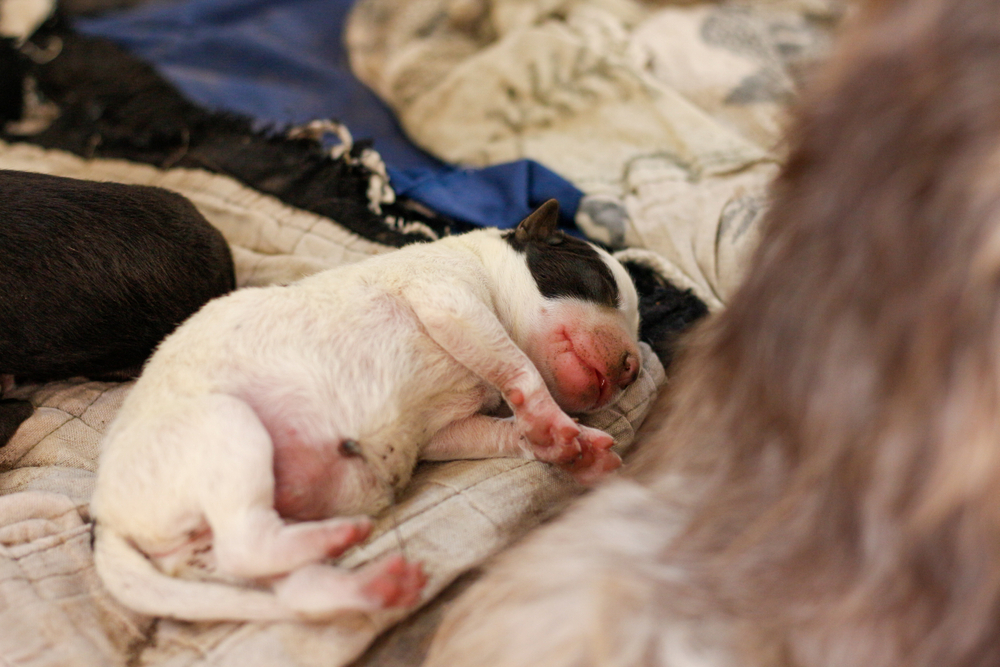
A weak puppy that lacks strength and energy may be termed as a “poor doer,” or “failing to thrive.” Puppies that seem to be normal when born but then fail to do well as time goes on may be described as having “fading puppy syndrome.” In fact, more than 50% of puppy deaths happen within their first 3 days of being born and consist of various causes.1 Sometimes, these pups may have had a difficult birth, or prolonged labor.
Other times congenital problems may come into play, or they may not be gaining much weight after birth for a myriad of reasons. Further along, we’ll explore more of the many potential reasons why, but for now, let’s move on to some various steps of what to do if you become responsible for a puppy with these issues.

Steps and What to Do
Some weak puppies may be able to be managed at home while others may need further medical care. This article is not a substitute for medical advice, but rather, a presentation of some steps to try at home. If a puppy is still weak or not doing well, prompt veterinary medical attention is recommended as a young puppy can become critically ill very quickly.
Birth
As a puppy is being born (and thereafter), the “ABCDs” need to be paid attention to carefully. Broken down, the A is for airway, the B is for breathing, the C is for circulation and the D is for dry (and warm).
- Ensure there is an open airway for the puppy. Immediately remove placental fluids and material off their face/mouth once born.
- Be certain the puppy is breathing. Using a suction bulb or syringe to help remove fluid in the mouth and/or to encourage breathing, may be helpful. If the puppy is still not breathing, you can vigorously rub them with your hands. If this does not help, quickly check step #3, and know that mouth-to-mouth breathing will need to occur.
- Confirm there is circulation. This may be done by feeling for a heartbeat or by using a stethoscope if you have one available. If a heartbeat is not present, puppy CPR would be warranted. Learning how to perform neonatal CPR before a puppy is born would be best, as an emergency situation with a frail puppy can be difficult. Careful chest compressions on the puppy with a thumb and index finger at a rate of about 120 per minute would be indicated. Be sure to then add mouth-to-mouth breathing in between chest compressions.
- Provide the right environment. Make sure the puppy is dry and warm in addition to establishing a clean and safe environment.

Immediately After Birth
After a puppy has been born, and you have ensured that the puppy is breathing, has a heartbeat, and is dry and warm, it is now time to pay close attention to the four “H’s.” The four H’s (hypothermia, hypoglycemia, hydration, and hypoxia) are common pitfalls that may contribute to a puppy being weak.
Furthermore, these individual causes are all connected and together come into play to provide an optimal situation for a young pup.
Consulting a veterinarian is recommended for the best course of action.
Next Steps
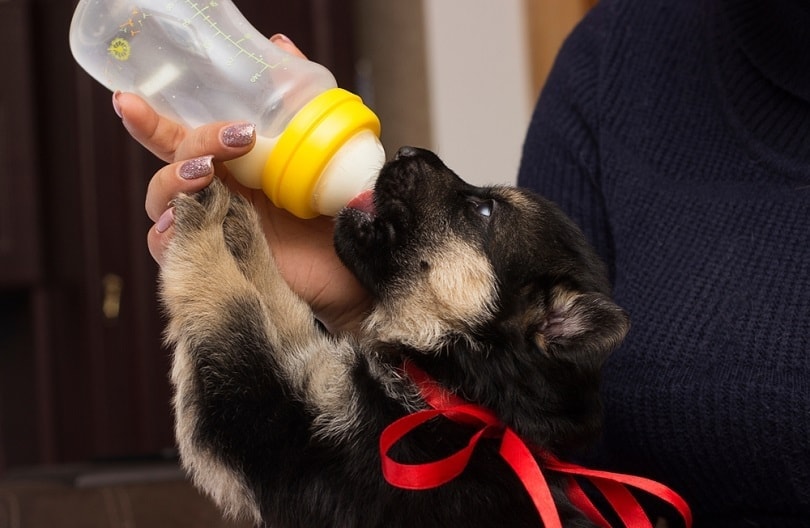
- Nutrition: Nursing is extremely important for puppies to provide them with the energy and nutrients they need. Colostrum is the first milk nursed by the puppies that give important maternal antibody-rich fluid with specific nutrients to help pass on protection and immunity for the puppies for many weeks thereafter. When situations arise where they may be needed, supportive tube feeding with a commercial milk replacer or colostrum replacer can be the next-best option. If this is the case, specific details will be given by your dog’s doctor. Additionally, daily weighing of the pups is helpful to ensure they are increasing in size.
- Routinely observe neonatal behavior and learn about normal standard milestones for puppies. For example, typical behavior for neonates (a puppy that is up to 2 weeks old) consists of sleeping and nursing with minimal crying, while remaining present in a group with the other puppies. Variations from this behavior could be indications of a medical problem.
- If a puppy is weak or not doing well in the first few weeks of life (or beyond), these fragile pups may need veterinary care to determine a potential cause and/or to provide treatment. In these cases, time is of the essence as there can be a rapid progression of signs in these young ones.

Puppy Illness Causes and Treatment
As mentioned, there can be numerous causes for a puppy to be weak or failing to thrive; some of these may include:
Seeking medical care for any signs of concern with a weak or ill puppy is paramount. Specific treatment would depend on either the cause, if determined, or if specific signs are noted. Some examples of care may include supplemental warmth, glucose, fluid administration, oxygen therapy, blood transfusion, proper nutrition supplementation, etc.
In addition, medication such as antibiotics or parasiticides (medication that kills parasites) may be needed, and some congenital defects may require surgery.

Conclusion
Having a weak newborn puppy can be a very concerning experience. Receiving accurate newborn puppy care recommendations or puppy medical advice is best done by contacting a veterinarian.
A timely evaluation of those puppies that are not doing well can give them the best chance at potential diagnosis, treatment, and hopefully survival.
Sources
Featured Image Credit: Rani Ayu A, Shutterstock
Expert dog care, straight to your inbox
Vet-reviewed advice, training tips, and the best of Dogster. Free, and you can unsubscribe anytime.
By signing up, you agree to our Terms & Conditions and Privacy & Cookies Policy.
Dr. Rachel Ellison DVM (Veterinarian)
Dr. Rachel Ellison lives on a mountain in Utah with her husband, daughter, and son, as well as their animal menagerie— a Bernese Mountain Dog, a Bengal/Siamese mix, and an orange tabby cat, as well as numerous chickens. During her free time, she enjoys being with those she loves, cooking and baking, reading, hiking, sharing her knowledge about cats, and exploring nature and the world around her.
Join the conversation
Ask a question, share your story, or send private feedback.