Swimmer’s Syndrome in Puppies: Vet-Verified Causes, Signs & Care



In this article
Swimmer’s syndrome is an uncommon physical condition affecting a puppy’s limbs. It causes the pup to paddle or “swim” due to their inability to stand or walk. Aside from standing and walking, this physical deformity can also lead to problems in breathing, eating, and circulation, making early detection and intervention important to ensure a better quality of life for a swimmer pup.
In this article, we will discuss swimmer's syndrome, its signs, possible causes, and how to improve your pup's quality of life.

What is Swimmer’s Syndrome?
Swimmer’s syndrome is a developmental canine problem that causes a pup’s limbs to splay out to the side of the body due to weakness, hindering them from properly standing or walking. The syndrome starts at the hind limbs before affecting the front limbs, restricting the pup’s movement to a paddle-like motion on the floor—with their limbs out to the side as if they are swimming. Other names for the syndrome include swimming-puppy syndrome, flat-puppy syndrome, twisted legs, and turtle pup.
With the dog's limbs hindering them from standing, the puppy’s thorax is also pressed against the floor, giving them a flat chest and putting them at risk for several health issues. A dog with swimmer’s syndrome may experience difficulty in respiration and breathing, eating and digestive issues, and joint problems and may be at risk for an early death.
Swimming puppy syndrome is a rare complication, with little research and evidence available. But like with all developmental complications, early identification and intervention can make all the difference.

What Are the Signs of Swimmer’s Syndrome?
Aside from the previously discussed descriptors of swimmer’s syndrome, other signs of this syndrome include the following:
- Weakness, lethargy, and low energy (especially compared to littermates)
- Difficulty in breathing
- Inability to eat and drink properly and regurgitation
- Difficulty in urinating and defecating (and possible lesions due to scalding)
- A flat chest compared to a normally rounded thorax
- At 1 week of age, having legs splayed out to the sides of the body
- At 3 weeks of age, being unable to stand or walk
Swimming puppy syndrome is a rare disease but is more commonly seen in smaller breeds. No matter your dog’s breed, looking for these signs while your dog is still a puppy before 21 days of age is recommended. The earlier swimmer’s syndrome is detected, the quicker it can be treated.
If you are concerned about the health and well-being of your pet, seek veterinary advice for the best course of action.

The 3 Common Causes of Swimmer’s Syndrome
There is little research on swimmer’s syndrome; no one knows where the condition comes from or what causes it. Swimming puppy syndrome is a congenital condition, but its cause can come from several factors. Some experts consider the syndrome hereditary, while others believe it is an acquired congenital condition in which the deformity occurs before or during birth. Other experts believe environmental factors can play a role in acquiring the condition after the pup has been born.
1. Genetics
Veterinarian experts view swimmer’s syndrome as a hereditary condition, where genetics play a major role in acquiring the condition. From this perspective, it is recommended that puppies affected by swimmer’s syndrome not be used for breeding, as this may increase the risk of passing down the gene to the offspring. They found that a small litter size and early weight gain were seen in Labrador swimmer pup litters.

2. Congenital Condition
Other experts consider swimmer’s syndrome an acquired congenital condition. This approach considers external or environmental factors that can cause the syndrome while the mother dog is pregnant. Factors can include infections or accidents that can occur during pregnancy or while the mother is giving birth.
3. Environment
Environmental factors occurring after the pup’s birth are another suspected cause of swimmer’s syndrome. For example, veterinary experts suspect that an environment that is too warm can cause a puppy to overheat and be lazy while staying in a lying position for extended periods. This limitation in movement can then affect the pup’s muscle development.

How Do I Care for a Puppy with Swimmer’s Syndrome?
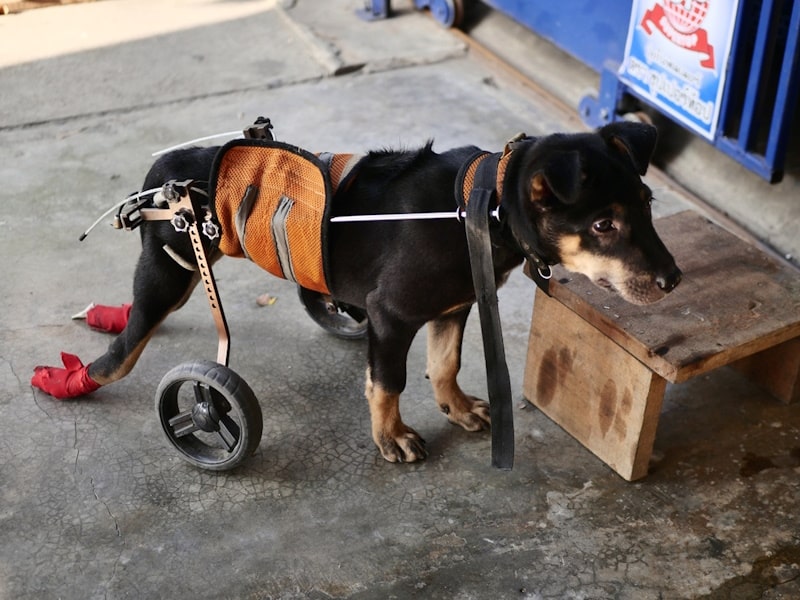
For the longest time, puppies with swimmer’s syndrome were thought to be hopeless cases. Despite the limited research about this condition, treatment options and home-care remedies are available to give your dog a better quality of life!
Caring for a swimmer pup involves 3 methods: nutrition, environmental modifications, and physiotherapy.
1. Nutrition
A healthy diet is necessary for swimmer pups since their weight must be carefully controlled. Due to their posture and limb weakness, any extra weight can put unnecessary pressure on their bodies. Swimmer pups also have difficulty with nursing and swallowing. Therefore, owners must control their nursing and help them swallow their food properly by propping them up while rubbing their bellies to prevent regurgitation.
Your veterinarian may also recommend supplements, such as vitamin E or selenium. Be sure to consult your veterinarian before giving your swimmer pup any supplements!

2. Environmental Modifications
Much like baby-proofing a home, it is essential to provide a safe environment for your swimmer pup that is safe, accessible, and promotes healthy movement. Try to keep your dog from laying flat on a surface to avoid putting pressure on the chest and the joints of the limbs.
Keep your puppy away from slippery surfaces. Try placing them on rough surfaces with enough traction to prevent slips and falls when standing. This can be done by laying a carpet down or using towels to prevent sliding.
Swimmer puppies have difficulty moving freely, so they will poop and pee where they rest. Because of that, it is important to keep the areas where they rest clean.
3. Physiotherapy
Just like humans undergoing physical therapy for physical disabilities, puppies with swimmer’s syndrome can also benefit from physiotherapy. Physical movement is vital in the treatment of puppies with this syndrome, and the increase in movement shows a better prognosis in a puppy’s life and progress.
Giving your puppy a full body massage can help relieve any tension in their muscles. This can be followed by providing “range of motion” exercises to your pup’s limbs, such as flexion and extension on the digits, hind-leg joints, and hip joints.
Training to stand is also part of the physiotherapy program to strengthen and encourage the muscles and structures involved. Stimulating the swimmer pup's paws and extremities can also encourage nerve activity. This part of the training can help facilitate the physiological development of your swimmer pup.
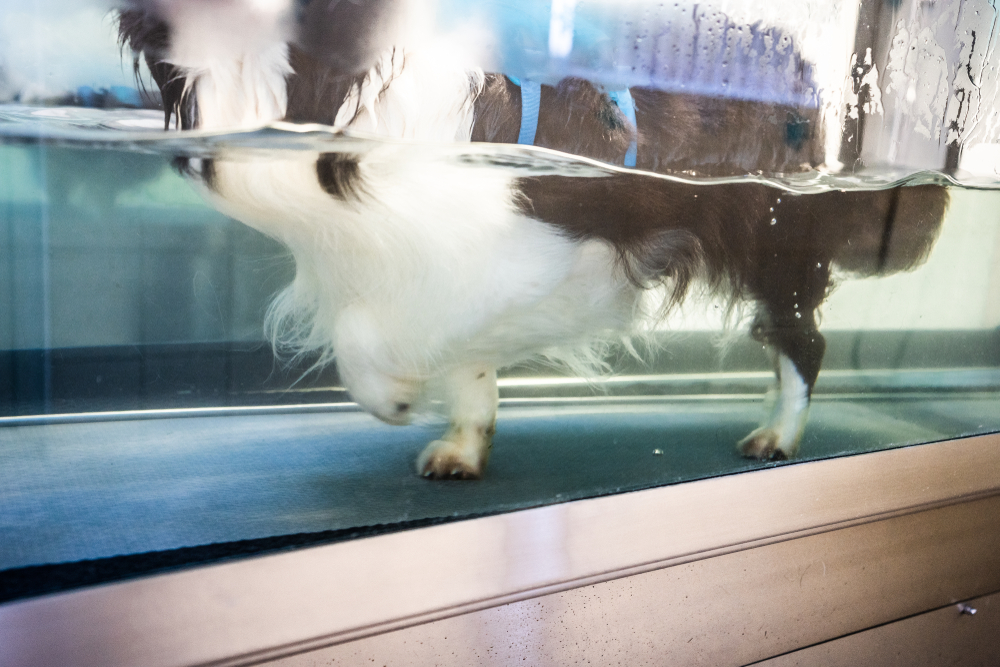
It is crucial to discourage the flat-lying position. Moving them from side to side, as well as encouraging them to sleep on their side, can also facilitate better breathing in your pup. Swimming can also help strengthen your pup’s muscles without adding extra pressure on their limbs and joints.
Consult your veterinarian for recommendations on the proper physiotherapy program for your swimmer pup.


Frequently Asked Questions (FAQs)
What Can I do to Prevent Swimmer’s syndrome?
Since swimmer’s syndrome has no definite cause, the best we can do is avoid risk factors. Ensuring the pregnant mother receives proper nutrition and that you stay in contact with your veterinarian is vital. It's also crucial to keep the environment of the newborn pups clean and at the proper temperature.

I’m Not Sure if My Puppy Has Swimmer’s Syndrome; How Long Can I Wait Before Consulting?
Even if you are unsure, it is always better to consult a vet as soon as possible. The sooner the pup is diagnosed, the sooner they can receive treatment, and the better the outcomes for your pup’s life!

Conclusion
Swimmer’s syndrome may be uncommon, and the diagnosis may be scary, but puppies with this syndrome are no longer considered hopeless cases. Treatment for swimmer’s syndrome takes a lot of work for the puppy and their owner. For the best outcome, it is essential to be patient and enjoy each other’s company during treatment so that you can give your swimmer pup the best chance at a long and happy life!
See Also:
Sources
Featured Image Credit: Ksenia Merenkova, Shutterstock
Expert dog care, straight to your inbox
Vet-reviewed advice, training tips, and the best of Dogster. Free, and you can unsubscribe anytime.
By signing up, you agree to our Terms & Conditions and Privacy & Cookies Policy.
Nicole has loved animals of all sizes her whole life so it's no wonder she has dedicated her career to helping them through what she loves best: learning, writing, and sharing knowledge with others. She’s the proud mom of two dogs, a cat, and a human. With a degree in Education and 15+ years of writing experience, Nicole wants to help pet parents and pets around the planet to live happy, safe, and healthy lives.
Join the conversation
Ask a question, share your story, or send private feedback.