Introducing a New Dog to the Pack: 10 Vet-Approved Tips



In this article
Introducing a new dog into a home with resident dogs can be challenging. Though dogs are communal animals by nature, these initial introductions can be unpredictable. It’s essential to approach these first few meetings with caution. A poorly planned integration period can be a recipe for disaster, especially when you already have an established pack at home. Read on to find our tips on successfully introducing a new dog to your already-existing pack.

Before You Adopt a New Dog
Consider the Current Living Situation
Before you think about bringing another dog into your home, you need first to consider how your current dogs get along. If they have a history of fighting or aggression, this may not be the right time to introduce a new dog into your family. The happiness of your current dog should hold precedence over adopting another dog.
If you absolutely must bring another pet into a home that is currently struggling with aggression between dogs, we highly recommend speaking with a canine behavior expert before proceeding with the adoption. They can work with your current dogs and implement behavior modifications that will be necessary before you bring your new pup home.

Know Your Dog’s Personalities
Consider whether your resident dogs are a good candidate for a new brother or sister. Dogs that are confident, calm, and friendly toward other dogs are generally better candidates for a multi-dog living situation. Those who are nervous, skittish, or fearful around other dogs may find it difficult to assimilate into a multi-pet household.
Set Realistic Expectations
Know that you cannot force companionship on dogs, especially not right away. Look at your pets becoming “friends” the same way that humans develop friendships. Relationships do not bloom overnight. It takes time, many positive experiences, and trust before we can feel close to someone. The same rule applies to your dogs. Don’t go into this introductory period with a set timeline in your head for how the relationship between your dogs will develop. Be realistic and patient.
Have a Backup Plan
No one can accurately predict how a group of dogs will get along, and sometimes, two dogs despise each other regardless of how you introduced them. Adoption agencies and breeders should have a backup plan available to adopters in the event the dogs do not get along.

The 10 Tips for Introducing Your New Dog
1. Start With Scents
Dogs have an extremely fine-tuned sense of smell, so before you even allow your dogs to see one another, introduce the idea of a new dog to your resident dogs and the idea of joining a pack to your new dog with scents.
Before you bring home your new pet, rub them with a cloth or ask the adoption agency or breeder if you can take a blanket they’ve been using to introduce your current pets to this new smell.

2. Visit the Vet
Before you bring your new dog into your home, make sure both the resident dogs and the new one are up to date on their vaccinations. Unvaccinated puppies are prone to dangerous and potentially life-threatening illnesses, like parvovirus and distemper.
3. Keep Them on a Leash
During the initial introductions, all dogs should be kept on a loosely-held six-foot leash and handled by a separate person. It’s important for every human taking part in this introduction period to be relaxed and calm, as dogs can pick up on your body language and mood. If you’re stressed or anxious about the process, your mood can rub off on your dogs.

4. Hold the First Introductions in a Neutral Location
Using your home as the introduction area is a recipe for disaster, as your current dogs may feel their territory is being encroached upon. Introduce your dogs face-to-face for the first time in a neutral location that’s unfamiliar to both the resident dogs and the new one.
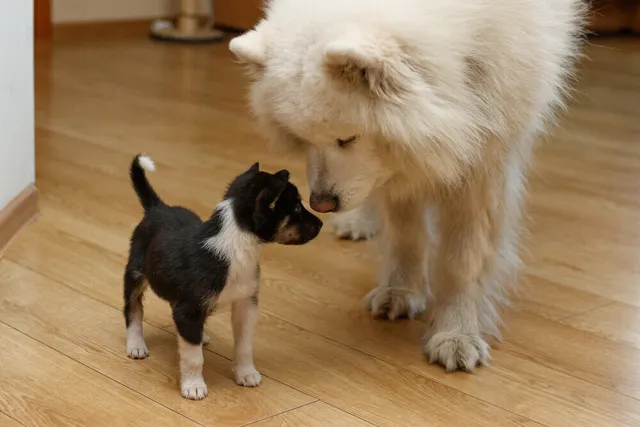
When the dogs begin to sniff each other, offer happy, high-pitched praise if you notice positive signs from them. After a few minutes, lead them away from one another. All initial interactions should be brief to ensure the dogs don’t have enough time to formulate an aggressive response. Allow them to smell one another, touch noses, and then separate them and engage them in play or obedience exercises for several minutes before allowing another interaction.
5. Don’t Force It
Don’t force any interactions between your dogs. Let them walk near each other for several minutes and take the lead during the first few meetings. If they ignore one another, that’s completely fine.

6. Familiarize Yourself with Canine Body Language
It’s important for you, as the owner of multiple dogs, to know how to read your dog’s body language. Watch carefully for postures that can indicate your dogs are having a defensive or wary response to their new family member. This includes signs such as:
- Hair standing up on their back
- Baring their teeth
- Tensed mouth
- Growling
- Stiff legs
- Prolonged eye contact
- Yawning
If you notice any of these behaviors, immediately calmly interrupt the interaction by distracting your dog with something else.
However, your dogs will also exhibit positive body language when things are going well. Watch for signs like:
- Loose body movement
- Relaxed, open mouths
- Playful posturing

7. Remove Familiar Items
Before you bring your new dog to your home for the first time, please remove all of the resident pets’ belongings, like their toys, food bowls, and beds. This is to prevent any resource guarding or territorial behavior from your current dogs. You’ll be able to return their prized possessions back to them in several weeks and, at the same time, provide your new pet with their own toys, bowls, and beds. Until then, however, only give your dog’s toys when they’re in separate areas or their own crates to prevent tiffs.
8. Keep Them Separate & Set Boundaries
When your new dog comes into your home for the first time, keep the resident dogs in a separate area. Use a leash to walk the new pup in your home to show them around, but then confine them to a completely separate area for the first few weeks.
Use baby gates and doors to close off rooms to your pets to help set boundaries. After the initial walk-around, keep your new dog behind a closed door or baby gate to allow them to get used to their new home.
Feed your pets and set up beds in separate areas to prevent resource guarding.
After a few weeks of being separated and having interactions in a neutral space, you can begin extending the time your dogs spend together in what will soon be their shared home.
9. Supervise Playtime
As your new dog gets comfortable in their home, you can begin to implement play sessions with them and the resident dogs. Supervision is vital at this point in the introduction to ensure no dogs get too excited or aggressive. Interrupt any play that looks like it may get aggressive, and offer praise and rewards when the dogs play well together.

10. Know How to React if a Fight Occurs
Even though dogs are communal animals, fights can occur. If one happens, you must stop it as soon as possible to prevent injury. However, never put yourself in the middle of a dogfight. Instead, try to distract them with a loud noise or by throwing something soft, like a pillow, at them to break them up. The moment they’re distracted, get a hold of one of them and separate them until they’ve had a chance to calm down.
A fight doesn’t mean that they can never be introduced again. Remember, even humans get into fights with their loved ones sometimes. It does mean, however, that they’ll need to be separated for a short period until the tension between them has fizzled out.
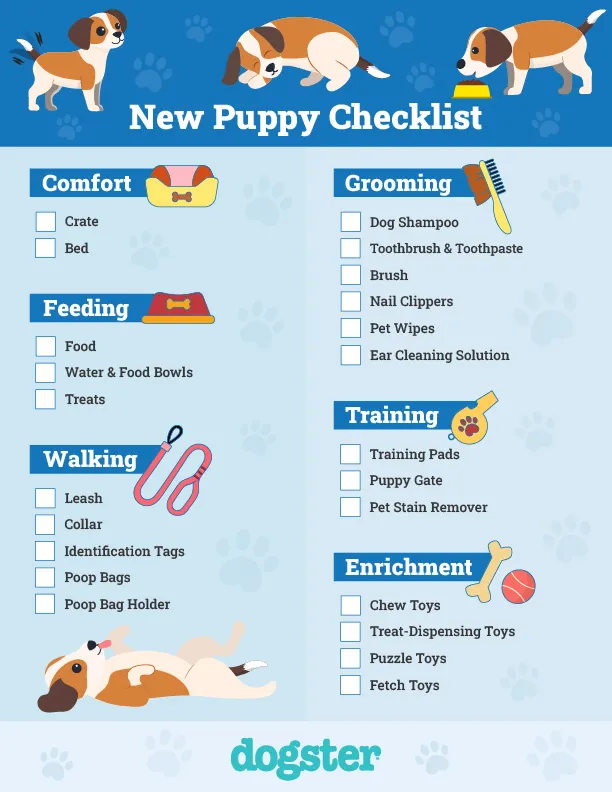
New Puppy Checklist
Final Thoughts
Though it may seem like a lot of preparation, work, and time, introducing your new dog properly to their new pack is a non-negotiable step to successful integration. Rushing the introductory period can be a recipe for disaster and may lead to aggression, injuries, and even failed integration altogether.
With patience and time, sharing your home with two or more dogs can be an extremely rewarding experience. Dogs are naturally communal animals and most generally enjoy keeping company with others of their species.
See also:
Featured Image Credit: Taryn Rahl, Shutterstock
Expert dog care, straight to your inbox
News, insights, expert advice, and everything dog.

No spam — unsubscribe anytime.
By signing up, you agree to our Terms & Conditions and Privacy & Cookies Policy.
How useful was this post?
Click a star to rate. You can leave written feedback afterwards. (We read all feedback.)
Chantelle is passionate about two things in her life – writing and animals. She grew up on the prairies of Canada surrounded by animals and as an adult, she choose to share her home with five cats, two guinea pigs, and a bearded dragon. Chantelle, her husband, and their child take great pride in being great animal parents- the ones who spend a thousand dollars on wall-mounted cat shelves so that their cats can have an indoor jungle gym all year round. When Chantelle isn’t snuggling her cats on the couch or taking pictures of them being funny, she’s outside exploring in the Rocky Mountains, binging the same shows on Netflix over and over, and reading about whatever random topic pops into her brain.