In this article
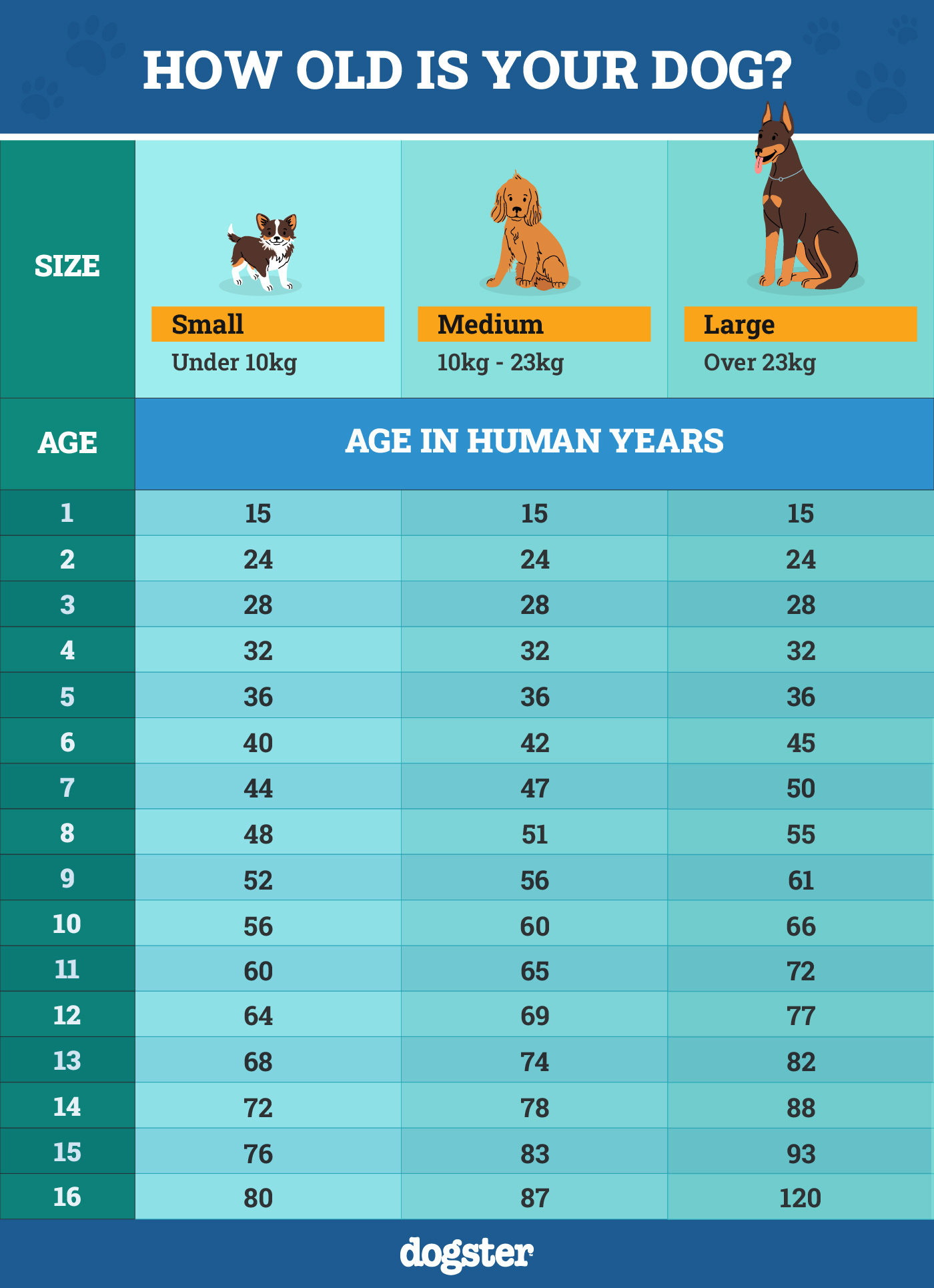
A common method for calculating a dog’s age is by multiplying 1 human year to 7 dog years, but it’s a bit more complicated than that. Other factors affect a dog’s age, and dogs that are 5 years old can be between 36 and 45 years old in human years.

How to Calculate 5 Years to Human Years
| Size | Age in human years |
| Small breed (<20 lbs or less): | 36 |
| Medium breed (21 to 50 lbs): | 36 |
| Large breed (51 to 100 lbs): | 36 |
| Giant breed (100+ lbs): | 45 |
Source: American Kennel Club
Calculating your dog’s age into human years isn’t as simple and straightforward as multiplying 1 dog year with 7 human years. Various factors affect your dog’s aging, so it takes a few more steps to figure out an accurate estimate of your dog’s age.
When calculating your dog’s age in human years, you must consider their size, breed, and weight. In general, smaller dogs have longer lifespans than larger dogs, and they seem to reach older adulthood later than big dogs.
It’s also important to note that puppies age quickly and reach adulthood much sooner than humans. Most puppies will go through puberty and become young adults by the time they reach 2 years old. The American Veterinary Medical Association (AVMA) estimates that a 1-year-old dog is the equivalent of a 15-year-old human.1 They gain an additional 9 human years when they reach 2 years old, which makes them as old as a 24-year-old human.
What’s the Science Behind Dog Years vs. Human Years?
The origin of the belief that every dog year equals 7 human years is unclear. It most likely stems from an outdated and generalized comparison of a human’s average life span and a dog’s average life span. If a human’s average lifespan is 70 years old, and a dog’s average life span is 10 years old, then a simple conclusion would be that the comparison of human and canine aging has a 1:7 ratio. Since the average human lifespan has increased, it’s safe to say that multiplying your dog’s age by 7 years isn’t an accurate way to measure their age.
It’s also worth noting that research studies have shown that dogs age differently depending on their size. For example, a study conducted by Dr. Silvan Urfer of the University of Washington found that small dogs have a median lifespan of 14.95 years, while larger dogs have a median lifespan of 13.38 years. This study also found that a dog’s size was the most significant factor in predicting their lifespan.
The Life Stages of a Dog
Knowing how old your dog is can help immensely with providing age-appropriate care for them. However, as we’ve discussed, it can be challenging to accurately convert your dog’s age to human years.
Fortunately, you don’t need to know your dog’s age in human years in order to take care of them well. If you understand dog life stages and can identify which life stage your dog is in, you can provide excellent care for them.
In general, dogs go through six stages:
- Puppyhood
- Young adulthood (adolescence)
- Adulthood
- Mature adulthood
- Older adulthood (senior)
- Geriatric years
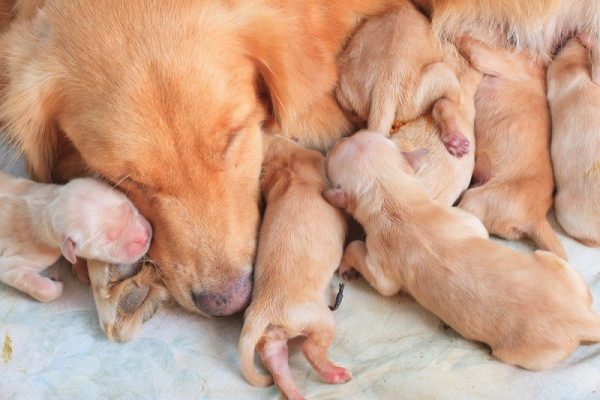
Puppyhood typically lasts between the first 1 to 2 years of a dog’s life. During this time, puppies go through exponential growth and development. Puppies rely on a healthy diet, exercise, and socialization opportunities to ensure they can grow into strong and confident dogs.
Puppyhood lasts until a dog becomes sexually mature. They then reach young adulthood which is also known as adolescence. Growth slows down during this stage, but your dog may continue to grow a couple more inches and gain a little more weight as they settle into their adult bodies.
Adulthood is the longest life stage for dogs. The latter years of adulthood are often considered to be mature adulthood when dogs reach their middle-aged years. You may start to notice your dog slowing down a little during this time.
Older adulthood refers to the time period when dogs reach the last quarter of their lifespan. Dogs are considered to be seniors when they reach this phase. The term “geriatric” is usually reserved for dogs in the later stages of aging, typically at 12 years of age or older, when they are usually experiencing more health-related issues.

Life Span by Breed Size
| Size | Average life span |
| Small breed (<20 lbs or less): | 10–15 years |
| Medium breed (21 to 50 lbs): | 10–13 years |
| Large breed (51 to 100 lbs): | 10–12 years |
| Giant breed (100+ lbs): | 8–10 years |
Source: American Kennel Club
Key Factors That Affect the Dog’s Aging Process
From what research has discovered so far, the most significant factor that affects a dog’s aging process is their size. A study conducted at the University of Gottingen in Germany found that a dog’s life expectancy decreases by 1 month for every 4.4 pounds they weigh.
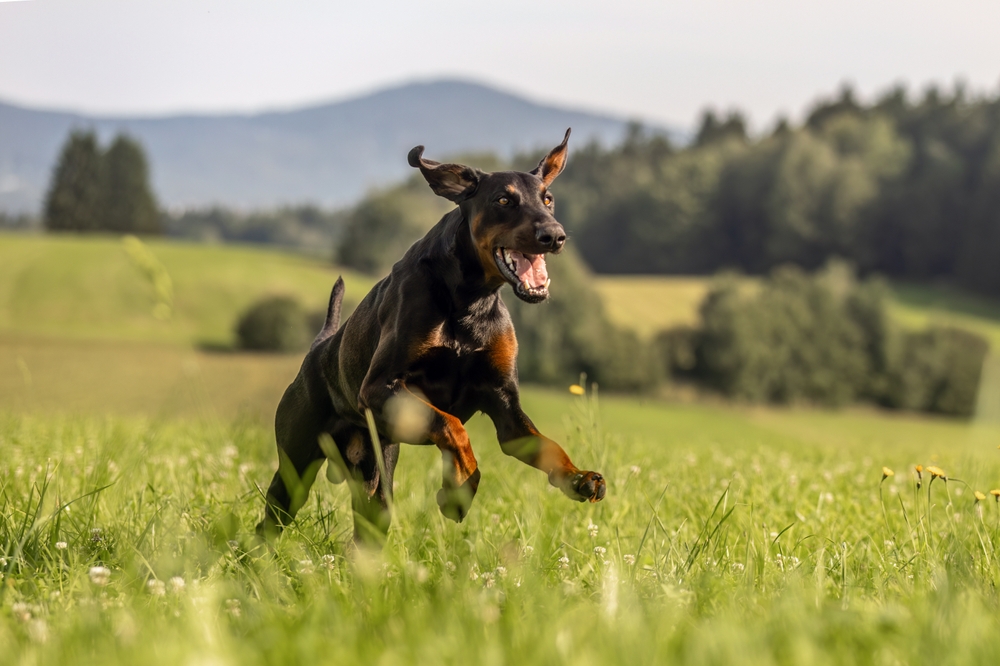
Another factor that affects a dog’s lifespan is genetics. Certain breeds are susceptible to developing specific health issues and chronic diseases as they age. Some of these conditions can drastically reduce a dog’s quality of life and shorten their lifespan. For example, certain large breed dogs, including Boxers, Doberman Pinschers, Great Danes, and Saint Bernards are all prone to developing dilated cardiomyopathy, which is a serious heart disease that can significantly shorten a dog’s lifespan.
A dog’s lifestyle including their diet, exercise, and veterinary care can also affect how they age and their overall health.
Conclusion
A dog that is 5 years old is between 36 to 45 years old in human years. Their age can be calculated more accurately when you consider their size, breed, and weight. Having a general idea of what life stage your dog is in can help you take care of them better because it will enable you to provide age-appropriate care for them.
- You might also be interested in: How Old Is 14 In Dog Years? Vet-Approved Guide to Each Size of Dog
Featured Image Credit: rebeccaashworthearle, Shutterstock