Dogster is reader-supported. When you buy via links on our site, we may earn a commission at no cost to you. Read about privacy.

Lifestyle

What Do Guide Dogs Do? 7 Vet-Verified Ways They Help People

Chantelle Fowler
By Chantelle Fowler · Reviewed & fact-checked by Dr. Luqman JavedVet Approved
Dr. Luqman Javed
Reviewed & Fact-Checked byDr. Luqman JavedDVM (Veterinarian)
Dr. Luqman (also known as Dr. Lucky) grew up with an extreme fondness for animals of all kinds. By becoming a veterinarian, he turned his childhood dream into reality. Now, his goals are focused on providing help to dogs all around the world by helping dog owners to understand their canine friends better to ensure the best quality of life for them. His passions are wildlife, exotic pets, pet owner education, and animal welfare. He graduated with his DVM from the Universiti Putra Malaysia in 2020. Dr. Lucky has experience with a variety of animal species and has decades of personal experience with keeping many different types of exotic pets, such as turtles, hamsters, freshwater fish, chickens, songbirds, and parrots (and he has extensive skills in training parrots, too).View authorThe information is current and up-to-date in accordance with the latest veterinarian research. Read about our vets
Updated on
Share
Guide dog is helping a blind man in the city

Guide dogs aren’t just working dogs; they’re companions that add value to the lives of their handlers. Whether you’re considering getting a guide dog yourself or are just curious about why these pups are so amazing, you need to keep reading. We’re going to review seven reasons why these intelligent and confident pups are life-changing for the folks who need them.

divider dog paws oct 2024

The 7 Things That Guide Dogs Do

1. They Provide Independence

Guide dogs assist their users in traveling safely, allowing them more freedom, confidence, and independence. People who were once unable to leave their homes can navigate different environments safely with their guide dog in tow.

Guide dog helping blind man
Image Credit: hedgehog94, Shutterstock

2. They Provide Safety

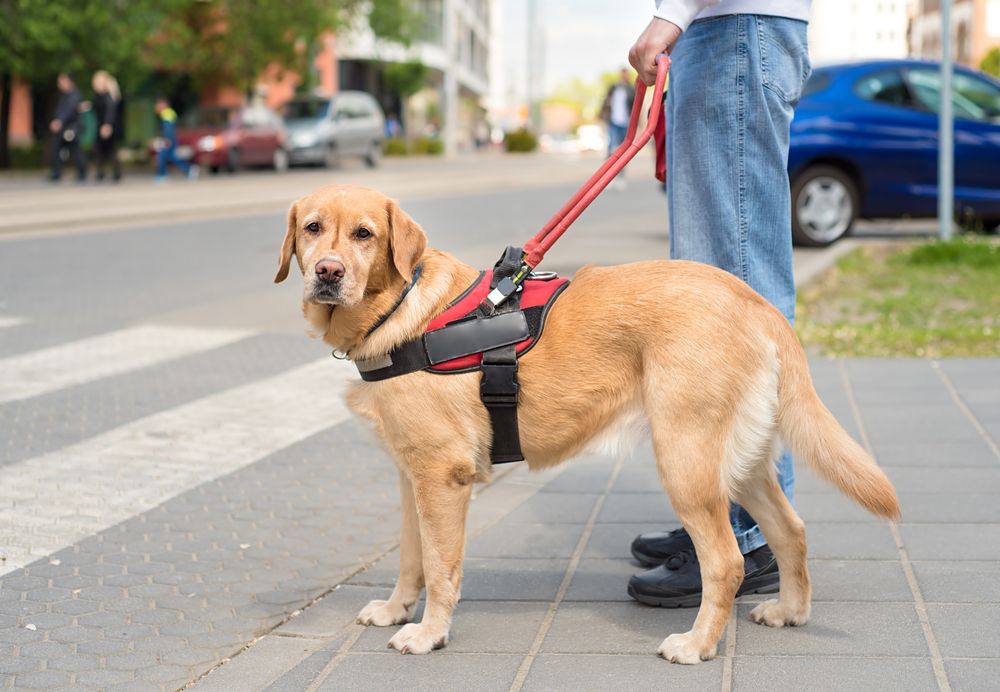
Guide dogs are trained to lead their humans safely. They have sharp eyes and constantly watch for hazards like tree limbs and power lines. They’re trained to alert their handler to any elevation changes, such as steps and curbs. They’ll also guide their owner cautiously to sidestep uneven or cracked sidewalks. This vigilance ensures their users can navigate their worlds safely.


3. They Help Make Appropriate Decisions

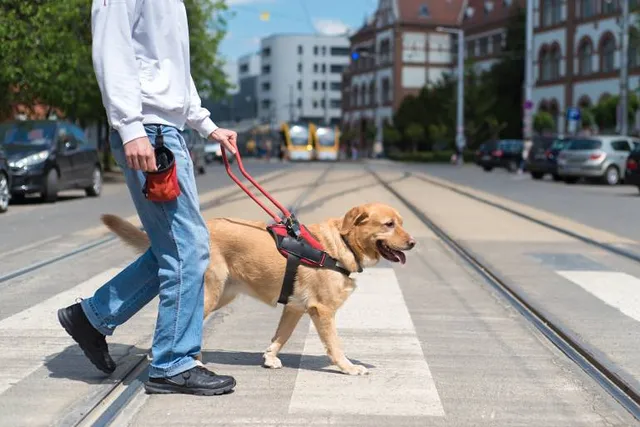
Guide dogs are trained to not only listen to the commands of their owners but also learn how to reason. If their handle tells them they’d like to cross a street as traffic is approaching, the dog knows to disobey the order. This is known as “intelligent disobedience” and occurs whenever a service animal goes against their owner’s instructions to make a better, safer decision.

Guide dog helping blind man on pedestrian crossing
Image Credit: Africa Studio, Shutterstock

4. They Remain Task-Focussed

Guide dogs are trained to ignore any distractions that may interfere with their ability to perform their duties. Under no circumstances will they abandon their owners, not even if a squirrel zips across their path.

Important

  • If a guide dog approaches you on their own, they’re not keen on being pet. Guide dogs approach strange people to draw attention. For example, the person they’re supposed to be guiding may have collapsed.

5. They Promote Physical Activity

Since guide dogs provide their handler with greater independence and safety when leaving home, their owners may feel more comfortable in their ability to go outside and be active when they have their pup by their side.

Blind young man with guide dog and mother outdoors
Image Credit: Pixel-Shot, Shutterstock

6. They Promote Social Inclusion

People with mobility problems often experience restrictions for social interaction, which results in feelings of isolation and exclusion. Guide dogs allow their handlers the confidence and freedom to leave their homes, promoting social inclusion.

In 1998, researchers found that 92% of guide dog owners report others stopping and talking to them when they’re out with their dogs.1 Three-quarters of these owners reported making new friends since bringing their guide dog home.


7. They Provide Companionship

Like their non-guide counterparts, guide dogs provide companionship to their handlers. They’re seen as important family members and, in many cases, offer more to their users than possible with human support because they provide an unconditional relationship.

One study found that 93% of guide dog owners report viewing their dog as a valued family member.² Seventy percent turn to their pet for comfort and feel their pet is more important to them as a friend than they are as a working dog.

man hugging chocolate labrador dog at the park
Image Credit: Sergey Nivens, Shutterstock
divider dog paws oct 2024

Final Thoughts

There’s certainly no denying the benefits a guide dog can provide to their handler. They can increase independence, freedom, confidence, and self-worth in their owners, who may otherwise be excluded or isolated. Guide dogs aren’t just highly skilled workers, though; they’re loyal pals that help their handlers be better equipped to set out into the world.


Featured Image Credit: SasaStock, Shutterstock

The Dogster Newsletter

Expert dog care, straight to your inbox

News, insights, expert advice, and everything dog.

No spam — unsubscribe anytime.

By signing up, you agree to our Terms & Conditions and Privacy & Cookies Policy.

Click a star to rate. You can leave written feedback afterwards. (We read all feedback.)

Chantelle Fowler
Authored by

Chantelle Fowler

Leave a Reply

You're very welcome to leave a comment or question. Please know that all comments must meet our community guidelines, and your email address will NOT be published. Let's have a positive and constructive conversation.

10 Fascinating Facts About Guide Dogs (Vet-Approved)

10 Fascinating Facts About Guide Dogs (Vet-Approved)

According to the Centers for Disease Control and Prevention (CDC), roughly 12 million people aged 40 years or older in the US live with some kind of visual imp…

Chris Dinesen Rogers
By Chris Dinesen Rogers ·
How to Train a Guide Dog: Vet-Verified Tips & Important Traits

How to Train a Guide Dog: Vet-Verified Tips & Important Traits

It takes a special temperament and devoted training for a dog to master guide work. Guide dogs are responsible for restoring their handlers’ independence and a…

Nicole Cosgrove
By Nicole Cosgrove ·
7 Health Benefits of Having a Dog: Vet-Approved Facts

7 Health Benefits of Having a Dog: Vet-Approved Facts

Once upon a time, human beings domesticated canines to help them complete tasks. Some of these pups were tasked with hunting, others with guarding, and a laund…

Ashley Bates
By Ashley Bates ·
What Happens to Retired Guide Dogs? After Work Facts & FAQ

What Happens to Retired Guide Dogs? After Work Facts & FAQ

It occurred to me that one day I'll have to retire Nash, so I talked to other blind people who have retired dogs to learn what they've done.

Nicole Cosgrove
By Nicole Cosgrove ·

International Blind Dog Day 2026: What It Is & When It's Celebrated

International Blind Dog Day is an event that happens every year on the 23rd of August. It seeks to assemble the owners of blind and partially sighted dogs in c…

Nicole Cosgrove
By Nicole Cosgrove ·
International Blind Dog Day 2026: What It Is & When It's Celebrated

How Much Is a Guide Dog? 2026 Price Guide

Service animals provide disabled people with valuable assistance, and the most well-known of their kind are the famous guide dogs. Trained to lead and assist t…

Codee Chessher
By Codee Chessher ·
How Much Is a Guide Dog? 2026 Price Guide

10 Vet-Reviewed Reasons to Get a Puppy: How it Can Improve Your Life

Puppies are adorable animals that can become some of the best companions for people. There are many benefits to living with a puppy, such as reduced isolation…

Jessica Kim
By Jessica Kim ·
10 Vet-Reviewed Reasons to Get a Puppy: How it Can Improve Your Life

What Makes a Good Service Dog? 8 Vet-Reviewed Characteristics

If you have ever seen a service dog in action, it’s easy to see that these dogs are highly trained professionals screened and trained from puppyhood to perform…

Codee Chessher
By Codee Chessher ·
What Makes a Good Service Dog? 8 Vet-Reviewed Characteristics

What Do Mobility Assistance Dogs Do? Qualities, Tasks & FAQ

Mobility assistance dogs take “man’s best friend” to the next level. They’re not only a loyal, reliable companion but essential for people who struggle with di…

Nicole Cosgrove
By Nicole Cosgrove ·
What Do Mobility Assistance Dogs Do? Qualities, Tasks & FAQ

Why Do Dogs Have to Be on a Leash in Public Areas? 7 Vet-Reviewed Reasons

When I’m walking my dog on roads and most public places, she is walked exclusively on a leash. She is still young, and I don’t want her running into traffic. S…

Matt Jackson
By Matt Jackson ·
Why Do Dogs Have to Be on a Leash in Public Areas? 7 Vet-Reviewed Reasons

11 Vet-Verified Reasons to Get a Dog: Why They Are the Best Pets

While any avid owner can gladly expound on the meaning their pets bring into their lives, would-be pet parents can’t always see the rationale in getting a dog.…

Nicole Cosgrove
By Nicole Cosgrove ·
11 Vet-Verified Reasons to Get a Dog: Why They Are the Best Pets

15 Fascinating Dog & Human Relationship Facts (You Never Knew!)

Dogs and humans have a long history of living together and forming strong bonds. From early hunter-gatherers to modern city dwellers, dogs have been part of hu…

Nicole Cosgrove
By Nicole Cosgrove ·
15 Fascinating Dog & Human Relationship Facts (You Never Knew!)

Love Dogs? So Do We! Join the Dogster Community

Stay informed with expert pet care insights delivered straight to your inbox! Discover professional guidance on animal behavior, feeding tips, trusted product picks, and much more.

You may opt-out at any time. View our Privacy Policy for more information.

The Dogster app on a phone