In this article
When you cross the gorgeous Golden Retriever with the whip-smart Poodle, you get an amazing family dog: the Goldendoodle. Goldendoodles have been among the most popular crossbreeds since their inception in 1969.
They come in all sizes (due to the toy, miniature, and standard sizes of the Poodle) and a variety of colors. They can also have four coat types, though technically, the fourth type is not recognized and is quite rare.
Below, we’ll discuss each coat type and how to take care of each one through grooming, so if you’re planning on adding one of these fabulous dogs to your family, you’ll have a better understanding of how to care for their coat.

The 4 Goldendoodle Coat Types
1. Straight Coat

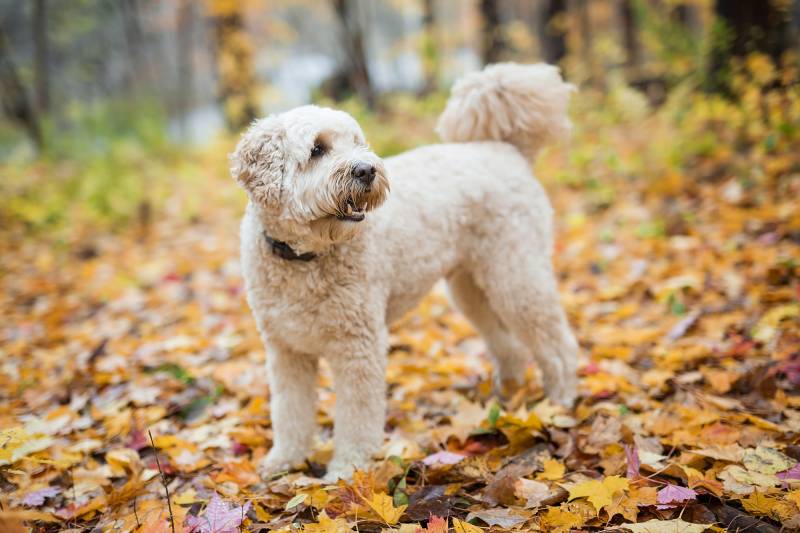
The straight coat is rare for the Goldendoodle. It more closely resembles the coat of their Golden Retriever parents because they inherited the non-curly trait, but some coats have a bit of a wave. While the coat is straight, there are still furnishings, which is the hair that gives the dog fluffy eyebrows and beards. So, while their coats might come from the Golden Retriever, they don’t look that much like a Golden because of the furnishings.
Straight coats shed a bit but don’t require frequent grooming and brushing. They are likely to have an undercoat, which increases the level of shedding. These coats typically need brushing about once a week and more often during the spring and fall shedding seasons. They might need a bath about once every 6 weeks, but the straight coat is a relatively low-maintenance type.
2. Curly Coat
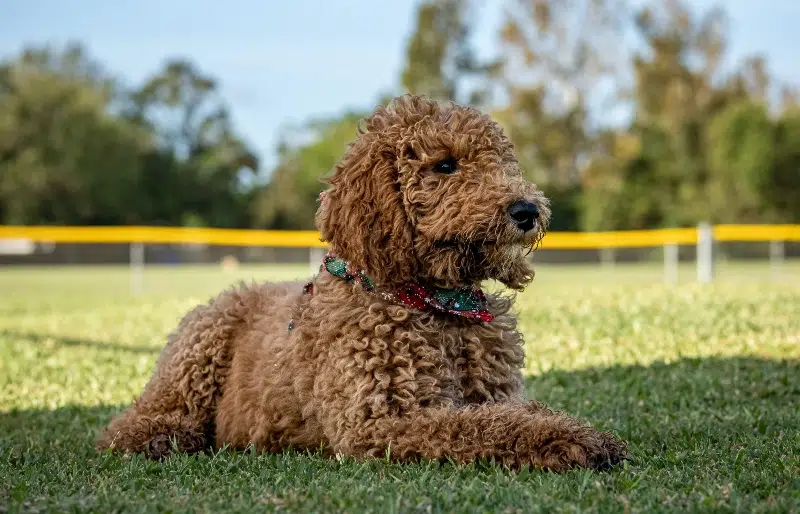
The curly coat is not standard for the Goldendoodle, but it can be the most sought-after. The curlier the coat, the less they shed, which can be helpful for allergy sufferers. This coat most closely resembles the Poodle’s and is considered the most hypoallergenic of the Goldendoodle’s coat types.
The frequency of brushing depends on how tight the curls are (a curly-coated Goldendoodle can have tight or loose curls). The curly coat requires daily brushing because the curls can easily become tangled and matted. Curly coats also need frequent baths, about every 2 to 3 weeks.
3. Wavy Coat

The Goldendoodle’s wavy coat is the most common for this breed. It’s also known as a shaggy coat and is essentially a cross between both parents’ coats. It’s moderately low maintenance with moderate shedding and needs brushing about once a week (more often in the spring and fall). Dogs with the wavy coat will need a bath every 1 ½ to 2 months.
4. Improper Coat
This coat is the rarest and isn’t always considered a Goldendoodle coat type. It’s almost the same as the straight coat, but the most significant difference between the straight and improper coats is the lack of furnishings or excess facial hair. So, Goldendoodles with an improper coat essentially look like slim Golden Retrievers.
The care that should go into this coat is the same as with the straight coat.

How Can You Tell What Coat Your Goldendoodle Puppy Will Have?
If you’re dealing with a reputable breeder, they should be able to tell you what kind of coat your dog will have when they mature. Some breeders can conduct a DNA test on your puppy to get a better grasp on the dog’s coat type and how much they will shed.
You can also check the puppy’s muzzle and face for clues. The more crimps and waves on the face and muzzle, the curlier the coat will be. If the puppy’s face is smooth without noticeable crimps or waves, they will likely have a straight or improper coat.
Specifically, a prominent mustache will likely indicate a curly coat, while a beard-like shaggy muzzle will signify a wavy coat. But if the muzzle has short and neat fur, they will probably have a straight or improper coat.
How Does the Goldendoodle’s Coat Change as They Mature?
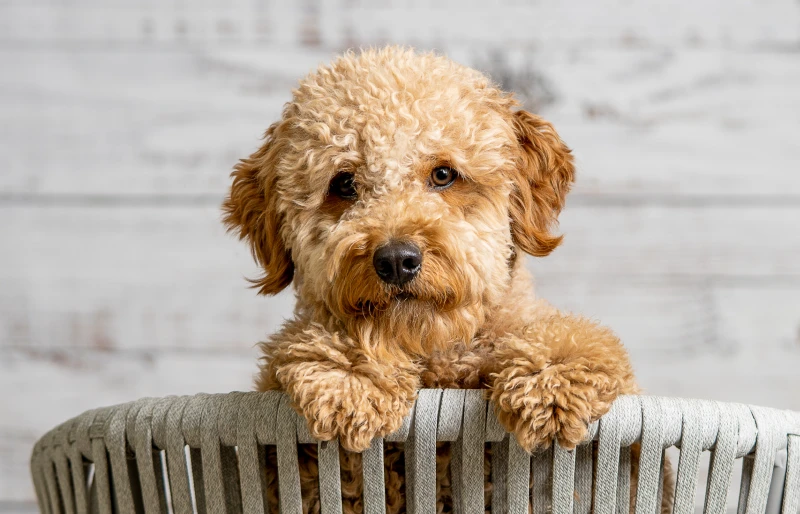
The Goldendoodle’s coat continues to develop and change as they mature. The puppy coat stage lasts until they are roughly 8 months old. It starts with a soft coat that’s easy to look after. As the dog matures, the coat gradually grows into the final stage.
The adult coat stage begins around 8 months or older, and the coat will lose its puppy softness and become thicker and stiffer. This is when the coat becomes more difficult to groom and look after. The coat will be wavy, straight, or curly by this time.
What Colors Do Goldendoodles Come In?
Goldendoodles commonly have creams and golds due to their Golden Retriever parent, but Poodles can display several coat colors.
- Apricot: This soft red cream is one of the most popular colors.
- Black: The dog is black almost everywhere, and this is a rare color.
- Blue: This rare color combines black and gray with a blue tinge.
- Champagne: This rare color has a pale yellowish hue.
- Chocolate: This color can range from warm chocolate to dark cocoa.
- Cream: This color comes from both parents and features a touch of gold.
- Gray: The puppies start off almost black, which fades to gray as they mature.
- Red: Red is a highly sought-after color and can range from deep red and mahogany to cinnamon red.
- Sable: Each hair strand has a black tip that fades into a paler brown color at the root.
- Silver: This is generally a light blue or gray Goldendoodle.
- Tan: A dilute red pigment typically gives the coat a golden tan color.
- White: White Goldendoodles are never pure white, but it’s the palest shade.
- Abstract: This random pattern usually has less than 50% white combined with any other color.
- Brindle: The coat has a black or brown base with lighter brown and red stripes, giving it an almost tiger-like appearance.
- Parti: You get 50% white, with another color making up the other 50%. The other color tends to be tan or apricot.
- Phantom: This rare pattern has a dark base color with a lighter color on the legs, muzzle, and around the eyes.
- Tuxedo: The base color tends to be black but can be any color, with a white chest, abdomen, and hind legs.
Conclusion
Goldendoodles are often advertised as hypoallergenic, but there is no such thing as an allergy-free dog. The curly coats shed much less than other coats, but they do shed. However, you can aim for a curly-coated Goldendoodle if you have allergies since they will likely be easier to live with. If you’re not worried about allergies but want a low-maintenance dog, look for a wavy or straight coat.
Regardless of the color or coat type, you can’t go wrong with bringing a Goldendoodle home as your new companion!
Related Read:
Featured Image Credit: Lopolo, Shutterstock