

Click to Skip Ahead
Whether you’re renovating a house, upcycling furniture, or into arts and crafts, paint will likely be an essential part of your project. However, if you have kids or pets, you must be careful about what type of paint you use.
Dogs, especially young ones, may try to lick or chew freshly painted surfaces, and paint fumes can also be toxic. If you aren’t sure how to find dog-safe paint, you’ve come to the right place. In this article, we’ll discuss how to choose safe paint to use around your dog, including the advantages and disadvantages of the products.

How Does It Work?
So, what makes a paint dog safe? Well, as we mentioned in the introduction, the most significant dangers of paint are if your dog ingests it or if they inhale toxic fumes.
With that in mind, you’ll want to look for paint labeled non-toxic.
- Acetone
- Ammonia
- Formaldehyde
- Polyurethane
- Mercury
- Biocide
You also need a brand labeled low or no VOC. VOC or volatile organic compounds are the toxic chemicals in paint fumes. Inhaling the chemicals can cause short-term respiratory irritation and has been linked to long-term health problems.
Specific paint tints or finishes may also have other toxic ingredients you’ll want to avoid. Oil-based paints and stains are more likely to cause irritation to the respiratory system, skin, and eyes.1 Lead paint is always toxic but has been banned in the United States since the 1970s. You likely won’t find it for sale, but your dog could encounter it if you live in an older house.
What Are the Different Types of Dog Safe Paint?
Water or latex-based paints generally contain fewer VOCs, but you should only use the products in well-ventilated areas. Some latex paints contain small amounts of ethylene glycol (antifreeze), which is toxic to dogs if ingested. Read the label carefully.
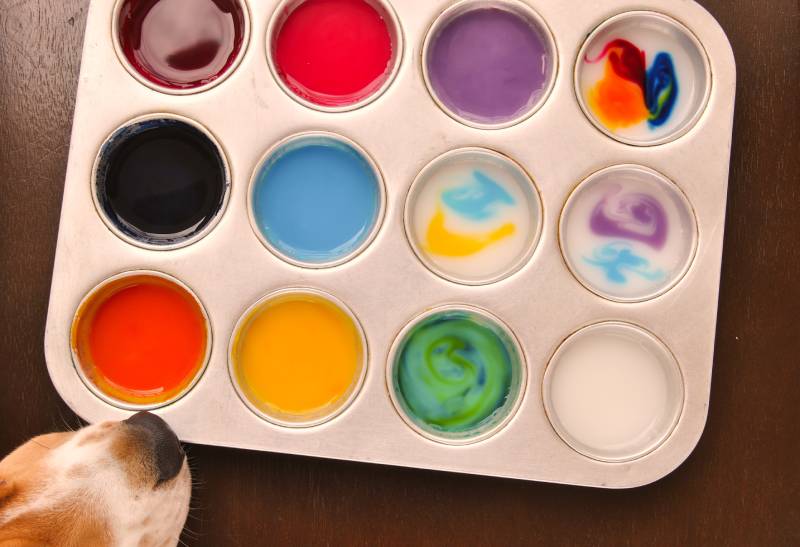
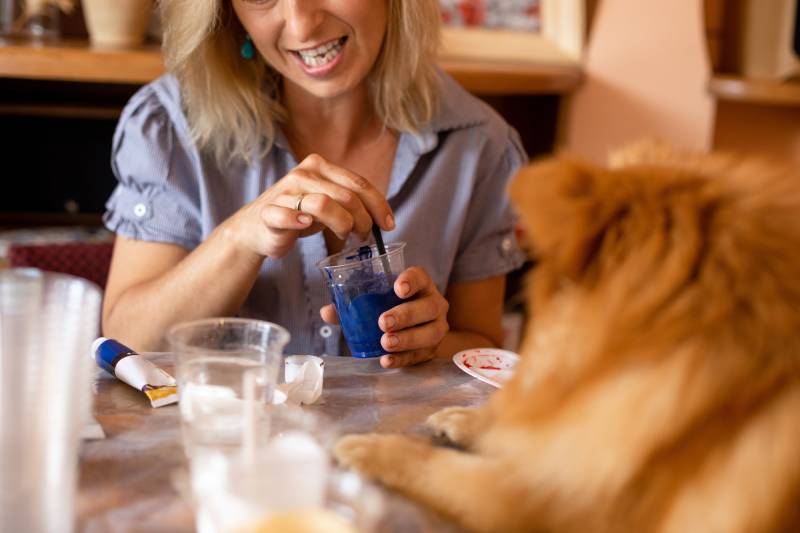
Milk-based paints are made entirely of natural ingredients and are the safest paints you can use around your dog. They typically contain no VOCs and are non-toxic. If you’re looking for arts and crafts paint, products that are washable and safe for kids are usually okay for dogs, too.
It’s best to avoid oil-based craft paint, which sometimes contains small amounts of lead and other potentially toxic ingredients. Acrylic paint is generally a safer choice.
Where Is It Used?
Dog-safe paint can be used for nearly any home project. Milk paint can be used on furniture or walls and works well on concrete, wood, drywall, brick, and plaster surfaces. Water-based paints are available in exterior and interior formulas, along with several finishes.
You can use them on floors, walls, and other surfaces. Craft paints can be used on paper, wood, canvas, and other mediums, depending on the type you choose. Kid’s paint usually works best on paper, cardboard, or canvas. It may not be as effective on wood.

Advantages of Dog Safe Paint
The primary advantage of dog-safe paint is that it’s safer for humans and other pets. The same VOCs that pose a danger to your dog can be deadly for pet birds. They may also be dangerous for kids, pregnant women, or people with respiratory issues.
Milk paint is also much safer for the environment than other types of paint. It contains only eco-friendly ingredients and doesn’t release toxins into the air either.
Disadvantages of Dog Safe Paint
Dog-safe paints may be more expensive than other types of paint. For instance, milk paint costs more than water-based or oil paints. It also comes in a powdered form that must be mixed in small batches. While the powder can be stored long-term, the mixed paint must be used quickly.
Milk- and water-based paints are sometimes less durable long-term than oil paints. They are more vulnerable to wear and may not retain their finish. Milk paint also needs to be sealed after use.

Frequently Asked Questions (FAQ)
What Precautions Should I Take When Painting Around a Dog?
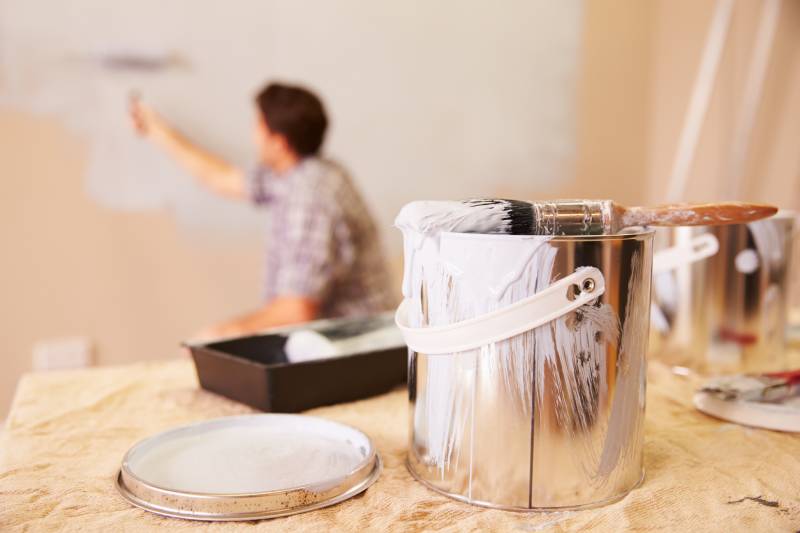
Paint that contains fewer VOCs can still irritate your dog’s eyes and respiratory system. Make sure you’re painting in a well-ventilated area. Keep your dog out of the area where you’re painting until it is completely dry.
If possible, you may want to keep your dog out of the house entirely during your project. Once the paint is dry, it should be safe for them to return. Ensure you clean up all the leftover paint and supplies before your dog returns.
Also, store the paint and supplies safely out of your dog’s reach. Dispose of all painting trash as directed and keep it away from your dog.
What Should I Do If My Dog Gets Paint on Them?
If you’re using dog-safe paint, there shouldn’t be any significant dangers if your dog gets paint on them. To be safe, keep them from licking it and wash the paint off as soon as possible. You can use a dog-safe shampoo or dish soap to remove the paint in the bathtub. Be sure to rinse off and dry your pup thoroughly.
If the paint is dried, it may be easier to trim the hair. Don’t use scissors which can easily cut your dog. Clippers are the safest option. If you can’t trim them at home, a groomer or your vet may be able to help.
You won’t be able to wash off oil-based paint, so you’ll have to keep your dog from licking it. Once dry, you can cut off the hair. Don’t use paint thinner or turpentine on your dog since they are also toxic.
Monitor your dog for skin irritation or itching after the paint is gone, and contact your vet if you’re concerned.
What Should I Do If My Dog Licks or Eats Paint?
If you suspect your dog has licked paint, contact your vet or the Pet Poison Control hotline. Be prepared to tell them what type of paint your dog ate and roughly how much. Follow your vet’s and the poison control’s directions regarding how to proceed.
- Vomiting
- Diarrhea
- Tremors
- Trouble breathing
- Depression
- Loss of appetite
- Seizures
Conclusion
A fresh coat of paint is one of the fastest and easiest home renovation projects you can tackle. Beginner DIYers can usually handle the job without much trouble, which can be very satisfying. With the proper precautions, you can spruce up your home while also keeping your dog safe. You can start by selecting a dog-safe paint and following the advice in our guide.
See Also:
- Spray Paint For Dogs: Is It Safe To Paint Your Dogs Fur? Vet Approved Advice
- How to Teach Your Dog to Paint: A Step-By-Step Guide
Featured Image Credit: tehvon, Shutterstock